Captivating Beth Chatto Gardens

20170529_115957

Imagine a boggy gravel pit. Where most of us would only see the grey dusty desolation of the former scene of frenzied excavation at the quarry, a visionary in the form of Beth Chatto saw past the starkness, the stones and rubble and over the past 55 years she and her team has worked tirelessly to create the serene, lush and heavenly gardens now named after her.

20170529_120247

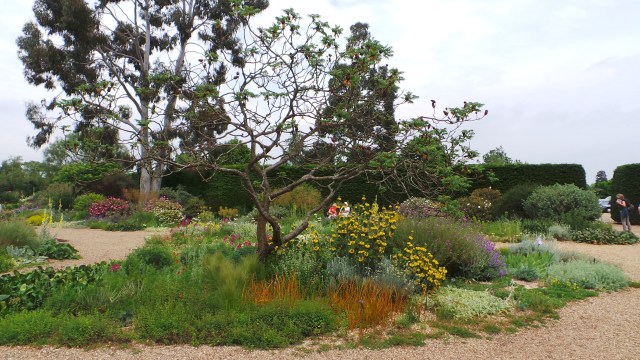
The gardens are loosely split into various areas including the Gravel Garden, the Water Garden which leads through to the Woodland Garden and the recent addition of the Scree Garden.
20170529_132722

From the very beginning, Beth Chatto decided to work with the environment and this was particularly pertinent since the gardens are located in the county with the lowest rainfall in the UK (famously less than in the Sahara desert!)
20170529_122020

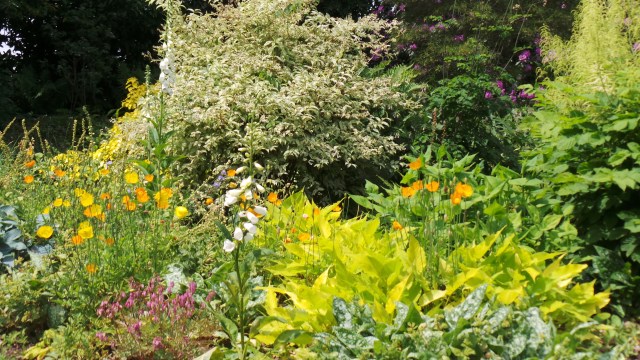
She longed to learn how to garden in these conditions and in the process help other gardeners of the future. The Gravel Garden was an inauspicious stone parking space for many years and I recall a visit here many years ago when a few cars were dotted around this rather glum piece of land and the ‘cafe’ was located in one corner. A tent ‘cafe’ barely held in place as the wind relentlessly tried to lift it to the sky! Nowadays a modern designed restaurant sits at the edge of the gravel garden with tables outdoors open to its views and wildlife – robins and blue tits were frequent visitors to our table.
20170529_123425

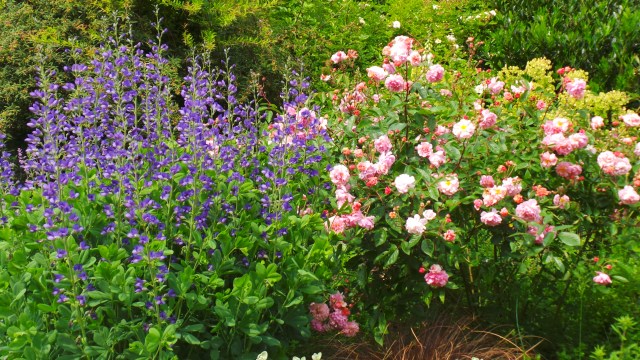
Over the years the arid land has been transformed into its current beautiful Gravel Garden. Vibrant colours abound through the inventive and inspiring planting where also the textures of the plants and flowers are taken into consideration. As the sun comes out there is a real Mediterranean feel to this sun trap and I’m transported to the South of France! 

20170529_123448

A novice to gardening, Beth Chatto is self-taught although both her parents were enthusiastic gardeners and her husband, Andrew, had a life-long interest in the natural environment of plants. During her decades of work at Beth Chatto, she became close friends with some of the eminent gardeners at the time and in due course became an award-winning gardener. For ten consecutive years, she has won gold at the RHS Chelsea Flower show; she was awarded an OBE by the Queen in 2002, received the RHS Victoria Medal of Honour as well as accepting an Honorary Doctorate Degree from the University of Essex. Furthermore, she’s lectured worldwide and written numerous books on gardening. Even to this day at 96 she often comes out to the gardens!

The gardens have constantly evolved as her expertise has grown and in my opinion, the Water Garden is the jewel of all the areas.

20170529_124734

Four ponds straddle the garden, linked by a gurgling stream which was dammed up specifically to fill the ponds. There is a powerful lush tropical feel throughout and there is a dominant celebration of the colour green – from the immaculate emerald green of the grass to the hundreds of shade of green of the rich foliage of the trees, plants and flowers. Colour is used sparingly and when in evidence has a transforming impact on the garden and on the flower, they stand out like never before. 

20170529_125115 (1)

The sense of harmony and tranquility is almost overwhelming, the effect immediate and real. As I enter a seeming state of transcendental bliss I let my senses absorb the delights as I nurdle* (wander aimlessly) around the Water Garden. 

Nothing has been left to chance. Soft fragrances float on the gentle breeze, never overpowering, rather a warm hint of promise. 

20170529_133156

The stream provides a constant rhythmic backdrop to the walk, changing in pitch as I meander around, then in the hushed reverential near silence I notice the birdsong; what a jubilant chorus as they seem to compete for attention, their delight in life infectious. Only later looking over the videos I took on the day do I hear the distant roar of planes high overhead, at the time they were effectively tuned out!
20170529_133353

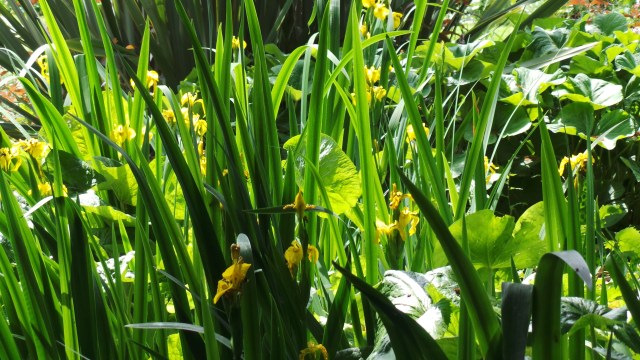
It was not only my eyes which took in the varying textural forms, from the razor sharp, sword-like leaves, to the whimsical frilly grasses, to the variegated leaves of the ferns. My hands swish between some leaves here, some grasses there. My fingertips enchanted my the soft tender sensations, some tickling, some spiky.

20170529_121513

Giant parasol leaves loom over me at one stage and proof again that Beth Chatto has achieved something remarkable here – these moisture-loving plants never associated with East Anglia are thriving. I bend to inhale the scent of the roses, I stretch up to spy the colours closer, I stand stock-still following the dragonflies darting over the lake and its irises, so fast in their dance, impossible to capture on camera. 
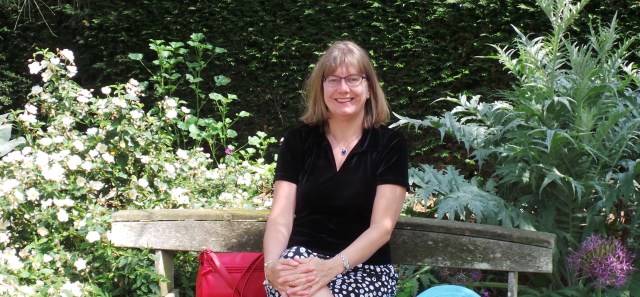
20170529_120412Benches are logistically, romantically, placed around the gardens, often in the soothing shade to sit and contemplate nature and her amazing art. The play of shade and light is spectacular, the dark grasses a sharp contrast to the soft mellow sunlight stems taking on their own structural sculptural artistic form. Gazing, absorbing and reflecting I sit in silence…before I feel the eyes of others eager to enjoy the peace, to rest up and reluctantly I move on.

20170529_133419

Peeling myself away from the sumptuous Water Gardens I wander through the Reservoir Garden, its large borders a miracle of colour and flowers and it’s hard to imagine this is the site of a former wasteland filled with scrubby bushes. 

20170529_122159

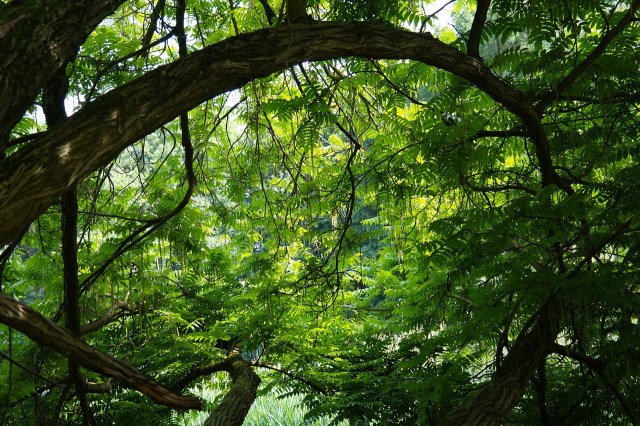
The woodland came to its own after the infamous hurricane of 1987 when trees across the UK, and especially in the South, were decimated with about 15 million trees felled by 115 mph winds. At Beth Chatto many new trees were self-seeded and those remaining include many oak trees over one hundred years old. The dappled light shines playfully between the tall canopies and below flowers adorn the ground, the damp earthy forest fragrance is reminiscent of many childhood bluebell wood walks. 

20170529_121449

Many thanks for accompanying me on this epic walk through Beth Chatto Gardens’ seven acres…however, it’s not quite over! A visit is never complete without looking at its renowned nursery with over 2,000 different species of herbaceous plants and bulbs and we came away with armfuls of plants including Cosmos and Veronicas.

*Please see the previous post.

NB. All photos ©Annika Perry, 2017
Neptunes-uouue

TWILIGHT

A world without words is a terrifying thought. They are the very essence of our being and no part of our existence is untouched by words.

Yet we are complacent with this precious gift and like the thousands of animals that silently, almost unnoticed, fall into extinction, so to do our words.

A recent research project by Dr Selin Kesebir at London Business School has discovered that an incalculable number of our words in the English Language are quickly disappearing and many of these are associated with our natural environment. These words were robustly used and alive until the 1950s but have since dwindled in usage until their presence in society is a mere backdrop, often known only to academic staff.

Poetry is found within the words themselves, their sounds a sensory delight, almost tactile and a joy to pronounce (or attempt!). The highly evocative ‘Landskein’ describes the weave of horizon lines on a hazy day – where one word takes the place of the clumsy formation of nine!

Equally rich and expressive is ‘roarie-bummlers’, a Scottish playful-sounding word describing the swift-moving storm clouds.

Whilst school children become more attuned to the digital world and where nearly 80% can name Pokemon characters as opposed to only 50% who can name pictures of wildlife, the hope is that this same expansive digital network can come to the rescue of the vanishing words.

Through the use of social media there is an aspiration that words such as ‘shivelight’, which means lances of light cast through woodland canopy, will enter our everyday language. In one experiment a tweet sent by Dr MacFarlane at the University of Cambridge about the Anglo-Saxon heritage of the word ‘Holloway’ for a sunken lane worn into the landscape by generations of travellers received 20,000 retweets and likes.

Other words highlighted in the research include the following:

‘Owl-light’    Twilight

‘Petrichor’    Smell of dry earth and rock that comes before and during rainfall 

‘Glashtroch’    Incessant rain

‘Gludder’    Fleeting sunshine between showers

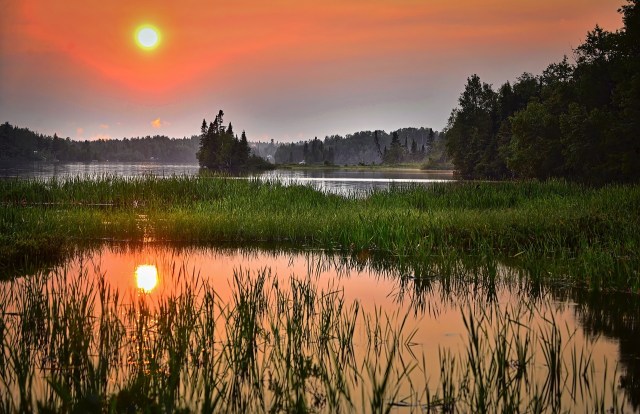
‘Neptunes-uouue’    Sea mist

‘Smeuse’      Sussex dialect for a hole in the hedge left by the repeated passage of a small animal

‘Stravaig’     Scots and Irish word for wander aimlessly

Nurdle’     East Anglian dialect for wander aimlessly

tree

One area where there is an exception to the decline of words is weather-related vocabulary, which is as popular as ever and no doubt shows the predisposition in the UK to talk endlessly about the weather…of yesterday, today, tomorrow!

However, the decline of words surrounding nature are of concern ‘not only because they imply foregone physical and psychological benefits from engagement with nature, but also because cultural products are agents of socialisation that can evoke curiosity, respect, and concern for the natural world.’*

The onus on us is to save our rich heritage which is part of us all!

* Selin Kesebir

Photos courtesy of Pixaby

Sources include The Times & BBC Todaysea mist


TRANSITION

IMG_0279

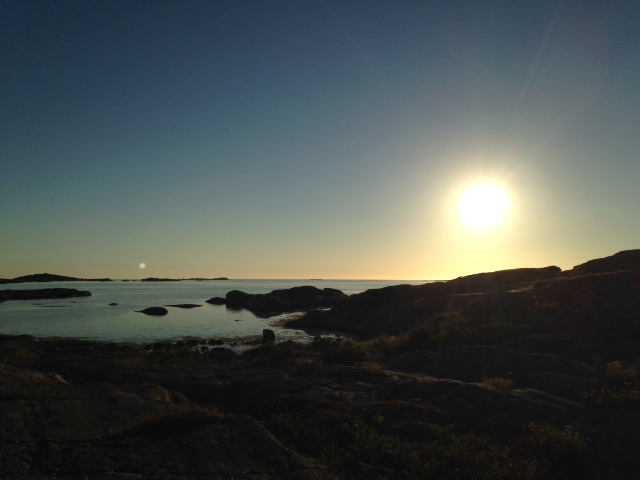
It’s less than a week since I arrived back from Sweden and the transition to everyday life has been harder than ever. The break was perfect on all levels and once home I realised that my body made it across the North Sea whilst my soul was still residing in the summer house, wandering blissfully on the land, clambering on the rocks.

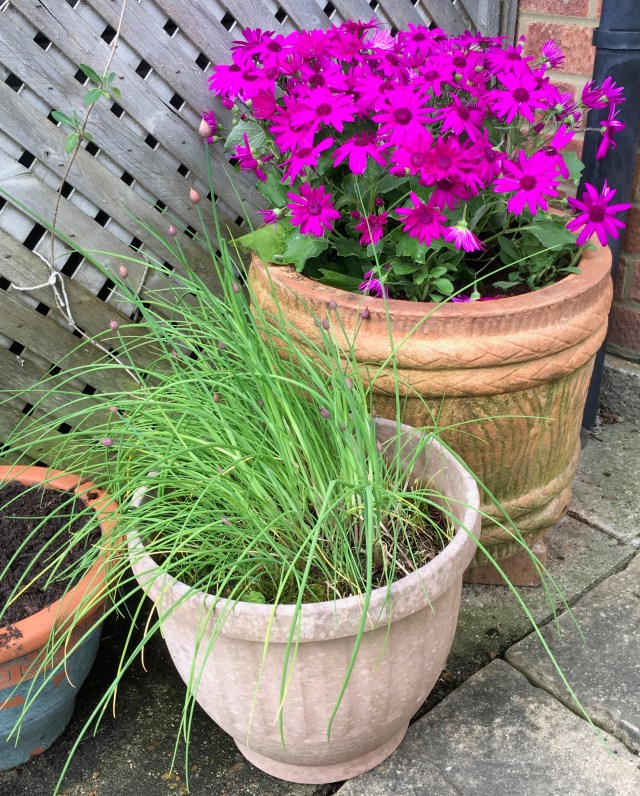
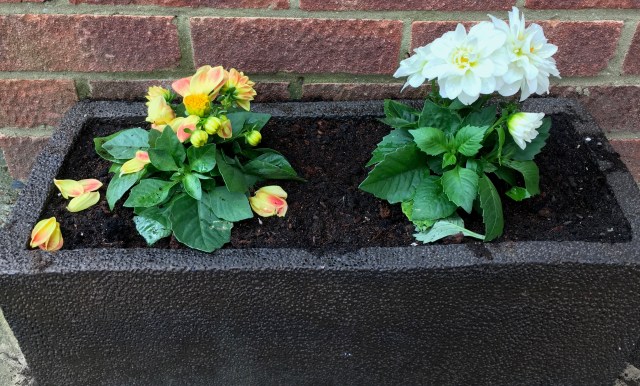
Senetti with Petunias and Flowering Chives

To aid the unification of body and soul I set out to do what often helps in these circumstances. When I was younger that would have meant a splurge at a bookstore after hours of browsing. As an adult and keen gardener I headed to the local garden centre and spurred on by the rare warm sunshine the temperamental trolley was soon filled to the brim. Muttering at the trolley under my breath I steered the plants to the car and kept my fingers crossed for a sunny Sunday.

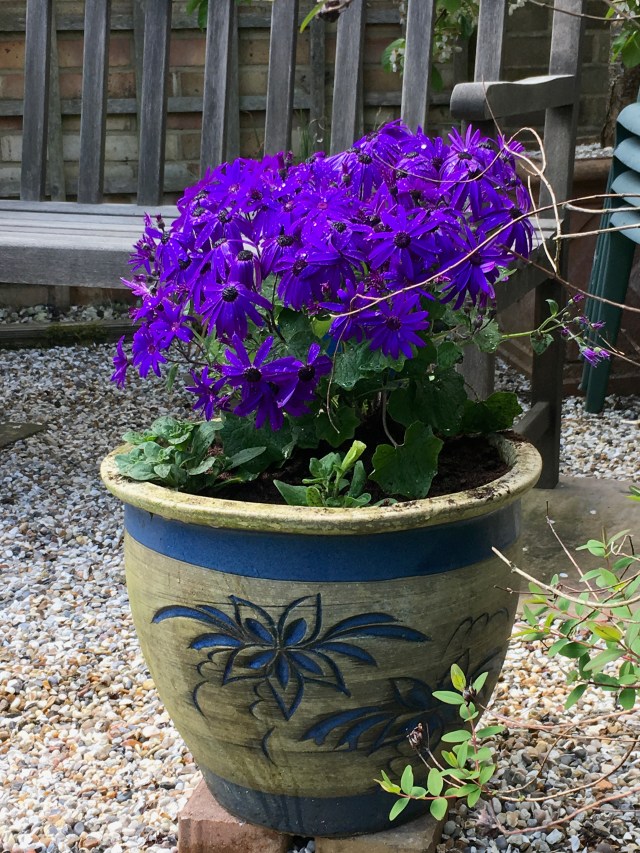
Senetti with Petunias

Today I woke to fair weather and keen to get started I left the housework and headed out to the garden. Quickly a new solace took hold of me, gently pulling or cutting the plants from the tight pots and planting with joy. Childlike glee swept over me as soil spilt onto the grass, the patio; little granules of compost sneaking their way into my shoes. One old and tired plant needed to be replaced and proved particularly stubborn on being pulled out. I tried digging it out with a trowel. No luck. Then it was time for the fork and with satisfaction I attacked the rock hard roots, hacking away! At last, I managed to replace it with a beautiful new flower. I could feel my spirits lift.

IMG_0295

A few hours later everything was in place…happily including my soul! 

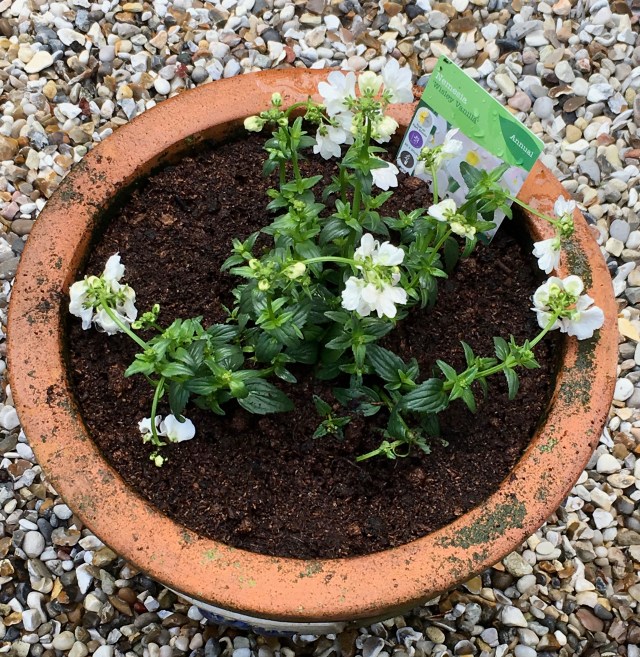
Nemesia 'Wisley Vanilla'
Nemesia ‘Wisley Vanilla’

That is when the idea for this post struck me…another book-style post is partially written but just didn’t feel right at the moment and I had initially left comments on my last post on Bert Håge Häverö but turned them off at the last moment as I was dazed and exhausted upon my return to the UK, feeling overwhelmed to respond.

IMG_0298

Thank you all for being patient; I’m slowly catching up on your blogs and look forward to easing into normality in the coming week. Meanwhile, I want to finish with one poem featured on Brainpickings this morning. Maria Popova is a gifted writer and her articles are always a treat and consist of interesting, informative and thought-provoking essays on writers/artists/philosophers and it was:

‘Founded in 2006 as a weekly email that went out to seven friends and eventually brought online, the site was included in the Library of Congress permanent web archive in 2012.’ *

Today’s feature on poet Jane Hirshfield is particularly relevant as it was Earth Day yesterday. Enjoy.

ON THE FIFTH DAY
by Jane Hirshfield

On the fifth day
the scientists who studied the rivers
were forbidden to speak
or to study the rivers.

The scientists who studied the air
were told not to speak of the air,
and the ones who worked for the farmers
were silenced,
and the ones who worked for the bees.

Someone, from deep in the Badlands,
began posting facts.

The facts were told not to speak
and were taken away.
The facts, surprised to be taken, were silent. 

Now it was only the rivers
that spoke of the rivers,
and only the wind that spoke of its bees,

while the unpausing factual buds of the fruit trees
continued to move toward their fruit.

The silence spoke loudly of silence,
and the rivers kept speaking,
of rivers, of boulders and air. 

In gravity, earless and tongueless,
the untested rivers kept speaking.

Bus drivers, shelf stockers,
code writers, machinists, accountants,
lab techs, cellists kept speaking.

They spoke, the fifth day,
of silence.

* From Maria Povova on https://www.brainpickings.org

IMG_0299

IMG_0296

Senetti with Petunias

EASTER AWAKENING

20170328_112808

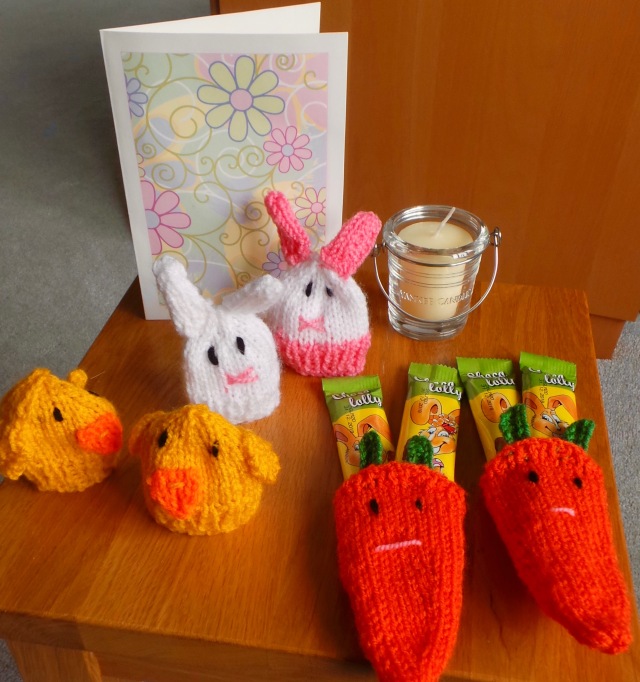
The plonk of a parcel landing on the hall floor startled me from my writing reverie and with the eagerness of a child I dashed downstairs and fetched the promised package – these wonderful Easter creations knitted by a dear friend. During the winter months she’s been beavering away in the evenings with family and two lively cats around her and finally her collection was complete! What a lovely and kind idea to share these chicks, bunnies and carrots with family and friends! What a beautiful way to spread Easter sunshine to us all! 

For two weeks I’ll be enjoying the peace and beauty of our ‘retreat’  in Sweden, away from the busy bustling world, barely connected to its digital being. 

20170328_114225

I look forward to walking the land in the cold mornings, the freshness of the air biting my lungs – a sting I welcome as I inhale the crisp ozone air scented from the surrounding pine forests. The dew on the grass will be bathed in sheer white frost, crackling underfoot and dotted around I’ll spot tracks of nighttime visitors of rabbits, badgers, foxes and deer. This early communion with nature has been sorely missed! 

20170328_114441

Whilst on holiday I will heed the words of Thalia Gust’s latest poem, rejuvenating in the beauty of the natural world, bringing my full awareness to the sights and sounds…leaving those ‘Musts’ behind.

MUSTS

What is a Must 

when Cherry blossoms shimmer,

What is a Must

when the skylark sings,


What is a Must

when garden turns

        yellow, white and blue;


What is a Must

when the wind plays in the Willow

What is a Must 

when I sit on favourite bench,


Wren and Robin nesting

in bushes that surround.


I left Musts behind today

threw them in the river.

© Thalia Gust

I hope to be on Twitter some, a little on WP but otherwise want to wish you all an enjoyable and peaceful Easter!

20170329_094718

A Winter’s Walk

20170122_102009

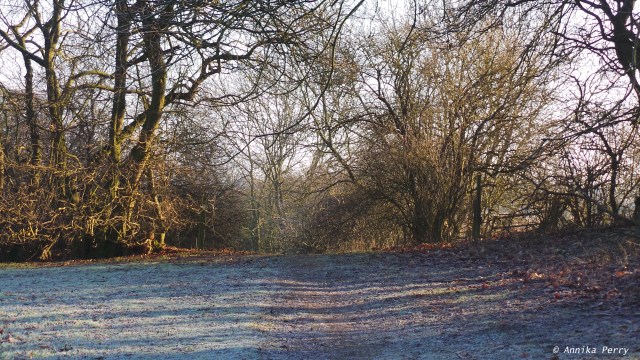
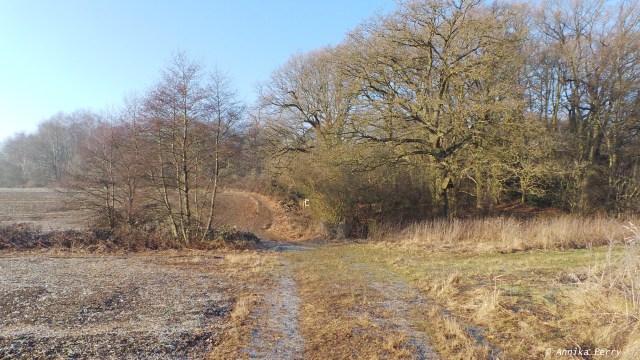
 Picture perfect winter days have been few and far between this season and when they do deign to appear I’m like a child again, eager to step forth into the white hued countryside, to inhale the crisp icy air, to stomp on the frozen puddles and lakes sending ripples of cracks zigzagging along the ice.

On my quest one sunny Sunday I join my son on his regular long (ie. very long for me) walk through the local nature reserve, across the fields to the local town. A new route for me as I’ve only taken the road there but trusting his navigational skills, I duly follow!

The nature reserve is a lush wood with a few smaller lakes and a central flat grass area with picnic tables dotted around. It is a hidden gem and luckily only twenty metres or so from our house. It has not always been a protected area of natural beauty however and until the 1960s it was a sand and gravel quarry – not too successful by all accounts as the American airforce considered the quality of the product inferior and was unable to use the gravel and sand from here when building the runway at the local airfield. After its closure the quarry became unflatteringly known as the ‘Pits’, the holes filled with water and some fish were introduced for anglers. It remained bleak and barren until adopted by the village in the 1980s and today it is managed to a high standard.

20170122_101655

As  I cross the level plain I glance again – after all is this snow or white sand? It’s deceptive in this play between light and shadow, my eyes blinded by the sunlight.

20170122_103032

Again the mystery of light enhances my feelings of the mystical as I look into the woods, recalling the old-time sagas, remembering the Nordic myths…I almost expect to witness a troll staring back at me and after a pause, a shrug, continue on the walk, my disappointment palpable and real.

20170122_105401

What is it about paths that just beckon to be explored? Where could they lead? There are so many to choose from, I want to veer off, investigate further but my son leads the way and dutifully I follow, musing. Paths. Like the ones out here in the wilderness (of sorts!), life offers up many diverse paths, opportunities and various factors determine which ones we choose to follow, which ones we perhaps return to at a later date, which ones…I realise I’m dawdling and hurry to catch up, my reflections forgotten, as I carefully traverse the rough ground. 

20170122_101528

Frozen in time the leaves, solid in their white coats, catch my eye, their gold, amber and brown colours cloaked in frosty layers. Striking in their unusual state it will not be long before the warmer air frees them from their enhanced beauty and as the soil turns to mud they’ll gradually mulch into the field, another state, another time.

20170122_102427
The bridge, at times flooded from the troubled waters of the stream flowing beneath it, is a safe crossing for us this time and the tractor’s tracks of upturned mud are frozen into solid peaks and troughs. I step gingerly in between them.

20170122_101745

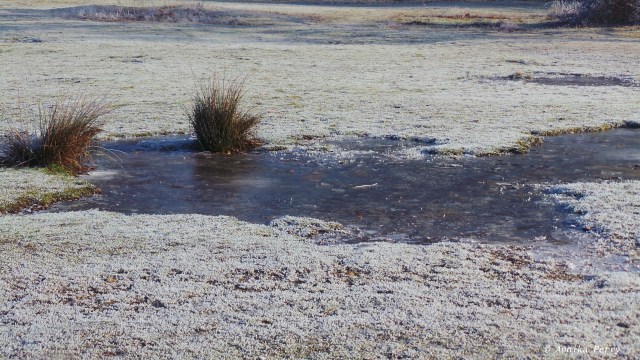
The pools of water are scattered across the plain, their surfaces covered with fragile thin layers of ice, like the veneer we often display to others, the false confidence, joy, certainty. Like the ice here, so easily shattered, transitory.

Good fun memories flow come to mind; of my toddler son jumping with glee on the ice, winter suit wet and muddied, of stick battles with the frozen puddles, swishing huge pieces of two inch thick slabs of ice across the slippery grass, an alternative version to ice-hockey. Memories so much a part of us, part of our past and our present and even our future. 

Content, exhausted, refreshed I return home…like the child of the early morning I long for a hot chocolate and biscuit break – the only difference is now I’ll be making them!

‘I was sorry to hear my name mentioned as one of the great authors because they have a sad habit of dying off. Chaucer is dead, so is Milton, so is Shakespeare, and I am not feeling very well myself.’  Mark Twain

GHOST CRABS ET AL

img_2259
‘Hey folks! Have you got the photo yet? I’m getting pretty bored with this posing lark!’

I noticed the  perfect round holes first. 

What lived in these burrows visible across the beach? Soon after I began to catch glimpses of the elusive crustaceans as they scuttled across the sand and as if leaping, disappeared into their holes.  Impossibly so,  I felt as the crabs were far broader than its habitat. Intrigued I wondered about their appearance, colouring. Not the usual dark brown crabs from the North Sea coast, that much I could see. 

Then one morning one of the mysterious ghost crabs obligingly paused by its burrow and looked up. Its expression was priceless; slightly disarming, slightly grumpy. It stayed still. Waiting patiently as camera phone was found, put on correct setting, sun glasses removed in order to see the screen. Ready at last! The black piercing eyes were unmoving, its shell pale and almost translucent. In contrast the legs shone with gentle light golden hues, furry-like at the tips. The two claws were of uneven size; a characteristic of the ghost crabs – so named for its pale complexion and chameleon ability to blend in with its environment and the shading of the body adjusts according to the time of day.

20160823_130555

The first morning I was mesmerised by a flock of large birds swooping and gliding across the ocean. Five clearly visible although other days up to eighteen would fly across the water close to shore. Suddenly one dived into the ocean before quickly reappearing. What were these majestic birds? Soon I had my answer. Pelicans! I was in utter awe; before I had only seen Pelicans in zoos. It was a joy and privilege to view them on a daily basis in the wild.  Often during meal times three pelicans would pass within two metres of our balcony, their heads and wings clearly visible. An awesome overwhelming sight and we sat in silence savouring the experience.

img_2247

One particularly elegant and regal bird was a constant visitor on the shores, purposefully striding along the waters edge, its crisp white plumage gleaming in the sunlight. Always keeping its distance from each other, the little egret, a type of heron, occasionally bopped its black beak into the wet sand before moving on with its striking yellow feet. Time stood still as I watched the egret; sheer peace and harmony. The only time it seemed bothered was as the wind increased following the hurricane and then it tucked its head snuggly against the body, seeking lee within itself.

20160831_140801

This slideshow requires JavaScript.

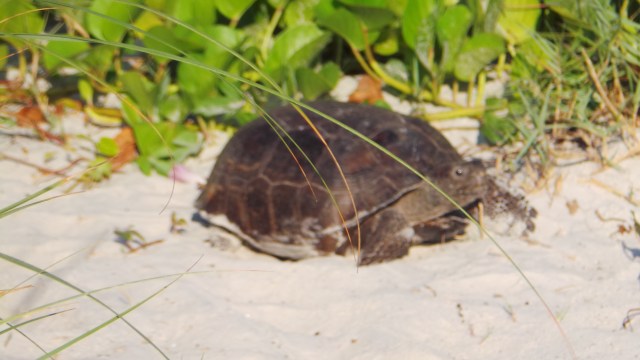
Partly hidden under the bottom wooden stair down to the beach, the turtle’s head stretched beyond the step. Oh no! It should have returned hours earlier back to the sea but then I saw its injury, a large chunk of shell lying by its side, no doubt attacked by the seagulls during the night. My heart went out to the poor animal. After our walk it was still on the beach, but heading in the right direction. Later it had disappeared, hopefully after making its own way to the sea!

img_2176

img_2180

Geckos galore! That is the only way to describe the paths around the condo building by the car park as geckos of all sizes crowded the paths. I had to keenly observe the path I walked along, particularly as the baby ones were only a cute centimetre long!

img_2309-1


20160830_002724

The sunlight sparkled from this alien orb on the sand; hypnotic in its strange beauty. Was it alive? The answer I found out was no as this was the the ‘jelly’ remains of a jellyfish. Called the mesoglea, this is the last part to decompose when a jellyfish dies, usually after being torn apart by fish, turtles or rough weather. It doesn’t sting but not knowing that at the time I wasn’t taking a chance!

img_2215

Butterfly clams were a delight of tiny proportions. Visible briefly as the waves washed over the sand, the butterfly clams use the water to move around on the beach before quickly burrowing themselves again. This recurrent movement is known as the “dance of the coquina”.  Although it was difficult and rare to catch sight of the clams themselves, their shells were scattered across the beach and the child within me eagerly collected a handful of the 15-25 mm empty shells.

clam
Image from Google

Finally, a mystery! These little birds were a common sight on the beach, pecking away at the sand along the water’s edge. They were among our favourite animals in Florida, so cute and particularly endearing as with each oncoming wave they would dash quickly away up the beach, their little legs stepping so fast. Despite numerous conversations with other walkers along the stretch of coast we became no wiser as to what these birds were actually called. Can anyone help?  Below are my first attempt to upload my own videos from Vimeo – fingers crossed they work!

I hope you have enjoyed the visit to the animal kingdom from New Smyrna Beach; my next post will visit the bricks and mortar of the towns in the area.

Unless specified all photos copyright © Annika Perry

DISAPPEARING WORDS

farmers.3

Acorn. Fern. Cygnet. Everyday words. Or so you would think. Words that belong in everyone’s lexicon. However, along with bluebell, pasture and willow the Oxford Junior Dictionary has deleted these words from its books. Discarded, like ashes in a burnt out fire, they scatter on the breeze, taking flight, flying further away from us. 

As our youngsters increasingly reject the outdoors, the woods, fields, streams and gulleys, words relating to the environment are becoming redundant, replaced by ones of the digital world. Welcome to blog, broadband and chatroom. Welcome to the insidious destruction of our language; an incalculable loss that will only be felt, appreciated and mourned much later.

Our landscape is being replaced by cyberspace and in the process we are failing to see that the rocks and stones and trees ought to remain ‘an active and shaping force in our imagination, our ethics, and our relations with each other and the world’, according to Robert Macfarlane, Fellow of Emmanuel College, Cambridge. In his book, ‘Landmarks’, he stresses that ‘words do not simply label an object or action, but in some mysterious and beautiful way becomes part of it’. 

He particularly points to the regional variations of language relating to nature and the environment and in his book aims to preserve the words and dialects of fishermen, farmers and foresters across the UK. Words that have been eroded by time. As in the Aboriginal tradition in Australia of song-lines, he sees these words as our ‘song-lines’, the soul of the people and the country. 

Here are some of the words Macfarlane found during his research; enjoy their poetic finesse, their keen sense of onomatopoeia, their play on variation of ordinary words. Personally I have relished saying these lost words aloud – breathing life into them for one fleeting moment. My particular favourite is perfect for those moments of sharp sudden pain of a stubbed toes: ‘crottle!

  • aquabob             icicle                     Kent
  • shuckle              icicle                     Wessex
  • clinkerbell        icicle                      Cumbrian
  • wonty-tump    molehill               Herefordshire
  • may-bobs          Marigolds           Herefordshire
  • Nurped                freezing              Herefordshire
  • pank                    to knock or shake down apples from the tree              Herefordshire
  • crottle                 animal dung
  • doofers               animal dung
  • turdstool            animal dung
  • wind-hover       kestrel
  • bell-hawk          kestrel
  • urp                      cloudy with large clouds    Kent
  • Spronky             having many roots               Kent
  • Roarie-bummlers    storm clouds ‘noisy blunder’        Scottish
  • wewire                to move about as foliage in the wind   Essex
  • èit                        placing of quartz stones in moorland streams so they would sparkle and attract salmon.                                     Gaelic
  • báini-báini         used to call pigs                                           Irish

We all have a responsibility to counter this linguistic doomsday. Language is our responsibility; use it wisely, widely and with abundance. Its rich and varied existence depends on us and us alone. At risk is a verbal uniform blindness, the unforgiving norm.

‘Language is the light of the mind.’

John Stuart Mills. 

roots

HOMEWARD BOUND

WhiteFlowers

And soon it’s time to say good-bye.

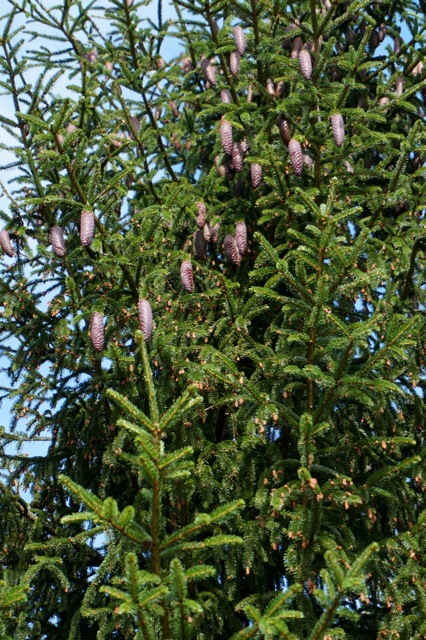
PurpleConesMy eyes never tire of staring in awe at the towering trees, examining the clusters of purple pine cones hanging forty metres above my head. My eyes never tire of looking across the landscape, into the far distance. My ears never tire of the songs from the small birds assembled beneath the feeder, never tire of the haunting cries of buzzards and falcons, their calls echoing for miles around.

How could I tire of that which has become an integral part of myself? The nature has enveloped me, cosseted me and its tentacles has spun around my spirit. Now my soul stretches and fills across the landscape, flying and interweaving with the rustle of the leaves; taking its place in this world of serenity.

Thus refreshed and re-energised I return home.

A small gasp at leaving, a tantalising tug at my heart strings – stay – but I long for my home, my husband, friends. I long to return to my writing again. Like a child at the beginning of a new school year, I wait expectantly in the playground, hopping from foot to foot, skipping around eagerly for lessons to start (yes, I was one of those children!).

As a result of much reading (more on this in later blogs) and of much thought and note taking I now feel confident to return to my first draft and complete it this year.

Reading numerous short stories and anthologies has given me a renewed desire to resume short story writing again and to return to competitions.

As my brain pace entered a gentle walk mode rather than frantic gallop I scanned new competitions with fresh vigour and creative ideas blossomed, little seeds of suggestions that I hope to carry to fruition.Moon:Sun
It’s good to be back, ready with pen, paper and keyboard. Thank you to the elk that bounded in front of our car along the track. For a heart stopping moment life was majestically sublime. Thank you to the badger I spotted strolling across the land one morning, its giant mass surprising and awe inspiring, its saunter so certain and determined – what, we think we own the land? How mistaken are we. Thank you to the deer leaping with grace across the meadow full of flowers. Thank you to the foxes, giant hares, birds, fishes, flowers, ferns, trees. Thank you to the crisp morning air, to the warming midday sun, to the sparkling blue of the lake and sea. Thank you for this wonderful gift. Of life, renewed creative spirit and inspiration, increased mental and emotional power.

Thank you all for reading and supporting.

I look forward to reconnecting with you, catching up with your posts, writings, making new friends and to sharing thoughts, ideas and experiences in the months ahead.