Note: This is a post that was published earlier in 2018 and which I recently has somehow ended up in my draft box!! I have no idea how this is possible but wanted to return it to my blog along with its 80 likes and 160 wonderful comments! Thank you everyone again!
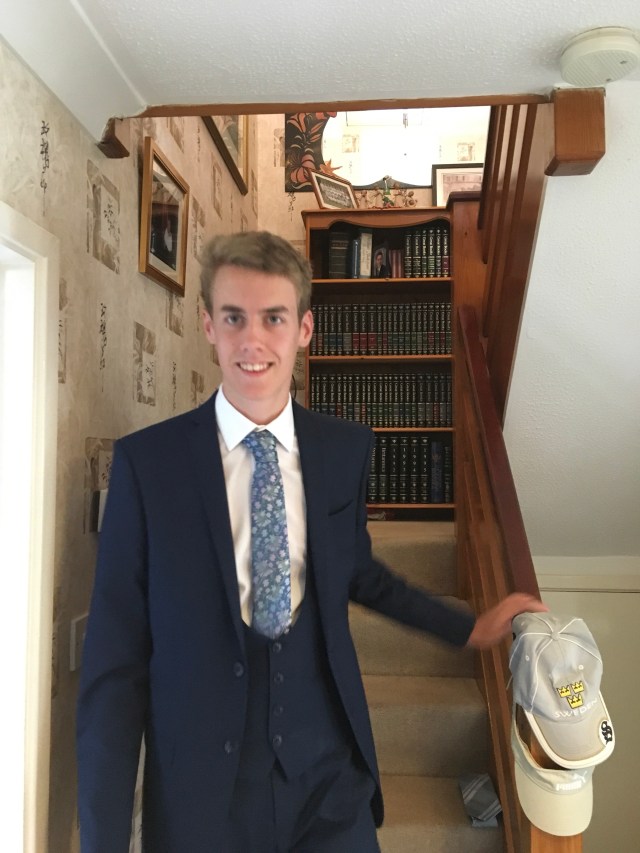
Sammy, I know you have studied music for a long time, since you were ten I believe. I have even had the great joy to listen to your performances both at your home, at school and in Covent Garden in London.
To me your music always express so much vitality, joy and sensitivity and I often wondered where it would take you as you grew up and took your own place in life.
Would it become your hobby and the sciences your priority? Would it become your hobby and the sciences your priority? I guess you still wonder yourself.
So Sammy, you have surprised us all by creating your first single, “MY FRIEND” whilst still 16. I am enthralled with it, its advanced musicality, its depth and also the sad but yet comforting lyrics.
I feel honoured to do this first interview with you and without further ado, we dive straight into our chat.
When did you first think about writing your own music? Was there a moment that stands out?
Sammy: I got serious about writing my own music whilst in Sweden last summer. I was walking through the forest up to a viewpoint; standing at the top, listening to “Without You” by Avicii and felt a strong inspiration to start creating my own music in a way that would make people feel the same way as I did at that moment.
When did you start creating “MyFriend”?
Sammy: I believe I started composing that in November 2017. The first thing I messed around with was the piano chords and melodies which I recorded on my phone. Whilst trying to figure this out I also was working on the lyrics which was by far the hardest part of the process for me.
Would you mind giving us an idea of what inspired this song?
Sammy: The main inspiration for this song came from both my own experiences and those that my friends had and told me about. This song was also inspired by helping friends through hard times in their lives and wanting to help in any way possible
You are a pianist so I wonder how you created all the harmonies and layers to orchestrate the song in production?
Sammy: There was a lot of trial and error with choosing the instruments and percussion sounds. Most of the chord progression and melodies the instruments are doing; such as bells and violins, echo what the piano is doing so these were quite easy to produce. I had more creative freedom with the drums because, although there was trial and error, I had a lot of fun composing the drums in a way that made the piano and vocals stand out and sound more interesting.
Are you working on any new song and if so would you mind telling us about your plan?
Sammy: I am already half way through composing my next song which I plan to release some time in May or June this year. I don’t have much more to share at this point.
Sammy, is there anything else you can add about your music and how it makes you feel?
Sammy: The response from people listening to and hearing their opinion and reaction to it has been overwhelming and makes me more confident and excited about releasing more in the future. I am very happy with the way this song has turned out and my hope is that people will continue to enjoy the song in the future.
Thank you, Sammy, for letting me do this for me unique interview. It is a first for you and for me so it is pretty special.
Sammy: Thank you for having me and I have enjoyed answering all your questions.
Wow! I felt like a movie star as I left the school, a large bouquet of flowers nestled in the crook of my arm. My mind was spinning, my heart was light with joy. I’d just had a most wonderful afternoon with a group of creative writers at a local school. Aged from eleven to fifteen, the eighteen students were brimming with questions, ideas and originality. Their enthusiasm knows no bounds (a soaring and liberating sensation). From my talk below the top tip that remained with the students afterwards was to ‘Write from your Heart’ – one couldn’t ask or hope for more.
Here is my talk to them in full for your perusal and if new (or not so new) to writing I hope it can inspire you and your work.
♦♦♦
A heartfelt thank you for the invitation to meet you all today. I’m thrilled to be here and can’t wait to learn more about all of you and listen to some of your work.
First of all, how did I become an author?
Writing has been my lifelong passion. Just as I cannot imagine a life without books, nor can I imagine a day without writing. An inspirational teacher at primary school instilled in me the joy of creative writing and I haven’t stopped since. Writing became a way for me to paint with words, layering them for texture, using bold dramatic language on occasions, other times capturing the gentle nuances of a moment with subtle word play. It is an art form, that can be crafted, shaped, moulded to an endless variety of formats.
Three years ago I had the opportunity to start writing seriously and a well-established writing course gave me guidance on developing my writing as well as advising me on how to become published.
There are countless short story competitions available and entering some of these was my first port of call. I bought the magazines, studied their stories, and also, this is critical, read the rules to competitions. It baffles me how many fail to do this!
Very soon I won first prize in a Writing Magazine short story competition and the success of ‘Biding Her Time’ proved to be the confidence booster I needed.
I quickly developed a love for short stories and I delight in crafting them. They require clarity, conciseness whilst not being abrupt or missing out on the artistry of language and they can often be a form of character study. Every word has to count!
I draw inspiration from all around me — conversations, everyday experiences, and even news items. If an idea strikes me I make a note of it as soon as possible; after all it’s proven that ideas can float in and out of our consciousness within three seconds. If a notebook is to hand, I’ll scribble in that, otherwise I’ll tap away on the ‘note’ app on my mobile.
I’ve kept journals since young and they are a quiet meeting place for me to jot down my thoughts, ideas, concerns and story possibilities in private; never to be shared or scrutinised. I return to some of these at a later date and sometimes find a gem of an idea for a story, poem or even article.
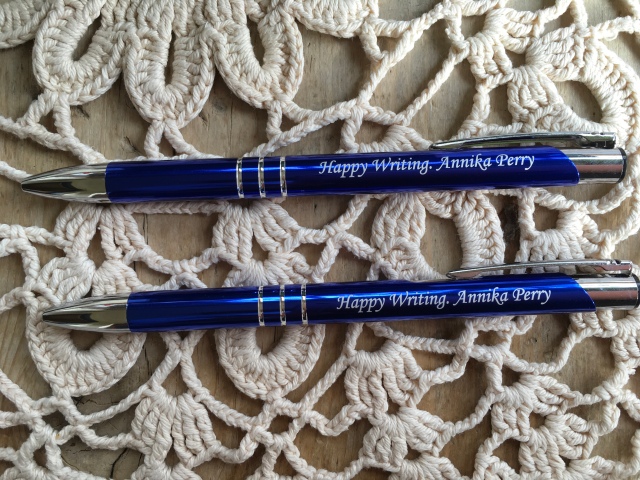
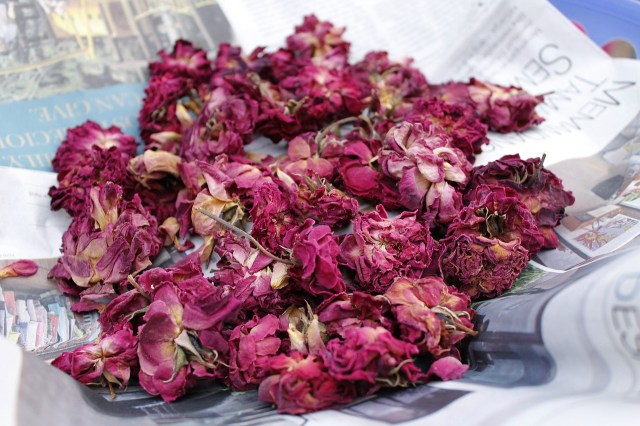
A small memento of my visit for the students. May many new stories be written with these.
The first line of a story is critical to me. Once that is in place the rest of the writing flows. It is as if someone is ‘dictating’ the story, it becomes organic and takes on a life form of its own. Subconsciously I will be writing away, the first draft always on paper, and many times I will be wonderfully surprised by a twist in a story or the strength of a minor character forcing their way to centre stage. It is a magical surreal experience and one that can last for hours.
The voice of the piece is a major factor in writing. I feel there are always two voices.
Your voice as the writer must be just that — YOURS. Be true to yourself when you write; this is what makes your writing original and enables it to shine out.
The voice or point of view of a story can vary. Will the point of view be first person, which is often more immediate and direct? Or will it be in the third person, which allows you more scope to examine events beyond just one person? There is also the option of the second person – you – format which I experimented with in one of my short stories. Of course, many books feature multiple points of views and it is important to make each distinct and at all times clear whose head you’re in!
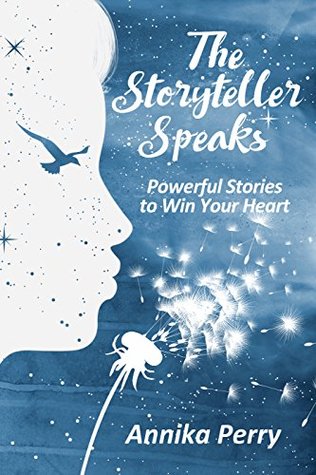
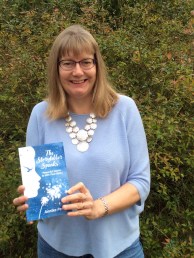
Although I have printed a one-off edition of my earlier childhood work and also been featured as part of my writing group’s anthology, ‘The Storyteller Speaks’, is my first published book. I was encouraged to publish some of my short stories in a book by the readers of my blog.
My blog was set up following the recommendation by my tutor for the need of an online presence! As a result, I have made wonderful friends across the globe and also connected with people within all aspects of the publishing industry. Through this networking, I ‘met’ the cover artist for my book who lives in Australia and a company in Ireland provided extensive formatting support.
Furthermore, I increasingly use Twitter to interact with readers, writers and publishers.
Planning a novel is not something I’d considered before I started writing mine a couple of years ago. ‘Island Girl’ is now in its final editing stages and I recollect its early days with fondness. Then, as with much of my writing, I set out to write it with just the backbones of a few ideas, themes and setting.
However, my time-line was slightly array, details of my characters and places were forgotten from one chapter to the next. It was a lot tougher keeping control of all the elements of a full-length novel. Quickly I developed various techniques to avoid future faults.
One way to spot both grammatical errors and glaring mistakes is always to read your work aloud! Since it is a lot to expect to read a whole novel aloud I started using ‘Natural Reader’ app.
Various writing programs are a huge benefit.The free online thesaurus is always open on my tab as I’m working. Similarly, a grammar program such as ‘Grammarly’ helps me to fine tune work, but I never automatically adopt its suggestions. I write on a software program called ‘Scrivener’. This acts as a virtual binder and allows me to plan chapters, look at my ideas on a virtual corkboard, include research documents, as well as writing the novel chapter by chapter.
Not content with writing short stories and a novel, I have also completed two children’s books.
What other advice can I give?
Throw yourself into writing and relish the experience! Find the magic within you and share it! Write from your heart! This may be easier said than done, if like me, your head tends to rule. Don’t disregard your mind but just don’t overthink.
Once you’ve finished a piece, and this can be tough, put it aside for a while. Returning to it with fresh eyes will be key to the next stage; editing. Here engage that brain, tap into your creativity, look out for ways to improve your writing. Perhaps you’re ‘telling’ too much instead of ‘showing’? Not only is it more enjoyable for the writer to show through their writing, it will lift your story.
Never underestimate the effectiveness of dialogue to carry a story forward, to show emotions, even description. It’s striking when you can have a sequence of speech without the ‘he said’/‘she said’. Try to avoid always using adverbs with these; the anger etc should come out in the language where possible.
Never be afraid of feedback of your work; after all we learn through constructive criticism. Also start to read your own written work with a critical eye when necessary.
Play around with your writing. Writing outside one’s comfort zone is a great way to bring new life into your work. Try another unusual genre. Shift your work around — explore new vocabulary and if writing fantasy, maybe even make up a few new words of your own! Use different tenses, viewpoints. I felt a sense of liberation writing from a male viewpoint in some of my stories and using the present tense brought a welcome sense of rush and urgency to them.
When not writing, read lots! Not just in one genre but across the board. It’s a wonderful way to learn. See what works well, and also look out for writing that falters, flatlines … learn from other’s mistakes.
When you start a new piece of writing, remember that this is your first and rough draft. If you wait to write down the most I and absolute best version of your work you may never start at all as you will feel inhibited before even writing a word.
Write with your Ideal Reader in mind — recall your own emotions and feelings when you are swept away by a story. There is nothing quite like escaping into another world; when the present real-world fades to that of the fiction. My dream has been to recreate that experience for all my readers — and hopefully I have. Make your characters three-dimensional, so real that neither you nor the reader wants to leave them!
Through the nitty-gritty of writing, the joy and power of creating worlds, characters, stories should never be underestimated.
As one famous writer said of short stories: ‘(they) are tiny windows into other worlds and other minds and other dreams. They are journeys you can make to the far side of the universe and still be back in time for dinner.’
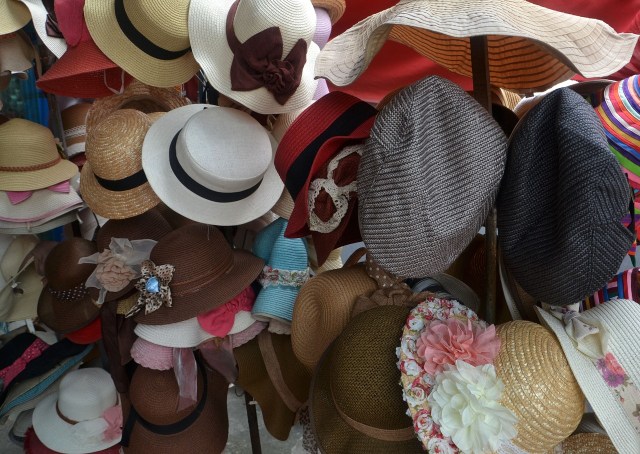
This was Jensen’s tenth hat in as many weeks. The first, a cranberry felt Fedora lasted only a few days, before being replaced by a grey knit Beanie. He’d learnt a new word that time … Beanie and it had looked as inane as he’d imagined, even after he’d cut off the wobbly black bobble. His two ears refused to be tethered beneath its soft surface. Like two aircraft landing light beacons his ears poked out from beneath every imaginable hat.
Jensen had high hopes for the dark blue navy trilby with a feather tucked into its suave red band. His expectations were of course in vain. The tweed flat cap was anything but fashionable on his pathetic head. It rested neatly on the top, “a perfect fit”, the shop-keeper declared. What he did not say, did not need to mention were the ears, coming up and over the cap, stroking its sides. Nothing would hide these atrocities.
“Buggerlugs!” they’d yelled at him at school. All those years ago. He’d tried to laugh along … at first. He’d even tried to take the daily abuse as a joke but failed as the non-stop flicking of his ears dragged on relentlessly for three long years. Every month his grotesque ears seemed to sprout further from his head. The fourth year offered respite as a new and younger pupil started school, a new ‘Buggerlugs’ for his tormentors to feed off.
Jensen thought it was all over these last thirty years, that the school days were filed away in a remote recess in his brain, never to be accessed again. Until the luncheon at The Ivy eleven weeks ago. With his usual Moss Bros striped shirt and his long grey trousers he’d walked proudly into the coveted restaurant. The bar at the centre gleamed and glistened, the stained glass windows lent a mystical reverential aura to the meeting with his agent. Relaxed they’d chatted away until he spotted Slater. Two years his senior at school, an expert at delivering taunts and injury, Slater now sat at the next table. Jensen continued to sip his whisky, taking in the grown man that had been his persecutor. Dapper in a navy striped suit, Slater’s hands swung back and forth as his procrastinated with vigour and brashness. Slowly sinking into his chair, drink clutched tightly in both hands, Jensen hoped Slater would not spot him. No such luck, as with a curt nod, his adversary mouthed a greeting. Surely it couldn’t be! He couldn’t have said it! “Buggerlugs!”
Eleven weeks since the fateful meeting and the eleventh hat. Jameson whisky had become Jensen’s best friend and his head was reduced to a fug of memories. With shaking hands he reached for his most recent acquisition. So many had been discarded in disgust as they proved mediocre for their main purpose – to hide his blasted ears! A baseball cap was quickly disregarded, the beautiful cream coloured Panama hat had been sent flying across the room. The straw hat held such promise of summer days on the canal, however once in place it not only accentuated his ears but his shiny forehead too.
This last purchase was perfect, Jensen was sure of it! The tweed deer-stalker, as worn by the infamous fictional detective Sherlock Holmes, had adjustable earflaps … no need for his ears to be visible in public ever again! It was the only answer he felt, apart from taping down the abominations on the side of his head. He’d tried that once when young but the beggars refused to be tamed and flamboyantly sprung up and out for inspection.
“Sir looks fine in this,” insisted the shop-keeper.
Jensen checked in the mirror again. What a lying…
“Jensen? It’s you, isn’t it?”
Slater, shifting warily from one foot to the next, stopped in front of Jensen. Slater was no longer so dapper, his shirt partially out his trousers, his hands clenched nervously.
“I never forget what we did to you. I tried to tell you there, at The Ivy, when you rushed out. So Sorry! For Sorry! I deeply regret our, my behaviour…”
Jensen smiled, then waved imperiously as if swatting away an annoying bug. With a small push and shove with his shoulder against Slater, Jensen walked to the shop counter. With a ‘harrumph’ he sent his latest hat flying onto the wooden surface, calling out at the same time to the shop-keeper.
“I’ll no longer need this one. Nor the others. I’ll return them promptly and expect an immediate refund. No more hats for me!”
A heartfelt thank you to everyone who has read and/or reviewed my book over the past couple of months.
It’s amazing to read your thoughts about my collection through your comments and reviews!
Reviews are the ultimate gift for authors and the latest one on Amazon for The Storyteller Speaks was the perfect start of the month for me!
Overwhelmed with joy, I read it over and over and was touched how Lauren Scott managed to bring in so many aspects of my stories and poems. My warmest thanks to Lauren for her wonderful review and for letting me share it here on my blog.
‘A COMPELLING DEBUT BOOK!
The stories and poems in Annika Perry’s debut book are indeed compelling. Each one evokes various emotions from everyday life.
I’ve followed Annika’s blog for awhile now, so I wasn’t surprised at how wonderful the final outcome turned out to be. The cover alone is stunning! She has her magical way of playing with words to pull the reader in, but keep one hanging on until the end.
However, not all of her writing in this book is lighthearted; some is pretty dark. There were times when I smiled, moments when I was horrified, and occasions for tears. The beauty is that with each turn of the page to a new story or poem, the reader is pleasantly surprised.
With this being said, it was difficult to choose favorites, but I managed to pull out a few: Chillies in My Handbag, Bouquet of White, A Rare Passion, Stars of Wonder, and Loss of a Patriarch, which personally resonated with me because of my father’s passing last fall.
Another bonus to this creative compilation was the About the Stories section at the back of the book. I really enjoyed reading how each story was born.
Overall, anyone who chooses to read this wonderful collection of short stories and poems will not be disappointed. This was a wonderful start to Annika Perry’s writing journey, and I’m sure I’m not alone in anticipating new publications from this amazing author.
5.0 out of 5 stars
by Lauren Scott’
If you want to check out The Storyteller Speaks it is available here at Amazon US or Amazon UK. Thank you so much!
Lauren Scott blogs at Baydreamer and this is her ‘space for sharing poetry and photography, and for initiating occasional discussions.’ It’s always inspiring and heart-warming to read her posts and chat away via comments. Do pay her a visit!
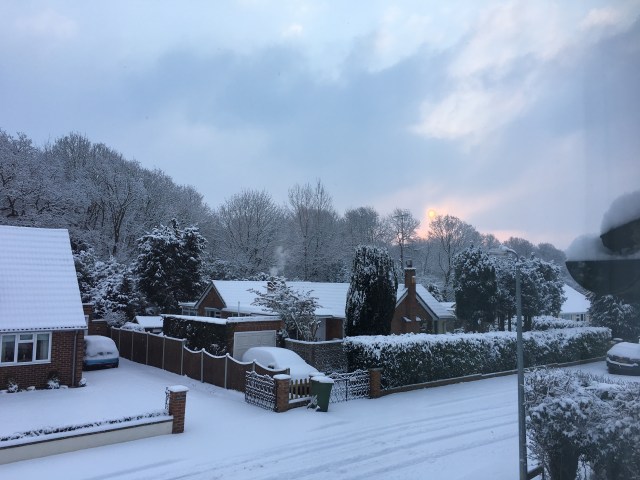
What is it about snow? Just as it has the power to cause chaos, this quality brings along unexpected peace and harmony. Waking to the promised sub-zero temperatures, the snow view from the bedroom window was stunning.
Heavy clouds shimmered in their purple hues, ladened with more snow. Through them pierced the morning sun, a thin spotlight of warmth, a glimmering sign of a new day. Ethereal colours danced all around.
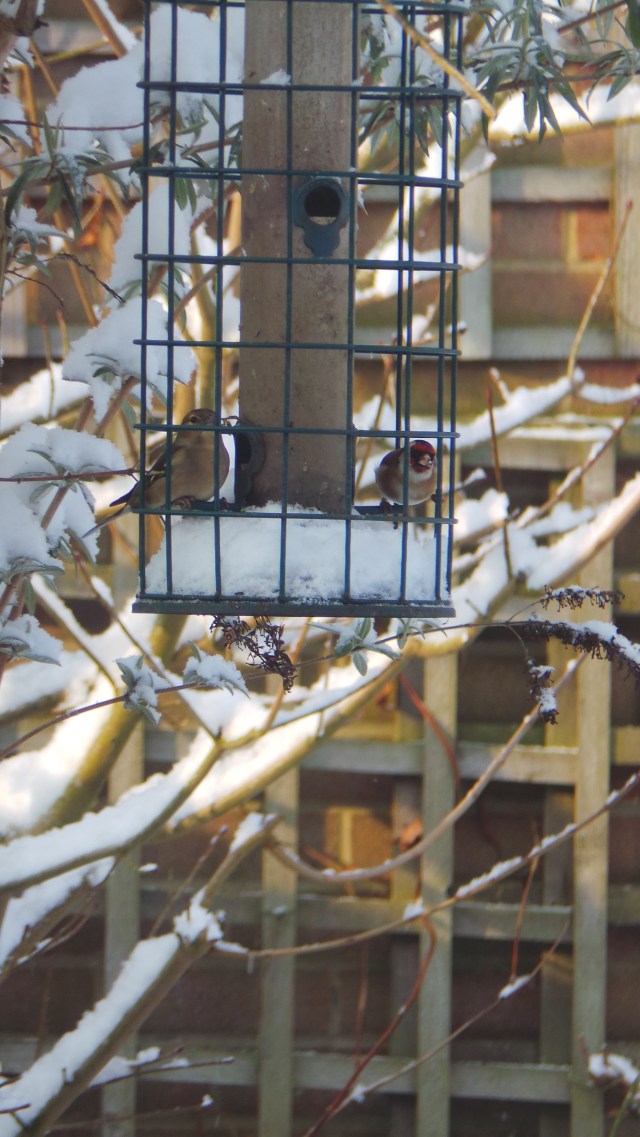
Outside the birds flocked thankfully to the full feeder, and with quiet gratitude I watched their morning repast whilst contentedly eating my own. A breakfast usually rushed for work and school took on a life of its own and was one that just did not want to end. Ninety minutes later my soul was satiated from the busy flutterings, my stomach was full with berries, yogurt, granola. The outside beckoned!
With perfect timing the sun appeared as I strode around the nature reserve. Total and absolute silence, apart from the satisfying crunch of snow with every step. The crushed implosion seeming to reverberate across the landscape. Otherwise not a sound. No birdsong. No a single car engine noise. Just a few solitary walkers, some children on their sledges and snow scooters.
Gently winding its way round the wood, I follow the path from memory, gazing across to the small lakes. Their frozen surface is not one I’d trust to walk out on, however tempting!
Ahead, a welcoming bench is covered in white and the usual seat for contemplation is reluctantly passed by … until another warmer day!
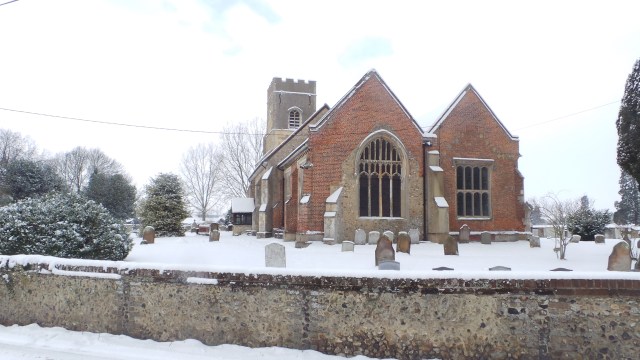
The church stands out gloriously in its winter setting, a perfect Dickensian feel and it’s timeless nature makes me stop in awe. A church on this site since Norman times, the additions are clearly visible. Recalling the stained glass windows from Ely I’ve always wondered what happened to the ones here. Later I learn they broke and were never replaced with such wonders, alas!
As I turned to home, the walk suddenly became a trek across the arctic tundra, a howling bitter wind fought a battle across the landscape. With my head bowed and fingers riddled with frost bite (or so I imagine) I slip-slide my way through the soft depths of snow, gazing at the ripples of white powder, perfect peaks across the fields. I trudge on wearily, relentlessly, the thought of a welcoming hot chocolate whinching me home.
Jill Weatherholt set us a lovely challenge on her latest post and one I was immediately tempted to carry forward.
She linked to a POSTwhich was one of her favourites to write and did not relate to the number of likes, comments or views.
Jill’s favourite post celebrated friendships and particularly nicknames. It was impossible to forget her ‘Jilly Bean’ nickname acquired at college. In my response nearly two years ago, I mentioned that I felt neglected at school as I was only ever only known by my name. At university this changed. Finally, I gained not only one nickname but a ‘fair collection’ as I’d written to Jill. I was quietly chuffed! Even if they weren’t the most flattering.
Of course, my Swedish heritage was picked up early on and many letters from my best friends started out ‘Turnip-Top’! During my first year, stress and poor diet resulted in some hair loss. Not one to keep shtum I mentioned the strands of hair collecting on my hairbrush. After a few weeks my nicknames had extended to ‘Yul’ (actor), ‘Duncan’ (swimmer) and ‘Sinead’ (singer) – all whose common factor was their baldness. I was not reassured but learning to laugh at myself taught me an invaluable lesson.
Now, to Jill’s challenge. Would we do the same? Think of our favourite post and write about it. How could I refuse?!
With nearly two hundred posts over three years, whilst not burgeoning, this is not an insignificant number and would be unwieldy to glance through on WordPress. Luckily I have a shortcut in place!
Every few months I have been saving my posts on Scrivener. This started out as I never could work out how to save the blog and I am slightly paranoid that all the work will just disappear in a jiffy! I spent a contented hour scrolling through my posts, creating a shortlist of ten before narrowing down a winner!
Apart from writing, I enjoy throwing myself into research. Posts which require a lot of information harvesting and sorting, before collating into an article accompanied by photographs are pure bliss!
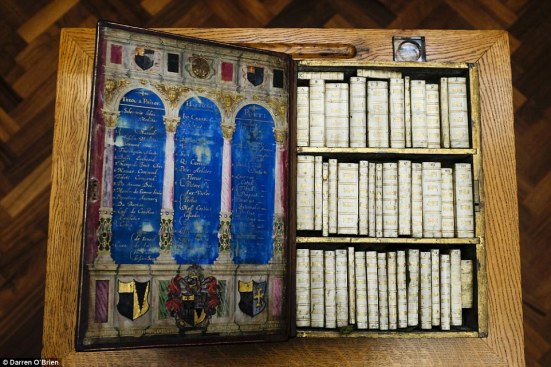
The 17th-century Kindle post ticks all the boxes. First and foremost, it’s all about books and tiny ones at that. Secondly, they are very old and delicate ones; my imagination was captured by the idea that someone created a portable library all those centuries ago – hence the Kindle in the title. Thirdly, the research was intricate and fiddly whilst the images served up a colourful visual feast. What wasn’t there to savour? I hope you enjoy reading the post as much as I did writing it! As this was posted in my early days of blogging it should be fresh and new to most of you. HERE is the full post.
Finally, I might be a bit absent from blogs in the next couple of weeks as I am not only continuing with my writing work but have also received an invitation to talk to a creative writing group at a private school. I was contacted by them following my recent newspaper interview which is available to readHERE.
As I’m preparing my talk, I’m gradually conquering my initial terror at the thought of the school visit and now look forward to chatting with the very keen and enthusiastic group of 11-16 years-olds as ‘an inspiring author’. Having heard briefly about their terrific work, I have a feeling it will be an afternoon of mutual inspiration.
I hope you have enjoyed my personal reflections and the link to my favourite post and that you will consider joining in and share your favourite blog post and explain why you chose it.
Just in case you might have forgotten (I know, how is it possible!) my debut book, The Storyteller Speaks, was published earlier this year. The ebook was released mid-December.
As the whirlwind of promotion is calming I want to share some of the lovely people who let me visit their blogs.
One of the first ones was Denzil over at The Book Owl. His searching and insightful questions had me pondering as amongst many queries, I answered how I convey emotions and how easy or hard I find it to write from the male point of view.
Not satisfied with just an interview he also reviewed my book and described it as covering ‘the whole gamut of human experiences.’ What these could be and for his impressions of my book as well as the overall owl rating, please read the full post by clicking the link below. Comments have been turned off on my blog for this post. I look forward to reading your comments over on The Book Owl.
I traveled through the centuries on my recent visit to the UK’s only Stained Glass Museum, located in Ely Cathedral. Over 1,000 examples of stained glass windows are held in their collection dating back to the 14th Century, although the craft is thought to have originated in the late 600s.
All topics are explored from the religious to everyday life, from science to farming, from nature to portraiture. The techniques vary enormously as new skills were introduced over time and the differences will be evident in the photos. The concepts and trends changed dramatically during the centuries.
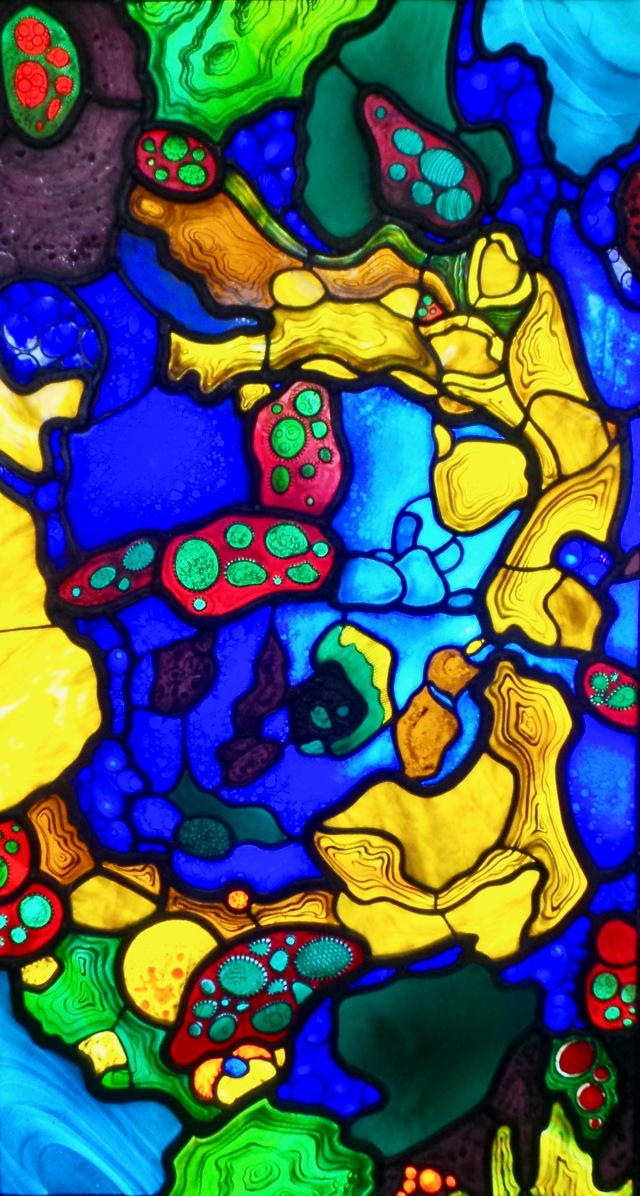
The introductory window above is a contemporary design entitled Inner Space (1979). This blended art and science and is an interpretation of electron photomighraph of hydra tissue (micro-organism). It illustrates many various techniques of modern design including texturing, acid-etching, tracing as well as traditional leading.
These three traditional -style windows are 600 years apart in age but look as striking and vibrant as ever. Furthest left is Geometric Grisaille (1200-1250s) which is a design expressing the simplicity of the Cistercian monastic ideal and aided the meditation for the monks. The middle panel, The Dawning of the Last Day (1871), is unusual in that it was designed by a clergyman in memory of his father and noticeably moved away from the Gothic Revival towards original motifs. The last of three, The Good Shepherd (1867), uniquely weaves together a painterly style of the figure with the gothic revival surrounds of the rich foliage.
The influence of the Arts and Crafts movement is evident in the window furthest left. Fathers of the Church (1904) depicts St. Augustine, Venerable Bede and St. Cuthbert. The next two windows were commissioned as part of the revival and popularity of stained glass windows in the 1800s and there was a push to return to the ‘True Principle’ of Gothic style windows. The Dance of Solomon (1856), formerly within Ely cathedral, is a lively panel, and one of four depicting St John the Baptist’s life, and martyrdom. The Arms of Queen Margaret of Anjou (c.1840) was designed by a heraldic scholar to blend the arms of 15-year-old Margaret who married Henry VI.
The Typography Panel (c.1930) was most likely a sampler created to demonstrate letter writing on glass, and the use of painted cross-hatching is clearly evident. To the right, this fish experimental piece (1950s) makes effective use of flashed glass and acid-etching within its two layers (to add depth) of pink and blue glass.
Angels are the common factor for these first two windows. Inspired by William Morris and his circle who hoped to rescue the decorative arts from commercialisation and industrial methods of production, the first window is one of two entitled Angel Musicians (1910-1912). It was influenced by famous late 19th-century designers when angel figures were typical of the Italianate style. The centre panel was created 400 years earlier and the Angel Musician (1440-80) shows a unique style of painting particular to the Norfolk area in the UK, which through its riches of the woollen trade produced the majority of stained glass windows at the time. The Annunciation of the Virgin (c.1340) is the oldest of the three panels and created in an era of illiteracy when religious education involved painted windows. It is the finest example of English glass painting of the ‘Decorated’ Gothic style.
This slideshow requires JavaScript.
Roundels have existed as a form of stained glass windows since their inception. The most modern is self-explanatory entitled Five Victorian Studios (1987). The opulent roundel of gold shows The Suicide of Charondas of Catanea (c.1530) and establishes the theme of justice as he broke his own laws and thereafter committed suicide. It was most likely produced in the Netherlands which was famous for its thousand or so small and exquisite roundels. The last of the three windows heralds from a church in Burgandy, northern France. St. Vincent on the Gridiron (c.1225-50) is part of a narrative by Gothic glass painters and depicts St. Vincent’s suffering for his faith as he is roasted on a gridiron.
These final three windows are from the very early days of stained glass window design. The central panel, Peasant Figure (c.1340-49), was once part of a large and important window in the Lady Chapel of Ely Cathedral and at one stage it would have been richly decorated. It is highly unusual for the mere figure of a peasant to be depicted in a glass window. Also rarely created were windows for patrons, which is the case of Donors of William and Matilda Cele (1350-1400) who ensured the survival of their name and contribution for 700 years and onwards. The bird in Bird Quarry is slightly older and produced in the 15th-century. These simple diamond shaped quarries were made in their thousands using white glass, glass painting and silver stain. They often depicted animals with amusing human motifs; here the robin is shown carrying a rosary.
Along one wall of the exhibition, there were mock-up models of stained glass studios showing the various stages of creating a window and some of these are pictured below.
In the quiet hush that can only signify a Sunday morning, my husband and I enjoyed the rare luxury of a breakfast together, exchanging small gifts and cards, before heading to the car for our day’s outing.
Twenty years ago we met for the first time and this was an occasion to be marked. We’d pondered how a few days earlier. Should we replicate the evening itself? That involved a flurry of pubs visits, one so empty and dull the security guards outnumbered the guests, the other so packed we sat like sardines on sunken sofas, embedded within the aged fabric. Even through rose-tinted vision of time passed we shook our heads in an empathic no!
Our interests took us elsewhere and with the promise of a few rain-free hours, we set off to a place we yearned to see again. Two years ago we’d paid a flying visit to Ely and it’s stunning cathedral set amongst the beautiful landscape of the Fens. We looked forward to seeing it again, enjoying the time and space to revel in its gifts.
1,000 or so steps
The car park in Ely by the Maltings, the Victorian brewery, kindly offered us free parking and requested we mention their generosity to our friends…duly done!
Nearby an eel sculpture stood prominently in a park to commemorate Ely, known at one time for its eels and named after the Saxon word for the fish -eilig!
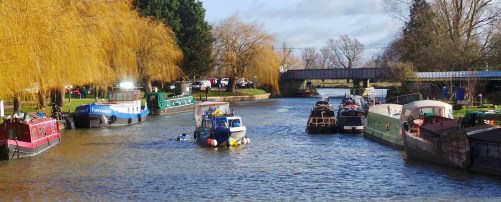
The walk to the river opened up to reveal a bustling holiday atmosphere as canal boats and small pleasure cruises teemed on the water, the golden willows whispering their greeting to the river, children, and dogs competing for attention.
Fishermen sat far apart along the river bank, nearly absorbed into the dark green of the grass, they seemed to blend seamlessly together in the picture.
2,000 or so steps
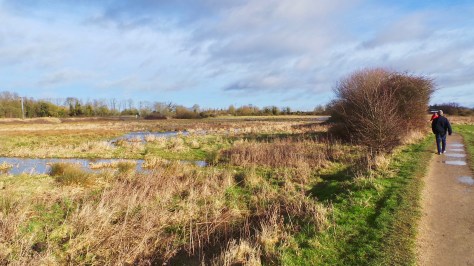
Astonishingly, the busy lively riverside promenade was left behind as we ducked below a railway bridge to the path along the swollen river. Here only the serious walkers set out. The raised path stood just above the water level of the flooded field to our left, the yellow decaying weeds a fluttering reminder of the winter still upon us.
3,000 or so steps
To the right, the mighty river (by British standards) flowed with majestic elegance.
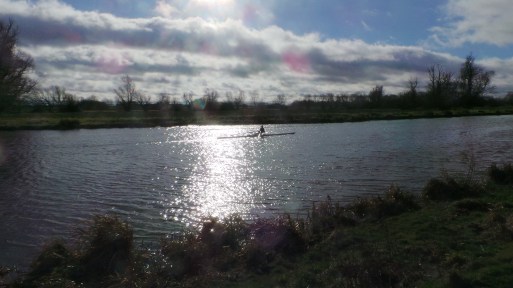
Ahead arrow-sharp rowing boats raced past at dazzling speed, the long oars barely seemed to dip into the water, effortlessly carrying it along. The University of Cambridge has a boathouse here and often practice on the river; not surprising considering the extremely busy River Cam, clogged with punts and the numerous tourists!
4,000 or so steps
We continued to traverse through the Fens flat landscape, the marshland of 1,500 square miles (3,900 square kilometres) stretching ahead, gently curving at bends. Here the sky opened up to lofty heights, the soft clouds of whites, pinks, greys dotted upon the lightest of baby blue hues. A gentle peace cascaded, rolled over us as we ambled on, my camera to hand.
5,000 or so steps
To the left, a sudden rush and hoot stopped me in my tracks – I hadn’t noticed the railway track before, set up just above the water level, the mechanical surprisingly not at odds with the calm of nature.
The menagerie of birds seemed quite unperturbed, the dogs continued to walk calmly on as did we.
6,000 or so steps
I’ve never walked across a railway track before and approached this one with discernible excitement, heightened as the lights started to flash and the alarm sounded. Here is the video I took of the Train as it passed closely past us. (Since WP suddenly will not allow me to post videos I set up a YouTube channel to allow me to share this!)
7,000 or so steps
Yet again the wonderful Cathedral dominated the horizon as it sits on the hill in this ‘Isle of Ely’. Visible from miles around the towers reach up to the heavens and there is no danger of becoming lost with this constant reminder of the town centre.
8,000 or so steps
We near the cathedral. Originally a church was built on this site in AD 672 before the Normans started work and it was deemed a cathedral in 1109 and thereafter the town formed around it.
9,000 or so steps
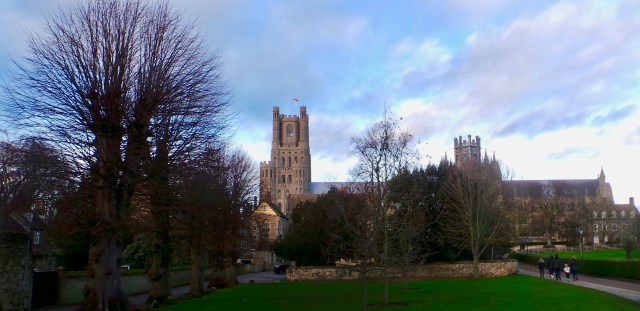
We approached the awe-inspiring cathedral which is fittingly known as the ‘Ship of the Fens’ after its famous and unique Octagon tower which replaced the former Norman tower.
This collapsed in 1322 and was replaced with a structure made from eight great oaks which served as the frame for the famous lantern inside.
This slideshow requires JavaScript.
The interior of the cathedral filled me with wonder and overwhelming gratitude. It is unusually light for a cathedral, and I wandered down the nave, before glancing up to its ceiling. The amazing painted wood panels were installed in the mid-1800s by the Victorians in an attempt make the cathedral appear even more medieval.
This slideshow requires JavaScript.
Walking around I admired the architecture, the stained glass windows and at one stage noticed the playful rainbow of colours on a pillar from one of the windows.
Along the walls, plaques and statues of people buried or interned are placed along the walls and floor. One was a Robert Steward, a knight who died in 1571 and looked peaceful in his repose.
10,000 or so steps
These last steps were used to visit the UK’s largest stained glass museum housed within the cathedral; more about these treasures in my next post. Tired but full of joy we ambled back to the car, letting the glorious sky sweep over us.
On the drive home we were treated to a sumptuous sunset; a glory and riot of colours which made driving difficult but a wonder to behold for me, the passenger.
Thank you for joining me on this 10,527 steps day out. Have you recently had a special day out? Celebrated an anniversary? As always it is a delight to read your comments and thoughts.
It is easy to imagine cookbooks being the preserve of the last few decades following the massive success of chefs and their books such as Jamie Oliver, Nigella Lawson and Mary Berry to name a few. However, food and its preparation have always been of interest to people and over the centuries chefs have sought to bring their recipes and wisdom to a wider audience.
One of the world’s outstanding collections of cookery books is currently on display at the University of Leeds and although I am unable to visit it in person I am happy to bring part of the exhibition of ‘Cooks and their Books’ alive for you (and me) through four of the fantastic books currently on exhibition.
The oldest cookery book dates back 1570 when Michelangelo was still completing the ceiling on the Sistine Chapel in Venice. Not far away a chef named Bartolomeo Scappi (c.1500-1577) was a cook for several cardinals at the Vatican and during this time he wrote his monumental treatise on the art of cookery. Entitled ‘Opera dell’arte del cucinare’, his book (pictured above) was first and foremost intended as an aid to his apprentice, Giovanni and this was the first time that a cookery book included clear instructions and techniques, both in written form and through illustrations.
In the thousand or so recipes Scappi managed to merge medieval tastes with those from the upcoming New World; for example, he included sugar in his cooking (and this featured as a pizza topping with pine nuts and rosewater).
This slideshow requires JavaScript.
Another tome of cookery was published in 1730 in London. ‘The Complete Practical Cook’ was written by Charles Carter, a chef to leading soldiers and diplomats serving Queen Anne serving in Europe, including, Berlin, Hanover, SpainandPortugal.
The book features many unique elements including sixty engraved table settings which were Carter’s pride and joy. The volume itself is set in chapters following the order in which dishes were usually consumed at dinner and therefore the comprehensive index proved especially useful and necessary.
This slideshow requires JavaScript.
The recipes, numbering about five hundred in total, were all accompanied by a glossary of terms used which was another new and practical addition to recipe books of the time. Charles Carter believed that cookery was an art form and claimed to be able ‘in no mean way…surpass a French Cook.’
Whilst Carter believed that the art of cooking should be more recognised and rewarded, Antonin Carême (1784-1833) turned the craft of cooking into a fine art. Working in Paris during the early nineteenth century he prospered after his inauspicious start of being abandoned by his parents at the age of ten. From starting out in his childhood as a kitchen boy, he worked his way up to becoming one of the top patisserie (confectionaries) in Paris. In 1828, Carême, who served such famous leaders as Napoleon and Tsar Alexander, published his hugely influential cookbook ‘Le Patissier Royal Parisien’.
It was a feast of ‘showstopper’ recipes showing the grandiose ‘high art’ of cookery including the famous pièces montées. These elaborate constructions were formed into monumental centrepieces of temples, ancient ruins, pyramids created out of foodstuffs including sugar, marzipan and pastries. Carême is recognised as one of the first internationally renowned celebrity chefs!
This slideshow requires JavaScript.
Mrs Beeton (1836-1865) is a byword for good cooking and household management – and a copy of her book is found in many homes in the UK (including ours since my husband owns a copy). Originally published in 1861 when it sold an extraordinary 60,000 copies, Isabella Beeton’s ‘Book of Household Management’ is still in print today (although revised and enlarged).
First Edition Cover
It was a ground-breaking comprehensive and influential book for the new middle-class in the Victorian era, extolling the values of hard work, thrift and cleanliness. The book included not only some 1,700 recipes for every day and special events (with additional information about the dishes as well as copious illustrations) but also provided information for running of a household, managing servants, raising children, looking after the sick and legal matters.
This slideshow requires JavaScript.
Mrs Beeton was an unusual cookbook publisher as she was not a chef herself rather she worked as a journalist, editor and writer. During her short life, she compiled and edited on behalf of her husband before dying from puerperal fever aged 28. She left behind a legacy which has spanned three centuries – a truly remarkable feat.
These are only a snapshot of the books available to see at the exhibition and of the entire collection of over 2,000 cookbooks. Which one was your favourite? Or perhaps you have your own special cookbook? Perhaps one passed down over the years? What is your favourite aspect of the book, the recipe to which you always return? As always I look forward to your comments. Happy Reading, Cooking & Baking!
* ‘A recipe has no soul. You as the cook must bring soul to the recipe.’ Thomas Keller
Sources: University of Leeds, alumni magazine & Wikipedia.

 Sammy: I got serious about writing my own music whilst in Sweden last summer. I was walking through the forest up to a viewpoint; standing at the top, listening to “Without You” by Avicii and felt a strong inspiration to start creating my own music in a way that would make people feel the same way as I did at that moment.







 Finally, I might be a bit absent from blogs in the next couple of weeks as I am not only continuing with my writing work but have also received an invitation to talk to a creative writing group at a private school. I was contacted by them following my recent newspaper interview which is available to read


 The first 100 or so Steps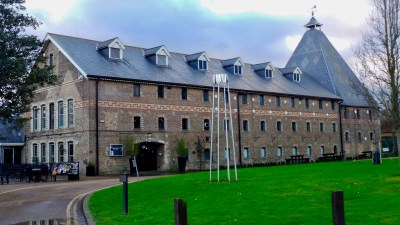







 The oldest cookery book dates back 1570 when Michelangelo was still completing the ceiling on the Sistine Chapel in Venice. Not far away a chef named Bartolomeo Scappi (c.1500-1577) was a cook for several cardinals at the Vatican and during this time he wrote his monumental treatise on the art of cookery. Entitled ‘Opera dell’arte del cucinare’, his book (pictured above) was first and foremost intended as an aid to his apprentice, Giovanni and this was the first time that a cookery book included clear instructions and techniques, both in written form and through illustrations.
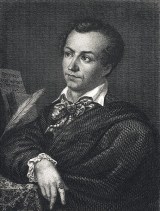 Whilst Carter believed that the art of cooking should be more recognised and rewarded, Antonin Carême (1784-1833) turned the craft of cooking into a fine art. Working in Paris during the early nineteenth century he prospered after his inauspicious start of being abandoned by his parents at the age of ten. From starting out in his childhood as a kitchen boy, he worked his way up to becoming one of the top patisserie (confectionaries) in Paris. In 1828, Carême, who served such famous leaders as Napoleon and Tsar Alexander, published his hugely influential cookbook ‘Le Patissier Royal Parisien’.
![Le_pâtissier_royal_parisien_ou_[...]Carême_Marie-Antoine_bpt6k852237p](https://annikaperry.com/wp-content/uploads/2018/01/le_pc3a2tissier_royal_parisien_ou_-carc3aame_marie-antoine_bpt6k852237p.jpg?w=298&h=497)
 Mrs Beeton (1836-1865) is a byword for good cooking and household management – and a copy of her book is found in many homes in the UK (including ours since my husband owns a copy). Originally published in 1861 when it sold an extraordinary 60,000 copies, Isabella Beeton’s ‘Book of Household Management’ is still in print today (although revised and enlarged).
 Annika Perry