‘Perfume of the Mountain Grass’ *

top

An unassuming man writes unassuming songs with such power and poetry that he’s single-handedly dominating the UK music charts with 14 of his songs in the UK top 15.

EDEd Sheeran, a Yorkshire lad, grew up in a village not far away and it was his ‘Castle on the Hill’ that first grabbed my attention with his signature style of telling a story of his youth, simple and straight forward but beneath the surface a soulful and profound message.

Quickly other songs on the album grew on me but ‘Castle on the Hill’ stayed with me and when I learned it was only an hour’s drive away a visit was planned. I just hoped it wouldn’t disappoint.

The predicted hour became a long meandering two-hour journey through quaint villages, thatched houses centuries old hugging the roadside. Soon other houses took on bold and vibrant hues, painted in ochre, startling orange, scarlet, dazzling blue. Small hamlets with the extraordinary names such as ‘Nedging with Naughton’ passed quickly whilst pedestrian style hunchback bridges spanned the brooks. Once again we spurned the Satnav and trusted to instinct, good luck and ultimately the good-old fashioned road until finally, we arrived at Framingham (and it only took three circuits of the town to locate a parking space!).

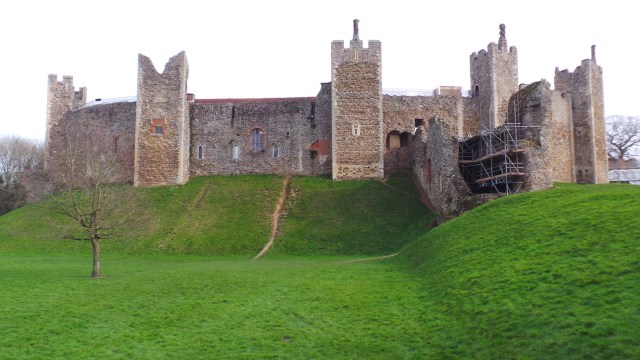
Framingham Castle dates back to the 12th Century and it was built by a local Norman family and was their home for over 400 years. Later it was briefly owned by Mary Tudor as she gathered her supporters to fight for the throne.
20170311_133821

The castle is built on the natural highpoint in the village and it stands magnificently on the mound; a landmark visible across the county to the North Sea.

20170311_130930 (1)

Its imposing facade strikes me as I walk towards the main gate which would have had a drawbridge across the dry moat. Towers reach for the sky and now number twelve out of the original thirteen and on top of some beautiful brick Elizabethan chimneys have been added by later occupants.

These were for both decorative and practical purposes and seeing their corkscrew design it is easy to understand why!

20170311_131107

Having read about the wall-walk this was our first destination. It is unusual to find a complete curtain wall in a castle in England – let alone be able to walk around it.

20170311_132253

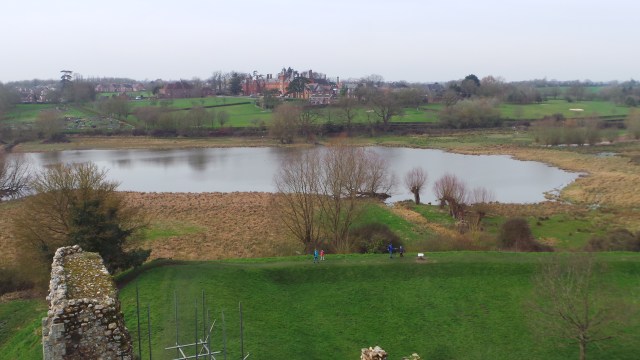
The climb up the 10.5 m (30 feet) high walls was well worth the effort with spectacular views, particularly looking down at the mere below. When originally built the mere was three times larger and the castle would have been reflected in the still water and provide a striking and stately effect.
20170311_131116

Walking around the moat, past the mere the sense of peace is palpable, the sense of history all around. Where Normans and Tudors walked, fought, lived, sightseers of the 21st-century swarm. People from the village gather, talk, chat…discuss music, compose songs. It is not hard to feel the inspiration which has become a top hit for Ed Sheeran.

As the album ‘Divide’ popularity grows and yes, I have become one of over 672,000 to have fallen in love with the album and bought it and quickly another song stood out to me. Its quiet, peaceful lyrical beauty is a tribute to his grandmother  – it is wonderfully moving, touching the hearts of all who listen to it. I’m sure ‘Supermarket Flowers’ will have many in tears.

https://youtu.be/SW8u69TnjE8

*From ‘Castle on the Hill’

Season of Mists *

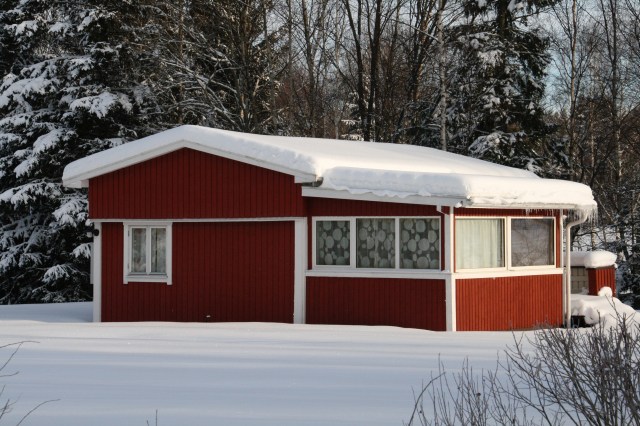
snow covered stuga feb. 10

As Autumn steadily sweeps across us, the temperatures dipping further down with each day, nature’s exhibition of its colourful canvases growing ever more spectacular, we slowly ready ourselves for the winter. 

Winter coats, gloves, hats and scarves are made ready.  The radiators clatter to the sensation of heat coursing through the pipes for the first time in months. 

So off to Sweden I head for a few days to help prepare the summer houses for oncoming winter, when ice can reach a metre or two below the ground, when snow can pile metres high up against the walls. Minus twenty (centigrade) is not unusual. This is the final sorting before the dark days descend, radiators will be left on and this year to ensure there is no repetition of last Easter’s indoor flood following burst pipes, a heated lead has been placed in the water pipes between the houses to stop them freezing. Fingers crossed. 

I can’t wait to see the bountiful beauty the trees will offer – although even as we left in August the birch leaves were already tinged ochre and cracking at the tips. The ocean adorns itself with a wintry gown, the light flickering across the silver shimmery sea, the crispness of the air snapping at my lungs. 

This is my last escapade abroad this year; I will catch up with you all on my return until then I wish you a lovely final few days in October, a fun Halloween if celebrating and for those participating in NaNoWriMo best of luck! May stamina, perseverance and snacks carry you through until the end of 50,000 words. 

‘There are moments in our lives, there are moments in a day, when we seem to see beyond the usual. Such are the moments of our greatest happiness. Such are the moments of our greatest wisdom. If one could but recall this vision by some sort of sign. It was in this hope that the arts were invented. Sign-posts on the way to what may be. Sign-posts toward greater knowledge.’

Robert Henri (1865-1929), American artist & teacher

* From ‘Ode to Autumn’ by John Keats

VIKINGS – CREATIVE ARTISTS

The Oseberg Ship. Photo by Mårten Teigen of Museum of Cultural History, Oslo

Like subterranean explorers we travelled for miles along the network of tunnels approaching Oslo. This was quite unlike any city approach I had experienced.

The occasional car swished past on the cavernous carriageway of Bjørvika Tunnel and soon we made our exit from the urban roads. Within minutes we arrived on Bygdøy, a small rural island which boosts an array of tantalising museums. Among them is the Kon-Tiki Museum. Thor Heyerdahl’s book made a huge impression on me as young and one day I must return for this pilgrimage. For now our destination was The Viking Ship Museum which was  easy to find with the aid of the long-suffering SatNav struggling on with the Norwegian pronunciation.

Overhead shot of The Oseberg Ship

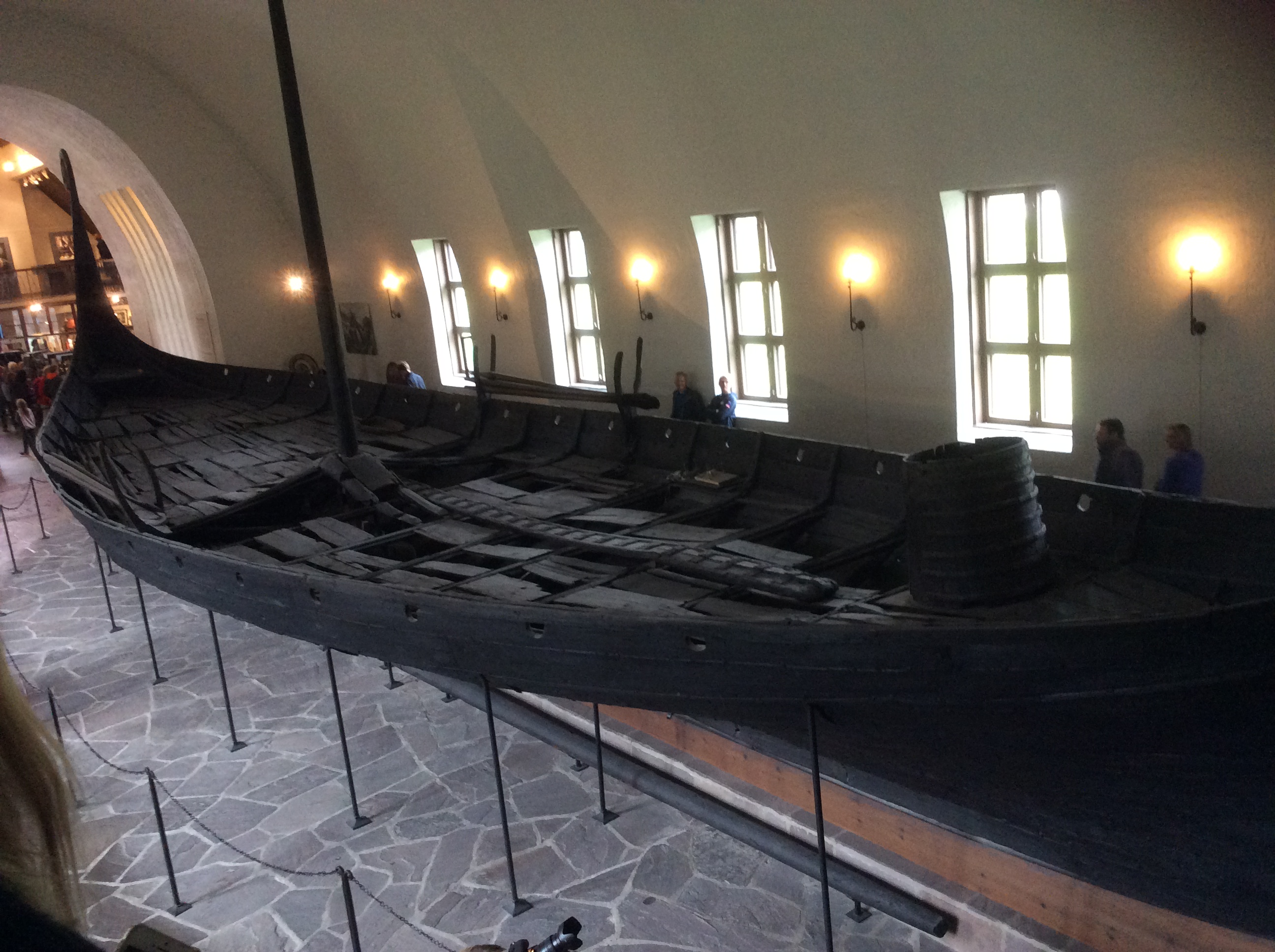
On seeing the Oseberg Ship I initially gasped in awe and immediately felt a humbling stirring in my soul. Over a thousand years old and our fore-fathers had not only created a vast sea-worthy craft but had done so with great sense of beauty and elegance. This was no clumsily constructed vessel, rather the wonder of craftsmanship shone from every angle, the soft planed oak boards with the carved keel, the perfect round-headed iron fastenings, then looking up to the bow I spotted the magnificently carved snake head spiral.

This slideshow requires JavaScript.

The ship, the largest intact Viking ship in the world, was built around 820 AD and could be either sailed or rowed with 30 oarsmen. Fourteen years later The Oseberg Ship was used as a burial ship for two women, one in her 70s the other in her 50s.

Burial Chamber
Burial Chamber

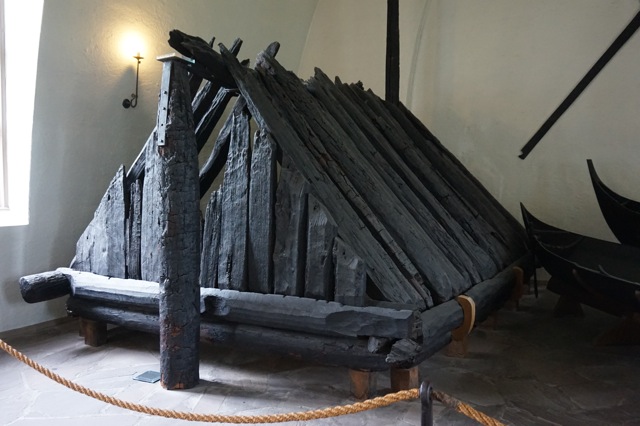
They were placed in a specially made burial chamber which resembled a small log cabin and with them were placed various items to help them in the after-life, including kitchenware, sledges, clothes, as well as horses and dogs. The remains of a peacock was one of the more exotic and unusual animals discovered. There would have been jewellery and weapons but these were looted within a hundred years of burial.

This slideshow requires JavaScript.

The artistic wonder continued as we wandered further into the museum. To be so aesthetically delighted was totally unexpected. We looked with awe at the beautifully carved sledges, a wagon, animal-head posts as well as the paraphernalia of the every day. The perfectly formed spades would not be amiss in a local B&Q; I could just imagine the price tag dangling on the top.

My wonder at these explorers of the past shifted to admiration of the early 20th Century archeologists whose care and dedication strove to rescue and persevere the finds which had been buried in the blue clay. Seeing the collapsed nature of the buried boats – oh yes, I forgot to mention the shock and amazement of discovering two further complete Viking Ships at the museum; The Gokstad Ship and The Tune Ship, tucked into opposing sides of the large cross-roads shaped museum.

Buried boats and artefacts were discovered tumbled to the side like giant wooden dominoes. All askew. All topsy-turvy. Looking so fragile in the photographs from the era, now the power and force resonated from the ships, silencing the large crowd mingling around us.

Our experience at the museum was tinged with sadness and poignancy as we learned my son’s generation might be to last to view the artefacts on display. The seemingly perfect objects were preserved with alum and they are slowly corroding from the inside out whilst scientists are working hard to find a solution to the chemical disintegration.

Replete in spirit and mind we left in mutual silence, our musings loud in our own heads, our hearts full of raw emotions from our millennium journey in the previous hours. It was time to leave this island of tranquility and head to our next destination – our hotel in Oslo city centre.

http://www.khm.uio.no/english/visit-us/viking-ship-museum/

http://www.kon-tiki.no