

‘Wine is bottled poetry’ * declared Robert Louis Stevenson when visiting the vineyards of Napa Valley, California in the 1880s and winemakers around the globe now seem intent on bringing that poetry and creativity to the very names and labels of their products.
A few years ago there was a proliferation of wonderful and weird names to both white and red wines and although a more sedate marketing has taken over the business, there are still some lovely evocative label names as well as the more unusual and peculiar.


A remarkable animal is celebrated in both the name and label of one South African wine. ‘Porcupine Ridge’ wine pays homage to the nightly visitors to the vineyard when it welcomes the crested porcupines. Their formidable spines and quills form an impenetrable defence barrier as they arrive in the dark, snuffling for food around the vineyard, forest and fynbos (small belt of natural scrubland or heathland).


‘Barefoot’ wine is a personal favourite of mine which I came across on my trip to Florida last year! The very first morning, before even unpacking or shopping for food, we walked barefoot along the beach – it was a feeling of pure pleasure and exhilaration and when we later spotted the quirky-named ‘Barefoot’ with its delightful drawing we knew we had to buy it.
Just as we had relished the free sensation of walking barefoot, so the wine name encapsulates the belief ‘that when you follow your heart there’s no limit to how far your vine will grow’. It is a wine that doesn’t want to take itself too seriously and flourished from its free-spirited 1960s start in a garage.
 ‘Black Stump’ wine of Australia supposedly traces its name back to the 1830s and a landmark ruling following a boundary dispute in the state of New South Wales. In that case, the surveyor had ‘pointed to some old stumps, which he said had been marked…defendant would not admit that the cross line marked by me on the plan was not part of his boundary…he said it ran to a black stump beyond the line, which he said had been marked….’
However, this historical basis for the name is in contention as it is also claimed that ‘Black stump’ is the name for an imaginary point beyond which the country is considered remote or uncivilised, an abstract marker of the limits of established settlement.
Others believe the expression originated from the use of black stumps in the landscape used as markers when directing travellers – to me, this seems the most likely!


Many wine names are derived from the location of the vineyards which is the case for the captivating scenery pictured on ‘Oyster Bay’. Their tagline is ‘Sometimes the world really is your oyster’ as they want their wine name and flavour to bring the promise to their customers of the remote beauty of their part of New Zealand. The family-owned vineyard ensured that climate became an asset for them as the colder nights but warm days create the long grape growing season.
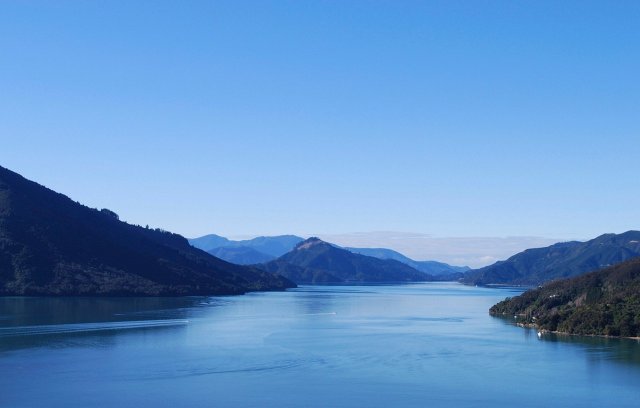
The very landscape that features on their labels is beautiful and almost lyrically captured in their description of the area.
‘The story of Marlborough’s soils starts a little while back, around 18,000 years ago. So in the scheme of ancient wine regions, we are considered to be quite young.
Once a towering glacier, the plains of Marlborough’s valleys are the trail of its slow (yes glacial) retreat. In the distance, the stern Southern Alps are guardians and providers. Their foundations are broad, but lie upon two tectonic plates that are perpetually moving in different directions.
This battle beneath the earth is only discernible by rocks sent down from the above. With purpose, the snow and rain fed rivers carry these away and over centuries smooth the harsh edges of their abrupt beginnings away. They spread across the valley floor, where our vines call home.
As the stones bask in plentiful sunshine, vine roots edge beneath to find nutrients. When the air cools at night, the stones share with the vines the warmth they have collected over the day, to help create the immaculate flavours synonymous with this special place.’


On a lighter note, ‘Cono Sur Bicicleta’ wine from Chile caught my eye with its cheerful watercolour label of the bikers in the countryside. The image and name of this pinot noir is a tribute to Cono Sur’s workers who travel around the vineyard on bicycles. The environmentally friendly aspect of the company is extended into its winemaking and only natural, often traditional, methods are used to tend the vines and make the wine.


Finally, who doesn’t like some comfort in their lives? This is particularly seen with the massive popularity of comfort foods and one Californian vineyard owner has taken this to a new level with the originally named ‘Comfort Wine / Custard Chardonnay’.
Don August Sebastiani came up with the concept of comfort wine the first time he inhaled the aroma of his chardonnay and realised he had “…a wine that reminds me of one of my favourite childhood indulgences ‐ Sunday morning glazed doughnuts with creamy custard filling…’comfort food’ before I even knew what that was.”

I hope you have enjoyed learning a bit about the names of a few wines and this post is the promised follow-up to What’s in an Ale Name when I explored the stories behind the names of various beers…as a non-beer drinker I rather missed out on the tasting element and many bloggers kindly suggested I should write a post dedicated to wine names! Many thanks for the suggestion, I have heartily enjoyed my research, both the written and the tasting!
‘There is more philosophy in a bottle of wine than in books.’ Louis Pasteur (1822-1895) French chemist/biologist.
* From The Silverado Squatters, 1883 by Robert Louis Stevenson, (1850-1894) novelist, poet, essayist, travel writer.




 Not at all…if I could only read in one place I’d barely finish a book! A book with breakfast is a treat, reading a chapter whilst at the doctor’s surgery happily passes the time. There is only so much scenery I can gawp at whilst on the train before out pops my kindle and I become engrossed in the novel, often rueing the punctual arrival.
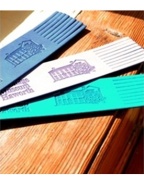 Isn’t it odd how childhood habits that we could never imagine breaking become a sweet memory. When young I collected bookmarks from places we visited…a new bookmark would gingerly replace the one tucked in my book, which in turn would be added to the box under my bed. From castles to towns, from writers’ houses to cathedrals; these bookmarks were treasured and some used more than others – The Bronte Parsonage was a particular favourite.
 A book with breakfast is not uncommon and at weekends a quick read in the afternoon with a biscuit is a relaxing way to spend half an hour!
 The reasons for skipping pages are diametrically opposed…either the story is so exciting, so enticing I can’t wait to read every word and am compelled to rush ahead…or the novel drags and I move forward hoping to become engrossed further along. In the former instance, I mostly manage to rein in my urge to skip ahead, in the latter I hope to find redeeming features quickly.
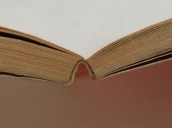 Breaking a spine is like sacrilege to me!! Never never! Having had a few borrowed books returned in this state I’m now cautious to whom I lend books.
 The first I’ve just started after recently buying it with birthday money and it is a book I’ve been very keen to read. Jonathan Safran Foer’s novel ‘Extremely Loud & Incredibly Close’, which is also now a film, tells the story of nine-year-old Oskar Schell whose father was killed on 11th September in the attacks on the World Trade Centre. Oskar, a boy of many abilities which include being an inventor, natural historian, detective and percussionist, sets out to solve the mystery of a key discovered in his father’s closet and the search leads him through the lives of strangers ranging from history to the bombings of Dresden and ultimately a journey to inner peace.
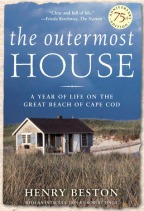 The second book I’m reading was written in 1949 by Henry Beston and only completed under duress when his fiancee refused to marry him until he’d finished it. A two week sojourn on the extreme coast of Cape Cod turned into a year as the author became mystified by the mysterious surroundings and ‘The Outermost House’ chronicles his solitary year on a Cape Cod beach and the debut book quickly became recognised as a classic of American nature writing. Its poetic lyrical language enraptures my soul:
 The final book I’m reading is for a book review for NetGalley – this is long overdue and I’m thoroughly enjoying ‘The Secret Diary of Hendrik Groen, 83 1/4 Years Old’ by Hendrik Groen and this is one for all fans of ‘A Man Called Ove’.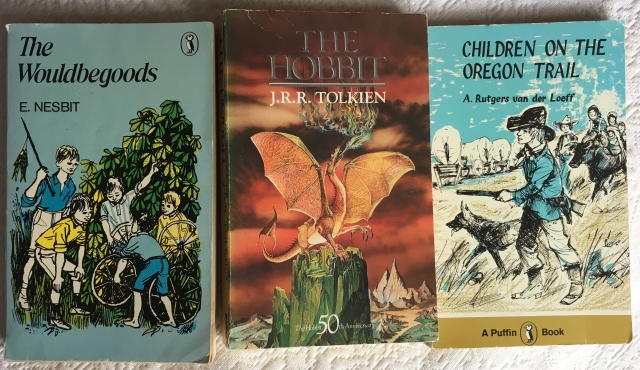
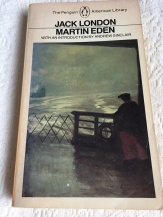 This is another impossible question but one of many favourites revealed itself as I scanned my bookshelf. My numerous readings of Jack London’s ‘Martin Eden’ never dulled my enthusiasm and adoration of this book with its skillful writing and striking character. I recall my complete awe and overwhelming emotion at the end…now that the book is out on my desk I fear it will not return to its place before I’ve read it again!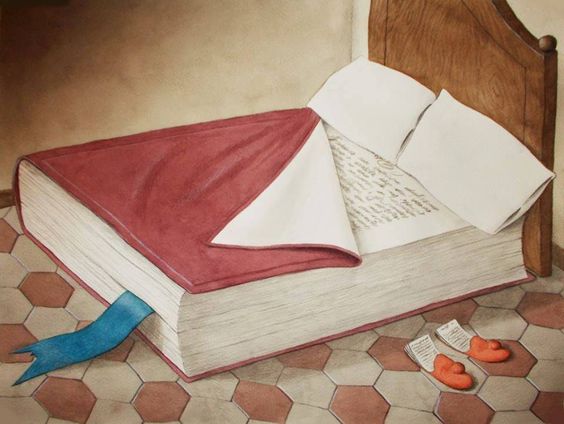








 Annika Perry