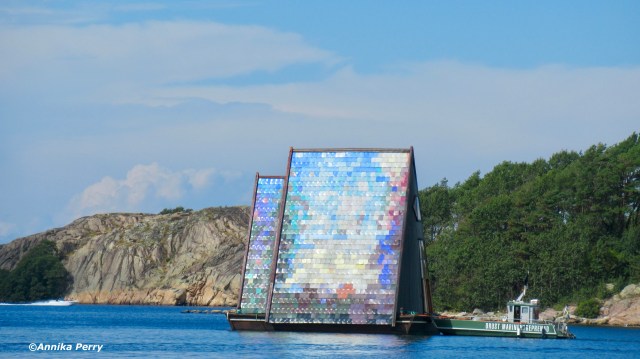
The Embrace

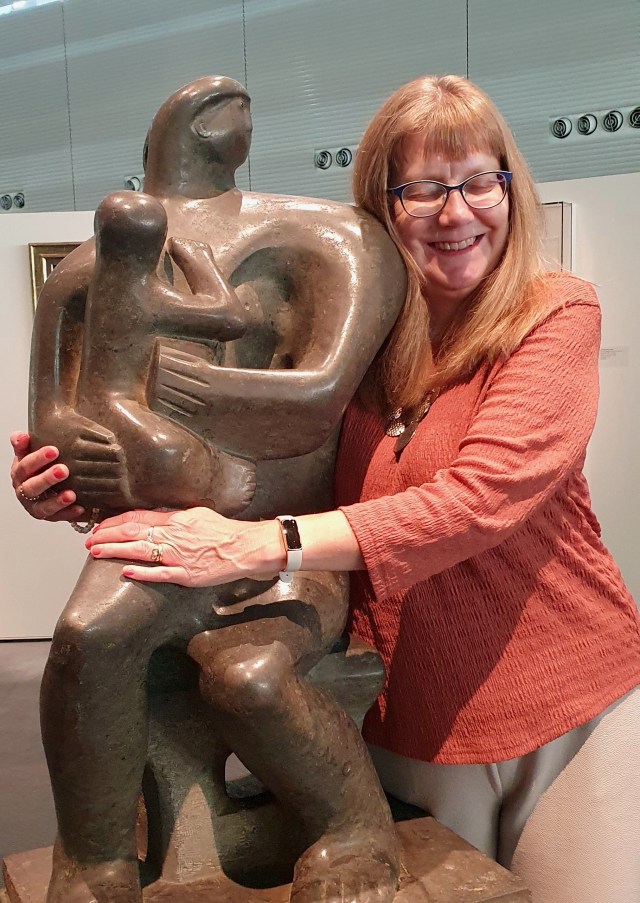
'Bronzed-coloured modern art sculpture of mother and child, mother's head turned towards mine as I embrace them both, my head resting on mother's shoulder.'
The Embrace

Yesterday I hugged a mother and child
The arms unyielding
The bodies cold and unrelenting
Yet such warmth in expression
A soulful tenderness in their closeness

A unique embrace, where the usual
Do not touch
Replaced with
Please hug me

Art is for all
Art is not remote
To be viewed at a distance
Art is life
Art is all our lives.

@Annika Perry, October 2024


My poem above was inspired by The Mother and Child sculpture by Henry Moore (1932) which is one of many wonderful, striking and thought-provoking pieces of art at the innovative and eclectic art museum of the Sainsbury Centre in Norwich, East Anglia. Originally a private collection by the Lord and Lady Sainsbury it was later donated to the University of East Anglia in the specially built museum. The collection is part of a desire to allow visitors to emotionally connect with the pieces (I did!) and enhance the belief in the ‘living life-force of art’.

Personal Note

Many thanks to everyone for your lovely comments on my last post and I was looking forward to returning here in September, Alas this became impossible. Tragically there was family bereavement as well as a devastating cancer diagnosis of a close family member. Along with the practical busyness of such news, emotionally I had to hunker down and slowly find my equilibrium. For now, my posts may be rather more erratic, my comments not as timely a I would wish. My heartfelt thoughts are with so many of you going through difficult times.

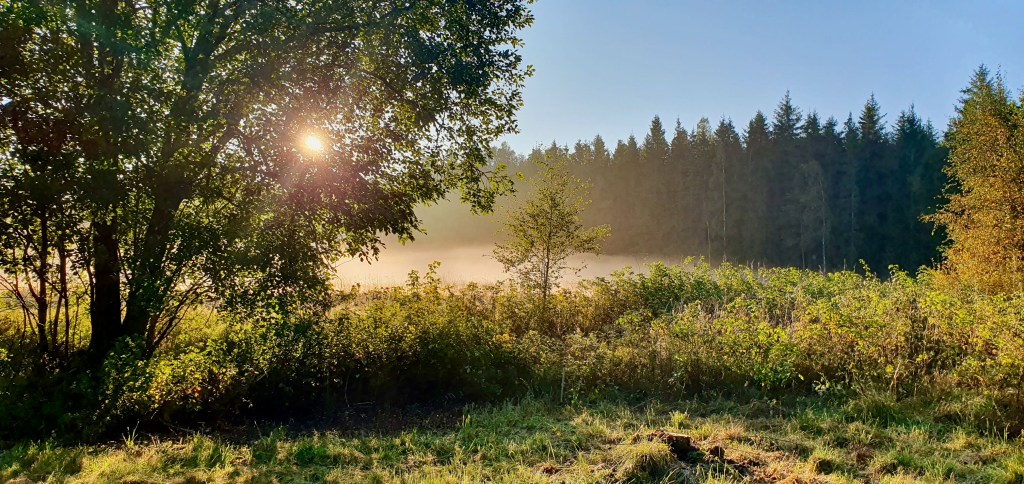
View of sunrise mist in a Swedish forest, August 2024

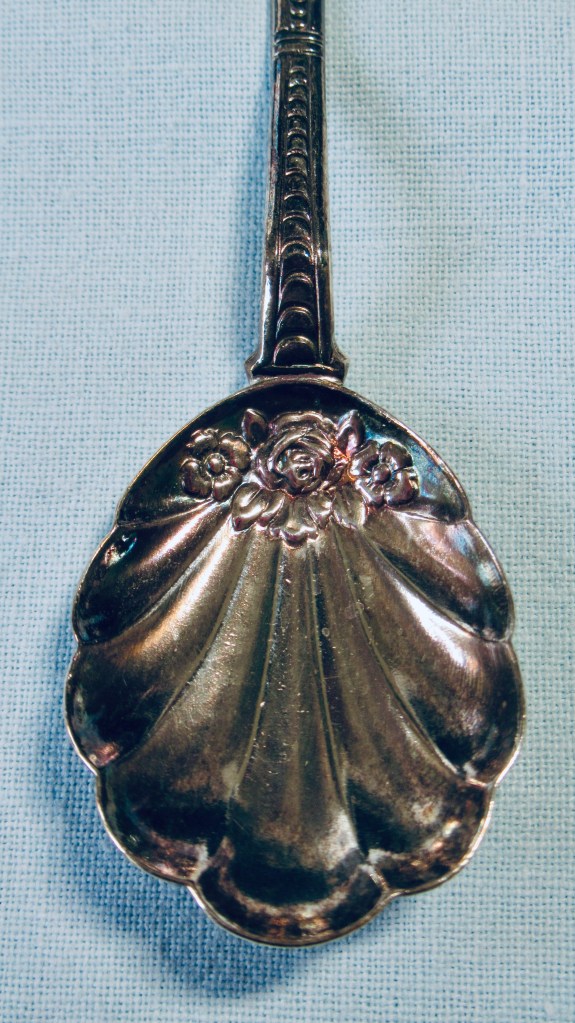
‘Born With A Silver Spoon’

My respect for the staff of the big houses, such as the fictional Downton Abbey, grew this week as I set to sprucing up my silver spoon collection.

Long neglected, it has lain gathering dust in the loft until the recent redecoration of a room brought it to mind. A new blank wall, a whole new canvas beckoned to be filled and up to the ladder I headed to hunt out something appropriate.

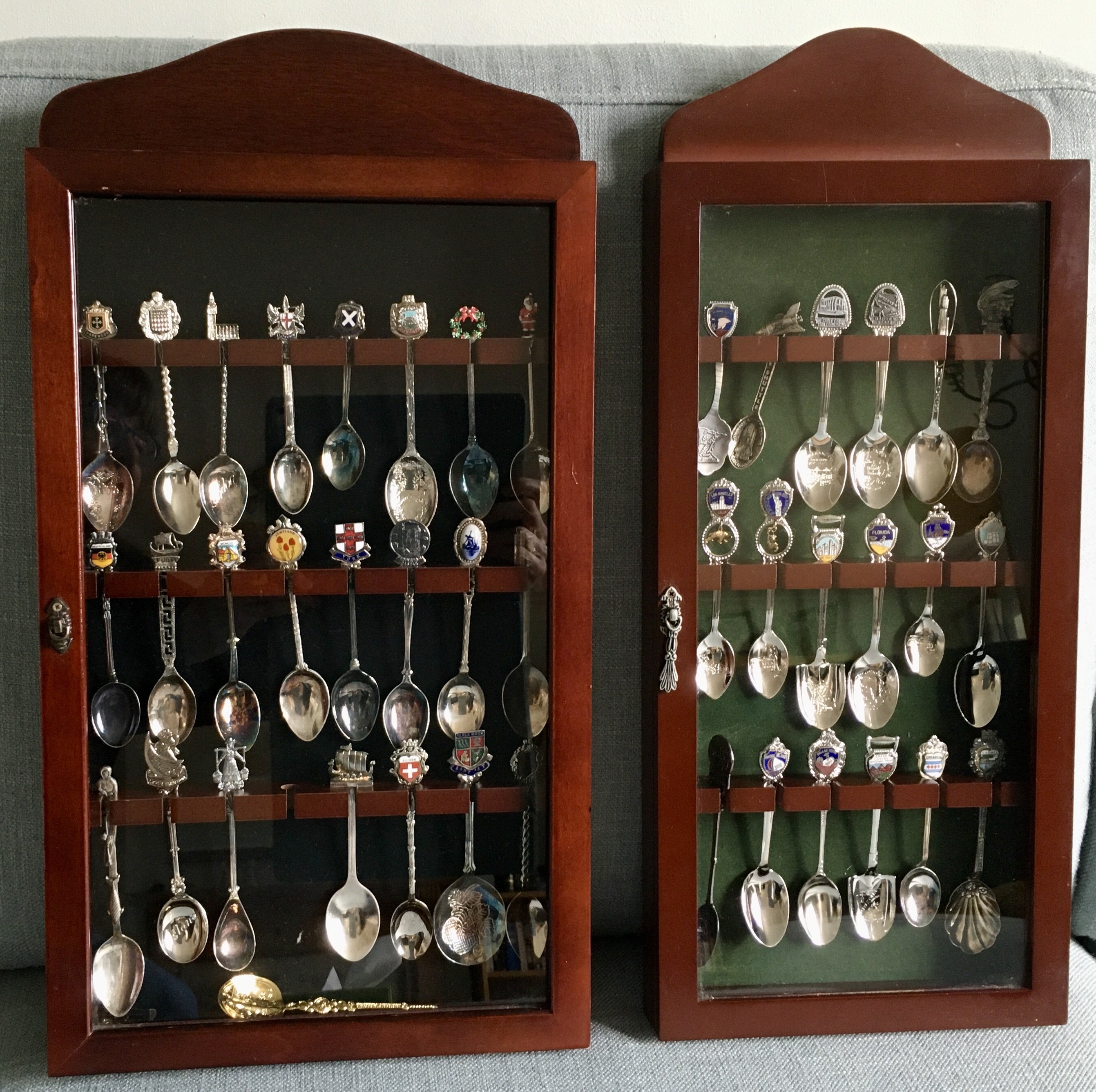
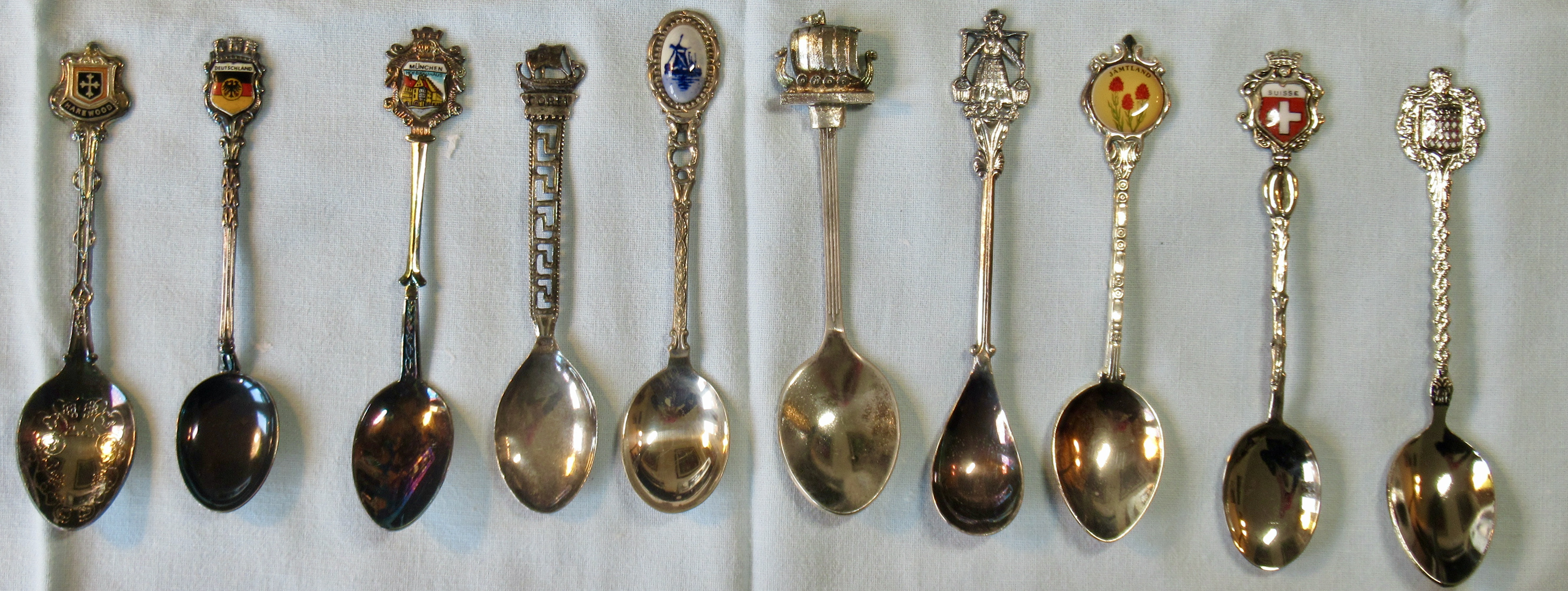
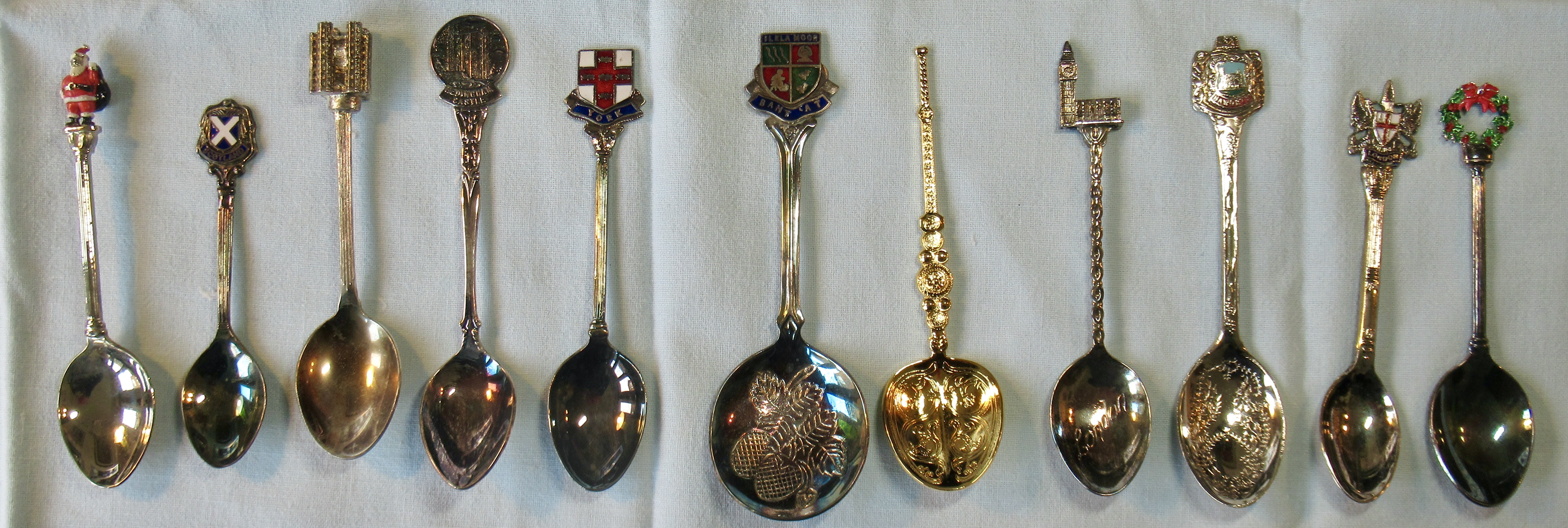
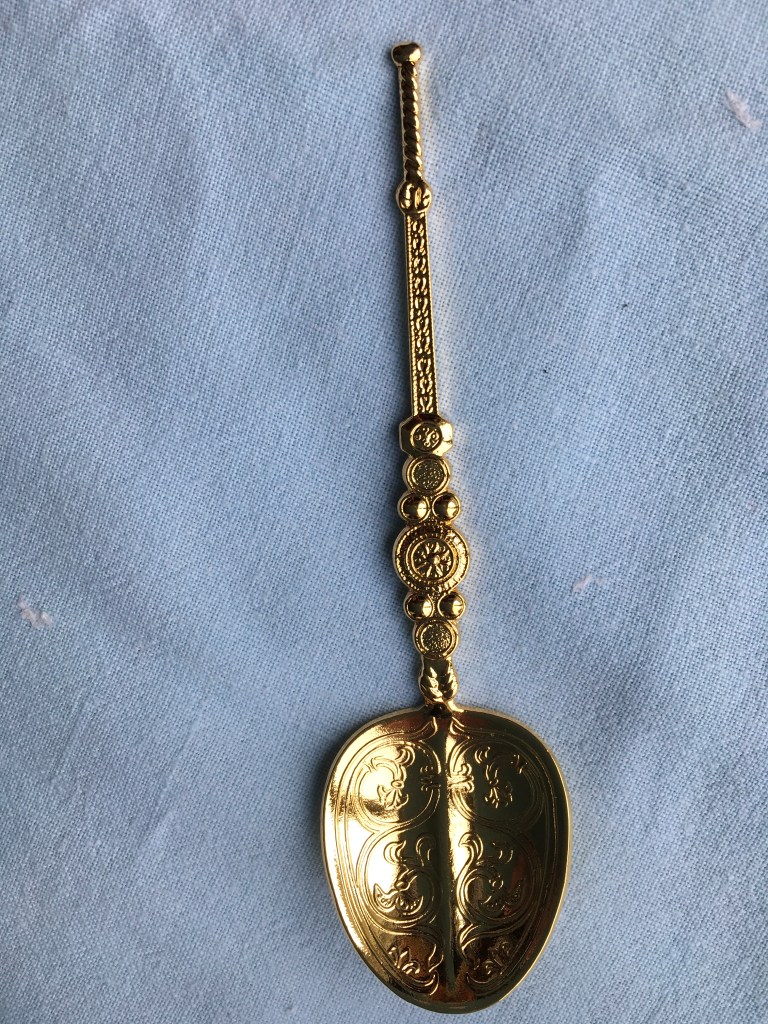
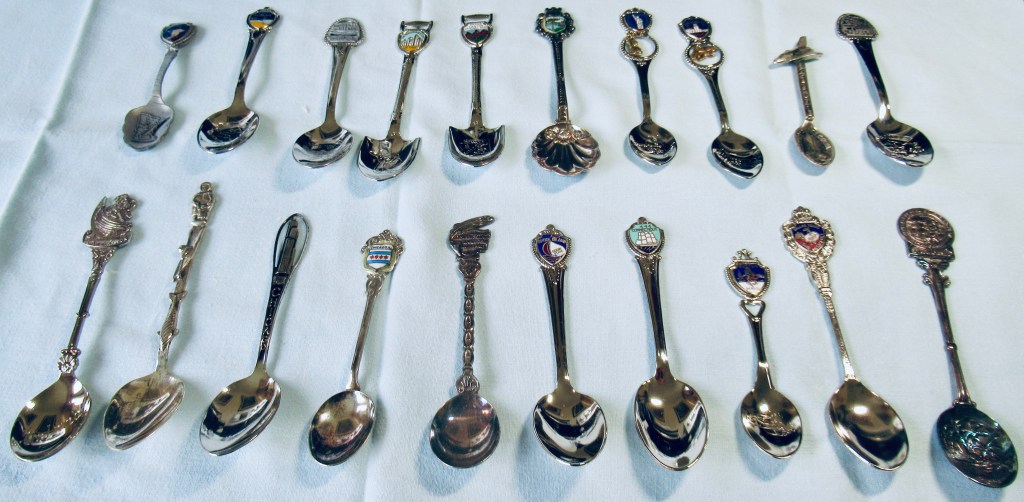
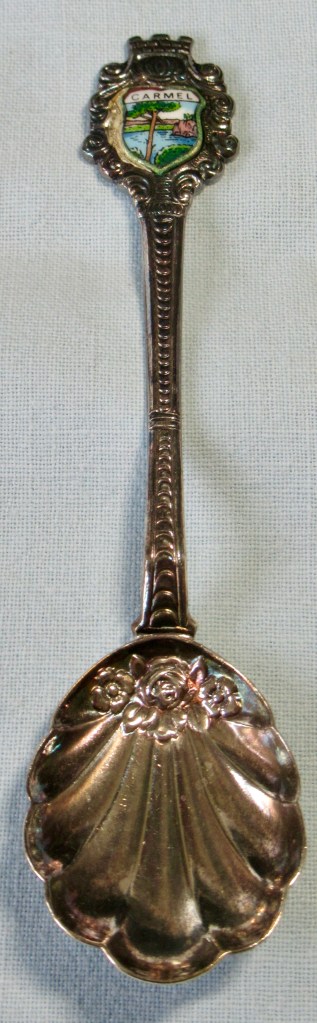
Tucked on a shelf the two cases lay next to each other – perfect. Not the entirety of my collection, there are many more in boxes, however these forty-two represent some of my favourites. 

They were in a sad state; dirty and blackened and well overdue a clean-up. Cherishing them once more I washed them individually in a bowl of soapy warm water, rubbing them as clean as possible, drying and buffing up to a shine. This took more time and dedication than I’d expected and my esteem for the staff handling the silver in the big houses grew ever more, in awe of their perseverance and dedication!

Although many are gleaming and glittering some still are rather less than shiny. For now, I am not resorting to silver polish as online warnings recommend that if used at all it is important to acquire the right low-dosage one! Who knew! 

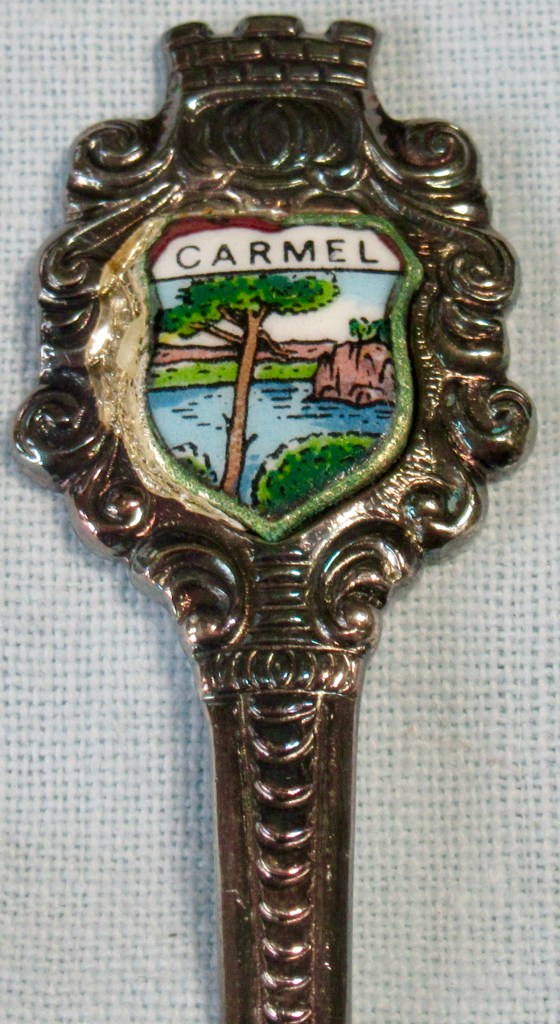
All children (and many adults too!) love collecting things and as well as bookmarks, spoons are my niche hobby. Many were gifted to me, mostly by family, as well as bought by myself. I love to travel and the spoons represented somewhere exciting and exotic; a memory of special times and other eras; the designs opening the doors of untold mystery and excitement. 

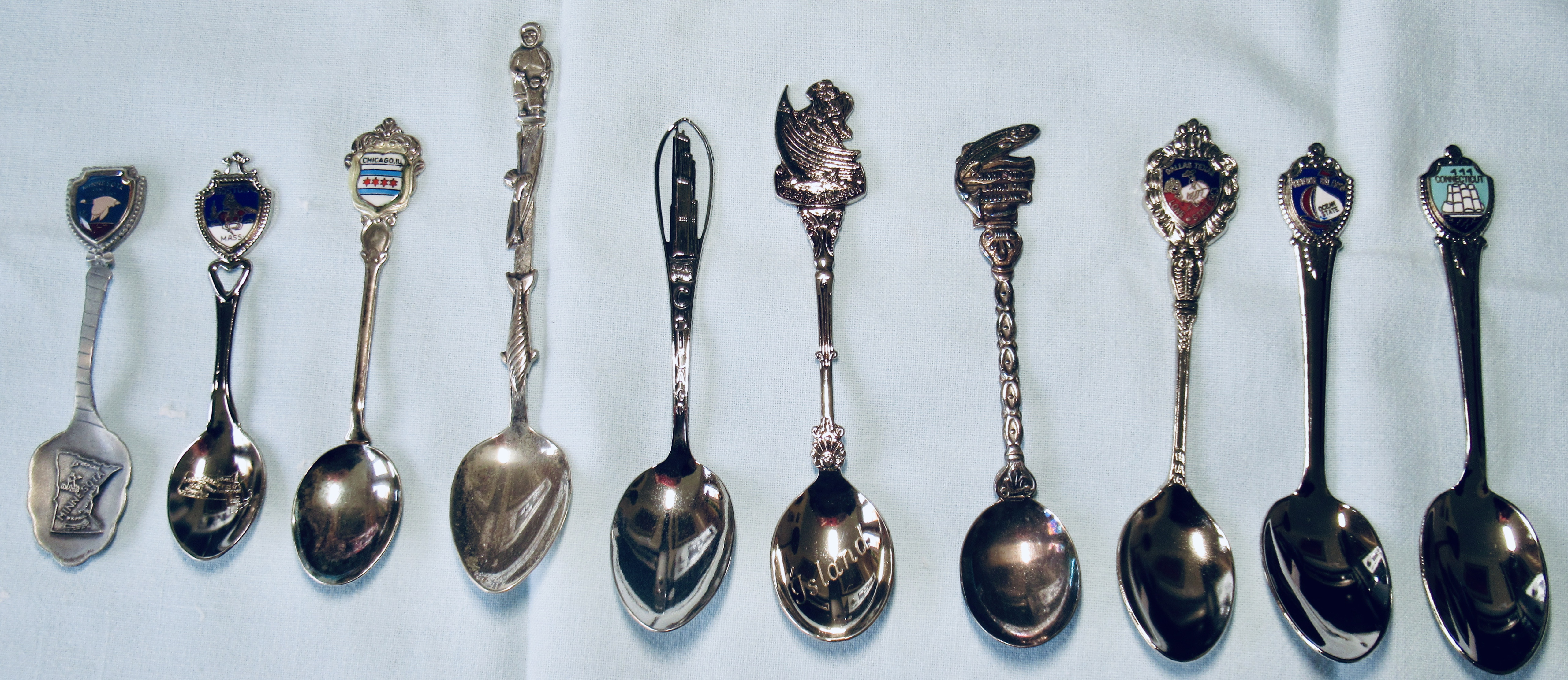
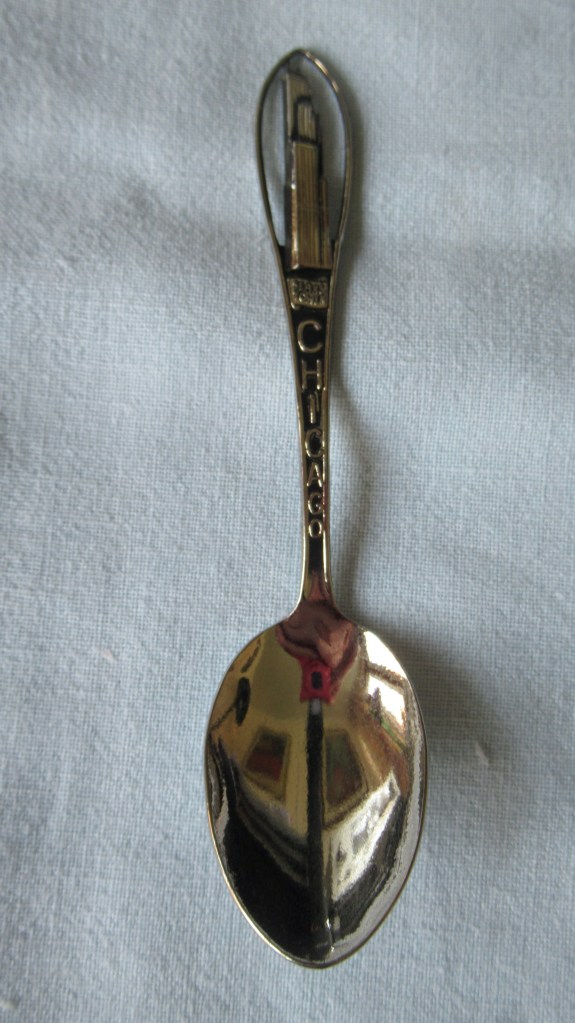
The collection is split into three categories: The United States of America, Europe and The United Kingdom. Enjoy browsing through the collection with me! Which are your favourite ones?

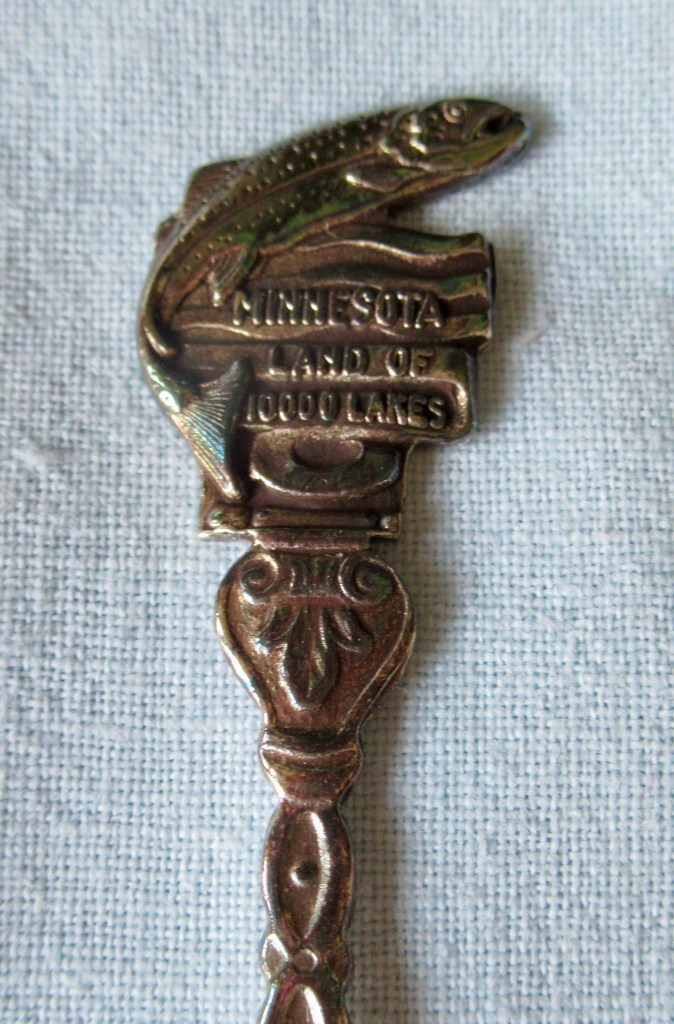
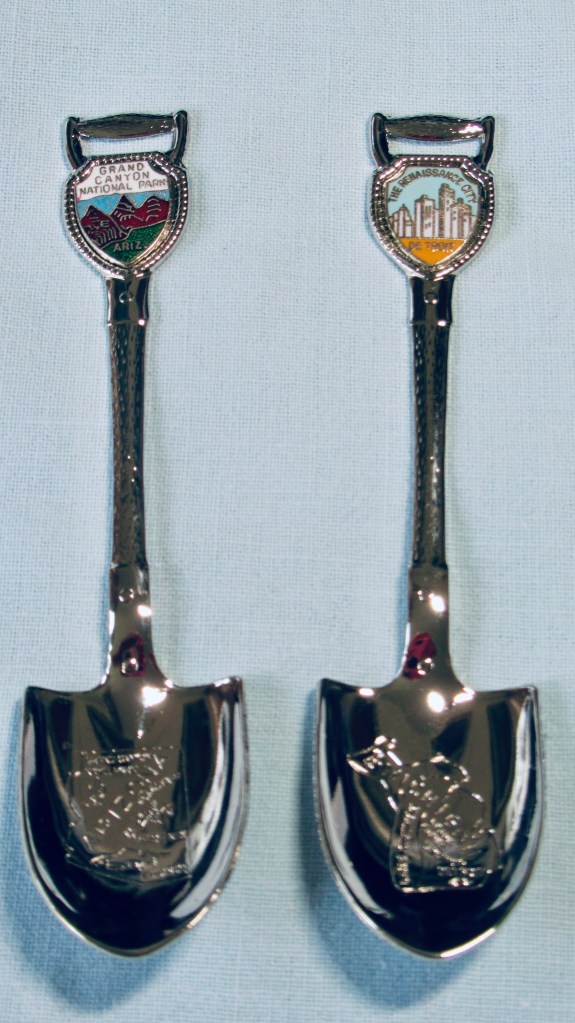
For those in America, can you find your state’s spoon?

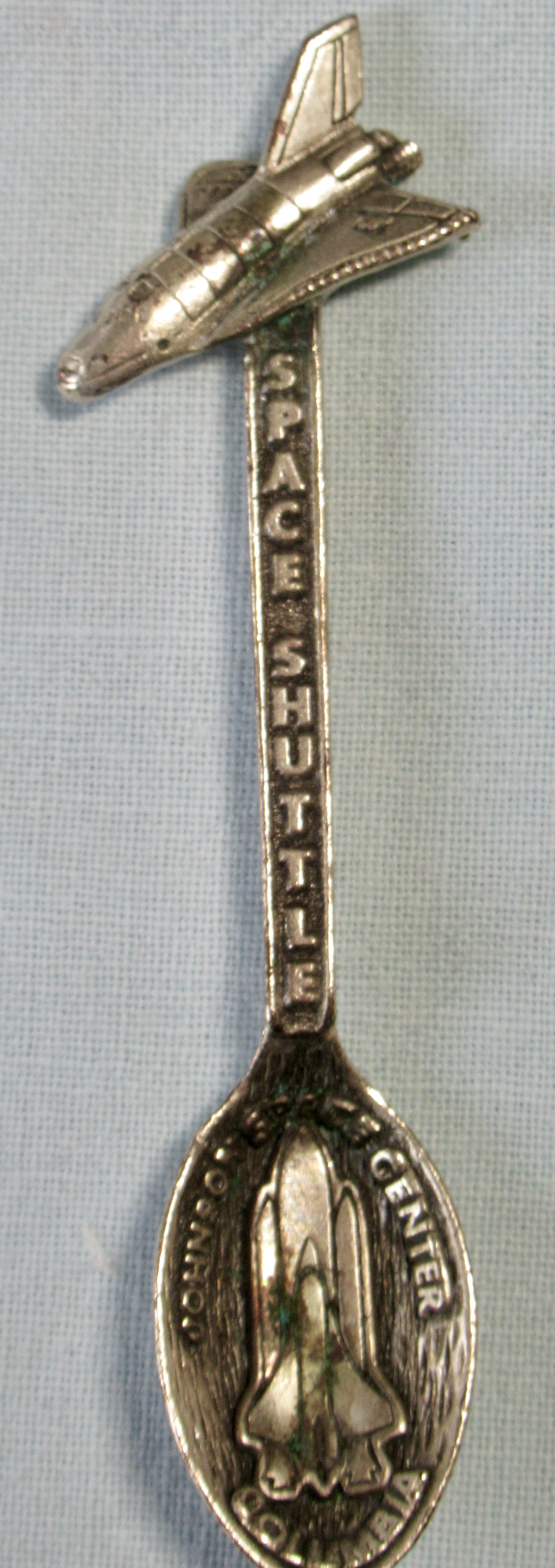
As a child I was mad about anything to do with space and especially the space shuttle – imagine my joy at receiving this spoon.

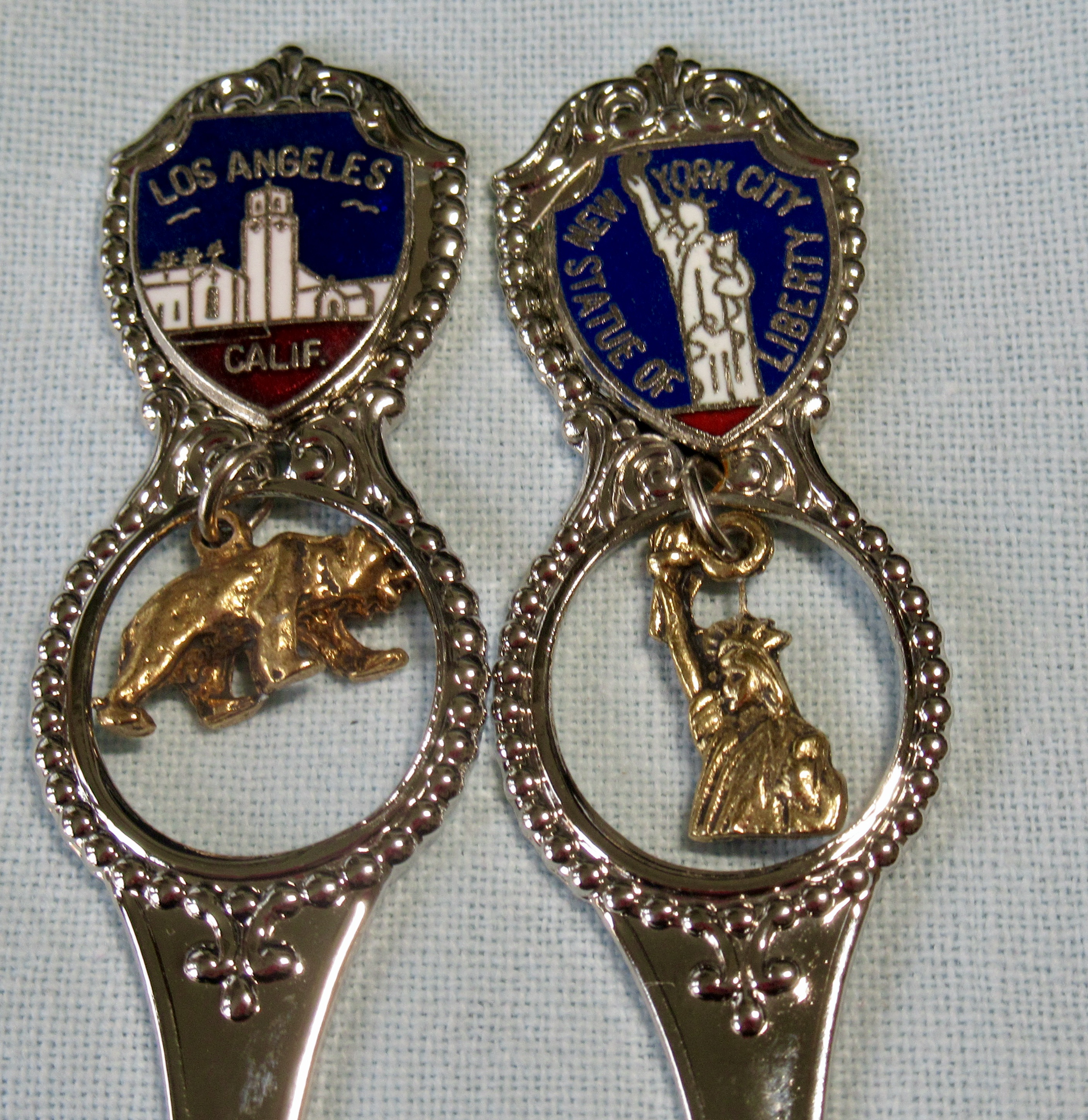
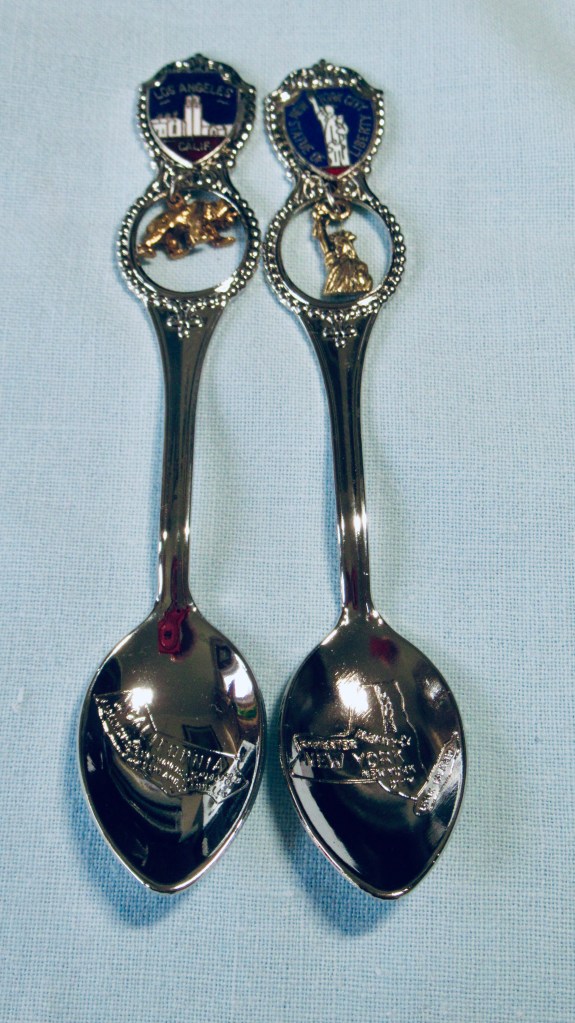
I’m particularly fond of the two spoons from Los Angeles and New York City with their golden hanging ornaments.

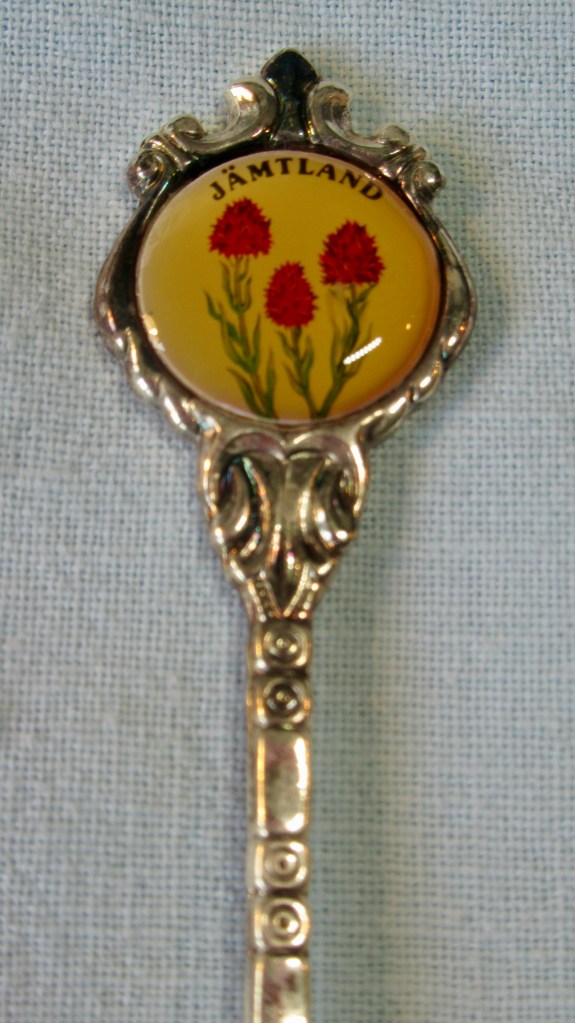
For those in Europe, can you see your country’s spoon?

When young we visited Greece many times and I have wonderful memories of our time in Corfu!

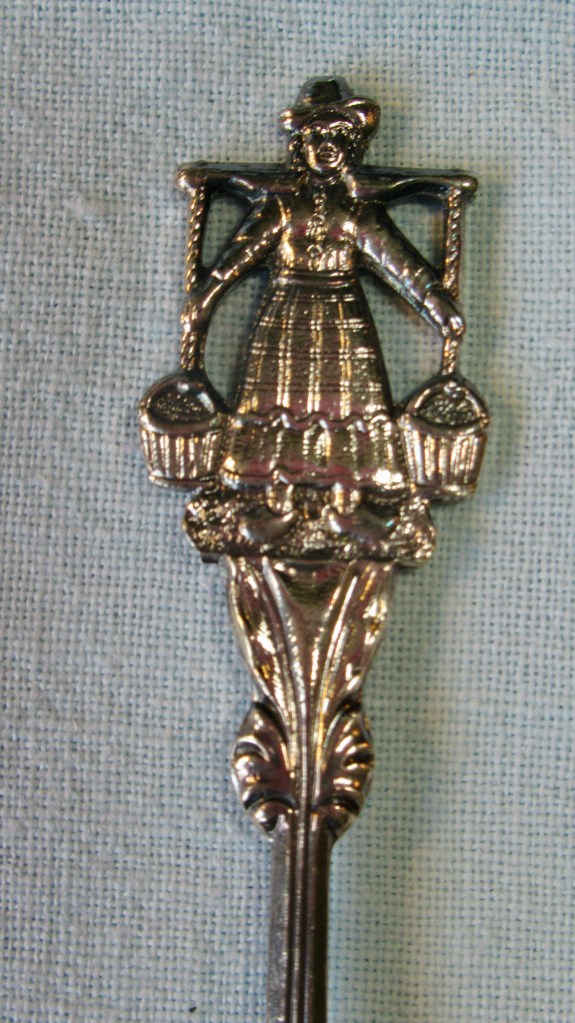
The slender shape of the Dutch milkmaid spoon is striking and there is exquisite detail of the woman herself, the two pails balanced perfectly on her shoulders.

Here are the spoons from Great Britain

Have you ever been to any of these places? 

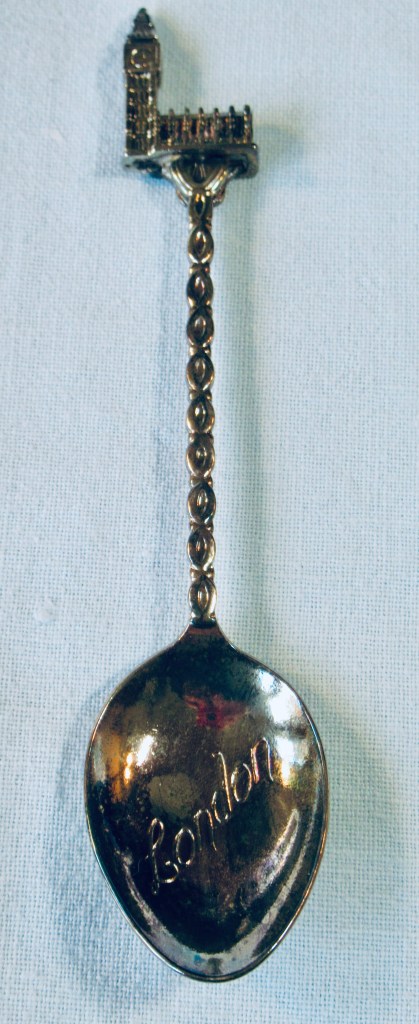
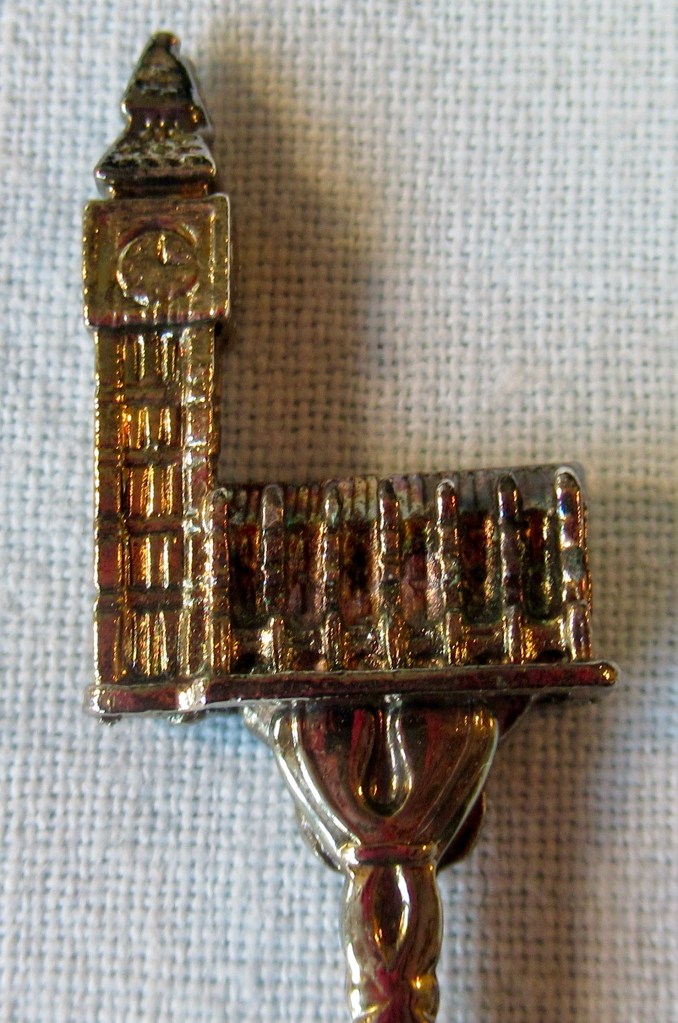
Big Ben and the Houses of Parliament are looking splendid on top of the silver spoon.

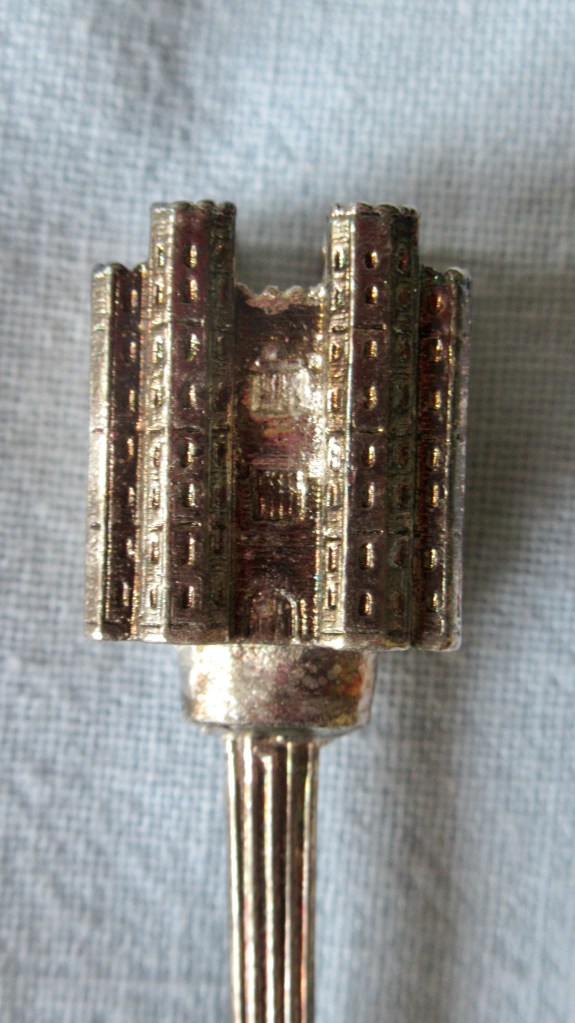
I remember being surprised that the local Hedingham Castle (which I’ve written about here) was similarly designed with the building on top.

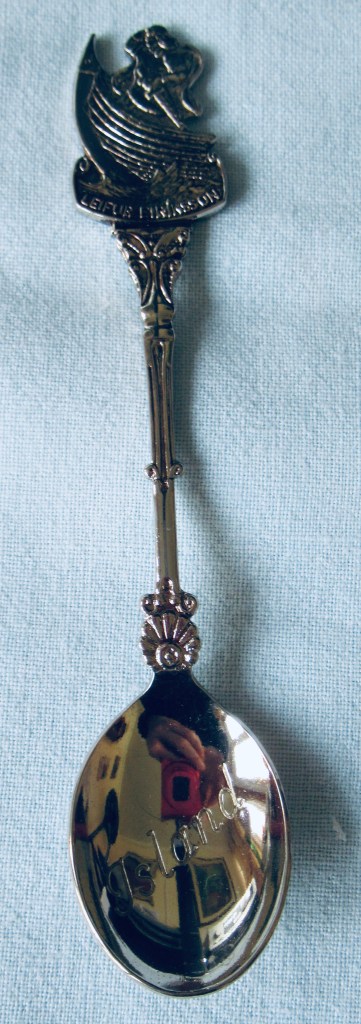
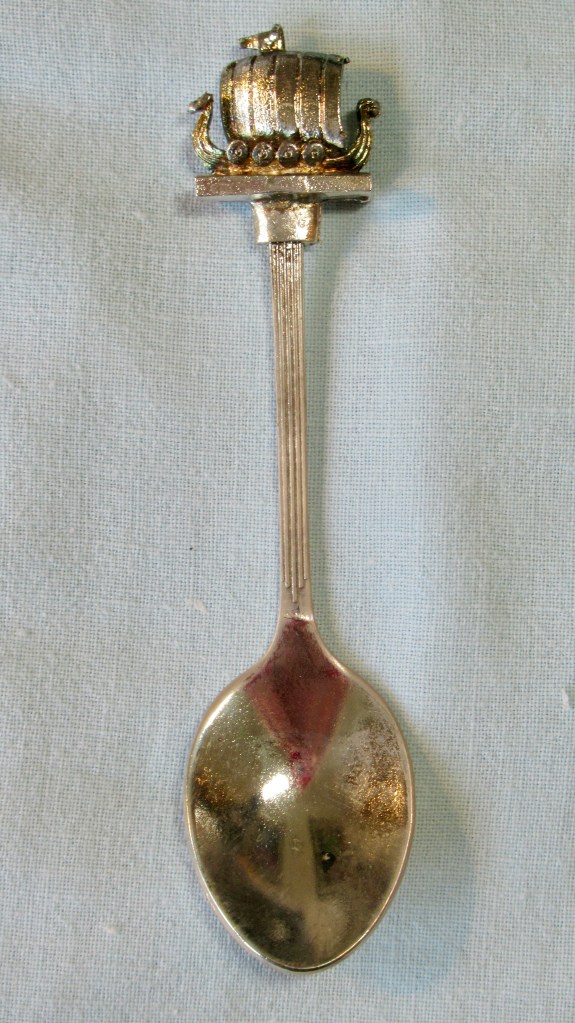
Finally, one spoon fell in between all categories although it ended up with the American.

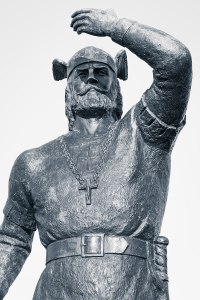
Leif Eriksson, also known as Lucky Leif, was a Norse man born in the late 900s, believed to be the first European to reach the shores of America. His father, Erik The Red, was originally banished to Iceland, before moving with his family, including Leif, to Greenland.

According to the sagas, Leif and his crew were said to have been blown off course while sailing from Norway to Greenland, eventually landing on Vinland in Newfoundland.

So much history within just each spoon! It is such a unique way of commemorating a place or moment.

Writing my post I became interested in spoon collections in general and intrigued to learn the following:

  • Silver spoon collecting became popular in the 1800s following the birth of tourism and especially the Grand Tours of Europe. By the late 1800s this European fad spread across America.
  • The first souvenir spoon produced in the United States, in Washington, D.C. in 1889, featured a profile of George Washington and was created to mark the centennial of his presidency.
  • Interest waned following World War One and is a marginal hobby nowadays.
  • My collection is palfrey in comparison to the world’s largest collection of 30,000 owned by Des Warren in Mayfield, Australia.
  • The phrase “born with a silver spoon in his/her mouth” is well known and is assumed to mean the child grew up wealthy. However, the idiom originated as a way of saying that the person never seems to get sick. There was a belief that the silver offered germ-killing properties and in the past children who were fed with silver spoons (which was a luxury often reserved for wealthier families) were typically healthier babies.
  • The most expensive silver spoon was sold for $32,500 / £26,000 at Heritage Auctions, London in 2021. It was manufactured in 1790.

Do you tend to buy a memento of your time visiting somewhere special? Or perhaps you have an unusual hobby or collection yourself? It’s great to chat away in the comments! 

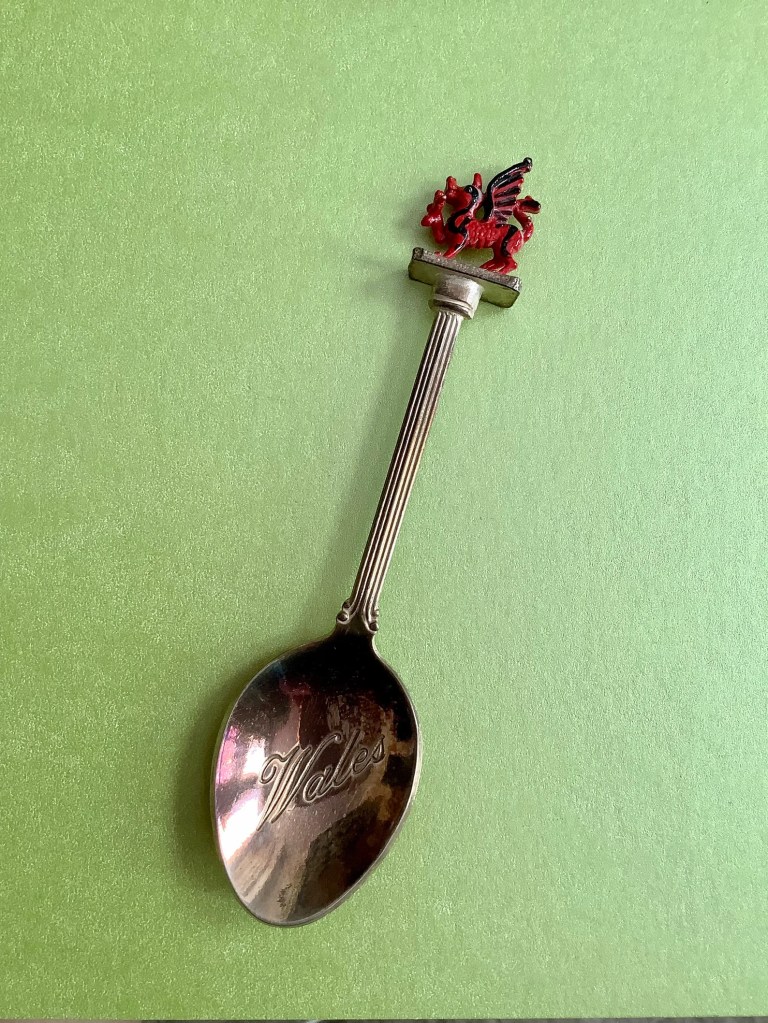
Finally, many thanks for David Prosser for mentioning how good the Red Dragon of Wales would look upon a silver spoon! They exist and look amazing- a new one I would love to be my next silver spoon!

* TO LOVE A GENIUS

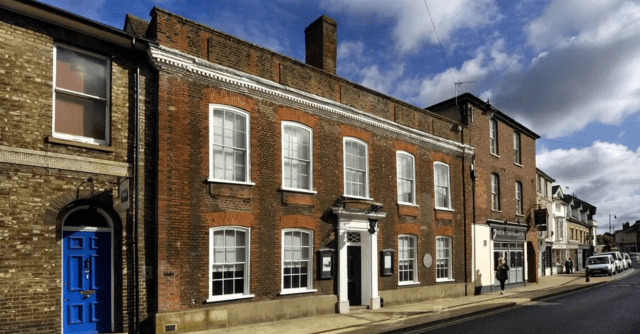
Down a narrow side street in a small market town in Suffolk is the entrance to the home of one of Britain’s most renowned artists – Thomas Gainsborough. Born in the town of Sudbury in 1727 the home of his birth and childhood is now a popular and iconic house / museum.

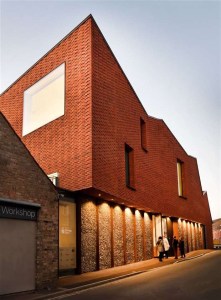
"Modern anglar, red brick building of new gallry space."

In the past few years, the ramshackle previous home has undergone a major refurbishment and it was with excitement and slight trepidation that I headed down the street, past the house from the 1400s to the new main entrance – a bold modern three-storey building.

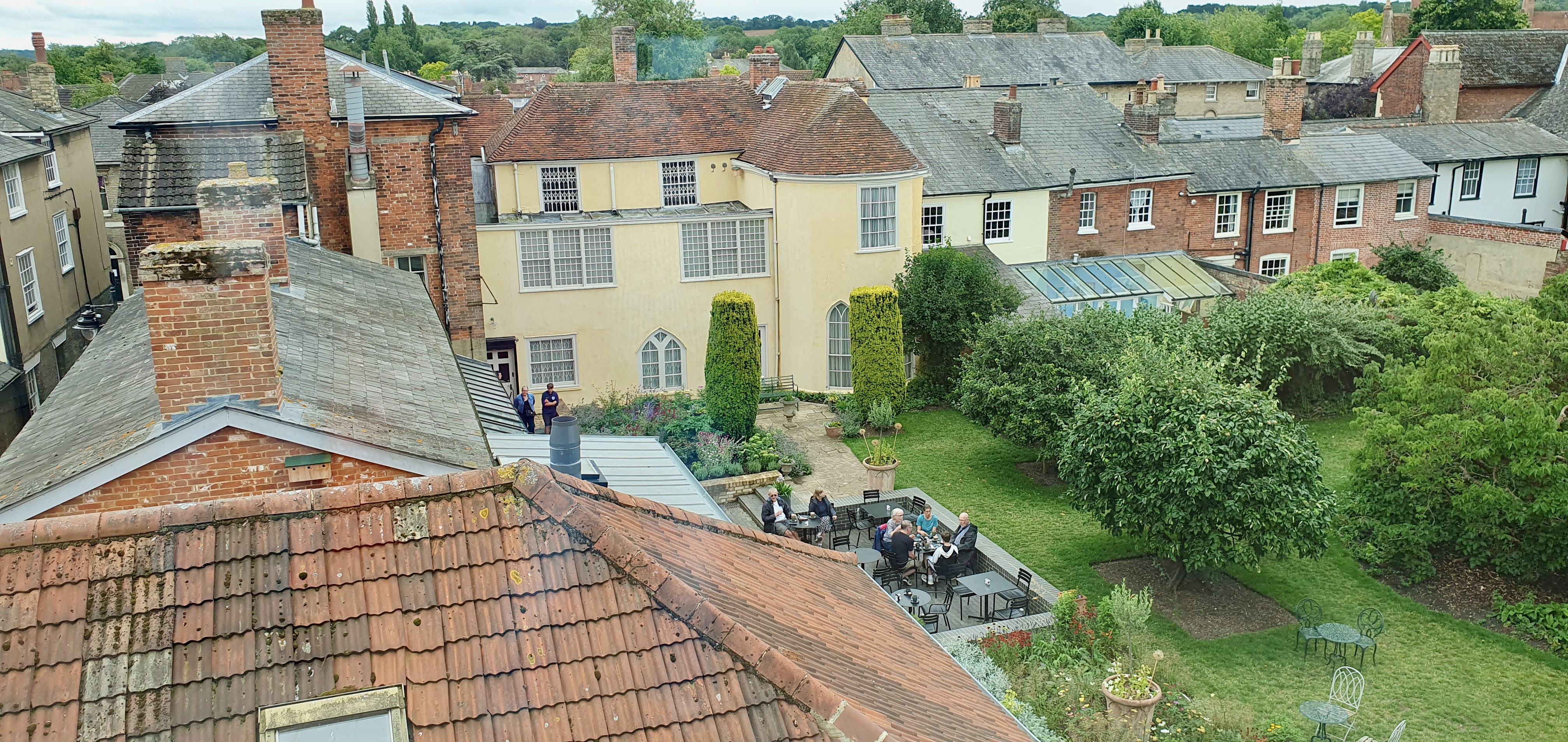
We were warmly greeted by staff and the new museum was explained in detail. First, we were advised to head to the top floor for panoramic views overlooking the town. What excellent advice and although I know the area well I could not help but be awed by the views of below and especially of the building and garden of our destination – Gainsborough’s House.

"View looking down onto the rear yellow of Gainsborough house, set behind pretty garden with patio seating area for cafe to the left."

Standing there, in the newest of buildings, looking out to one built six hundred years ago, one would expect incongruity, a clash of centuries, but the addition and changes blend thoughtfully and cohesively together.

Once downstairs, having seen a couple of extra exhibitions on the other floors, we pushed open the heavy dark door leading to the start of the visit proper.

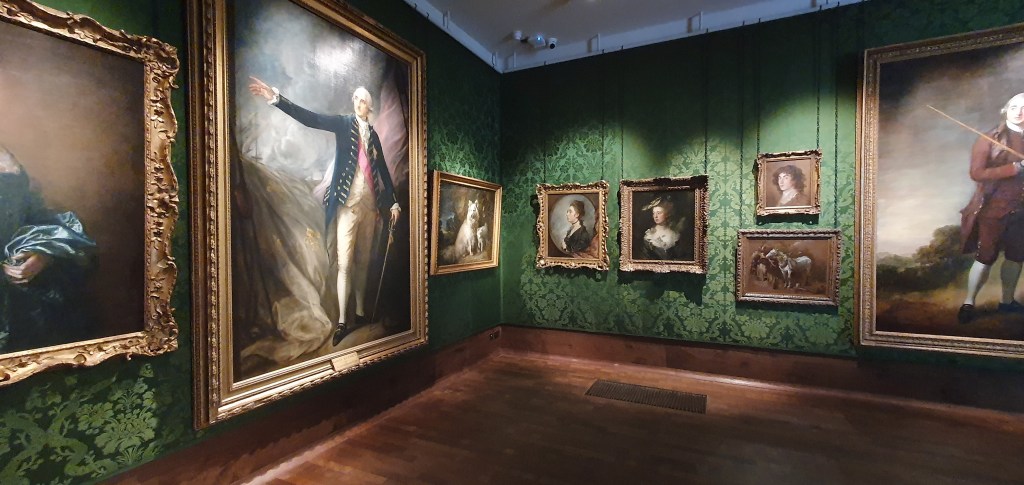
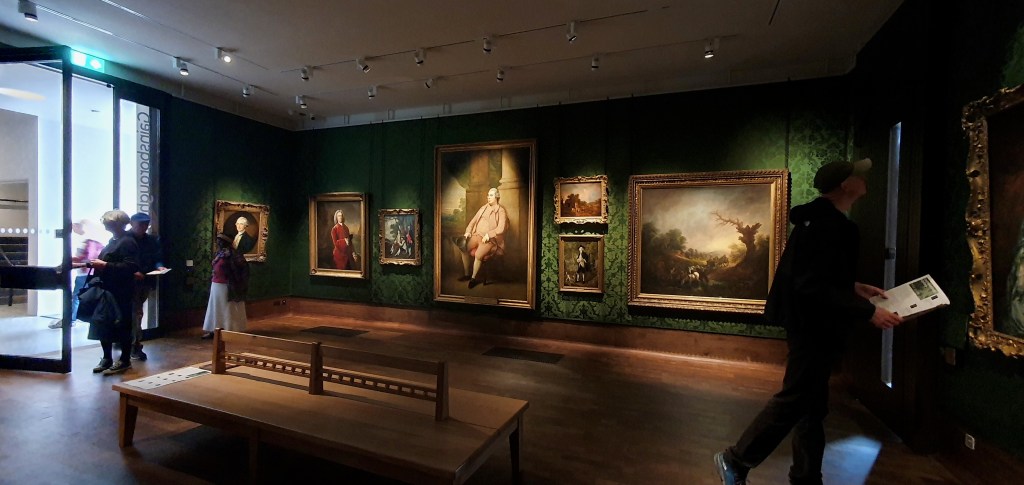
Initially, the dour gloom overwhelmed me before I took a sudden gasp of breath; within the gallery room hangs the most wondrous display of Gainsborough’s paintings.

I had seen many before and it is as if I were welcoming friends. They are perfectly lit.

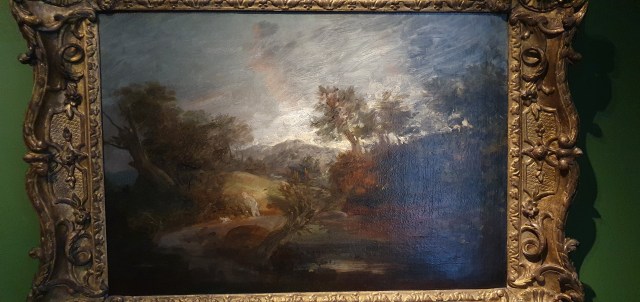
"Landscape scene with big grey and red lit up sky, trees leaning to the left, hills in the disatnce."

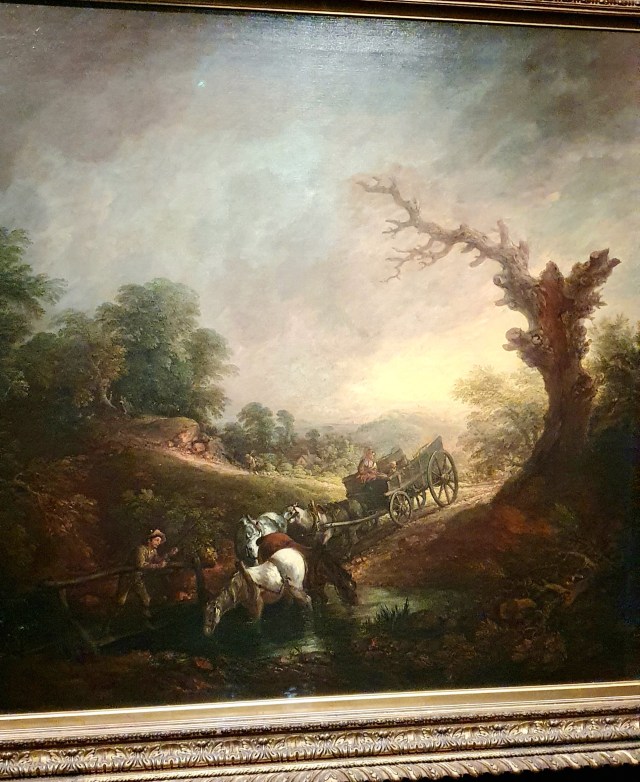
The heavenly light from the landscapes emits its own brightness and life.

"Beautiful close up of painting of horses and carriage, the horses drinking in the river, a man trying to encourage them on."

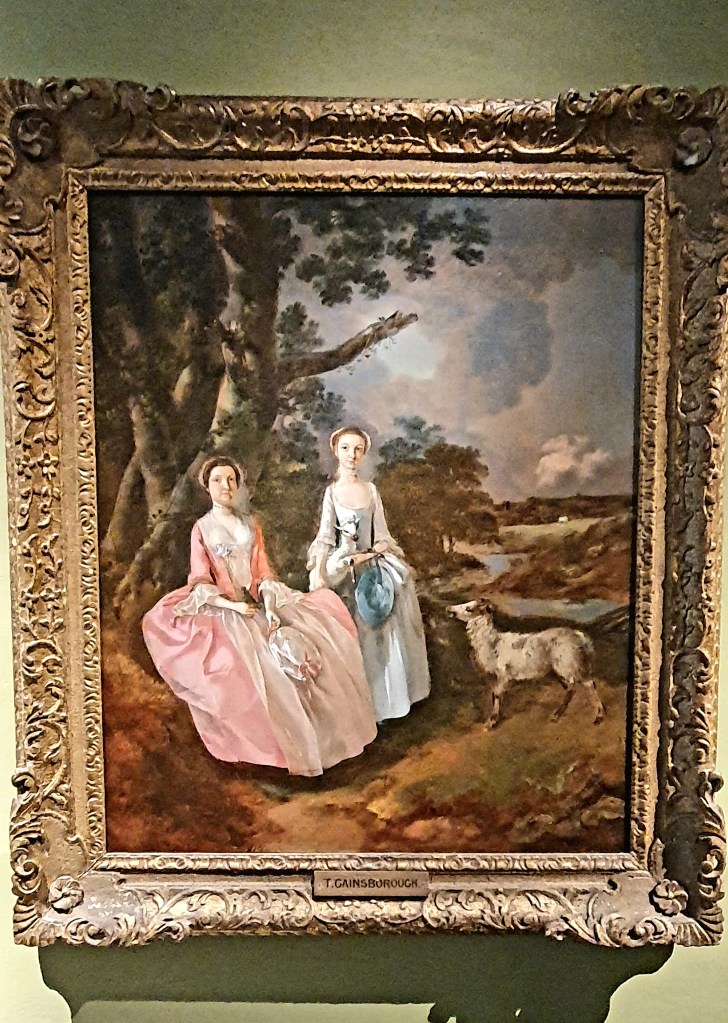
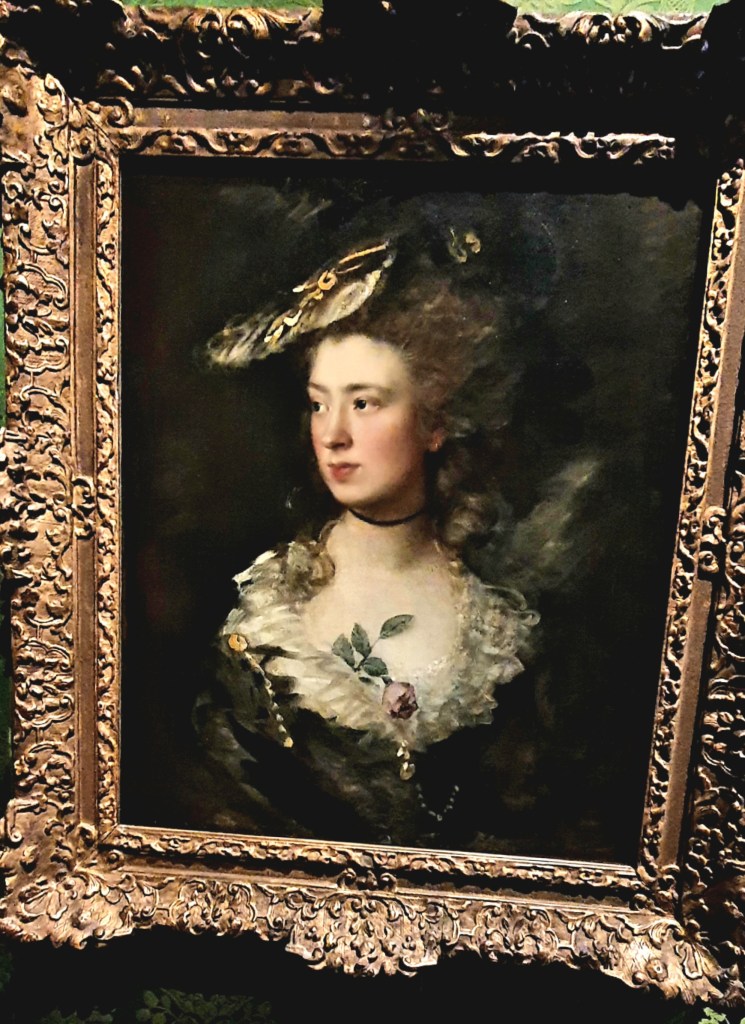
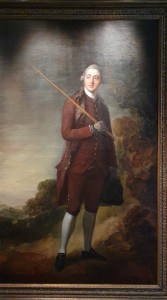
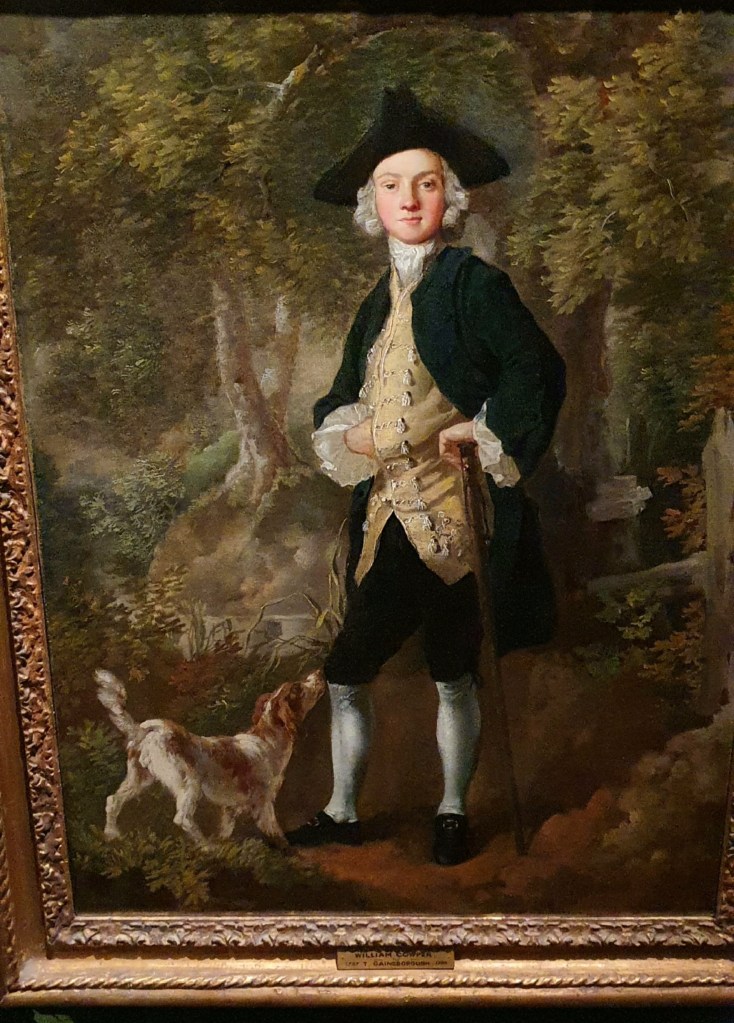
The portraits are exquisite, the women captured with depth and elegance.

The men display at times hidden pomposity, ensuring their grandeur and wealth are on display for all. One wonders how the artist had the patience with them all, only to learn he did not! Gainsborough did not enjoy having sitters and probably as a result turned out to be an extraordinarily fast painter.

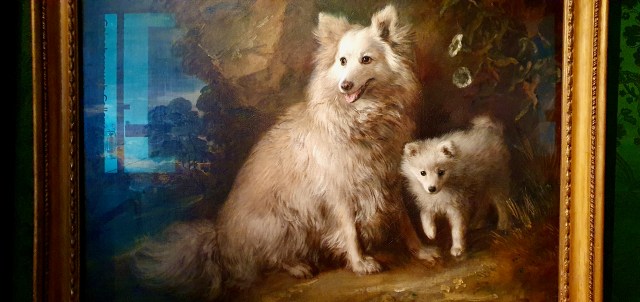
All around is such incredible art I can’t help but sit down in the tranquil reverential silence and absorb the magical beauty surrounding me, including the stunning painting of these two dogs, their eyes so full of life I felt they were about to come bounding out the picture.

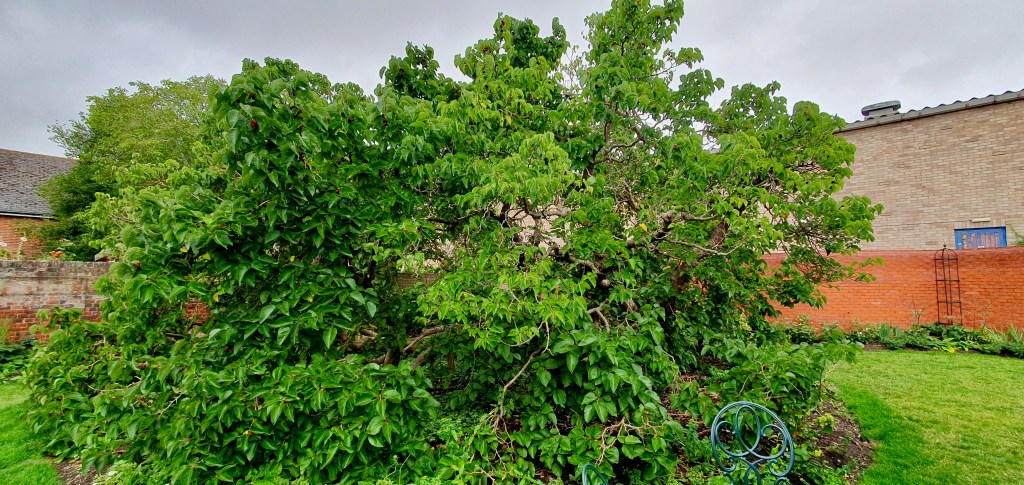
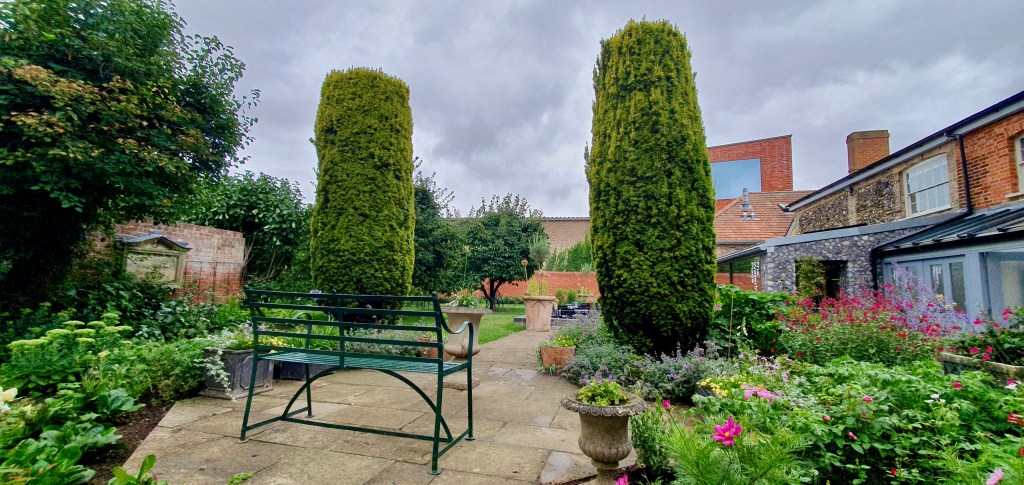
From this unexpected and dramatic introduction, we headed out to the serenity of the garden. Here an ancient four-hundred-year-old mulberry tree still bears fruit.

The yellow-painted house was just ahead and it was with intrigue I entered the house.

"Close-up of yellow facade of rear of house, showing the routund to the right, the red tils and three arch windows on the lower floor."

As Gainsborough’s House originally dates back to the medieval period some of the original beams from the era are visible. Also on show is an example of the style of the original build using wattle and daub (sticks & mud basically!). Gainsborough’s father, a merchant, ensured the family home was revamped in the modern Georgian style and much of the house remains as such.

On previous visits, the downstairs front room was a higgedly-piggledy collection of a tiny squashed cafe, a little shop corner and displays. Now the beautiful entrance hall leads us to the painting room.

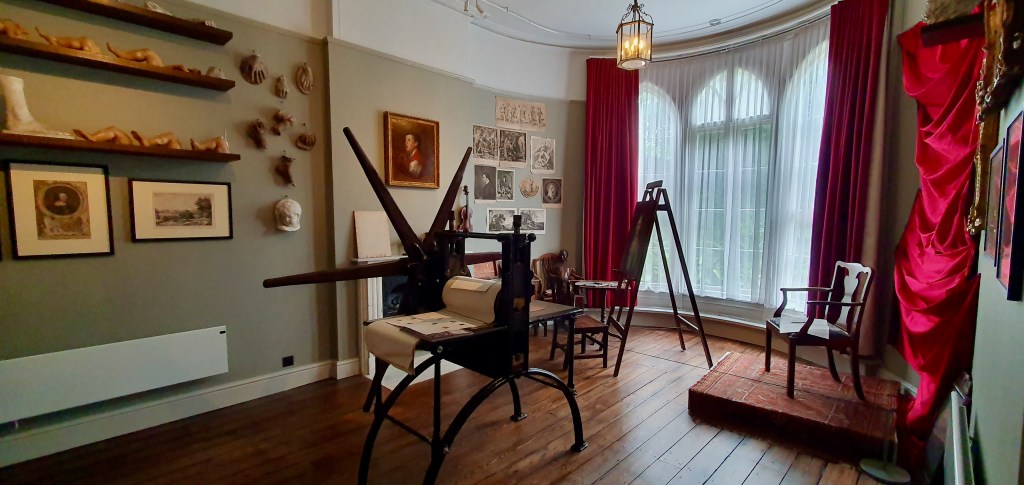
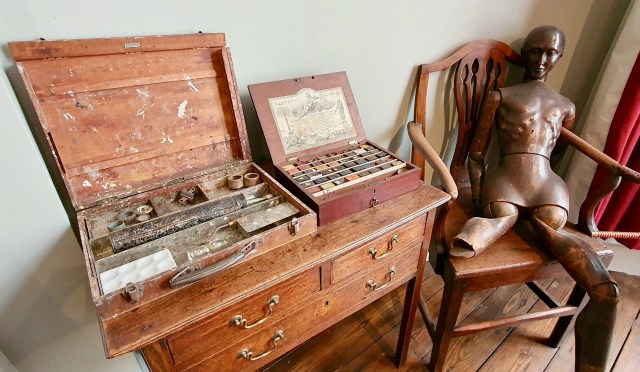
This is the contemporary interior of what would have been a typical studio. As was the norm it is north facing (to avoid issues with changeable shadows through the day) and the room contains a rich array of artefacts. An easel with a canvas by Thomas Gainsborough’s nephew Thomas Gainsborough DuPont, who was the artist’s only assistant, is casually on display while nearby artist’s brushes are set on a wooden table ready to be picked up and used.

"Wooden wooden chest of drawers and on top two boxes, one of traditional  painting tools the other of painting blocks. A metal manaqun rest on a chair next to this."

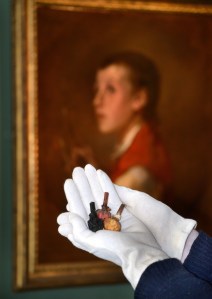
A glass case houses a unique collection of paint bladders – these are small animal bladders which contained the artist’s paint and a wooden stopper to ensure they were kept fresh. A large selection of these were found in the attic and there is good reason to believe they belonged to Gainsborough himself.

"Three colourful painters bladders held by curator with white gloves."

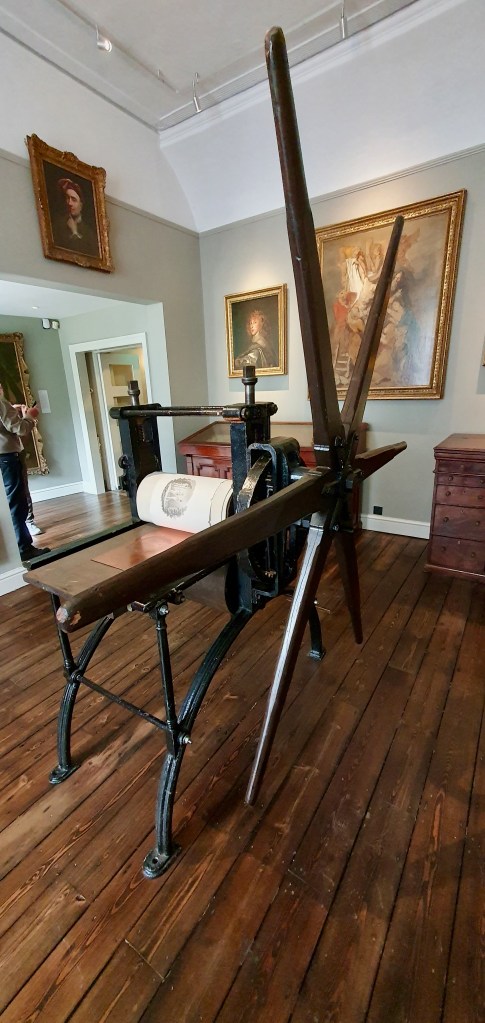
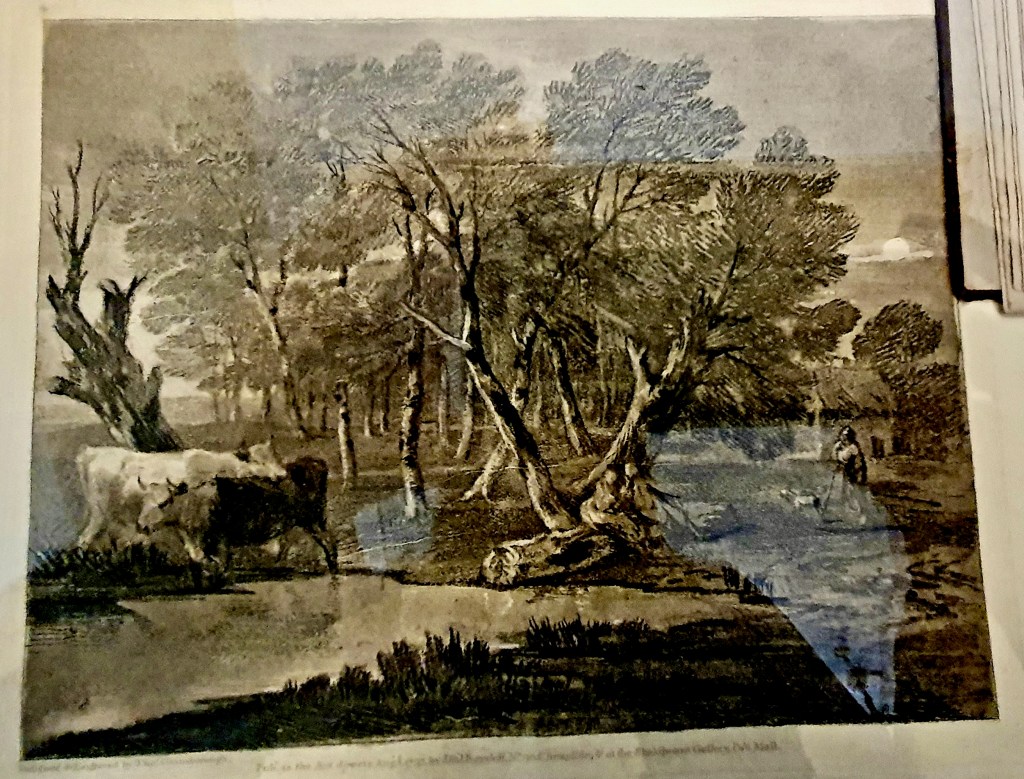
In the middle of the room is a most magnificent Star Printer which creates pictures from copper plate etchings and there is a stunning one made by Gainsborough on display.

Walking around the house one cannot help but reflect what it would have been like for Gainsborough to grow up here. His passion for painting was nurtured and encouraged by his father and Gainsborough was allowed to leave for London to learn more about the craft aged thirteen. His passion for nature, particularly the county countryside, is evident in his work although he turned to portraits, partly as a necessity to earn a living and he was a great admirer of Van Dyck’s work which is reflected in his paintings.

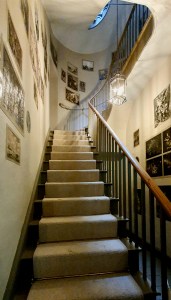
"Tall staircase leading up, pictures of paintings stuck onto the walls."

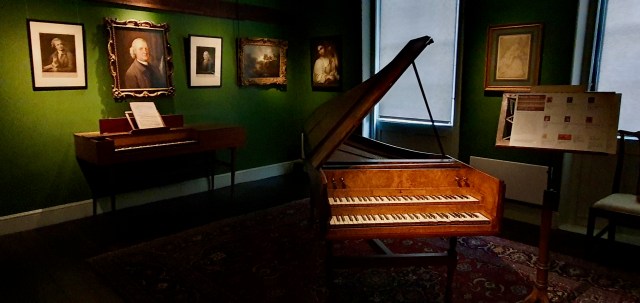
Gainsborough’s other love was music and the Music Room upstairs, which is accessed by the elegant and sweeping staircase, houses the country’s only double-manual harpsichord and this dates from 1738.

"Harpsicord, like a grand piano but smaller, the top lid open and on the green walls many paintings."

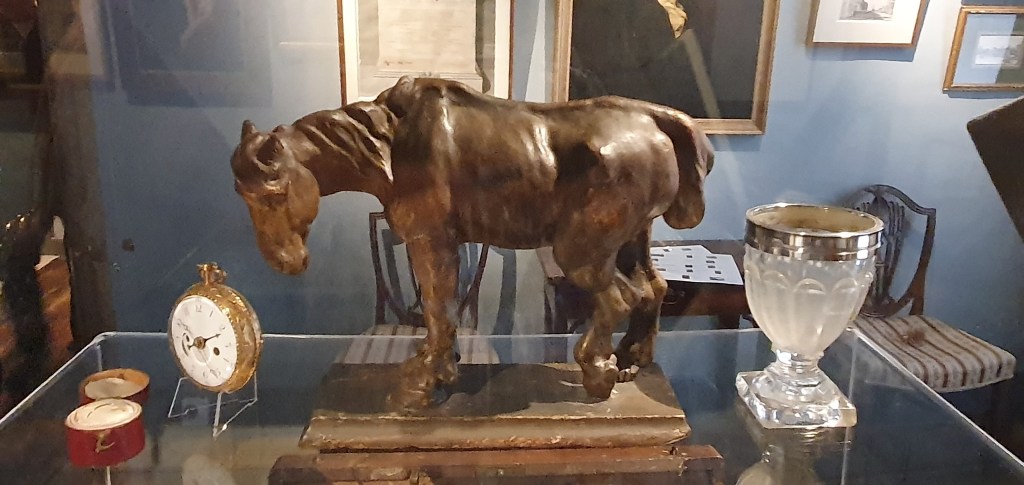
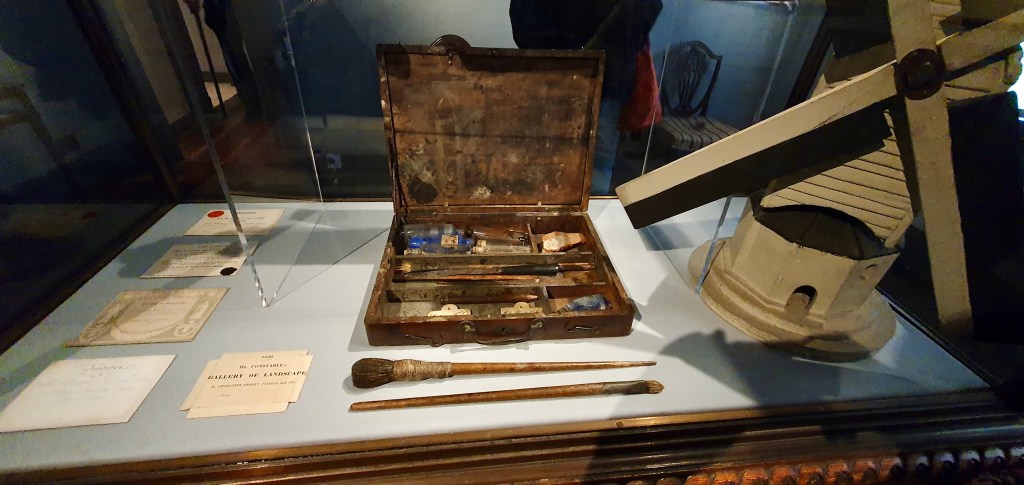
In the Constable room several of this other famous artist’s work is on display. John Constable was a close friend of Gainsborough and is said to have been influenced by Gainsborough creatively. Constable’s landscapes are legendary and great to see some of the smaller ones here. A case displays some of John Constable’s original set of brushes and also one of the artist’s most treasured items, a model of a horse made by Gainsborough.

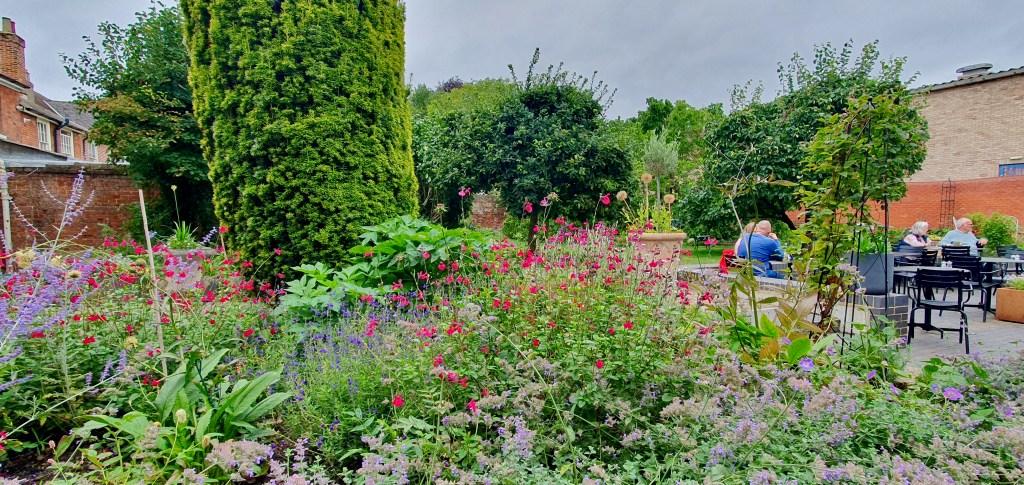
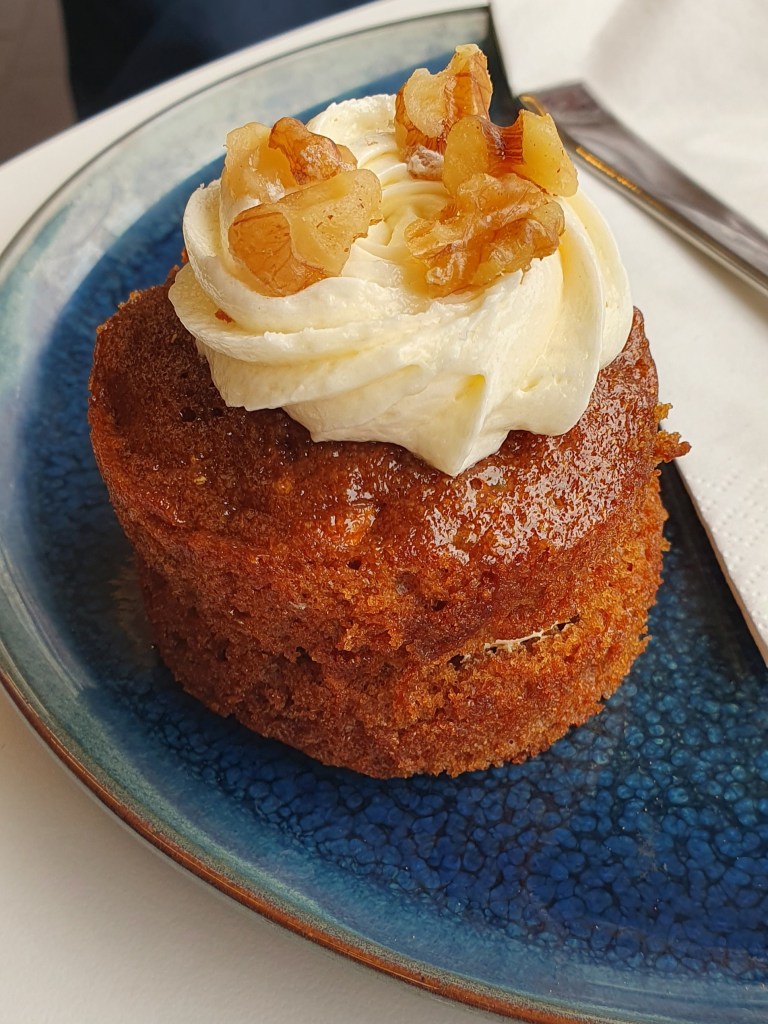
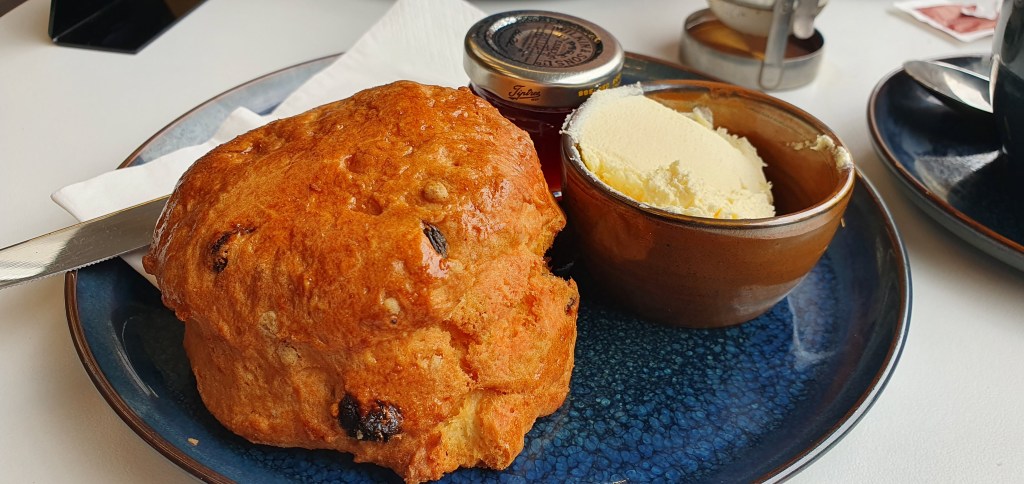
With our hearts and minds replete with art and history we headed back to the garden and the new cafe. In harmonious quiet we contemplated the incredible history on our doorstep, the stunning art in such a close and intimate setting, all in the original home of the great artist. Mulling over the visit, we turned around and laughed – as we enjoyed our cakes we noticed another Gainsborough hanging nonchalantly behind us!

* “We love a genius for what he leaves and mourn him for what he takes away.” Thomas Gainsborough

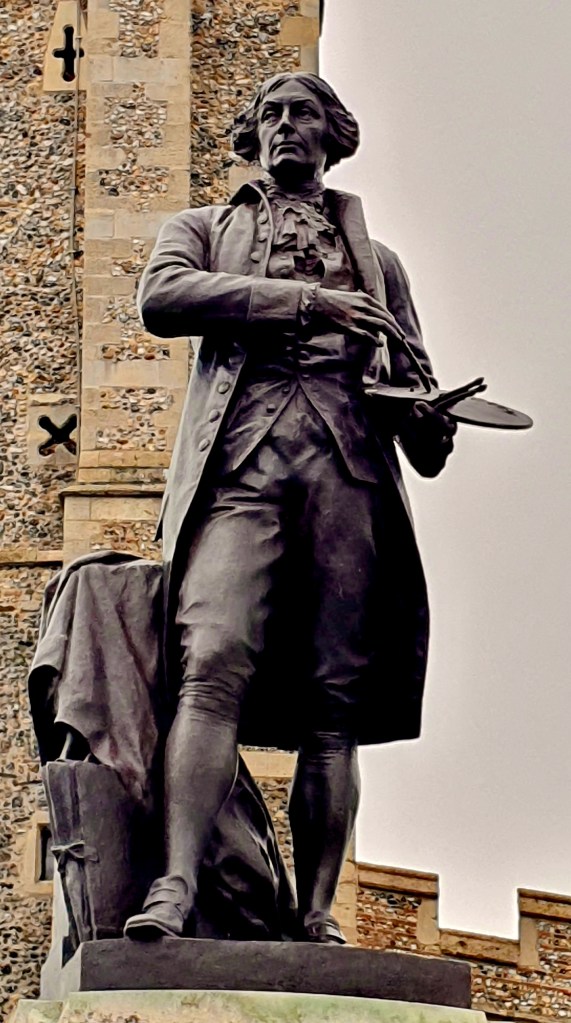
Bronze statue of Gainsborough in a long overcoat, open to reveal his waist coat and cravat, as he looks over the market square in Sudbury, towards Gainsborough House, pausing from painting and resting a brush on the palette.

“As we look at his pictures we find tears in our eyes and know not what brings them.” John Constable

PICTURE WORTH A THOUSAND WORDS

Do you have a spare thirty hours? Furthermore, do you have about thirty manual typewriters laying around the house?

Probably not!

One architectural student however has both of these and is creating a most astonishing new form of art – one that is reaching across the globe.

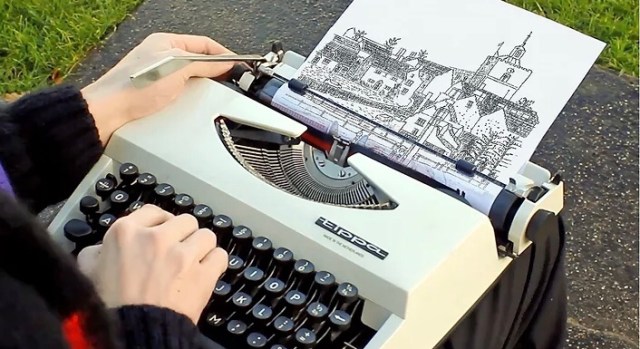
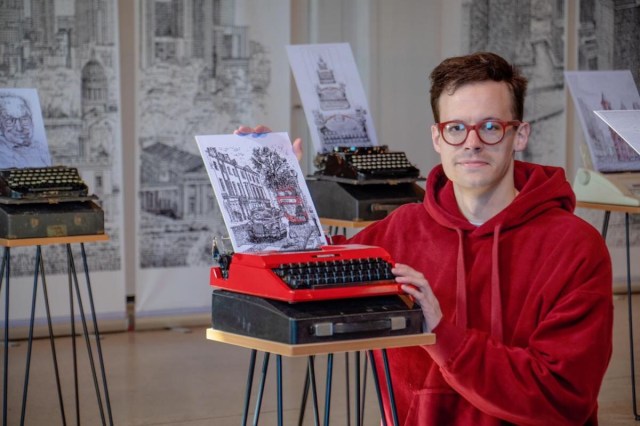
Known as the typewriter artist, James Cook (aged 25) from Braintree, Essex uses obsolete manual typewriters to ‘paint’ / tap out stunning landscapes, portraits as well as animated drawings.

James Cook. Photo on Google

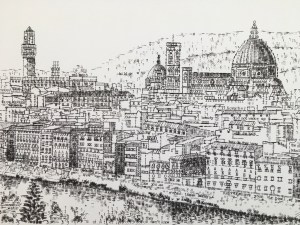
There is just a moot point – they are mostly black with a dabble of red (the two colours of typewriter ribbons!) James uses the restrictions of colour to a wondrous effect, capturing St. Paul, Westminster, New York, and Florence amongst many of the world’s famous sights! The largest of these used over 500,000 characters and the least amount of time on the smallest commissions is at least thirty hours.

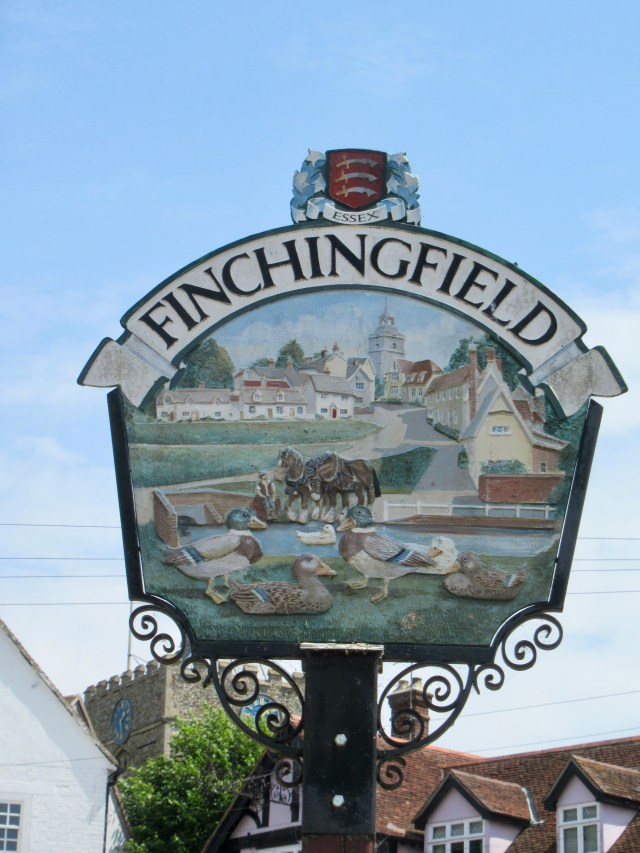
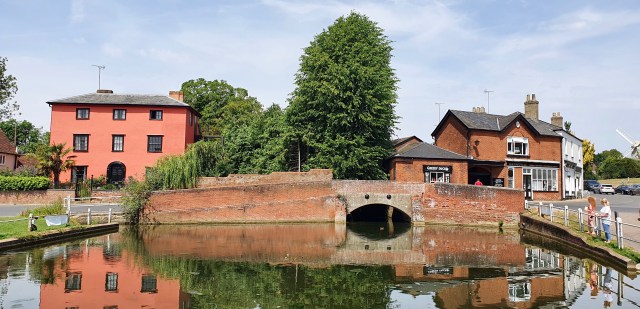
One weekend in July I had the pleasure of attending an exhibition of his work at a gallery in Finchingfield which is a picturesque quintessential English village with plenty of thatched houses, duck pond, pubs and cafes galore as well as a windmill.

Finchingfield Village sign. Photo by Annika Perry

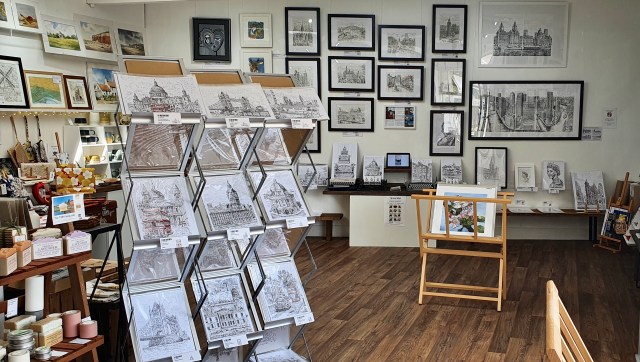
It was amazing to see the drawings in real life at The Wonky Wheel Gallery. There was a wide range of them on display and it was fascinating to learn that like traditional artists James Cook actually takes his tools of the trade out on location – in this case, a typewriter or two – and sits on a chair tapping away. He will also ensure to make pencil sketches for reference later.

The Wonky Wheel Gallery & part of the James Cook exhibition. Photo by Annika Perry

However, unlike oil and water colour artists, there is little scope for error as there are no second chances and he is loath to use Tippex (white out / correction fluid). ‘Accepting mistakes has been the toughest challenge.’

To date, James has created nearly 200 drawings, and last year became a full-time artist! The now 40 typewriters used range from a 1920s Continental Portable, to a Tippa and Rimington Envoy III to later manual typewriters from the 1990s.

There was one fellow typewriter collector James longed to make contact with – Tom Hanks. The latter was impressed enough with the portrait of himself which James sent him to return it signed. This had pride of place in the exhibition and it is startling how the artist has captured the character and nature of the actor.

Currently, typewriters are to be found in every room in James’s house, and some in his car, although only a few are fully working at any time. Luckily a local company helps to supply the all-important ribbon and he is also sourcing them from the USA.

Throughout his work, his passion for buildings shines and being a student in the field is a crucial component in his success.

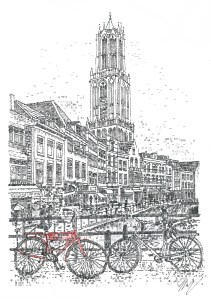
The Dom Tower, Utrecht, Netherlands typewriter art by James Cook. Photo on Google

Commissions are at the heart of his work as an artist and over the last seven years, James has become internationally recognised for his work. He has accepted orders from numerous countries including South America, Australia, France, Germany and the USA.

He finds that his ‘inspiration is motivated by the stories of individual and customer who commission drawings’.

Just as each drawing is created from two perspectives, that of the close-up of each individual letter, number or punctuation to create the mesmerising whole image, the viewer is equally beguiled by both elements. Close up I could see the darker areas of the drawing where the key has been struck endlessly in one place, in other areas I could see individual characters, and at times whole sentences are visible. These ‘hidden’ sentences helped him to create his slogan of ‘a picture is worth a thousand words’.

Florence typewriter art by James Cook. Photo by Annika Perry

While at the exhibition my husband and I bought one of his limited edition prints of Florence, a belated wedding anniversary present to ourselves and in memory of a beautiful visit there years ago. From afar James has captured the city with awe-inspiring effect, building upon building rising up to the iconic Duomo in the distance, the serene Arno and woodland in the fore. Looking closer I can make out sentences such as ‘11 November’, ‘did not wake up’, ‘with intention’ and ‘2nd time lucky’. On each viewing of the image, I make a new discovery and each new find enhances the drawing!

I am sure the astonishing typewriting art by James Cook will become ever more popular and known and it was a joy to view his drawings and some of the typewriters in the early days of his career. If you want to see more of James Cook and his works click here.

Finally, after three long years, my family and I are once again returning to Sweden for a long summer holiday and as many of you are aware the location is wonderfully idyllic and remote – ie. no Wifi! I will pop in to a library or family & neighbours during my sojourn and reply to comments when possible. I wish you all a wonderful safe summer (or winter to my friends in the southern hemisphere).

‘Within you there is a stillness and a sanctuary to which you can retreat at anytime and be yourself.’

Hermann Hesse

Finchingfield famous bridge and duck pond. Photo by Annika Perry

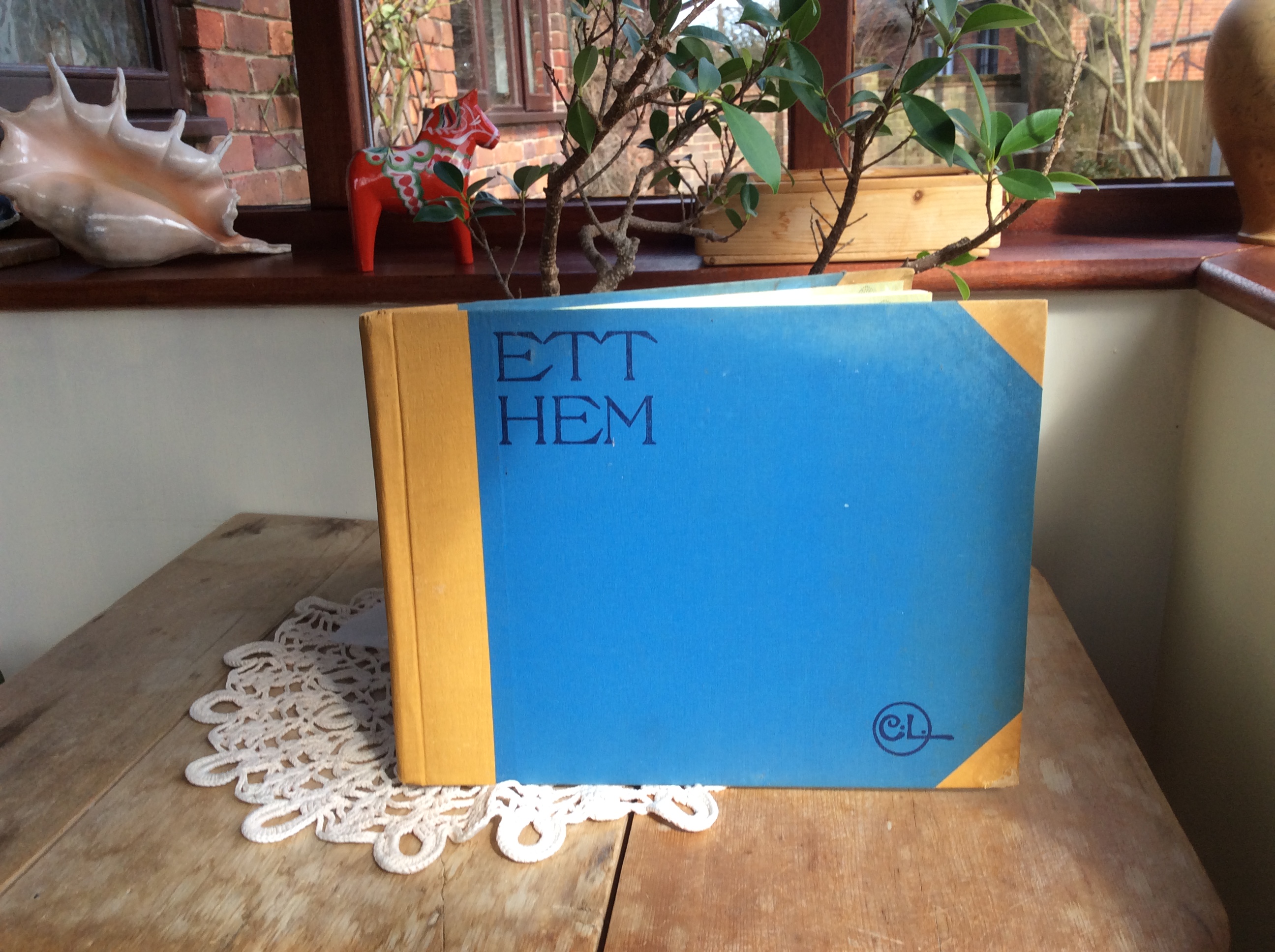
ETT HEM #3

The emotions are sometimes so strong that I work without knowing it. “The strokes come like speech.

“The emotions are sometimes so strong that I work without knowing it. The strokes come like speech.” Vincent Van Gogh

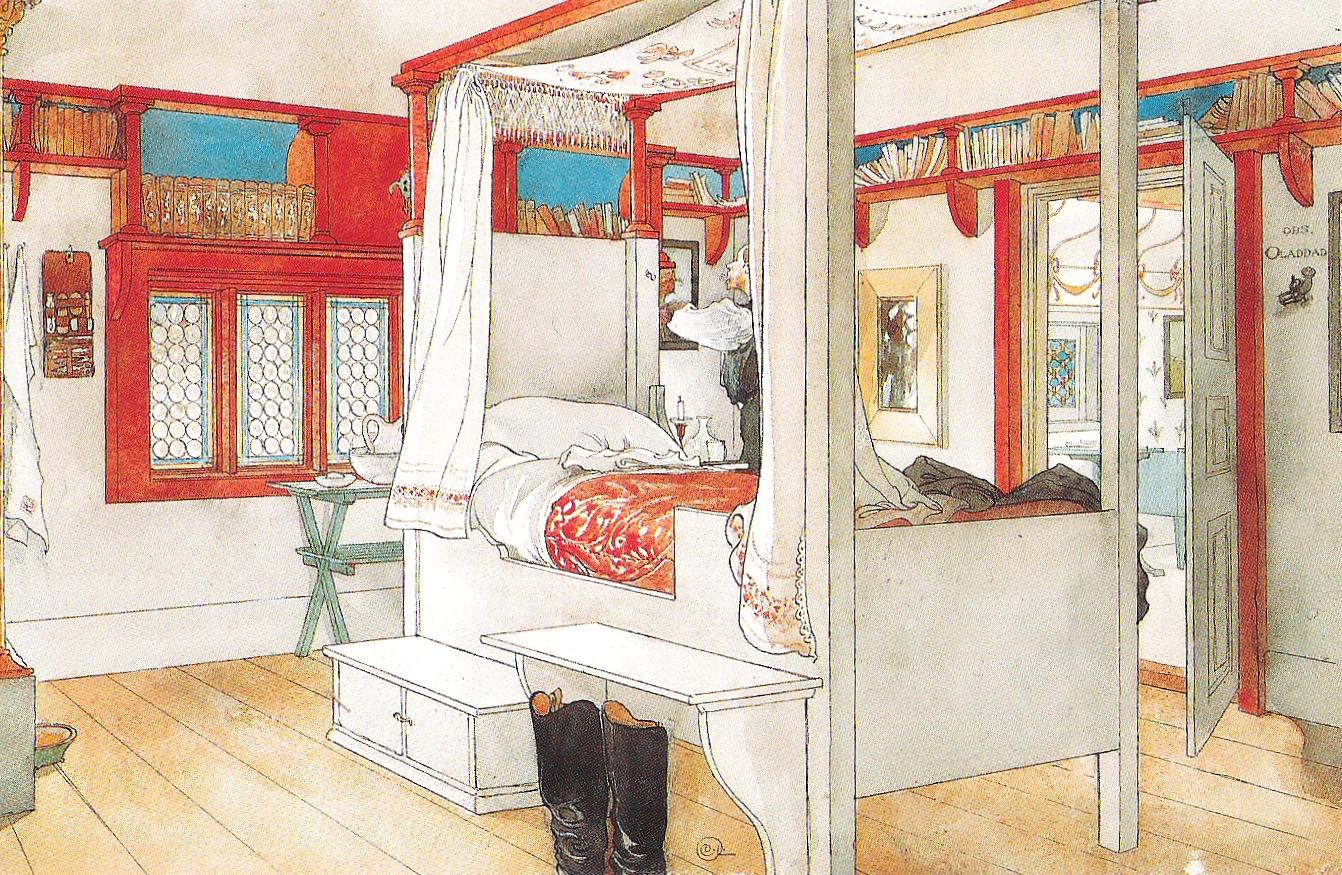
Welcome to my third and final instalment about Carl Larsson and his watercolours of the beloved family home; a place where he ‘experienced an indescribable delightful feeling of seclusions from the hustle and bustle of the world’.

Carl Larsson (1853-1919) was heavily influenced by William Morris and the Arts and Crafts movement in the UK and over the years Karin and Carl transformed their humble abode and in the process created a lasting legacy for interior design in Scandinavia and beyond. Their charming, evocative and distinctive style in furnishings is still highly influential and inspiring homemakers today.

“If light is in your heart you will always find your way home.” Rumi

Whilst Carl, with some help from carpenters, made the furniture, carved the doors and cupboards, Karin was responsible for the textiles and tapestries at ‘Little Hyttnäs’ as well as the rugs.

The idea to paint pictures of the home was first suggested to Carl by Karin during a rainy summer in 1894 when she feared her husband would fall into depression. Inspired, he continued to paint all aspects of their house and lives within and outside it.

“A picture is a poem without words.” Horace

Following Carl’s acceptance of an invitation from the publisher Bonnier to print some of his watercolours, twenty-four of the paintings were reproduced in the now famous ‘Ett Hem’ book. Initially sales were slow in Sweden until a German version became an instant bestseller in Germany, selling 40,000 copies in three months.

Carl and Karin Larsson were said to have been overwhelmed by its success however Carl always felt that the pictures of his family and home ‘became the most immediate and lasting part of my life’s work. For these pictures are of course, a very genuine expression of my personality, of my deepest feelings, of all my limitless love for my wife and children.’

‘Ett Hem’ has never been out of print and has had over 40 print runs. Today the family home is owned by their descendants and open to tourists during the summer.

We shape our buildings; thereafter they shape us.” Winston Churchill

NB. I look forward to reading your thoughts about the posts in this series and I will respond upon my return to the UK later in the month.

ETT HEM #2

Before marriage and settling down, Carl Larsson started his artistic career when a teacher spotted his talent early on and encouraged him to apply for the Royal Swedish Academy of Arts. Although he had difficulty settling in, within a few years he was able to earn enough money to support his parents through drawings and cartoons sold to various papers.

A move to Paris in 1877 was equally challenging although he finally found peace and inspiration in Grez-sur-Loing … and here he met Karin Bergöö, his future wife. At last, he moved away from oils and painted some of his prominent paintings with watercolours.

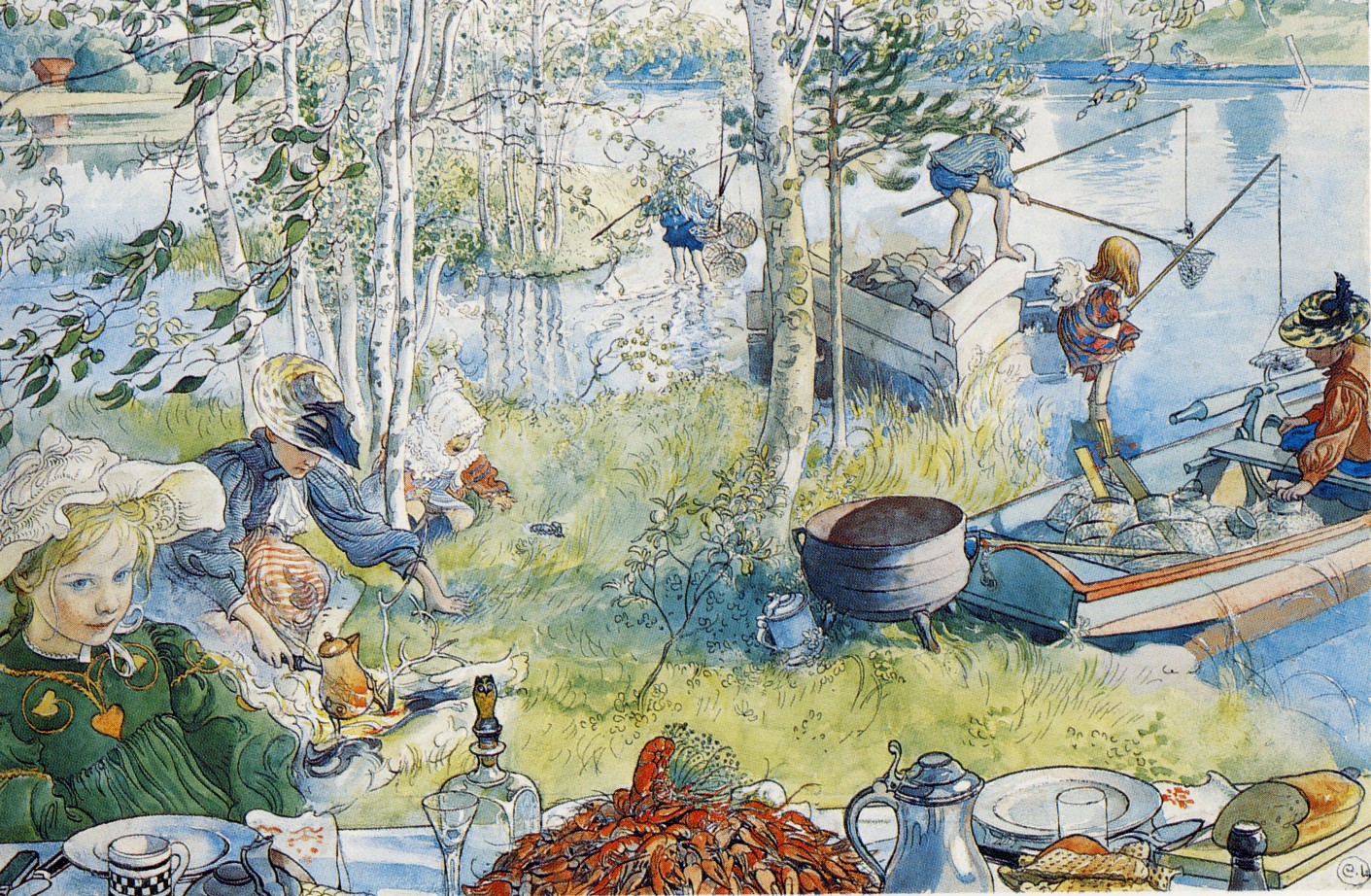
Frukost_under_stora_björken_av_Carl_Larsson_1896
Breakfast under the big birch 1896

Screen Shot 2018-03-20 at 11.35.17

Namnsdag_på_härbret_av_Carl_Larsson_1898
Nameday at the storage house 1898

“No one is able to enjoy such feast than the one who throws a party in his own mind.” Selma Lagerlöf

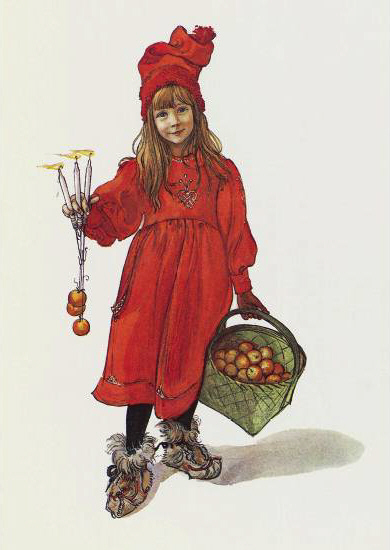
Carl_Larsson_Brita_as_Iduna
Brita as Iduna

“If I have managed to brighten up even one gloomy childhood – then I’m satisfied.” Astrid Lindgren

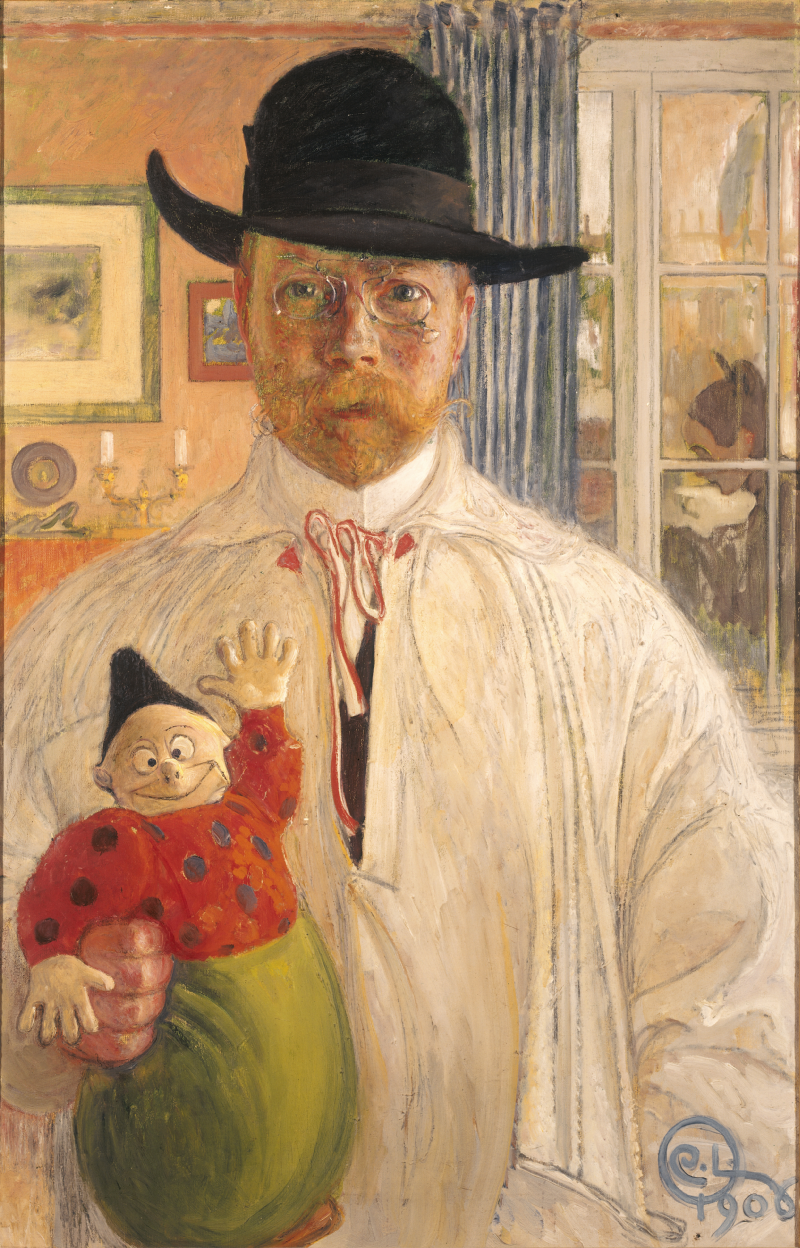
Carl_Larsson_-_Self_Portrait
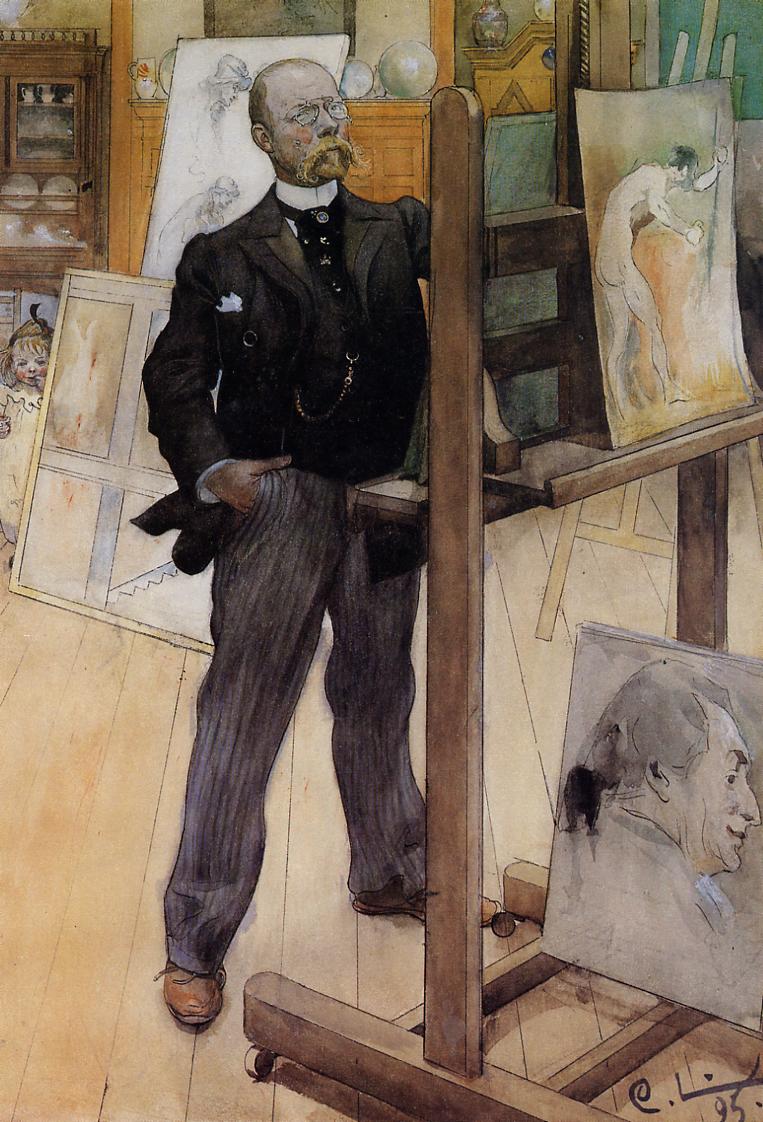
Self-portrait 1906

“I want someone to remember I existed. I want someone to know I was here.” Frederik Backman

NB. This is the second in a series of three posts based around the famous Swedish artist Carl Larsson and his successful book of watercolours called ‘Ett Hem’/’A Home’ centred on his family home. As I’m still on an Easter break in Sweden and disconnected from most technology, comments are turned off for this post but will be on for the next and final one in the series.

ETT HEM

Once again, I am flitting away for my usual Easter break in the peace of the Swedish landscape; savouring the calm of forest, the beauty of the lakes and seas! I’ll embrace the opportunity to unwind, relax … as nature soothes my soul.

7ABDF371-E1E5-4423-80B5-0F2032827A44
Ett Hem. Carl Larson 1969 edition

Meanwhile, I’ll leave you with a series of posts to peruse. With no more calendars to hand, I’ve drawn inspiration from a book I found at my mother’s house. Called ‘Ett Hem’, here Carl Larsson documents the family home, its gardens and his family. I will feature paintings from the book, along with self-portraits of the artist, and these will be accompanied by, hopefully, uplifting and inspiring quotations.

One of Sweden’s iconic artists, famous for the paintings of his home, Carl Larsson sadly and ironically was raised in extreme poverty. As young his father threw him, his brother and mother out into the street and thereafter he was raised in a squalid building with three families per room. This wretched start to life ensured he sought to build a loving, colourful home for his family and with the help of his wife, Karin, also an artist and designer, they redecorated the house –  Lilla Hyttnäs in Sundborn, Dalarna – given to them by her father. Carl Larsson captured in watercolours the life here with his eight children and wife in the famous book ‘Ett Hem’ (‘A Home’) – a book which ensured he never needed to fear poverty again.

1920px-Blomsterfönstret_av_Carl_Larsson_1894
Windowsill with Flowers 1894-1898

“A childhood without books – that would be no childhood. That would be like being shut out from the enchanted place where you can go and find the rarest kind of joy.” Astrid Lindgren

Köket_av_Carl_Larsson_1898
The Kitchen

“Drink your tea slowly, and reverently, as if it is the axis on which the world, earth, revolves – slowly, evenly, without rushing towards the future. Live the actual moment. Only this moment is life.” Thich Nhat Hanh

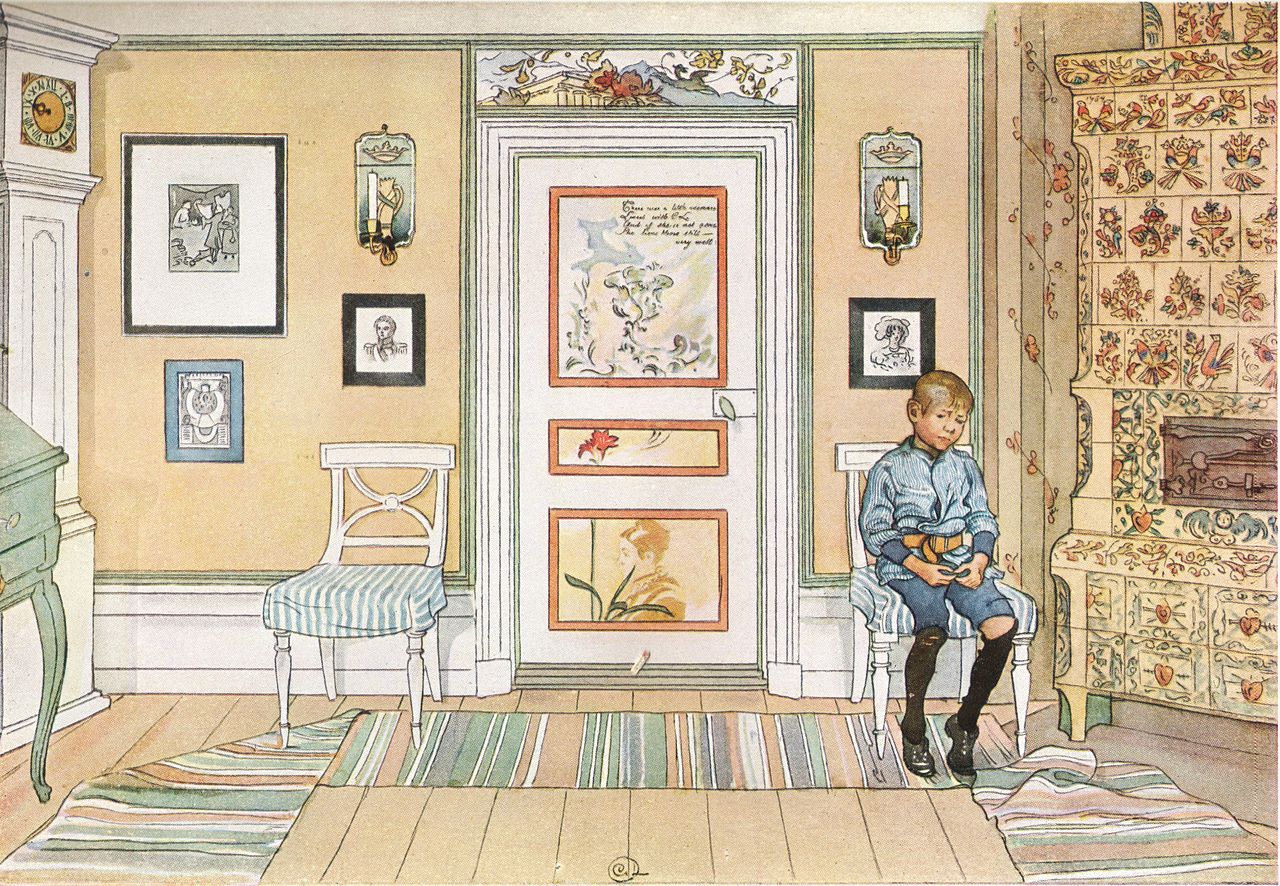
1920px-Carl_Larsson-Lathörnet
Cosy Corner 1894

“For, so long as there are interesting books to read, it seems to me that neither I nor anyone else, for that matter, need be unhappy.” Selma Lagerlöf

Larsson_-_Self_Portrait
Self-portrait 1895

“Where the spirit does not work with the hand there is no art.” Leonardo da Vinci

NB. Comments have been turned off for this and the next post but will be on for the final third post in the series.

AN ILLUMINATING ART

20180128_150251

I traveled through the centuries on my recent visit to the UK’s only Stained Glass Museum, located in Ely Cathedral. Over 1,000 examples of stained glass windows are held in their collection dating back to the 14th Century, although the craft is thought to have originated in the late 600s.

All topics are explored from the religious to everyday life, from science to farming, from nature to portraiture. The techniques vary enormously as new skills were introduced over time and the differences will be evident in the photos.  The concepts and trends changed dramatically during the centuries.

The introductory window above is a contemporary design entitled Inner Space (1979). This blended art and science and is an interpretation of electron photomighraph of hydra tissue (micro-organism). It illustrates many various techniques of modern design including texturing, acid-etching, tracing as well as traditional leading.

These three traditional -style windows are 600 years apart in age but look as striking and vibrant as ever. Furthest left is Geometric Grisaille (1200-1250s) which is a design expressing the simplicity of the Cistercian monastic ideal and aided the meditation for the monks. The middle panel, The Dawning of the Last Day (1871), is unusual in that it was designed by a clergyman in memory of his father and noticeably moved away from the Gothic Revival towards original motifs. The last of three, The Good Shepherd (1867), uniquely weaves together a painterly style of the figure with the gothic revival surrounds of the rich foliage.

The influence of the Arts and Crafts movement is evident in the window furthest left. Fathers of the Church (1904) depicts St. Augustine, Venerable Bede and St. Cuthbert. The next two windows were commissioned as part of the revival and popularity of stained glass windows in the 1800s and there was a push to return to the ‘True Principle’ of Gothic style windows. The Dance of Solomon (1856), formerly within Ely cathedral, is a lively panel, and one of four depicting St John the Baptist’s life, and martyrdom. The Arms of Queen Margaret of Anjou (c.1840) was designed by a heraldic scholar to blend the arms of 15-year-old Margaret who married Henry VI.

The Typography Panel (c.1930) was most likely a sampler created to demonstrate letter writing on glass, and the use of painted cross-hatching is clearly evident. To the right, this fish experimental piece (1950s) makes effective use of flashed glass and acid-etching within its two layers (to add depth) of pink and blue glass.

Angels are the common factor for these first two windows. Inspired by William Morris and his circle who hoped to rescue the decorative arts from commercialisation and industrial methods of production, the first window is one of two entitled Angel Musicians (1910-1912). It was influenced by famous late 19th-century designers when angel figures were typical of the Italianate style. The centre panel was created 400 years earlier and the Angel Musician (1440-80) shows a unique style of painting particular to the Norfolk area in the UK, which through its riches of the woollen trade produced the majority of stained glass windows at the time. The Annunciation of the Virgin (c.1340) is the oldest of the three panels and created in an era of illiteracy when religious education involved painted windows. It is the finest example of English glass painting of the ‘Decorated’ Gothic style.

This slideshow requires JavaScript.

Roundels have existed as a form of stained glass windows since their inception. The most modern is self-explanatory entitled Five Victorian Studios (1987). The opulent roundel of gold shows The Suicide of Charondas of Catanea (c.1530) and establishes the theme of justice as he broke his own laws and thereafter committed suicide. It was most likely produced in the Netherlands which was famous for its thousand or so small and exquisite roundels. The last of the three windows heralds from a church in Burgandy, northern France. St. Vincent on the Gridiron (c.1225-50) is part of a narrative by Gothic glass painters and depicts St. Vincent’s suffering for his faith as he is roasted on a gridiron.

These final three windows are from the very early days of stained glass window design. The central panel, Peasant Figure (c.1340-49), was once part of a large and important window in the Lady Chapel of Ely Cathedral and at one stage it would have been richly decorated. It is highly unusual for the mere figure of a peasant to be depicted in a glass window. Also rarely created were windows for patrons, which is the case of Donors of William and Matilda Cele (1350-1400) who ensured the survival of their name and contribution for 700 years and onwards. The bird in Bird Quarry is slightly older and produced in the 15th-century. These simple diamond shaped quarries were made in their thousands using white glass, glass painting and silver stain. They often depicted animals with amusing human motifs; here the robin is shown carrying a rosary.

Along one wall of the exhibition, there were mock-up models of stained glass studios showing the various stages of creating a window and some of these are pictured below.

This slideshow requires JavaScript.

All photos ©Annika Perry
Credit for post title to The Stained Glass Museum guide which uses this as a chapter heading.

CREATIVE ENERGY

20170901_125523 (2)

Whimsy met fantasy, nature recreated by man stood next to the absurd, the beautiful rested close to the ethereal celebration of family. A journey of discovery ensued as I visited the Gardens and Arboretum of Marks Hall which hosted over 300 sculptures from across the UK. For once such a magnificent exhibition was near to me and with a childish delight of the unknown, I set off to explore…and found the most wonderfully surprising, original, colourful and creative work imaginable. It felt an honour to feast my eyes upon these sculptures and I left a few hours later in awe of the artists and inspired by the collective creative energy.
20170901_133315

The plaque accompanying this magnificent statue was written by the designer, Stephen Charlton and is a testament to his desire to share joy and happiness with the viewer through his work.

‘THE OFFERING
NO WORD SAID,
BUT WITH A SIMPLE,
GESTURE INSTEAD.
AN OFFER OF MY HEART,
LET’S BE ONE TOGETHER
– NEVER APART.’

20170901_124915.jpg

The magnificent and awe-inspiring ‘Freedom’ stands in the prime position looking across the lakes, a glorious celebration of being, ready to take flight. It’s majestic in execution and simply breath-taking in scope.

20170901_134025

This wonderful ‘Guardian Angel’ is made entirely from cedar wood and the photograph is deceptive of its size with the statue being thigh high. Its huge wings reach out as if to scoop you up into safety. Its creator, Ed Elliot declared that ‘sculpture is a language for me and I aim to create a memorable presence with my work. Finding the right environments for sculpture is crucial in finishing many pieces and making them sing’.


Animals featured too amongst the sculptures including a variety of birds, fighting hares as well as two beautiful willow horses, the light flickering across the material rendering it almost life-like. It was hard not to just reach out and touch the friendly creatures. Their creator Jane Foddy says that ‘willow is a natural product that bends in elegant curves. Willow sculptures cast intriguing shadows as the sun moves across the sky, which brings them to life and suggests movement.’

20170901_131057

20170901_131028.jpg

Rounding the corner from the dark shade of a wood I entered the light of late summer afternoon and ahead in a beautiful golden circle, yellow flowers fluttered serenely in the light breeze. At the centre I spied a gleaming white statue of four figures and approaching it I realised I must meander through the maze cut through the flowers…how original and imaginative. Closer I spied the family unit of four enveloped in hugs, standing tall and stoic, looking bravely into the future.


This slideshow requires JavaScript.

There was a variety of modern art sculptures dotted around the two and a half acre site; nature inspired many such as the glass and metal flowers, the metallic leaves of one is mirrored by the metal scooped windmill branches of another rotating creation which thrilled with its quiet ease of motion.


This slideshow requires JavaScript.

Other sculptures took on a more abstract form, mimicking the tall trees around as well as one displaying an everyday bird bath which is ingeniously unique and quaint.

20170901_133932

I paused in front of the giant portal made from rusty steel; visions of numerous viewings of ‘Stargate’ come to mind. Did I dare pass through into the next dimension? Tickled with excitement I stepped beneath the circular arch – of course, I was still here, nothing had changed but for a moment the possibility thrilled me and then it occurred to me, that by visiting I had changed, new thoughts were born, energy was refreshed.

20170901_133011

This ginormous stained glass mosaic ball was stunning in its breadth of creation, ideas and colours which came vibrantly to life and was a most unusual form of stained glass artwork I’ve come across.

20170901_123502

Quirky, fantastically absurd and eye-catching summed up this astonishing creation of the fork and the conker. It stopped everyone in their tracks as the rule book of the norm, the expected was thrown out and a new reality recreated for us.

20170901_131822

Two personal favourites of my visit were of a smaller size. The wave totem was made of ceramic stoneware with in-glaze images of photographs from olden days. It was a terrifically atmospheric work, reminiscent of another era whilst using the art from across the Atlantic.

20170901_132817

The Rustic Oak Tree was galvanised steel formed into a perfect oak tree and placed on the autumn colours of a display board. Here the artist, Chris Townsend wanted to ‘challenge sculptural space’. He added that ‘in public places, beautiful objects can intrigue, calm and inspire. Some simply bring on a smile…”

All the sculptures at Marks Hall certainly achieved that, smiles all round, conversation flowing as discussions ensued, spirits revived on a beautiful late summer sunny day.

20170901_131715

I hope you enjoyed your ‘tour’ of the exhibitions and thank you for reading and viewing. Do you have any favourites of the sculptures I posted? Have you had the opportunity to visit any sculptures shows during the summer (or for some winter). I look forward to reading your thoughts and comments.

ON SOLITUDE AND LIFE

20170320_141056

This is the last in a series of Bert Håge Häverö (Swedish artist 1932-2014) paintings which I will feature during my holiday break this Easter. These delightful photographs were taken from our company calendar which we gave out to customers many years ago. Never having the heart to throw our copy away I came across this recently and wanted to share the beauty he saw of the Swedish landscape and people. Accompanying the paintings will be various quotations /sayings/poems that have inspired me or touched my spirit.  Comments have been turned off for this post.


20170320_141106

‘When I am feeling dreary, annoyed, and generally unimpressed by life, I imagine what it would be like to come back to this world for just a day after having been dead. I imagine how sentimental I would feel about the very things I once found stupid, hateful, or mundane. Oh, there’s a light switch! I haven’t seen a light switch in so long! I didn’t realize how much I missed light switches! Oh! Oh! And look — the stairs up to our front porch are still completely cracked! Hello cracks! Let me get a good look at you. And there’s my neighbor, standing there, fantastically alive, just the same, still punctuating her sentences with you know what I’m saying? Why did that bother me? It’s so… endearing.’
Amy Krouse Rosenthal (1965-2017)

20170320_141647

‘Reading it that evening was like having someone whisper to me, in elongated Germanic sentences, all the youthful affirmations I had been yearning to hear. Loneliness is just space expanding around you. Trust uncertainty. Sadness is life holding you in its hands and changing you. Make solitude your home.’

Rachel Corbett on Rainer Maria Rilke

20170320_141748