GRACIOUS LADY

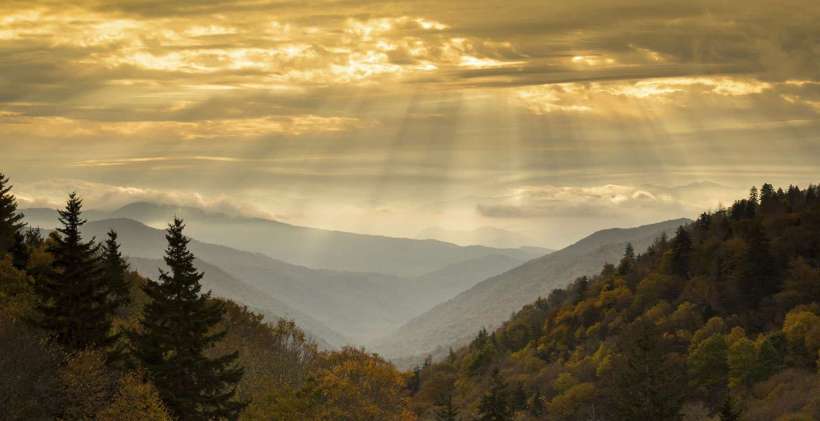
mountain1

I am delighted to have the chance to feature another one of Thalia Gust’s poems. Enjoy the walk with her. 

     Gracious Lady                               

     I met a gracious lady, she smiled, light lit her eyes,

     I dropped a pretty curtsy, to the wise woman.

     A curtsy learnt from childhood, showing honour and respect.

     Do we really honour those older and wiser, fully enough?


     The Lady spoke to me, we shared

     experiences of life.

     We shared  joys, pains and love.

     Her road was a gilded one but her heart had bled.

     I know my mother would love this lady, enough said.


     Walking among the roses, we talked 

     about our children with humour and delight. 

     About countries and people, about peace and war,

     About the sky, the ocean and nature’s force.

     We found unity.


     I walked up the mountain in a far away land

     met a Shepherd, resting with his flock.

     You have come, he said, seeking long,

     please sit down and share my fare.

     Quietly I did as the old man asked.


     We talked in stillness about life,

     its passions and griefs, its beauty and joy.

     What can you hear, the old man asked,

     I was quiet for a while, then said

     The mountain stream, the wind through the grass.


     The old man smiled and his eyes shone bright.

     You have come a long way, he said

     thus you found the core of joy.

     Never forget the mountain stream, the wind

     Let stillness and wonder live in your soul.

     © Thalia Gust.

ADVICE FROM A BEAR

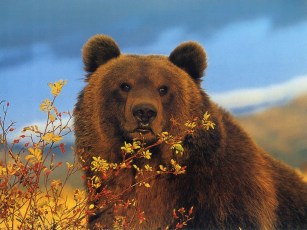
BEAR

Years ago I was given a T-shirt from my mother after her visit to the USA and the Smokey Mountains. 

I’ve always loved the beautiful drawing on the front of a bear striding purposefully along a river but I’d never taken in the inscription fully until yesterday . 

It resonates with me today more than ever; it has me smiling.

‘Live large

Climb beyond your limitations

When life get hairy, grin and bear it

Eat well

Live with the seasons

Take a good, long nap

Look after your honey!’

The T-shirt is produced by www.YourTrueNature.com

‘Hot Bed of Innovation’ *

DSC00626

Flexibility, control, copyright, maximum percentage earnings.  


These seem to be the key words for a new breed of entrepreneurs emerging in the publishing industry.  As more and more writers self-publish, what was previously regarded as vanity projects are now big business – both for writers and for the digital book industry.

Where before books would languish in drawers, writers with some knowledge, a lot of time, perseverance and social media presence can self-publish and hopefully with some or even lots of success.

Self-publishing has many positive elements:  

bookshops

  • The middle-man, retailers, are cut out and books are sold directly to the reader.numbers2
  • The earnings from the sale per book are increased for the writer in comparison with traditional publishing; the latter which have to take into account their work, marketing, printing and selling costs. The figures banded about are 10% in traditional publishing and copyright tied up for x-number of years against 70% in self-publishing with copyright retained and non-exclusivity. Of course, there are variations of numbers and contractual  terms within both sectors.flexi
  • Flexibility of sales technique is a major asset for those who decide to go the self-publishing route. There is the option to reduce and vary price,market special offers, including special promotions when a book might even be available for free. I know the latter is usually a major hit with many takers on the offer and resulting in increased reviews online. Also some authors can decide to part release chapters of their books via social media to tempt readers in. One major success of this tactic was Andy Weir’s ‘The Martian’.  He released his book chapter by chapter on his blog, before collating it into a complete book for self-publishing as an e-book, audio book and physical book. By then the word was already out and the book was picked up by a division of  Penguin Random House. It’s now a Hollywood blockbuster.  
  • Self-publishing also allows an author to publish a book no one in the traditional trade will touch as they consider it out of step with current market trends. One such example of miscalculation is the hugely successful ‘Fifty Shades of Grey’, which E L James decided to self-publish following lack of interest by the publishing houses. She self-published, the book flourished and in due course was picked up by Vintage Books, which had the capability to bring the physical books nationwide and to an international market as well as offering the full support of its marketing team. To date the whole series boasts sales of a 125 million books!
  • Many self-published authors have realised the popularity of series books and often have the flexibility to bundle the books together as such when selling them, giving the reader a better deal and for the writer an opportunity to increase financial sales and hopefully win longterm readers in the process.
  • Another positive aspect to self-publishing is that books do not have to be standardised regarding length, with books varying much more in number of words and offering a larger scope for refreshing variety of books.

So how big is the self-publishing industry?  

This is books scramble. Many books on white background.

No one knows for sure, particularly as the largest operator (Amazon Kindle) refuses to release their sales figures, however it is believed that between 12-15% of books sold are self-published.  Although the number might not seem large, according to Author Earnings the earnings from e-books by self-published authors in America is collectively more than earned by authors represented by the Big Five publishers.

This is a massive amount and one that is only increasing. Its own success spawns trouble for newcomers who are entering a flooded market and have to work so much harder to try and win attention and interest in their book. It is not impossible but it can be trickier than ever the experts admit.

There are numerous difficulties facing a first-time self-published author.

ebooksplatforms

  • It can be an arduous task to release over many platforms such as Amazon,Kobo, Google Play and Apple iBooks. For each platform there is the need to reformat the book each time. This can be both time-consuming and requiring yet more new skills. 
  • Furthermore there is the all important book design cover to consider. Whether to try and achieve this on ones own or search for help.
  • The blurb is vital with any book and it is important to get this right!web
  • Last but not least the actual marketing falls upon the self-published author alone; not only to organise but also to carry out without support. This includes both the social media/online marketing and perhaps outside promotional events in eg. bookshops and libraries.dollarpound 
  • There is of course also the financial risk to factor in. Many writers will want to have their manuscript professionally proofread. Perhaps a professional cover will be commissioned. Also if producing the physical books there is the printing costs to consider. Douglas Wright, a former journalist, took the opportunity to self-publish his first book but he is only now starting to recoup the costs. 

If it all seems too much there is a huge network of support out there. Many here in WordPress are wonderful  bloggers offering help, advice and support for various or all elements of the process.  

Furthermore several companies exist to help with the whole package of self-publishing including Whitefox Publishing Services, Reedsy. Support forums also exist, such as Royal Road Self-Publishing Forum, Authors Alliance.

Finally, on a personal level the information above is of great interest to me as I consider which direction to take in the future. So many bloggers have successfully self-published not just one but many books and I hold them in high esteem. My admiration for their books and their ability is immense as I begin to realise the epic journey that awaits anyone contemplating this route. I am pretty tech savvy but the thought of trying to put all this together myself into an e-book instills a certain amount of fear and trepidation. The more I read the more confused I become. I will not let this hamper my efforts though and like the writing take it step by step should I decide to go this way, calling upon your invaluable help along the way! 

* Michael Tamblyn, Head of Kobo talking about e-books on BBC news.

Data is from various sources including BBC news.


CORKS ARE FLYING!

IMG_2047

Dear Friends, are you all ready to duck? The champagne corks are ready to pop! It’s time to celebrate! I have completed the first draft of my novel!  

It was with euphoria and numb shock that I wrote the last word on my first draft this week. Euphoria as I finally achieved my lifelong dream of completing a book. Numb as the hard work abruptly came to an end. I floundered from over-work and the loss of my main focus of the last twelve months.

Without all your help, support, advice and encouragement here on wordpress I know I would never have persevered and reached this point. You all kept me going in this isolated insular world of writing – your warm, kind words providing a real boost, your advice so welcome and positive and above all your friendship offering a spiritual lift. A heartfelt THANK YOU to you all.

What now?

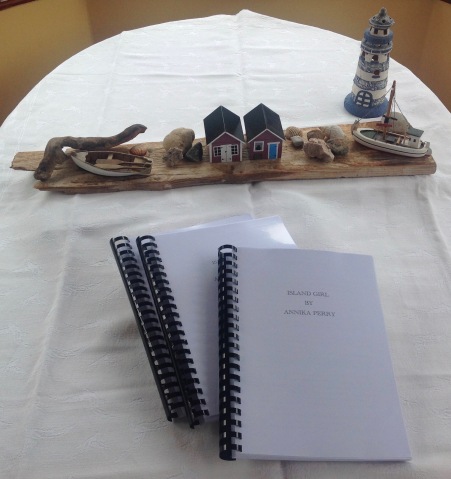
20160205_125224First of all, my self-imposed deadline for this week was as a result of it being my mother’s  birthday this weekend. Always my biggest fan and strongest advocate of my writing, I wanted to present her with a printed version of my first manuscript as a special present. As a way of saying thank you – for always believing in me; for being there when I doubted myself.
Printing? 

This point was raised by fellow blogger a while back and I realised she was right – the cost can become prohibitive and may not always give the best quality. 

20160205_125233Inspired I remembered an advert in my son’s school magazine and on Friday I headed down to their printing department.  For a fraction of the cost at under £ 4 (under $6) they printed the manuscript double-sided and bound it as well. 
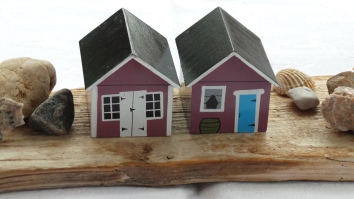
It was great feeling to hold the manuscript in my hands at the printers. Inside myself I was bopping around whilst in real life I shyly held the printed material. 

Recently I saw an interview with a successful writer and she said how many writers, including herself, had difficultly saying what she did for work as she felt a ‘fraud’. As my book was being put together I felt the same on its first outing to strangers. The printer only glanced at it but even so, my heart thumped heavily.  

This is only the beginning. I am under no illusions and am fully aware that the hard work starts now! Revisions, editing, scrutinising, re-writing.

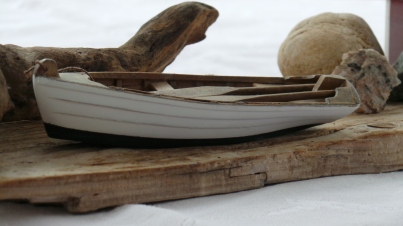
20160205_125351First though I will set the manuscript aside for a week or two. Out of sight, in a drawer. This universally accepted procedure is a necessity and I understand why. My book and I need a break from each other. In ten days I’m off to Sweden for a short break so this suits well and upon my return I will start work on it; refreshed, re-energised.
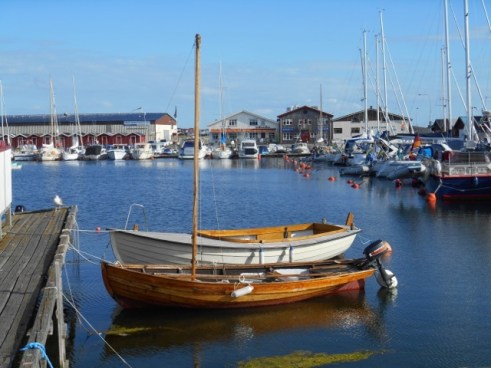
In the meantime, I’m studying and reading in more detail than ever all about self-publishing v. traditional publishing methods. I will make my decision in due course.  As always I welcome your help and comments. 

Please join me in a toast. 

Cheers! Skål! Prost! ¡Salud!  Yamas!  Salud! 

Finally, I would like to end  this post with a quote from Stephen King, where he talks about writing.

‘I did it for the buzz. I did it for the pure joy of the thing. And if you can do it for joy, you can do it forever.’

APOSTROPHES, SPEECH MARKS AND NOW!

riggiing

This is to say a quick hello to everyone; I am more than aware that I have posted less frequently than usual. You are not forgotten, rather I am working hard to finish my first draft. Along the way I ran into a couple of obstacles.

As I have written my draft across two various platforms and programs – my iPad and Scrivener on the computer – I realised a while ago that the speech marks and apostrophes were not synced. In other words I had two variations across my whole document.

Last week I bit the bullet and began rectifying the problem. Hence hours of work going through each chapter, finding and amending each and every apostrophe and speech mark – I never knew my characters were so chatty! Listening to music I have managed to make this mostly a painless task but the work accrued as in the process I started to re-read and found other errors – of course. 

Some of spacing, some basic grammar and two words flew out at me like red flags! ‘Now’ and ‘then’ must have appeared on every page as I wrote quickly, with the ideas and words flowing freely. Trying to place myself in the story I obviously decided to do so literally, ‘now’ scattered like petals, liberally falling across the draft. On re-reading instead of immediacy it was clunky and became an annoying intrusion across the narrative. Out it went – along with ‘then’. Many other changes also followed.

I’m sure this is not the way to do it! It’s not neat, seamless re-writing. It’s a constant revision, some chapters more than three times, others still on their first real draft. It’s my way of muddling towards the end. 

The additional chapters have mostly been written apart from the all important finale. Somehow I’ve managed to delay that – the premise is firmly in my head, the way it’s going played out endlessly.

Is this delay psychological? Once written will that be it? Finished for round one (or two, or three in some cases!)?  My major goal of actually writing a novel achieved?

No more procrastinating. Next week I’m buckling down, facing my fears, continuing with the apostrophes, finishing the final chapter. 

My apologies for a short absence – with my next post it might be time to pop those champagne corks and have a celebratory drink – before the real hard work begins. I’m under no illusions!

‘She wasn’t ready to return home just yet, her peace and contentment carrying her down to the harbour, to the boats. Even from here she heard the familiar orchestra of the mast riggings beating against the wooden masts; the various pitches in sound rising to a crescendo with each new gust of warm summer breeze. She stood with her bare feet perched up to the edge of the wooden boards, gazing out to sea, closing her eyes, soaking in the contentment of the perfect day.’

From ‘An Island Girl’ 

© Annika Perry

The Sisyphean Quest

mag

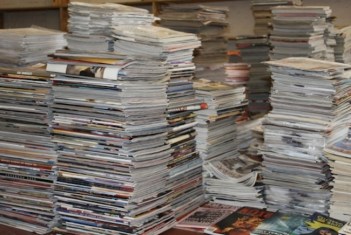
Hands up! We all have them. Magazines! Magazine collections stacked in the bookshelves, placed carefully in date order in folders, boxed and labelled before being safely placed in the attic. Magazines from childhood or current magazines around an interest or hobby. 

I’m hoping my son’s ‘Dr Who’ collection, numbering into the hundreds will one day be part of his retirement fund! My writing magazines are spilling out of the bookcases onto the surrounding floor. My science magazine collection was only recently discarded as mould had sadly attacked them. My husband’s childhood comic collection are hopefully not so ravaged and may well fund a cruise one day!  

None of these however come near the 85,000 + magazines owned by the 2012 Guinness World Record Breaker for the largest magazine collection in the world, James Hyman.

jhymanmagarchive1James Hyman started on a mission in 1990 to collect and preserve as many magazines as possible. He felt panic by the potential loss to humankind of the information and resources held in these magazines and therefore established what is today known as the ‘Hyman Archive’. He sees himself as a ‘guardian and preserver of popular culture in physical form’ and hopes to one day form a giant research library.

Currently all the magazines are housed in a huge warehouse near the Thames in Woolwich, London and 55% of his stock is not owned by the British Library and therefore not accessible to the general public. He hopes to change this. With Tory Turk, creative lead, he is busy cataloging and digitising the collection to unlock it for researchers and the general public. 

The theme for his collection is ‘Popular Culture In Print’ and  amongst the reading material he is also ‘preserving pictures, illustrations and photography’. It concentrates on print magazines from 1910 and onwards. The collection is currently growing at a rate of 20% per annum – largely through donations from the general public and there is a constant appeal for material from ‘publishers, collectors and enthusiasts’. It is already recognised as a huge cultural resource and actively used by companies and individuals alike. One example is the ‘David Bowie’ exhibition, which made great use of its resources and is now going on world tour with some of the information gleamed from the Hyman Archive.

shelvesOne can only start to comprehend the scale of the project when you see his large warehouse, shelves upon shelves of neatly stacked magazines. Corridors of information, the serious mingling with the fun – from ‘film, TV, Music, Music video, Art, Fashion, Architecture, Interior design, Trends, Youth, Lifestyle, Women’s, Men’s, Technology, Sports, Photography, Counter-culture, Graphics, Animation, and Comics’.  All set to saved for the future. ‘The New Google’ said one current user of the collection.

‘Madness that could be genius’ is how one relative described Hyman’s ambition. 

Madness however that is well on the way to becoming a reality and within twenty years it is envisaged that the collection will be ‘living, reading and accessible’. Not only is the data being digitised, James Hyman is also using ‘meta-tag, analytical tools to visualise date’ to aid all the ‘researchers, readers and students’ he believes will use the collection. 

Furthermore the collection extends beyond the printed word and picture and includes 30,000 CDs, 20,000 vinyl records plus thousands of DVDs. The numbers are staggering, the task seemingly insurmountable and almost impossible, as James Hyman has admitted, ‘a Sisyphean Quest’.  (If like me, the phrase is unknown to you, Sisyphus was a Greek King who’s punishment for his self-aggrandising craftiness and deceitfulness was to be forced to roll an immense boulder up a hill, only to watch it roll back down, repeating it for eternity.)

Have you ever felt the same concern about the information that may be lost to the future? Do you have your own special magazine collection? Do you think this collection and information would be of any use or interest to you in your work or blogging life? As always, I look forward to reading and sharing all your comments. 

U P D A T E            

Following the appearance of this post James Hyman was kind enough to visit it and to comment. In his comment he also answered many of the questions raised by others in the comments section. I am pleased to print part of his reply here for ease – I know it can be time-consuming to trawl through lots of messages.

I plan to keep the physical copy once everything is digitised as a physical artefact has its place and importance. Without going into too much technical details what is important post-digitisation is the tagging of the material to help anyone’s research (creative industries, academics, students etc) e.g. that pair of boots in that image – say, they are David Bowie’s, where was the picture taken? Who was the photographer? What is the context of this picture? (last gig as ‘Ziggy Stardust’ for example). Furthermore, careful tagging can enrich the data set and answer complex questions and provide connections that are not easy to realise. So, again, in popular culture, how does Stanley Kubrick relate to Bob Dylan in the 80s? Well, if everything is tagged, you could get a result such as a March 1987 Playboy Interview with Jack Nicholson who talks about Kubrick being his favourite director and how he would love to play alongside Bob Dylan in Kubrick’s next film.

Never forget, before the internet, magazines were the internet in many ways; they have been the zeitgeist, containing the best content from photographers, authors, illustrators, designers, and publishers. Not everything is readily available on Google. Remember, how you search and how those search results can be displayed & analysed is also of great importance and value.

Finally, if anyone wishes to donate their magazines to the archive, please get in touch via http://www.hymanarchive.com

By James Hyman


COSMIC WONDER

image

Sometimes I just forget our tiny place in the universe. How minuscule an area our atoms occupy, our Earth dwarfed by the enormity of the cosmos. Too large to fathom, to comprehend.

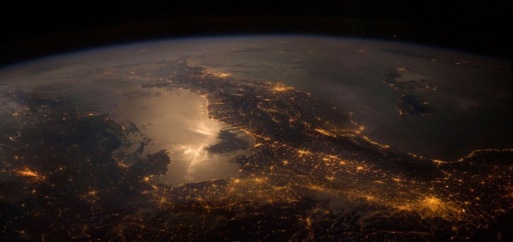
Moonlight reflecting off the Adriatic Sea and highlighting the boot of Italy.

Like the proverbial kick in the solar plexus I ached in awe at the glorious power, space and size of these images and what they represent. My mind started doing gymnastics before conceding defeat and instead stopped to admire the sheer beauty, scope and energy of the images. Enjoy.

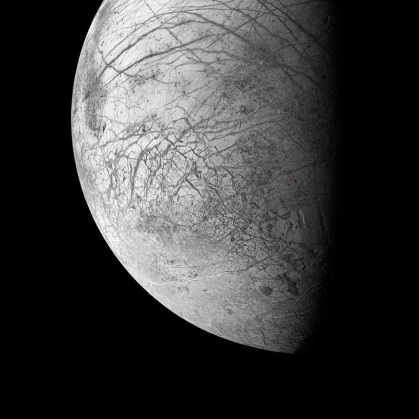
Europa - one of Jupiter's dozens moons - has a an icy surface filled with sprawling faults and deep flowing ridges.
Europa – one of Jupiter’s many moons – has an icy surface filled with sprawling faults and deep flowing ridges.

The pictures form part of a photographic exhibition at the National History Museum, London starting 22nd January 2016.  Called Otherworlds, the exhibition is an exploration of the solar system using some of the hundreds of thousands of images taken by robotic interplanetary probe cameras since the 1960s and recreated by Michael Benson to form the final composite images of the exhibition.

Calm day on Mars overlooking Husband Hill, which was named after Commander Rick Husband. He was the pilot of Colombia Space Shuttle which disintegrated on re-entry in 2003.
A calm day on Mars overlooking Husband Hill, which was named after Commander Rick Husband. He was the pilot of the Columbia Space Shuttle which disintegrated on re-entry in 2003.

 ‘Look up at the stars and not down at your feet. Try to make sense of what you see, and wonder about what makes the universe exist. Be curious.’ Stephen Hawking


A giant dust storm on Mars which can last months at a time.
Fog at the bottom of the 4,000km long & 6.5 km deep canyon on Mars.

‘Music in the soul can be heard by the whole universe.’  Lao Tzu

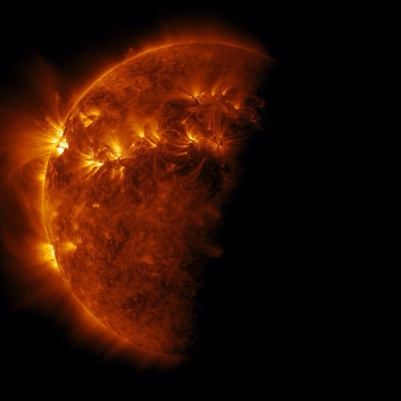
Ginormous solar flares.

Credit: Nasa/JPL/Michael Benson, Kinetikon Pictures & BBC News.

https://youtu.be/HOQtTgrdljE

Attention

night2

Time. When did this become such a rare commodity in our modern day life? It is hard to imagine an era when time – time for ourselves, each other – was part of everyday life. Not ‘something’ to be negotiated, scheduled, squeezed into a tiny segment of our 24/7 lives. 

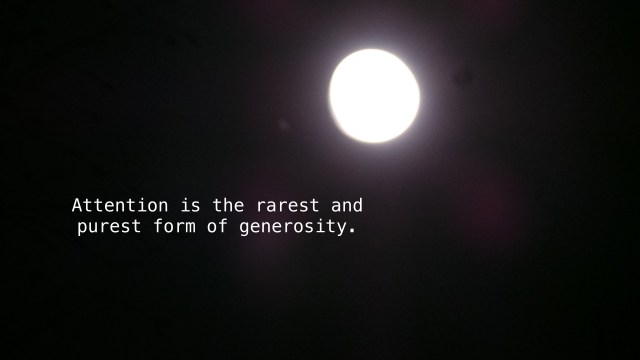
With this in mind the above quote by the French philosopher, Simone Weil (1909 – 1943) struck me as particularly poignant. 

How often do any of us take the time to talk, to really talk to someone? To take the time for conversations that reaches into the depths of the heart, where the spirit lies sad, where secrets are ready for harvesting. To explore moments that warrant more than a cursory glance, that necessitate our full equally mutual attention. 

Norh Pole Sunset (1)

I was motivated to write this blog of quotes by lovely Colleen at http://silverthreading.com/2016/01/06/writers-quote-wednesday-bewow-j-k-rowling/ at her regular Writer’s Quote Wednesday. Always a delight with a feast of imageuplifting, moving quotations and beautiful images. Do pop over and have a look – well worth a moment of quiet reflection in our hectic world. Who knows, you might be inspired to take part!
It took me a year, but better late than never!

The Whiteout Years – Part Two

IMG_1956

Here it is; the second and final installment of my short story, ‘The Whiteout Years’. I hope you enjoy reading it as much as I did writing it. That was a joy – or perhaps that is not the most appropriate word. Considering…

To read Part One, click here. There is an option to read the whole story here,  The Whiteout Years.

Finally, a huge thanks and hugs to you all for reading and for the many warm and positive comments. I’m truly touched by your words and they have given me such a lift. I feel it’s through the comments that a real sense of each other develops and relationships are built; that is the heartfelt core of blogging.

The Whiteout Years – Part Two

Along the road-side Carl spotted the triangle warning sign for elks. For the first time that day he smiled. The signs were far and few between, not through lack of trying. The local highway agency put them out, however they were soon quickly stolen by souvenir hunting tourists and taken home as a memento of their holiday in Sweden. The resilience of the authorities was staggering – hundreds of signs stolen, hundreds more put out. 

Out of the blackness Carl spotted the sign for the village. Two kilometres. His fifth year here and the road felt as familiar as the one he drove every day to work. How could that be? How could he feel so at home in a place he’d visited so infrequently?

He started to in shock, eyes blinded by a kaleidoscopic sheet of colour. Blinking, he saw more rainfalls of brilliant reds, whites, purples high in the sky. Another rocket swerved to the right, evaporating high up in the dark. Firework upon firework followed. Carl was late, the plane had been delayed and it must already be midnight. The start of a new year. As he drew closer to the village Carl saw that it had excelled itself. Now he could hear the distant thunder of the rockets, the odd whoops of delight from the crowd.  

Three years since his last moments with Karin. Three years since days, weeks, months, years ceased to matter. Her parent’s had survived their loss; he never knew how. At their insistence Carl came every year to visit them. Whilst he held himself responsible for  the accident, they had taken it upon themselves to save him. A lost cause, he told them repeatedly. He’d tried to escape their care and concern – to no avail. So, here he was again. Late.

Suddenly a wall of brown appeared in his lights. Large eyes gleamed in the headlights and instinctively Carl slammed on the breaks. The car spun to the side and with a smash it stopped; then suddenly it lifted and twisted up into the air before  landing on its roof with a cushioned thud. Outside Carl heard the sound of an injured animal, the pained barking of an elk.  As the car spun slowly, Carl saw the huge animal steady itself, before sheepishly trekking into the trees.  

He heard her breaths next to him, the harsh rasping and puffs of warm air upon his cheek. Tiny wisps of vapour floated in front of his face, warmth meeting cold. Carl started to shake, then thought of Karin and reached out to her, to protect her. The seat was empty. It was all wrong. Where was she? Wasn’t she driving? Why was he in the driver’s seat? She must have escaped? Gone to get help? He heard her voice in the distance, “Keep safe! Live.” 

“Karin!” Carl shouted her name until his voice was hoarse, quaking with the cold. His hand, blue and black, fought to release the seat-belt buckle. Karin, he had to find her. 

She was driving, laughing, singing away as they took an unknown short cut to her parents. He should have said no. He should have told her to slow down. Be sensible. No, he had told her, she’d shouted back. “Sensible is not living, this is!” and with that she’d turned the wheel first one way and then the other, skidding round and round.  He’d been furious, his temper frayed with fear. Seeing this, Karin had thrown herself around his neck, nestled her face into his neck, kissing him, comforting, all the time muttering, “Sorry, sorry.” After a while the car chilled and conscious of the time and the fireworks display, they set off. “Please, Carl, sensible is okay but remember to live, to live wildly, madly. Promise me.”

“Wildly, madly,” the words echoed in his mind, around him. “Please live…” the silent voice begged of him, 

“Live!” Karin’s voice again. Twisting stiffly in his seat, Carl searched for her. She’d been driving, more carefully after their stop, but he suddenly noticed her seatbelt. She’d forgotten to fasten it again. He told he to stop and do it up. She refused, saying they were soon there. He insisted. She started teasing him, “Calm Carl,” when suddenly he reached over in a huff for the belt. There was no warning, no skid, no shout. Nothing. Just a sharp descent down into the ditch, the car clumsily crashing, round and round down the steep slope. They would have been ok, the police said later. They would have been ok, if it wasn’t for the birch tree. Karin’s side of the car hit it full on, the door crushed on to her side. Unconscious for hours, Carl woke in the hospital with Karin’s father by his side, tears streaming down his face as he held Carl’s questioning look.

“Live wildly…” Karin’s voice again, demanding to be heard and freezing Carl started to, only to find himself dangling upside down in his seat, his head searing with pain, so cold time slowed. With her warm hand on his black fingers, they began to glow red as blood pumped painfully into them. With her guiding force Carl reached for his seatbelt until a sharp click released the buckle and with difficulty he clambered onto the road. 

Ahead lights sparkled from the windows of the houses in the village, colourful tree lights, window lights, candles. The last firework crackled in a cacophony light. “Karin!” Carl spun round, stumbling with dizziness. No one. Nothing. Yet, still something. 

The lights ahead beckoned, the lights of warmth and life and for the first time in three years Carl could see them, feel them. The mantle of oblivion had been lifted and yes, he would listen to her, to live wildly, madly. With tears stinging, freezing into tiny droplets on his cheek Carl staggered off towards the village.

The End

© Annika Perry 2015

The Whiteout Years – Part One

IMG_1958


Following the post about my visit to the Royal Society of Literature thanks to my short story entry to the V. S Pritchett Memorial Prize, many of you kindly asked if I was going to publish the story here on my blog. So I am pleased do just that.

I wrote ‘The Whiteout Years’ in the midst of Spring but it is set in Winter and particularly New Year so I thought this an apt time to post it. The story was also shortlisted for the InkTears Short Story Contest 2015.

As this is quite a long story I have decided to split it into two parts, however if you wish to read it in one go, please click this link.  The Whiteout Years

 As always, I really will appreciate your comments.:)

The Whiteout Year  by  Annika Perry

The music was blaring in the car, some modern Norwegian pop and once again Carl scanned through the radio stations. Lots of grinding static, then a few words, then silence as he hit the off button. Admittedly he was out in the Swedish forest but surely it shouldn’t be impossible to find a decent station, preferably in English.

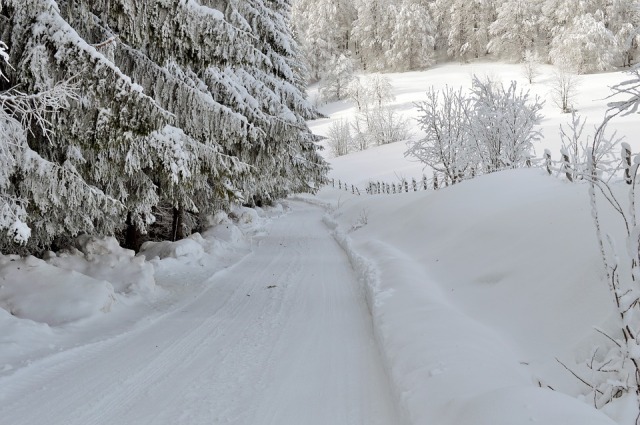
Outside the snow had started to fall again; thick snowflakes bombarding the windscreen, the white swirls hypnotic. Carl slowed down and rubbing his eyes peered through the windscreen. On full beam he was reduced to the bottom of well vision, so minimal it barely reached the bonnet of the car. There was a slight improvement with normal lights on as the headlights lit a dull streak in front of him.

It was too hot in the car and Carl turned down the heating and opened the windows. The cold blast of air bit into his cheeks. Well, that did the trick and now fully awake he looked out for the sticks. He remembered his first winter here with Karin, her laughter filled the car as she sped along the narrow road at if in a rally, catching the orange snow poles marking the edge of the road with glancing blows. Behind the poles was a metre deep ditch, packed with snow. No poles now, a recession was on, instead birch branches, painted white were impaled into the ground earlier in the Autumn. Clever that, white against the white snow – a genius stroke thought Carl ruefully. Wonder what Karin would have made of that?

Finally Carl reached a crossing for the main road and out of habit he stopped. He knew he didn’t have to; he’d have seen any approaching car from the top of the hill. Nothing. A moment of total silence. With the windows down he sat and listened. He never failed to be overawed by the silence, the odd rustle of snow falling gently to the ground from the over-ladened fir trees. The odd animalistic sound deep in the forest, feral and prehistoric.

That fist time he’d been petrified, as with Karin they took a trek through the woods in the late afternoon. Lunch at her parents had been long and jovial, wine followed by schnapps, then the coffee and cakes. Replete and exhausted they’d made their excuses and headed out for a break. Whilst his body had been warm, his lungs froze in pain, as he inhaled the icy wind. Shocked he’d stopped and gasped and with a warm gloved hand Karin lifted his scarf across his mouth and face, softly stroking his cheek. “Keep safe,” she’d whispered. If only she’d listened to herself.

During their first winter walk, the snow crunched luxuriously under their boots, the frozen twigs snapped against their coat and the moss popped quietly in protest. A world transformed and in awe Carl, gloved hand holding Karin’s, wandered around the magic winter wonderland. He’d laughed suddenly, startling Karin.

“What?” she’d asked.”What’s so funny?”

“Last year we took my nephew to a winter wonderland in Cornwall, it was dreadful, such a disappointment. But look at this. Heaven – there is no way you could recreate this.”

Not far now, he was almost there and yet another year without Karin. Without her blonde air across his chest as he woke in the mornings. Without her grumpy moody mutterings as she woke and then slowly cheered up sitting up in bed, black coffee clasped in her hands, duvet wrapped tightly around her. Carefully he’d snuggle next to her, sipping his tea. Another year without her clothes strewn around the bedroom; a shops collection of tops hogging the dresser drawers, skirts and trousers abandoned as if heading out for a walk. Whilst he folded his clothes with care, hung them on a hanger or over a chair, Karin would blissfully discard her clothes as she headed for a shower, one leg of the jeans in front of the other, as if removed mid-step.

The rejected choices from the previous day lay forlorn on the carpet, chair, wardrobe door. However did they get up there? In a fit of pique? Those early days together Carl had tidied up after her, attempted to mend her ways with hints and then stronger words. Within months he learnt to love the mess; he could gauge her mood by the number of items left out. Just one, a day of confidence and self-assurance. Three or more, Karin needed extra loving, caring. No one else knew, her fear of others, lack of belief in herself. How could they? So self-assured in her work, tall and beautiful. Your poster Swedish woman – god, how had he got so lucky?

The whiteout deepened and claustrophobic Carl glanced down the road. A wall of grey/white murk met his glance. He couldn’t see anything. The silence droned in his ears. Signalling right, he turned, first onto the the left side of the road, then correcting himself onto the right. At least the road was ploughed, snow banked two metres or so high on each side. He was still driving on snow though, icier here and he felt the snow tyres grip the surface with a little skid. That had been his life these past three years, skidding along.

Working, surviving, interspersed with hours, days, nights of whiteout. Oblivious he would just sit in the dark at home. Forgetting to put the lights on, forgetting to eat.

“You’ll slip through the cracks, if you don’t bulk up,” his friends warned him. He didn’t tell them, it was too late, He’d already slipped away.

Meals with Karin had always been spontaneous. His life of routine turned on its head as she entered his life.

“I’m starving,” she’d called out as they returned to his flat after their first date out. It was midnight, dinner was hours ago and the film had been a drag.

“I’ll get some toast and tea,” Carl had suggested. Karin scoffed at the idea, pushed her way into the kitchen and set to work. Within a few minutes most of the contents of his fridge and cupboards were on the counters, with the overspill on the small dining table.

“Let’s make a feast!” Swedish meatballs, rosemary potatoes, salad, dips, bread adorned the newly set table. She’d managed to find his one and only decent table cloth and not satisfied with its brown drabness she’d flamboyantly cast her blue scarf on top. With the harsh electric lights off, his long-forgotten candles were finally lit and in reverential silence they sat and ate. At two in the morning, a grotto of warmth and love. It was not only his kitchen which was transformed that night; Carl was never the same again.

To be continued…

©Annika Perry 2015