

To pay or not to pay?
Have you ever paid to enter writing competitions; either for short stories, poetry or even submitting a novel? Or perhaps you’d never contemplate having to pay for competitions?
The topic of writing competitions came up at our last meeting of the local writing group and I was surprised at the varying opinions.
A couple of people seemed genuinely surprised that most competitions charged and that these were successful – I then had to admit to entering some myself with one win, a shortlist and a couple of long-list to my name.
 At first I was overjoyed to have my work professionally validated and deemed worthy to be read in print and it was the confident booster I so desperately needed. The deadlines, themes etc was a great incentive to sit down and write, producing a story in a day or two – then a few more days to re-write and edit. However, as I entered more and more competitions I quickly became disillusioned. Not only was it expensive but entering the competitions was eating into my novel time. Instead I took a break from them and concentrated on writing the first draft of my book; the thought of competitions filed away in the depths of my brain. Until the discussion. Until the latest issue of Writing Magazine (a top-selling magazine in UK aimed for all level of writers in all genres). Once again many competitions tempted me, my creative desire to write short stories rejuvenated.
However, are paid writing competitions a scam as sometimes is implied?
Starting out, my initial reaction was the same as some of my writing group members who were shocked you had to pay for them. However, at the same time I appreciate there is a cost to running them, the administration alone for example. Also the judges take considerable time and work to read through the entries. In the process though some competitions have become prohibitively expensive as they fight for prestigious writers to join their panels. Free competitions can be great, particularly if you have researched them well although I think paid ones are here to stay.

If you are interested in entering competitions, whether free or fee-paying, I quickly learnt there are several important issues to consider.
- First of all, check out who runs the competition? Is it reputable? Will your work be published in print / online?
- What is the prize? Sometimes just recognition and being in print is enough, just be aware of this in the first instant. Another point to consider is that if it is a famous prestigious competition, such as the internationally famous Rubery Book Award or the BBC Short Story Award, it will attract thousands of entries from across the globe and your work will have less chance to make an impact.
- Is there a particular topic/theme to the competition? It is important to submit work targeted to the particular competition and not be tempted to recycle old entries that nearly but don’t quite match the prerequisites.
- There are some excellent free competitions, the Writers & Artists Yearbook Short Story Competition is one example and well worth entering and this year for the first time there is no specific theme. However other free competitions seem more set on getting your personal details for promotion. Just be aware.
- Take the time to look up the judges. This can be more helpful than initially imagined. What type of books / poetry / stories have they written or promoted? What can you learn about them from their social media exposure? Perhaps your style and content is not something that would interest them and your entry would be better placed elsewhere.
- Do check out the previous winners. This piece of research can pay dividends in the long run and its importance cannot be emphasised enough. Early on I made this mistake and only too late, after submission, read some previous winners and realised that my story had no chance of winning. Very frustrating and I chastised myself for this lapse. Also if hoping to win a magazine competition read not only the previous month’s winner but also a few back issues to help establish a feel of the target audience.
- Reading the T & Cs (many times and preferably underlining!) is vital. Always make sure to follow the rules of the competition – this is not a moment to rush ahead without reading the small detail. How should the submission be made? Post? Electronically? If the latter, in what format? In an attachment or part of an email? What are the font / spacing etc rules. What is the word count – and stick to it! The number of words, means just that! Unfortunately an entry can lose out for this reason alone and I know of one such case. Also send the correct money, in time! Also make sure you take note of any restrictions – for example there may be an age band or locality to consider. Finally be aware of the deadline. This is in itself an excellent incentive to complete your work for but do make sure the submission is in at least a few days ahead. Posting on the deadline date is not accepted by most competition rules.
- It is a good idea to consider how relevant is the prize for you? Financial reward is always welcome no doubt! Specific prizes such as a free book cover design will only be attractive to those with a book ready. Writing course prizes, such as a week on the prestigious Avron Writing course offered by the Bridport Prize, are also popular but again not ideal for everyone.
Hopefully by following these points you can save both money and time by ensuring your entry will be considered by the judges.
 Lately, some competitions have expanded their remit from pure competitions to helping others, whether locally or abroad. For example the Magic Oxygen Literary Prize promises to plant a tree for every entry. The trees are planted in Bore, Kenya. Furthermore the competition money will help fund an extra classroom at a school nearby. Personally I cannot help be moved by their efforts but at the same time wonder if it is a bit of a gimmick, a con?
Novel writing competitions are some of the most expensive ones on the market, often starting at £20. The Rubery Book Award costs £36 to enter with a prize of £1,500. Is this too much or is the possibility of a break into the publishing world worth the cost? Some offer feedback for an extra outlay. Is this worth it?
Recently I have noticed an increase of competitions on blog sites and whilst initially sceptical I have followed some and seen their success. The writing is of a superb quality, the winners receive public recognition as they are published on the blog and shared further and the entry fees are far lower than anywhere else but still retain the incentive of a cash reward. As the number of entries are considerably lower than national competitions ones the chance of a win is exponentially improved.
 What are your experiences with writing competitions? Have you entered any? Many? Paid ones or only those for free? Are you perhaps running a competition on your blog? Could you share your experiences? Have you ever been asked to be a judge for writing experiences? What was this like?
I would love to hear from you and hope a lively discussion will ensue.

Finally, in addition to the competitions already mentioned the following are just some of the many which have caught my eye and these should give you a feel of the range, expense and prizes out there.
- Cinnamon Press runs competitions for Poetry & Short Stories.
- The Telegraph newspaper runs a monthly ‘Just Back’ Travel writing Competition.
- An audio transmission of the winning story is promised in this free and unusual competition run by soundwork.
- The Rialto is running a pamphlet competition.
- The London Magazine offers a prize consisting of a number of pounds sterling equal to the current year (£2016 for year 2016)for the best Short Story submission.
- mslexia magazine, one of my favourite writing magazines, runs four competitions, open to women writers of all levels of experience from prose, Short Story, Novel and Poetry. Winners have gone on to secure publishing deals and literary agents.
- Inktears Short Story / Flash Fiction competition.








 Blimey, what a corker of a first question! Can vampires be sexy? The only time they’ve crossed my path is seeing Count Orlak in the 1920s film Nosferatu – definitely not sexy, just creepy so guess I’d…ruuuuunnnn!
 Glancing at my bookshelves I must admit to a predominance of what is called ‘romantic fiction’. However in that case I feel the likes of Jojo Moyes and Jodi Picoult bring that genre up a notch. Overall I read a lot of literary fiction, also some fantasy, YA books as well as humour books for light entertainment. Recently Nick Spalding’s books have been perfect for a good laugh wrapped around an easy going story. Books I will not touch are horror – reading Cujo as a teenager was bad enough!
 I can be a bit bossy, so would probably be (b.) but with fun, laughter and silliness thrown in. I spent time helping in my son’s classroom from time to time and luckily never had to supervise more than ten at a time.
 Like so many I started the blog as I’d read you need a ‘platform’ as a writer. Very quickly and to my joy I discovered it was so much more – the interaction with other bloggers is wonderful and the epitome of blogging.
 I’m not sure if it’s to do with being a Virgo but I am known for being very organised in my life. Around the home, planning trips, dealing with finances and always at work. Beware anyone who dared touch or alter my working system.
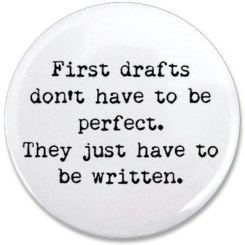 With this in mind it was a surprise to myself that although my novel was sketched in my mind I started writing without a written plan. Early on though I realised this was not the best way to go – my timeline was all over the place, I kept forgetting names, events and so quickly I developed a quasi plotter/panster method using Scrivener which worked well for me! I do use their cork boards and don’t know if I could have finished without them!
 I definitely believe in elements beyond our very limited realm and have had many experiences of ‘something’. In one of the houses I grew up, the lovely smell of home-baking would fill the dining room -although no one was even in the kitchen. Also a warm draft of air would pleasantly waft across my legs. Talking to older neighbours we learnt that the original house’s kitchen and oven were exactly in the place these incidents took place. Spooky but a gentle genial ghost I felt…
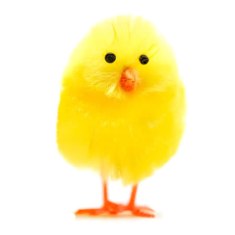 My worst hat incident occurred after I won the best made Christmas hat competition whilst at primary school. I learnt a valuable lesson that Easter – never set the bar too high at the start! My concept was brilliant – I glowed with expectation. My hat, at first just a cardboard frame, would become the Easter chick of all Easter hats. I painted – yellow. I glued on feathers like a demon. The more I glued, the worst it looked. By then it was too late and taking it in to school (in a carrier bag!) the teacher encouraged me to place the hat on my head. I wish I could have put the bag over my head instead! The whole class, including the teacher burst into laughter. I doubt I’ve offered so much hilarity to anyone since. As tears ran down my friends cheeks I put the offending hat back into the bag. But no, it had to go on the display table…
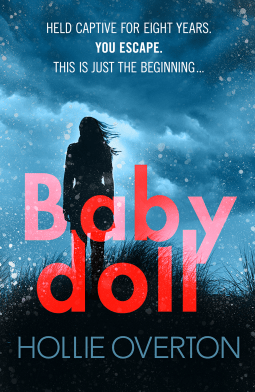
 I received this ACR from the publisher through NetGalley in exchange for a honest and impartial review.



















 Annika Perry