
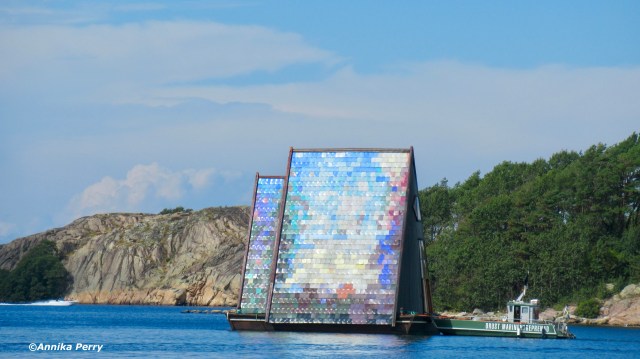
It’s not every day I gatecrash a christening, and especially one held in a floating church!
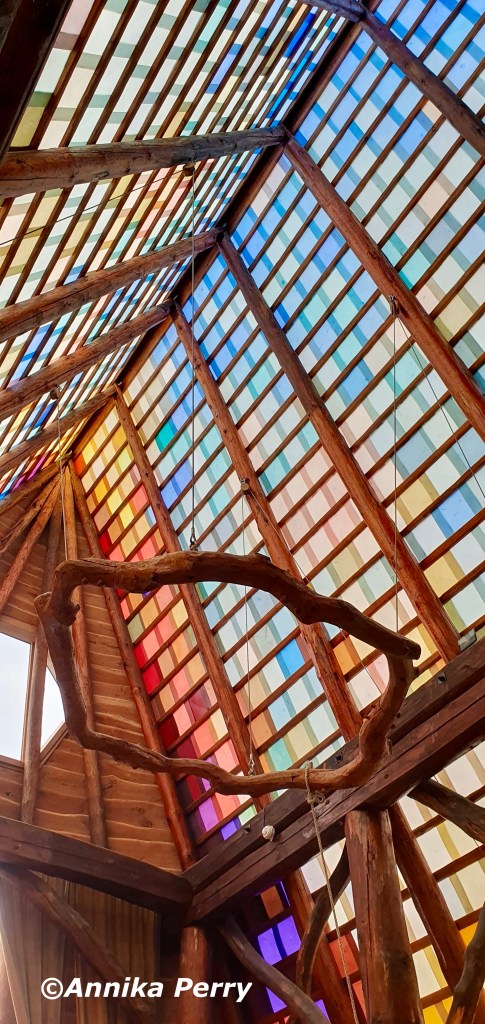
Stepping inside, I’m bathed under the resplendent colourful lights of the roof tiles. The mixture of ethereal colours is enthralling, and they dance in the sunlight; it feels both playful and miraculous. It’s unbelievable that the giant roof is all made from rubbish found along the shores, by using plastic reclaimed from the sea and moulded into tiles. I stood under hope. I stood in the Cathedral of Hope.
A few years earlier, church communities – and numerous other organisations – in both Norway and Sweden felt the despair and discouragement of so many, particularly the younger generation, about the climate crisis, the state of the environment and the seeming disregard for sustainability in life.
A dream was inspired to seek a way to give their, and our, spirits hope for the future. The cultural, artistic and interfaith project, created by the artist Solveig Egeland, wanted to show that something bad can become good through collaboration and care. The environment was and is, a huge concern, and as the coast dominates life in western Scandinavia, it was natural that this became their point of departure.
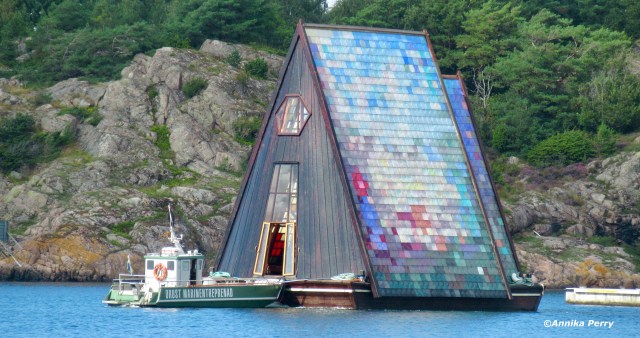
In various vessels, they scoured the coastline of western Sweden, heaving up debris from the sea. From the rubbish collected, they found enough plastic to make the 4,000 recycled plastic tiles that form the magnificent roof. Its 300 m2 mosaic of 50 colours is built on the Scandinavian stave church design from the 1100s. With one big difference — this one is on a wooden barge!
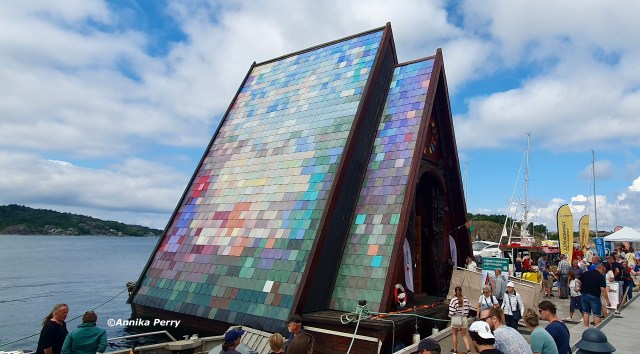
Three years in the making, the Cathedral of Hope (Håpets Katedral) made its pilgrimage in a series of visits to West Swedish coastal towns in the county of Bohuslän during the summer of 2025. Pulled by a tug in a slow, majestic sail of the sea, the sunlight glittering in angelic shimmers across the tiles, it entranced everyone who saw it.
I’d read about this wonderful build before our yearly travel to Sweden, and we arrived just in time to visit it in a nearby town in August 2025. I was ecstatic.
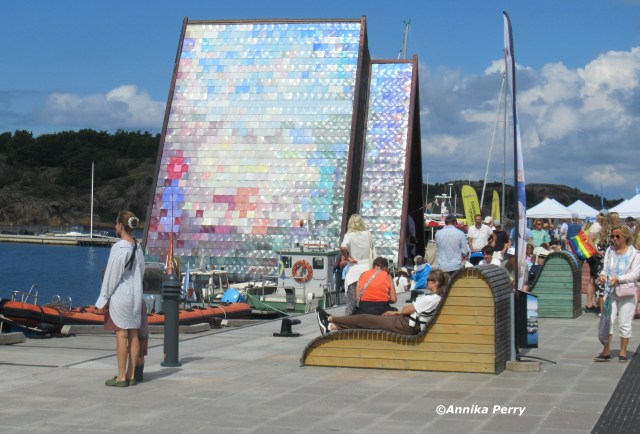
Walking to the quay of Fjällbacka, the steady flow of people were in almost carnival spirits, children running back and forth, a mix of languages with visitors from Europe and further afield. It was as if we were walking on a cloud of expectation. Even before seeing this new creation, it had more than the desired effect, hope brought us here, hope carried us down the street, between the colourful shops to the left, the granite rocks sloping to the road on the right.
Ahead music and the tones of excited chatter wove their way over the crowd who slowed at the entrance to the harbour.
My first sight was not of the floating church, but a beautiful wooden Clipper festooned with colourful ribbons, musicians on deck and a gangplank welcoming visitors on board. The quay itself was a sea of people, ambling between stalls offering food from across the continents and local crafts to view and buy.
What an unexpected surprise, what a wonderful festive start to the day out.
Yet, all the new arrivals, including myself, strained our necks, looking left, right, straight ahead. Where was the main attraction?
As if one, we all stopped. There. It was just over there.
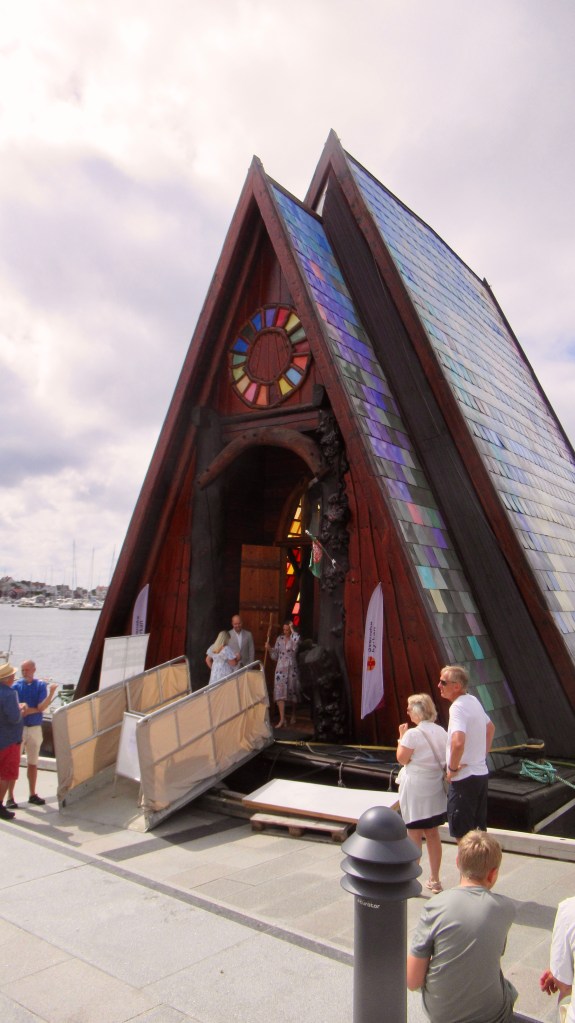
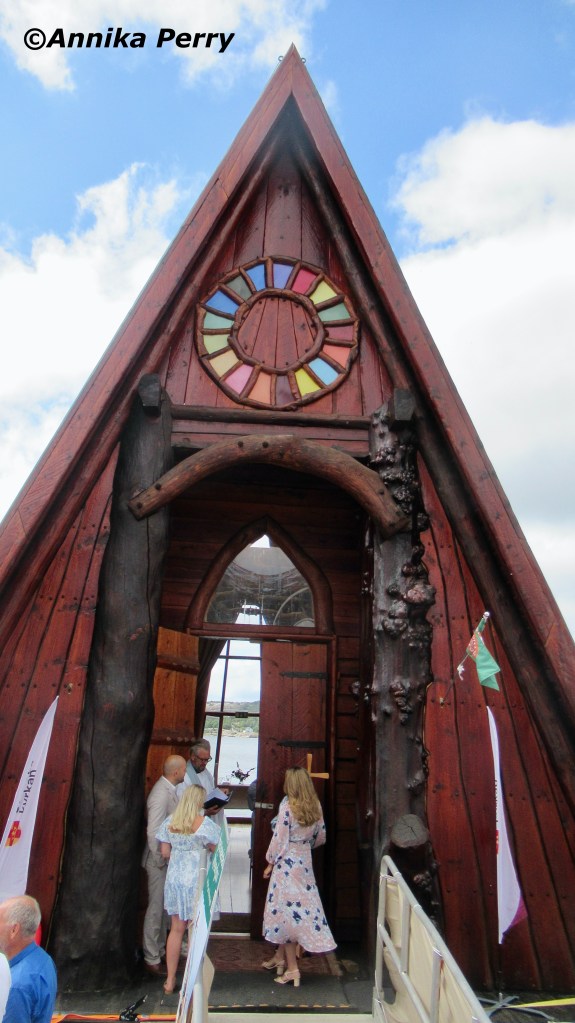
It felt right. Not a jaunty central place of exhibition rather a more humble mooring near the Clipper, smaller in comparison but exuding strength and a heavenly presence.
Pulled by its very existence, I no longer saw anything else but the floating church, its wondrous stave roof gleaming almost to the water. The colours were as wavering as the sea, glittering and hypnotising. At times, bold primary colours were brightest; mostly there was an array of glimmering sheen. Exotic and mystifying, I was drawn closer.
Coming closer, I saw the entrance, it was mythical and gothic, regal and folkloric, harkening back to the medieval era of merging Christian and Viking emblems. Two stout logs were on each side of the entrance and two smaller logs form a tall arch above our heads, above which hung a circular colourful motif. Called The Sustainability Rose, this was created by school pupils from plastic and oak found on the coast.
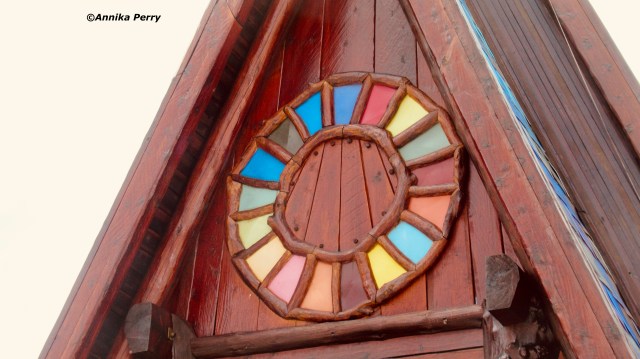
I stepped inside and paused. How could it be so much lighter here than outside on the sunniest of days? The glory of colours swept around me. A sense of joy filled me, my spirits lifted and took flight. For weeks I’d dreamt of this moment. I had arrived. This was my pilgrimage.
In the centre, tall sturdy logs held up the roof, the lines smart, the golden hues of the wood matching the colours at play inside. A hushed, awed silence filled the surprisingly large space, as everyone gawped, took photos, arching necks back to look up. To the seam of the roofline, in perfect harmony.
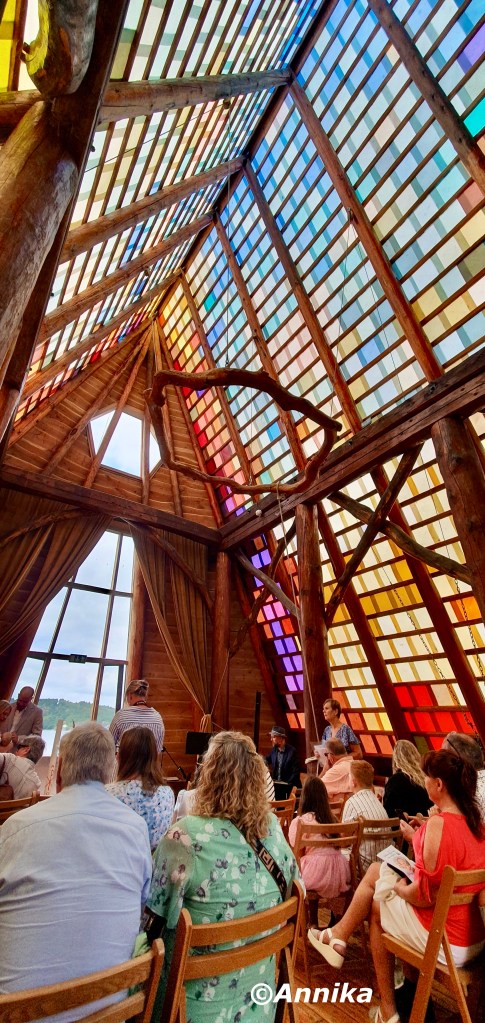
Inside my head, one sentence played on loop. This is from rubbish. I was in awe of the incredible vision that led to the Cathedral of Hope and thankful for this gift, by its creators to us, the visitors.
Emotionally overwhelmed, I sat down on one of the chairs, looking up to the altar.
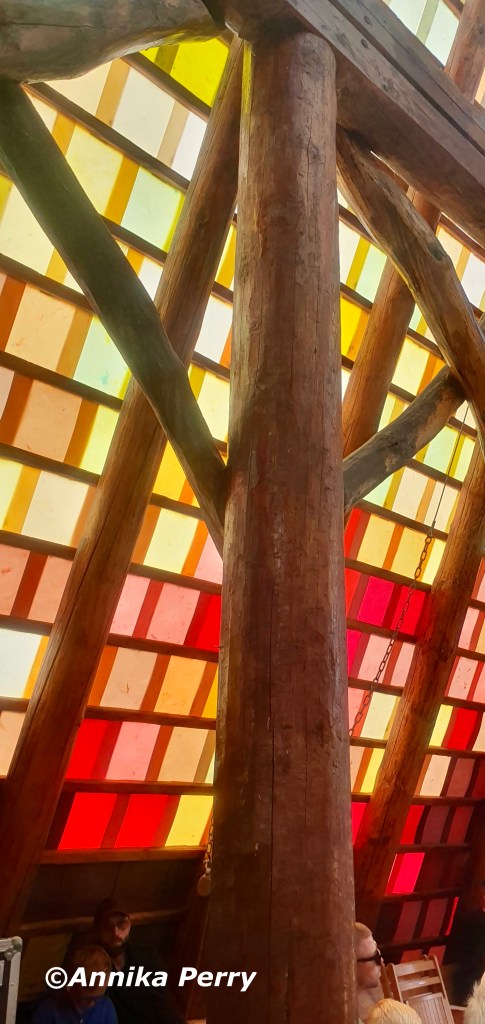
Only now did the real world intervene. A pamphlet lay on the chair. A sweet christening leaflet. Of course, it was a working church as well, for non-denominational services, meetings, concerts, exhibitions, lectures and much more.
The priest in his ornate vestments, whom I’d spied outside earlier, stood at the front with a young couple and their baby. At last, I noticed a smartly dressed contingent surrounding them, their bubble of excitement palpable.
An usher leaned over to me and she kindly asked if I was with the group as the church was temporarily closing for a christening. I smiled and said no as I joined the throng of visitors reluctantly leaving this most unique building. My soul was tugging me to remain just a while longer. Glancing up and back, I saw the light as I listened to the gentle lapping of water on the wooden boards. A floating church, the aptly named Cathedral of Hope.
Long may it sail and continue to be a space of reflection, dialogue and inspiration, reminding us that as soon as we dare to hope, anything is possible.
©Annika Perry



























 Nowadays tourism is the biggest industry in the area – although Cley proved to be quiet, with visitors dotted around the town, coast and visitor’s centre.


 Whilst others muttered at the lack of mobile signal I celebrated the return to ‘olden’ days and scouring my purse for coins I headed to the red phone box to call home. Memories of university days flooded my thoughts, my whirlwind of emotions as I recall hours spent calling from these tardis-style contraptions!





 Annika Perry