Cathedral of Hope

It’s not every day I gatecrash a christening, and especially one held in a floating church! 

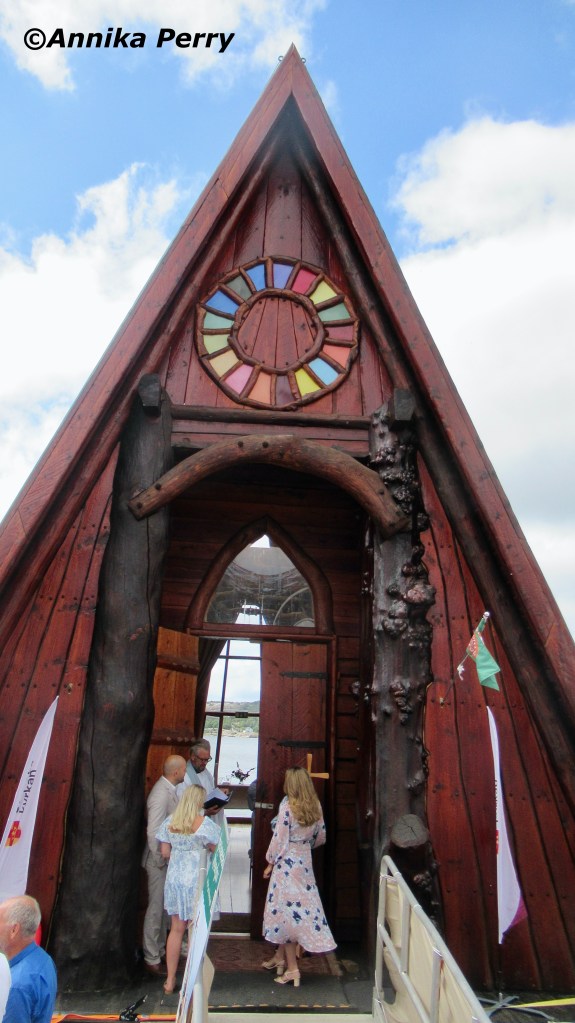
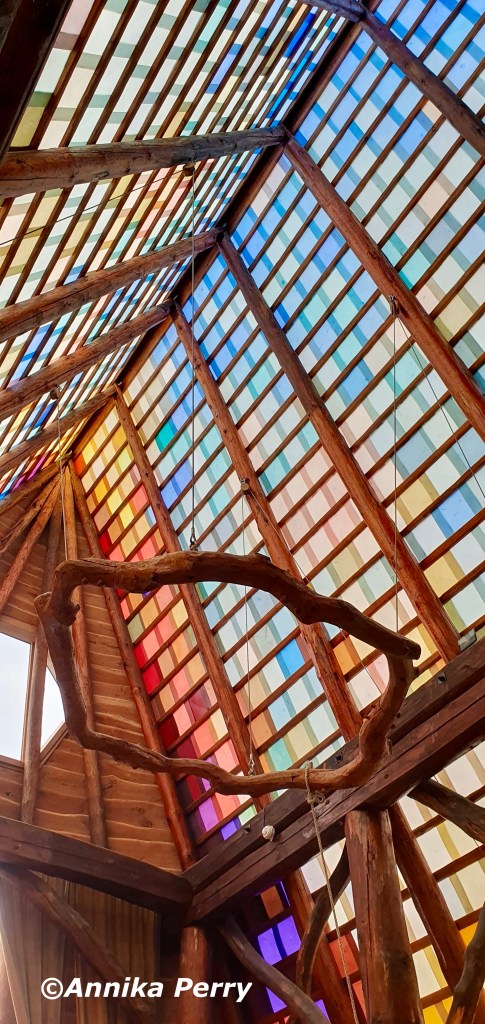
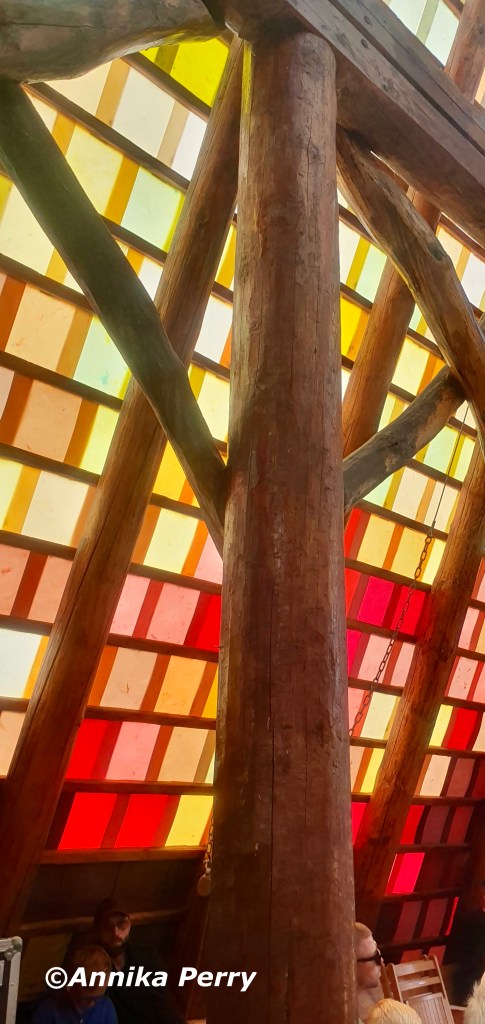
Stepping inside, I’m bathed under the resplendent colourful lights of the roof tiles. The mixture of ethereal colours is enthralling, and they dance in the sunlight; it feels both playful and miraculous. It’s unbelievable that the giant roof is all made from rubbish found along the shores, by using plastic reclaimed from the sea and moulded into tiles. I stood under hope. I stood in the Cathedral of Hope. 
A few years earlier, church communities – and numerous other organisations – in both Norway and Sweden felt the despair and discouragement of so many, particularly the younger generation, about the climate crisis, the state of the environment and the seeming disregard for sustainability in life. 

A dream was inspired to seek a way to give their, and our, spirits hope for the future. The cultural, artistic and interfaith project, created by the artist Solveig Egeland, wanted to show that something bad can become good through collaboration and care. The environment was and is, a huge concern, and as the coast dominates life in western Scandinavia, it was natural that this became their point of departure. 

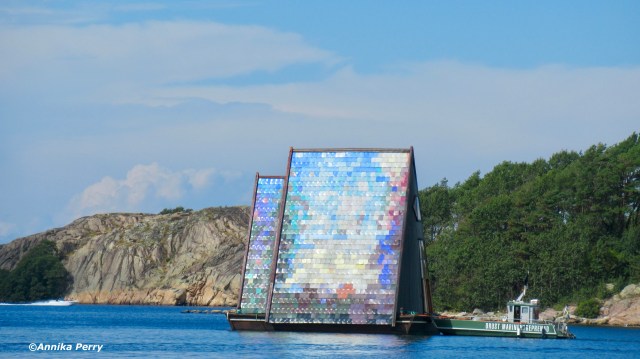
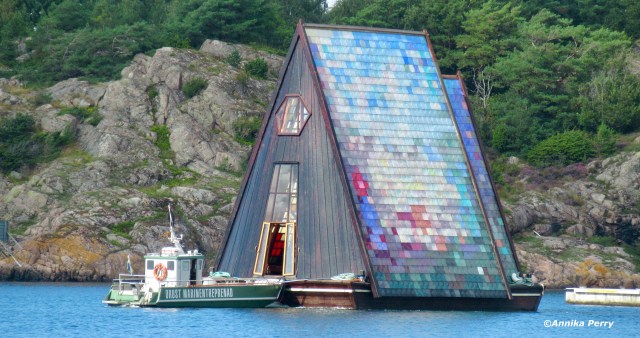
In various vessels, they scoured the coastline of western Sweden, heaving up debris from the sea. From the rubbish collected, they found enough plastic to make the 4,000 recycled plastic tiles that form the magnificent roof. Its 300 m2 mosaic of 50 colours is built on the Scandinavian stave church design from the 1100s. With one big difference — this one is on a wooden barge!
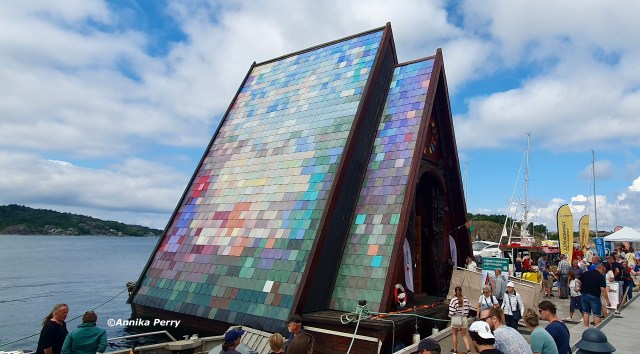
Three years in the making, the Cathedral of Hope (Håpets Katedral) made its pilgrimage in a series of visits to West Swedish coastal towns in the county of Bohuslän during the summer of 2025. Pulled by a tug in a slow, majestic sail of the sea, the sunlight glittering in angelic shimmers across the tiles, it entranced everyone who saw it. 

I’d read about this wonderful build before our yearly travel to Sweden, and we arrived just in time to visit it in a nearby town in August 2025. I was ecstatic. 
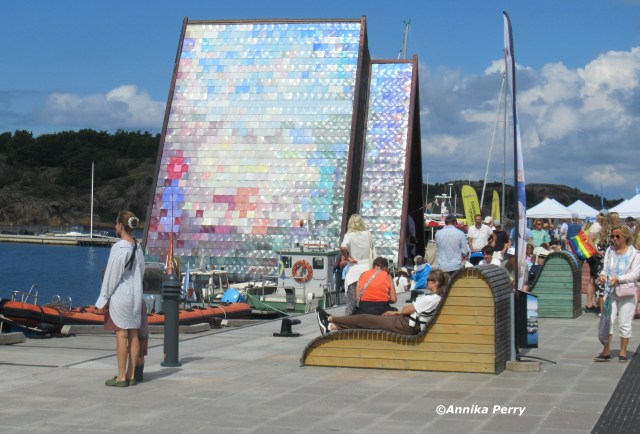
Walking to the quay of Fjällbacka, the steady flow of people were in almost carnival spirits, children running back and forth, a mix of languages with visitors from Europe and further afield. It was as if we were walking on a cloud of expectation. Even before seeing this new creation, it had more than the desired effect, hope brought us here, hope carried us down the street, between the colourful shops to the left, the granite rocks sloping to the road on the right. 

Ahead music and the tones of excited chatter wove their way over the crowd who slowed at the entrance to the harbour. 

My first sight was not of the floating church, but a beautiful wooden Clipper festooned with colourful ribbons, musicians on deck and a gangplank welcoming visitors on board. The quay itself was a sea of people, ambling between stalls offering food from across the continents and local crafts to view and buy. 

What an unexpected surprise, what a wonderful festive start to the day out. 

Yet, all the new arrivals, including myself, strained our necks, looking left, right, straight ahead. Where was the main attraction? 

As if one, we all stopped. There. It was just over there. 
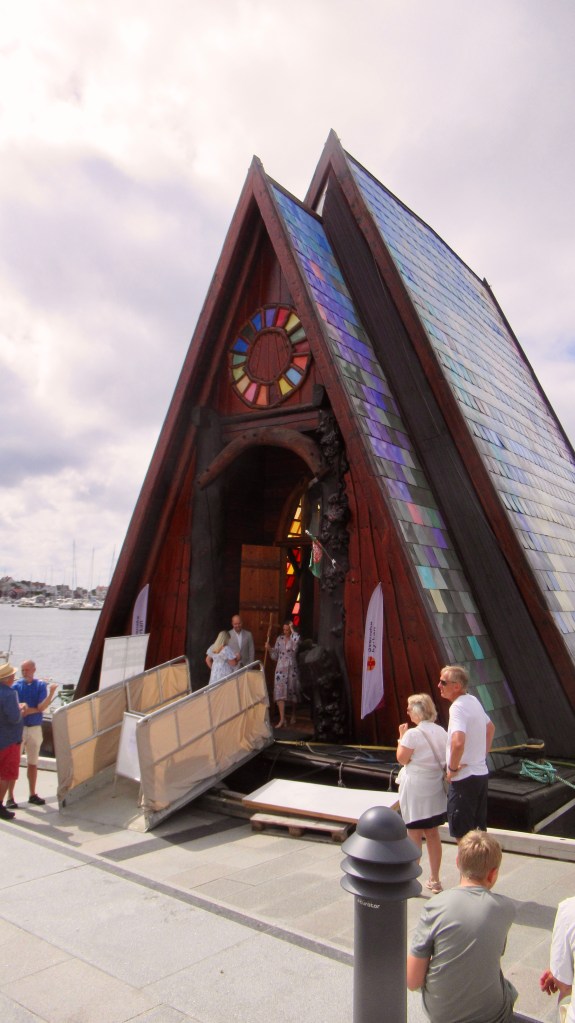
It felt right. Not a jaunty central place of exhibition rather a more humble mooring near the Clipper, smaller in comparison but exuding strength and a heavenly presence. 

Pulled by its very existence, I no longer saw anything else but the floating church, its wondrous stave roof gleaming almost to the water. The colours were as wavering as the sea, glittering and hypnotising. At times, bold primary colours were brightest; mostly there was an array of glimmering sheen. Exotic and mystifying, I was drawn closer. 

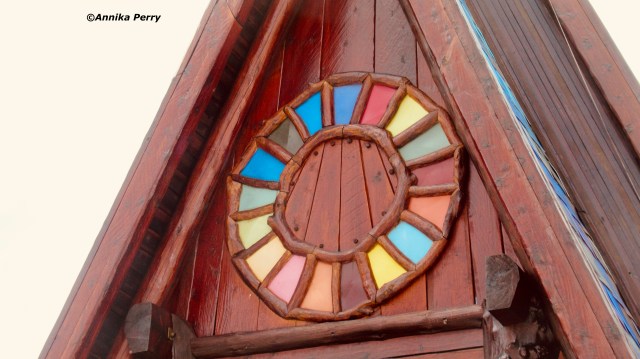
Coming closer, I saw the entrance, it was mythical and gothic, regal and folkloric, harkening back to the medieval era of merging Christian and Viking emblems. Two stout logs were on each side of the entrance and two smaller logs form a tall arch above our heads, above which hung a circular colourful motif. Called The Sustainability Rose, this was created by school pupils from plastic and oak found on the coast.
I stepped inside and paused. How could it be so much lighter here than outside on the sunniest of days? The glory of colours swept around me. A sense of joy filled me, my spirits lifted and took flight. For weeks I’d dreamt of this moment. I had arrived. This was my pilgrimage. 

In the centre, tall sturdy logs held up the roof, the lines smart, the golden hues of the wood matching the colours at play inside. A hushed, awed silence filled the surprisingly large space, as everyone gawped, took photos, arching necks back to look up. To the seam of the roofline, in perfect harmony. 
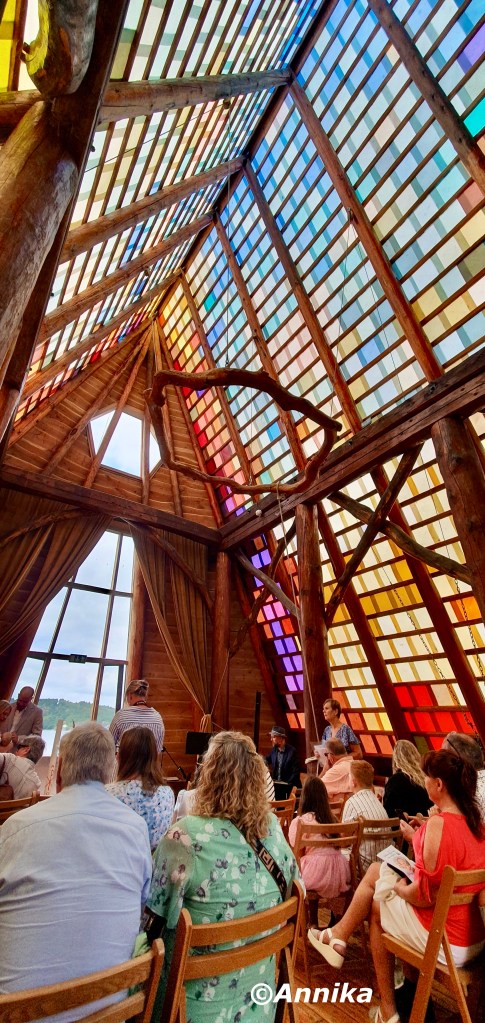
Inside my head, one sentence played on loop. This is from rubbish. I was in awe of the incredible vision that led to the Cathedral of Hope and thankful for this gift, by its creators to us, the visitors. 

Emotionally overwhelmed, I sat down on one of the chairs, looking up to the altar. 
Only now did the real world intervene. A pamphlet lay on the chair. A sweet christening leaflet. Of course, it was a working church as well, for non-denominational services, meetings, concerts, exhibitions, lectures and  much more. 

The priest in his ornate vestments, whom I’d spied outside earlier, stood at the front with a young couple and their baby. At last, I noticed a smartly dressed contingent surrounding them, their bubble of excitement palpable.

An usher leaned over to me and she kindly asked if I was with the group as the church was temporarily closing for a christening. I smiled and said no as I joined the throng of visitors reluctantly leaving this most unique building. My soul was tugging me to remain just a while longer. Glancing up and back, I saw the light as I listened to the gentle lapping of water on the wooden boards. A floating church, the aptly named Cathedral of Hope. 

Long may it sail and continue to be a space of reflection, dialogue and inspiration, reminding us that as soon as we dare to hope, anything is possible. 

©Annika Perry
PARALLEL LIVES

The first time I met myself was a few years ago. Once again this Easter, after a  day of travelling, I arrived at last at the houses in the midst of the forest. And there I was! As if I’d never been away! A disconcerting sensation, a time-shifting eclipse. As if my conscious self in the UK had been switched off, just as the awareness of my Swedish self powered on.

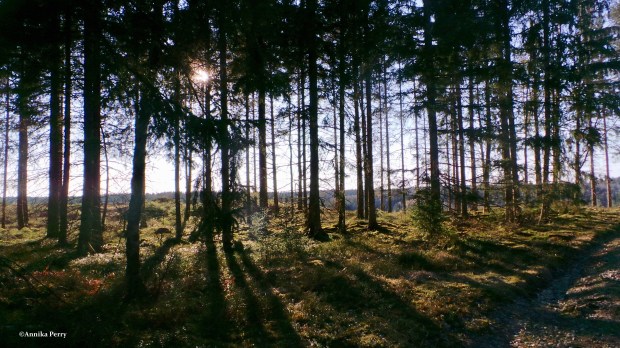
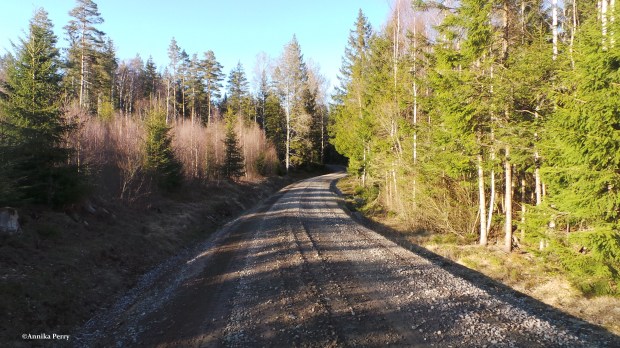
It was as if I’d walked this gravel road every day, not just for the two weeks over Easter. One spectacular afternoon I witnessed the sun searing through the trees.

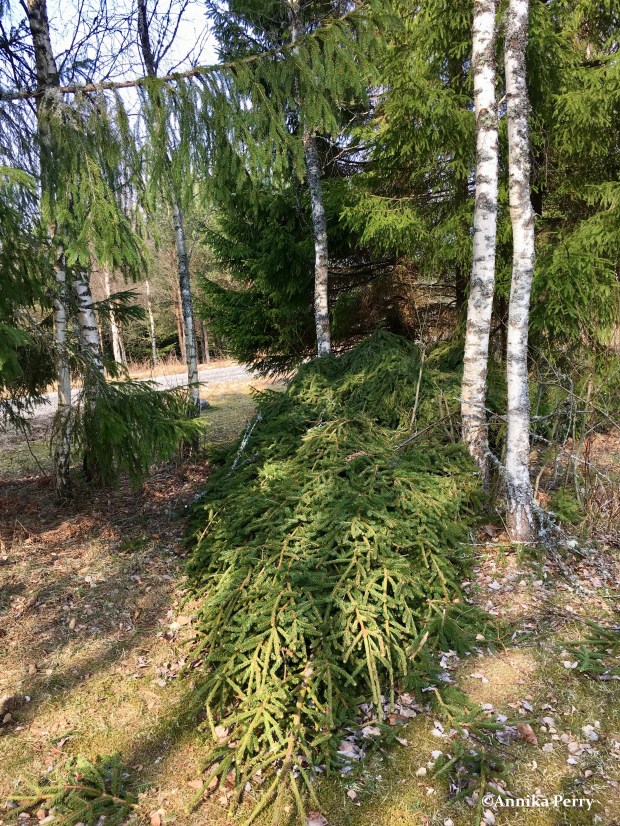
The forest itself proved startlingly alive, alluring; the air brimming with oxygen, the colours clear and vibrant. Certain events, unknown to my Swedish self, reminded me that I had not been there after all. When did the big fir tree topple down? Or rather break away as a neighbour later pointed out, the top half cracking away from the main trunk, to land neatly in the birch copse. 

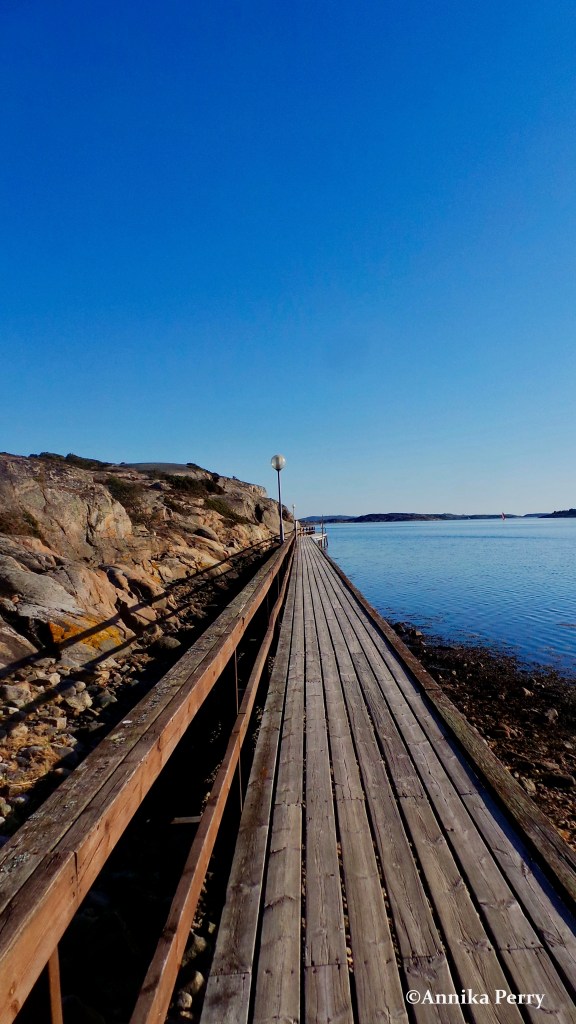
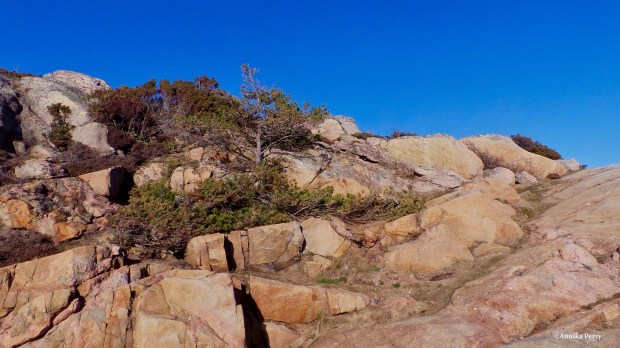
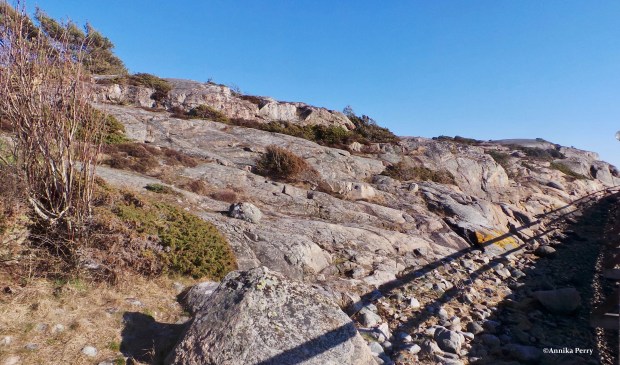
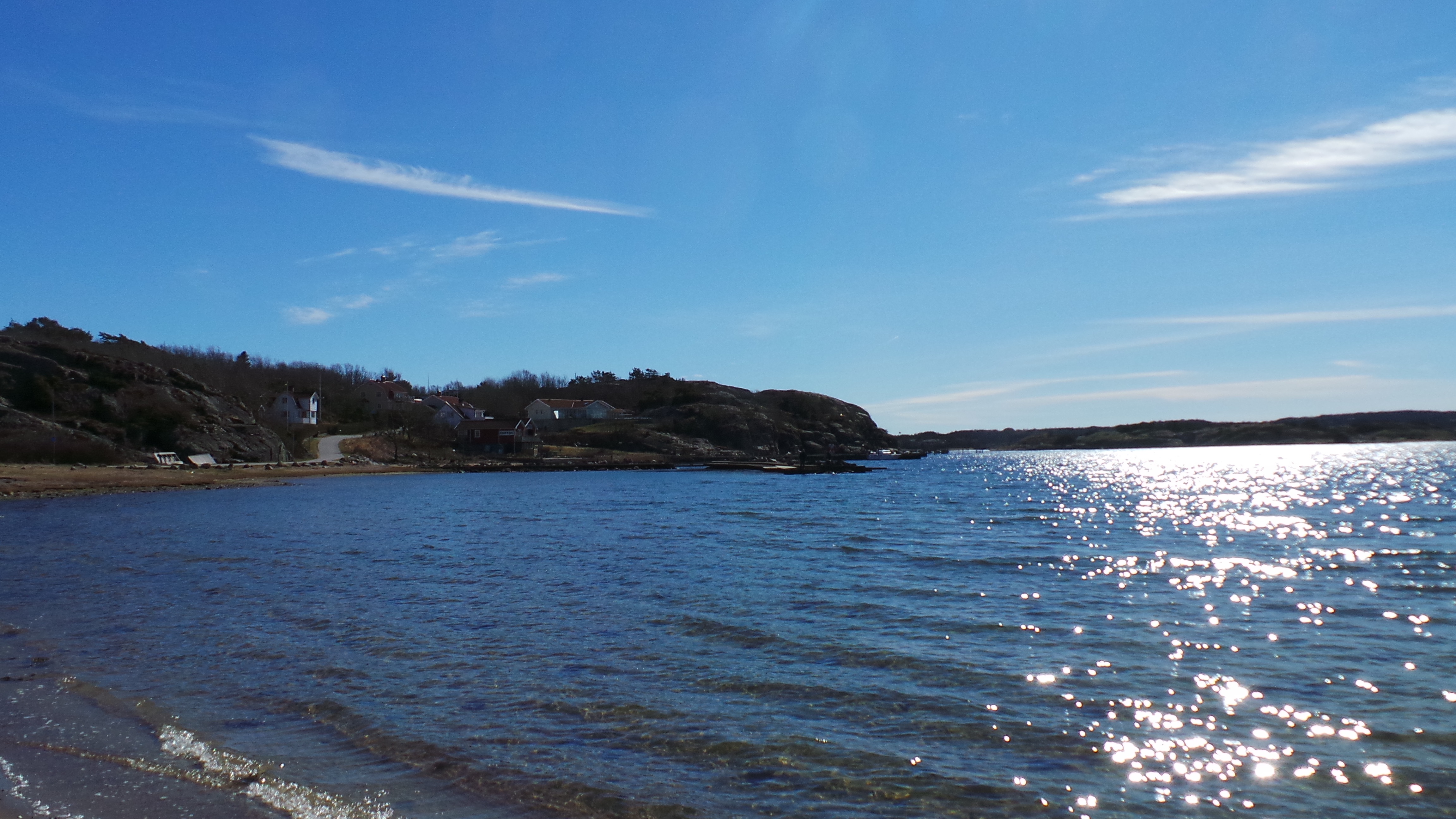
By the coast the combination of sea, sky and rocks struck me anew, the views intoxicating, like a punch of joy to my heart. My other self had let me down, let me forget this body blow of beauty.

The blues all around were broken up by the array of colours of the rocks, the stark trees, the dainty flowers growing in the granite cracks.

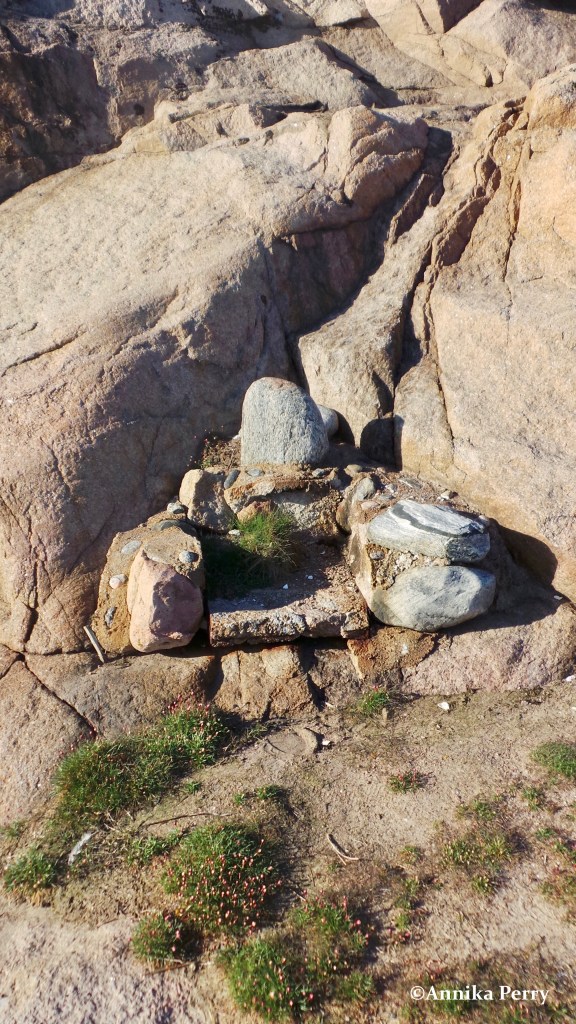
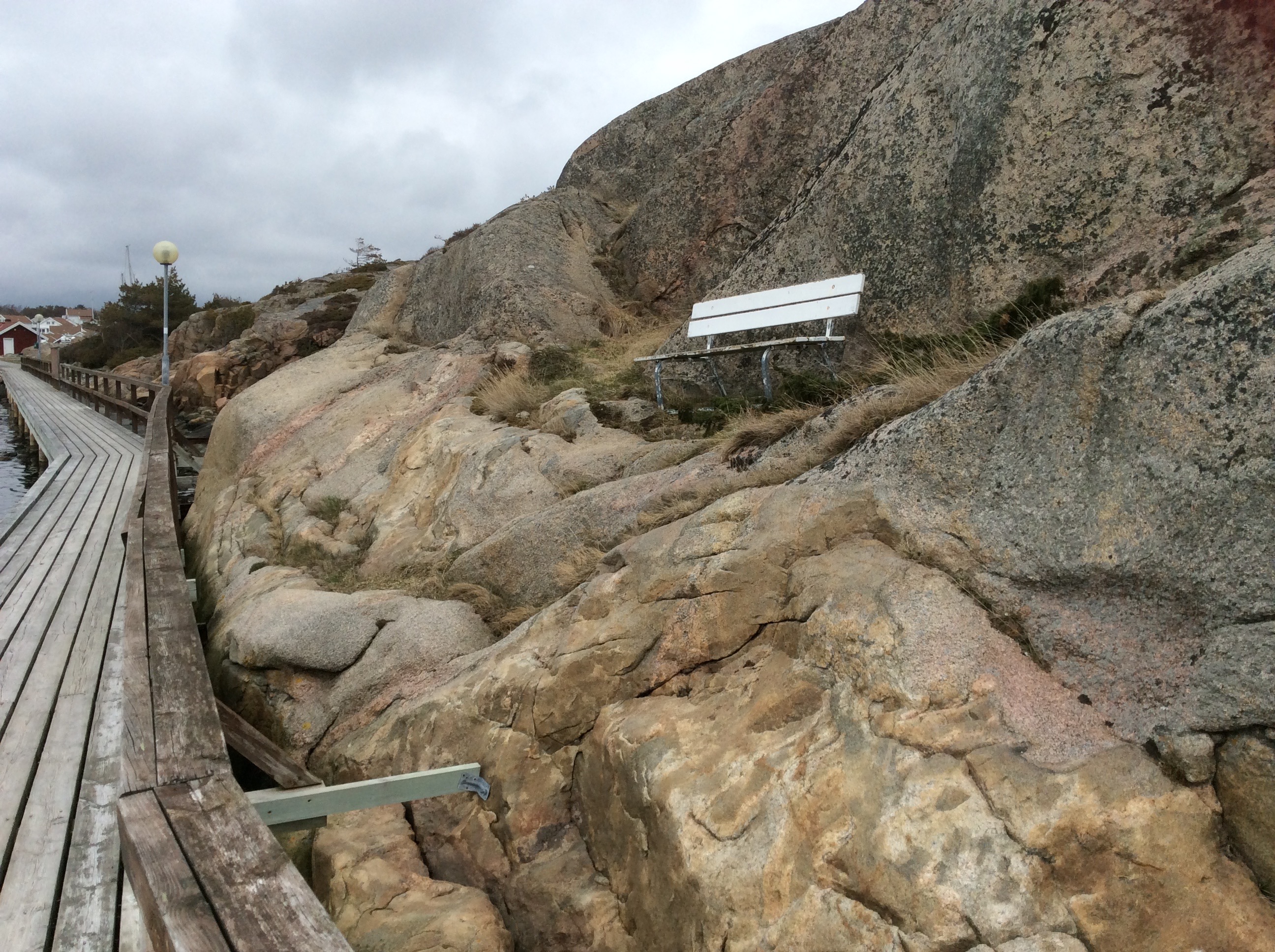
Here and there people had contributed to the enjoyment with a sense of fun creating a child’s seat set amongst the rocks.

The two weeks were filled with overwhelming joy, laughter, conversation. Where walks transformed into meditations, where books became all-consuming, where thoughts sought and found clarity in the vastness of nature.

How could life be anything but this?

Yet I return home … my other home, to my other self. Yet the one in Sweden clings on to my spirit, not quite ready to release me from its hold, my soul swooping amongst the trees, across the waters.

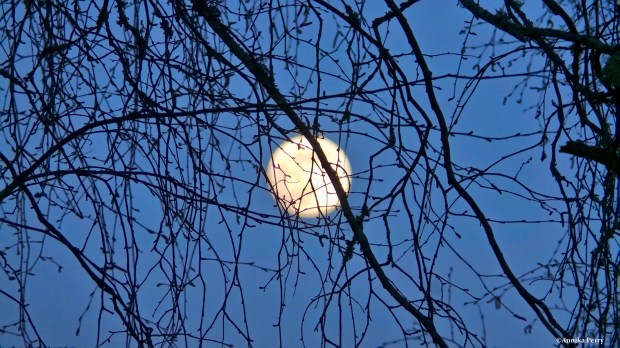
I am here, yet there. I’ll never forget standing on the deck on Good Friday, gazing at the full moon in all-consuming awe of epiphany. The pink aura transported across space to minuscule us! The magic of the cosmos captured in a finite second. There am I, part of the wilderness, here am I, longing to return.

“We carry our homes within us, which enables us to fly.” John Cage

ETT HEM #3

The emotions are sometimes so strong that I work without knowing it. “The strokes come like speech.

“The emotions are sometimes so strong that I work without knowing it. The strokes come like speech.” Vincent Van Gogh

Welcome to my third and final instalment about Carl Larsson and his watercolours of the beloved family home; a place where he ‘experienced an indescribable delightful feeling of seclusions from the hustle and bustle of the world’.

Carl Larsson (1853-1919) was heavily influenced by William Morris and the Arts and Crafts movement in the UK and over the years Karin and Carl transformed their humble abode and in the process created a lasting legacy for interior design in Scandinavia and beyond. Their charming, evocative and distinctive style in furnishings is still highly influential and inspiring homemakers today.

“If light is in your heart you will always find your way home.” Rumi

Whilst Carl, with some help from carpenters, made the furniture, carved the doors and cupboards, Karin was responsible for the textiles and tapestries at ‘Little Hyttnäs’ as well as the rugs.

The idea to paint pictures of the home was first suggested to Carl by Karin during a rainy summer in 1894 when she feared her husband would fall into depression. Inspired, he continued to paint all aspects of their house and lives within and outside it.

“A picture is a poem without words.” Horace

Following Carl’s acceptance of an invitation from the publisher Bonnier to print some of his watercolours, twenty-four of the paintings were reproduced in the now famous ‘Ett Hem’ book. Initially sales were slow in Sweden until a German version became an instant bestseller in Germany, selling 40,000 copies in three months.

Carl and Karin Larsson were said to have been overwhelmed by its success however Carl always felt that the pictures of his family and home ‘became the most immediate and lasting part of my life’s work. For these pictures are of course, a very genuine expression of my personality, of my deepest feelings, of all my limitless love for my wife and children.’

‘Ett Hem’ has never been out of print and has had over 40 print runs. Today the family home is owned by their descendants and open to tourists during the summer.

We shape our buildings; thereafter they shape us.” Winston Churchill

NB. I look forward to reading your thoughts about the posts in this series and I will respond upon my return to the UK later in the month.

ETT HEM #2

Before marriage and settling down, Carl Larsson started his artistic career when a teacher spotted his talent early on and encouraged him to apply for the Royal Swedish Academy of Arts. Although he had difficulty settling in, within a few years he was able to earn enough money to support his parents through drawings and cartoons sold to various papers.

A move to Paris in 1877 was equally challenging although he finally found peace and inspiration in Grez-sur-Loing … and here he met Karin Bergöö, his future wife. At last, he moved away from oils and painted some of his prominent paintings with watercolours.

Frukost_under_stora_björken_av_Carl_Larsson_1896
Breakfast under the big birch 1896

Screen Shot 2018-03-20 at 11.35.17

Namnsdag_på_härbret_av_Carl_Larsson_1898
Nameday at the storage house 1898

“No one is able to enjoy such feast than the one who throws a party in his own mind.” Selma Lagerlöf

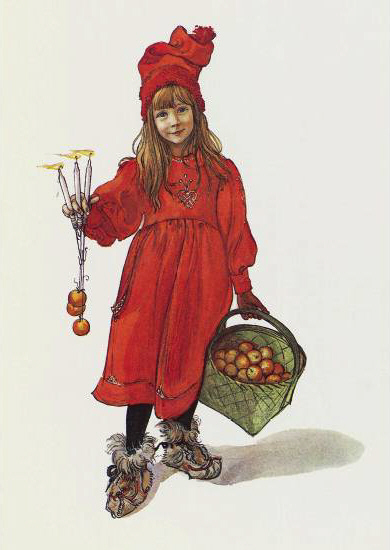
Carl_Larsson_Brita_as_Iduna
Brita as Iduna

“If I have managed to brighten up even one gloomy childhood – then I’m satisfied.” Astrid Lindgren

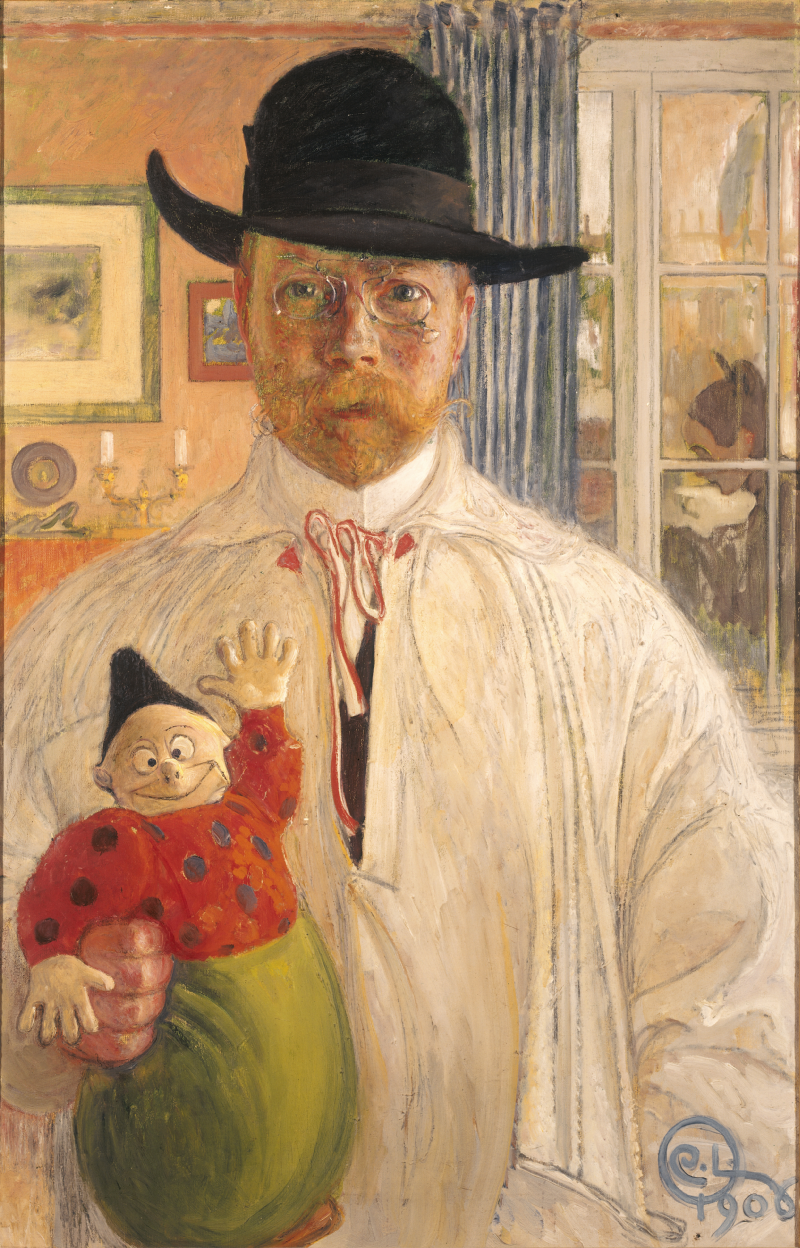
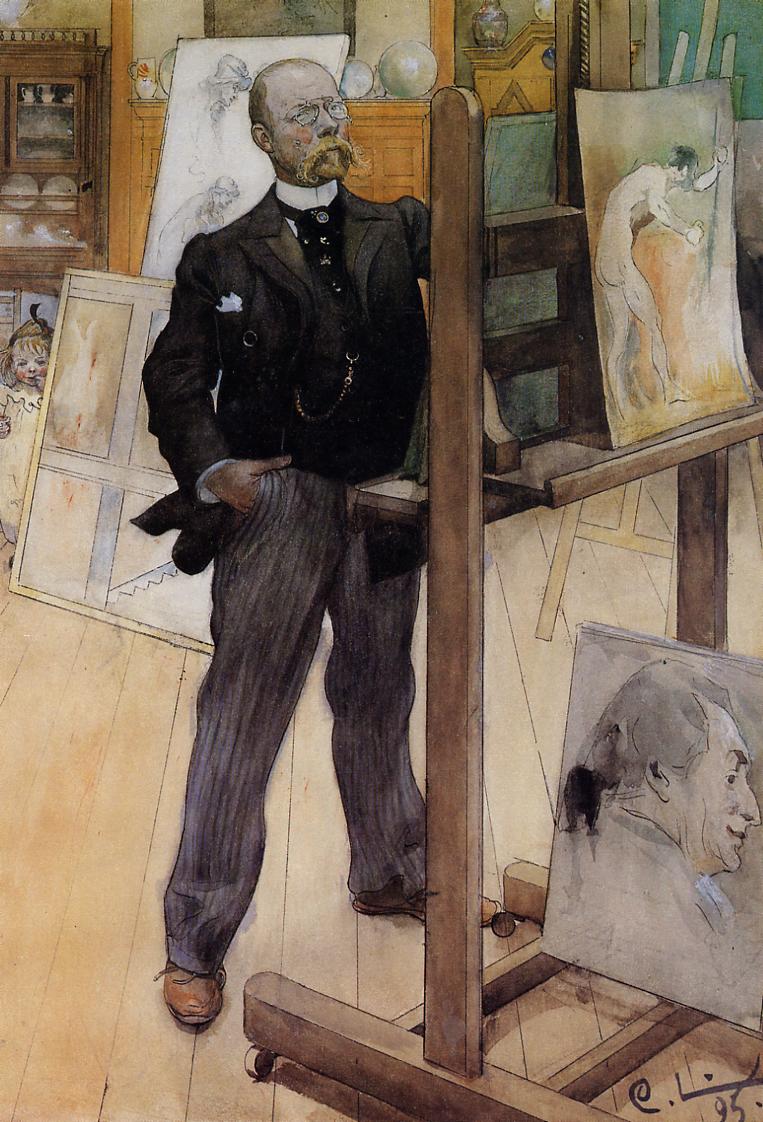
Carl_Larsson_-_Self_Portrait
Self-portrait 1906

“I want someone to remember I existed. I want someone to know I was here.” Frederik Backman

NB. This is the second in a series of three posts based around the famous Swedish artist Carl Larsson and his successful book of watercolours called ‘Ett Hem’/’A Home’ centred on his family home. As I’m still on an Easter break in Sweden and disconnected from most technology, comments are turned off for this post but will be on for the next and final one in the series.

ETT HEM

Once again, I am flitting away for my usual Easter break in the peace of the Swedish landscape; savouring the calm of forest, the beauty of the lakes and seas! I’ll embrace the opportunity to unwind, relax … as nature soothes my soul.

7ABDF371-E1E5-4423-80B5-0F2032827A44
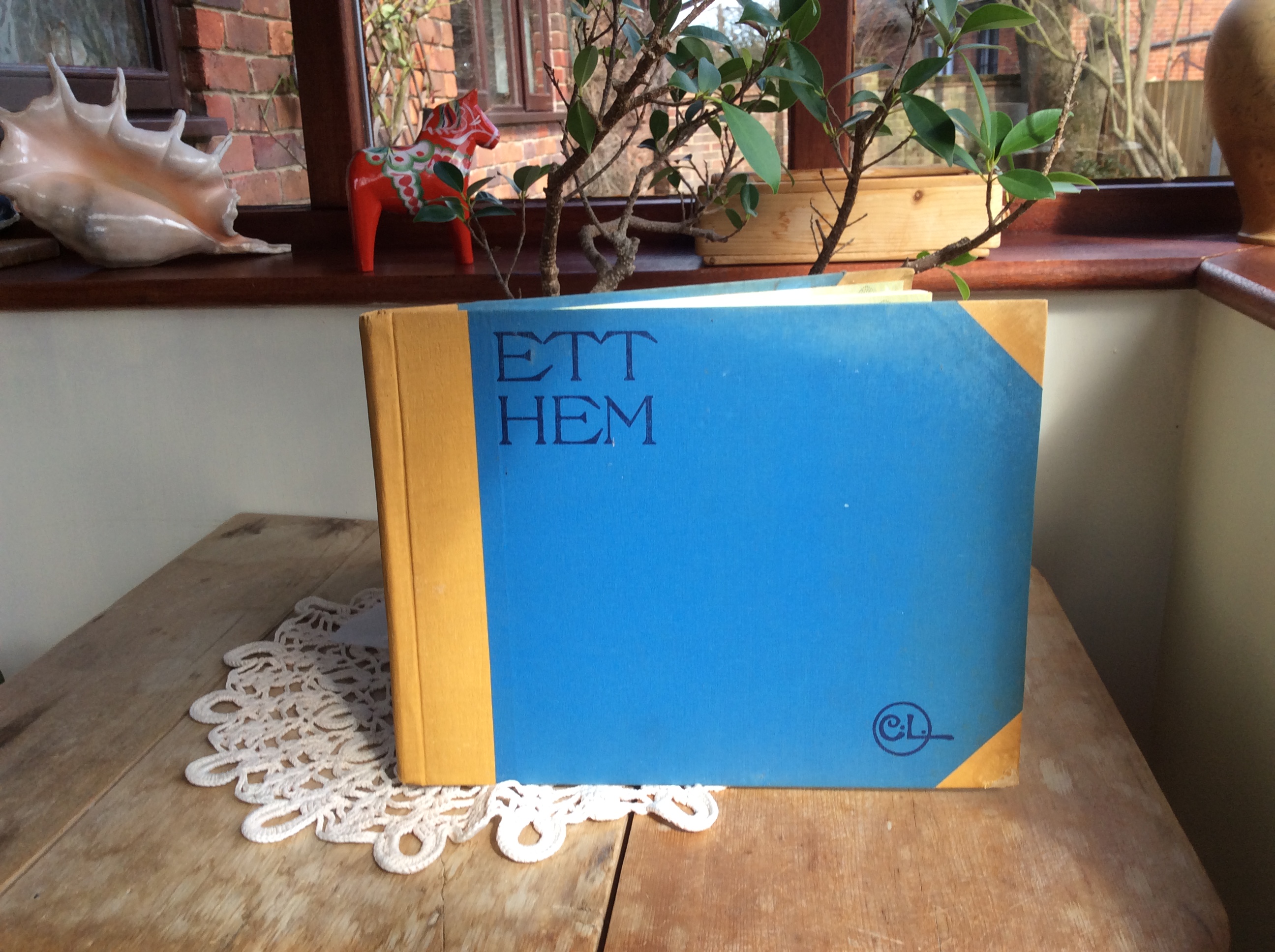
Ett Hem. Carl Larson 1969 edition

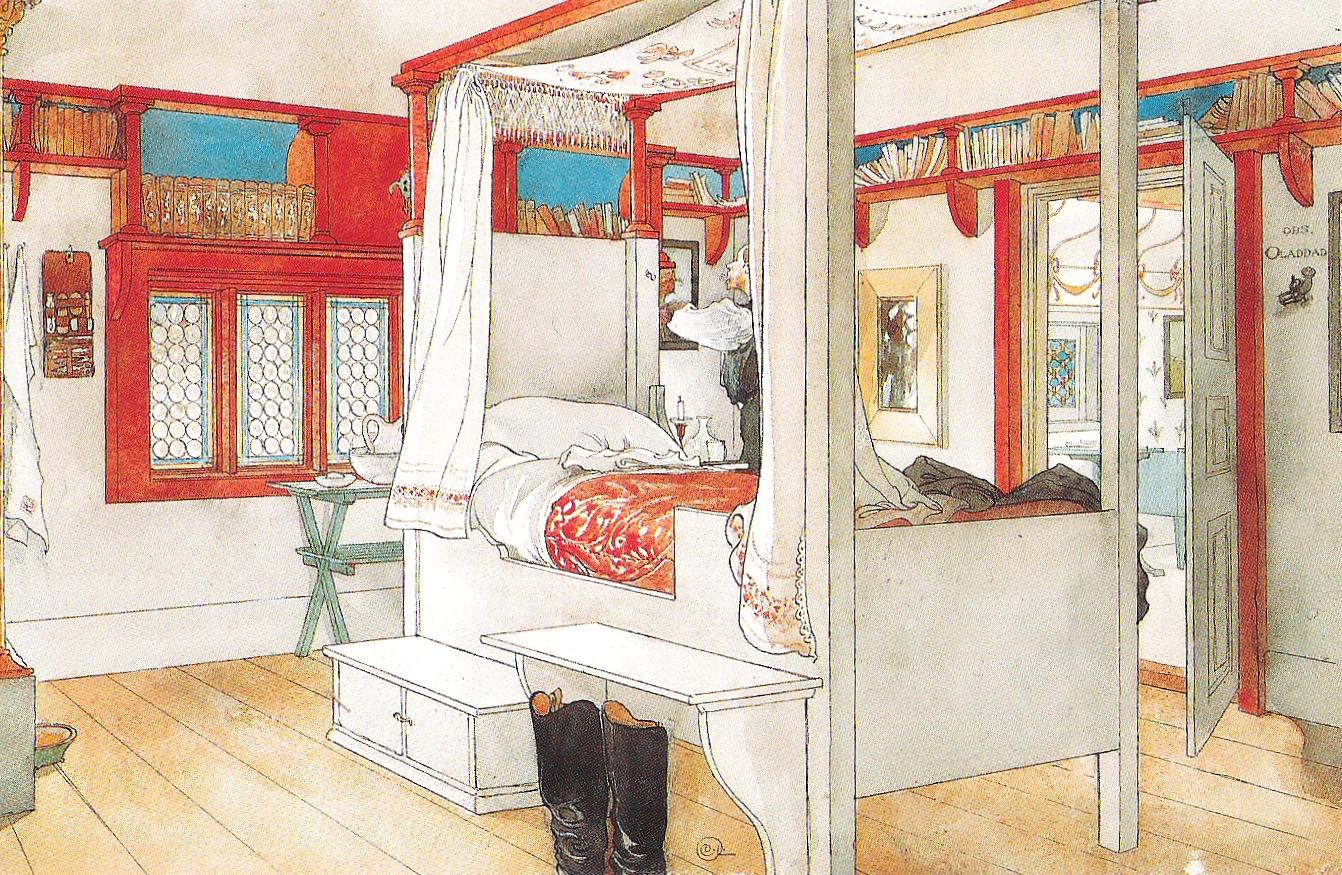
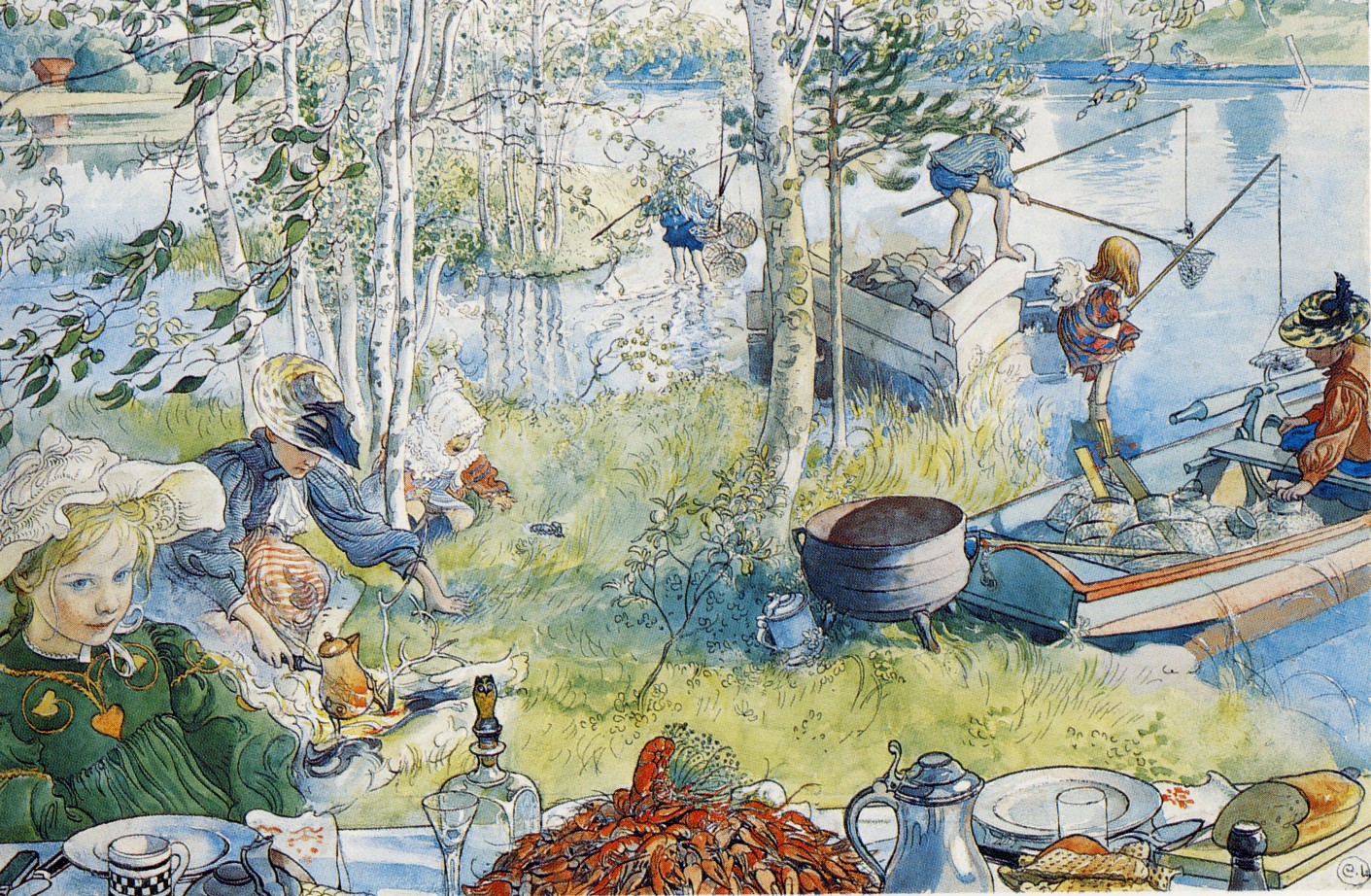
Meanwhile, I’ll leave you with a series of posts to peruse. With no more calendars to hand, I’ve drawn inspiration from a book I found at my mother’s house. Called ‘Ett Hem’, here Carl Larsson documents the family home, its gardens and his family. I will feature paintings from the book, along with self-portraits of the artist, and these will be accompanied by, hopefully, uplifting and inspiring quotations.

One of Sweden’s iconic artists, famous for the paintings of his home, Carl Larsson sadly and ironically was raised in extreme poverty. As young his father threw him, his brother and mother out into the street and thereafter he was raised in a squalid building with three families per room. This wretched start to life ensured he sought to build a loving, colourful home for his family and with the help of his wife, Karin, also an artist and designer, they redecorated the house –  Lilla Hyttnäs in Sundborn, Dalarna – given to them by her father. Carl Larsson captured in watercolours the life here with his eight children and wife in the famous book ‘Ett Hem’ (‘A Home’) – a book which ensured he never needed to fear poverty again.

1920px-Blomsterfönstret_av_Carl_Larsson_1894
Windowsill with Flowers 1894-1898

“A childhood without books – that would be no childhood. That would be like being shut out from the enchanted place where you can go and find the rarest kind of joy.” Astrid Lindgren

Köket_av_Carl_Larsson_1898
The Kitchen

“Drink your tea slowly, and reverently, as if it is the axis on which the world, earth, revolves – slowly, evenly, without rushing towards the future. Live the actual moment. Only this moment is life.” Thich Nhat Hanh

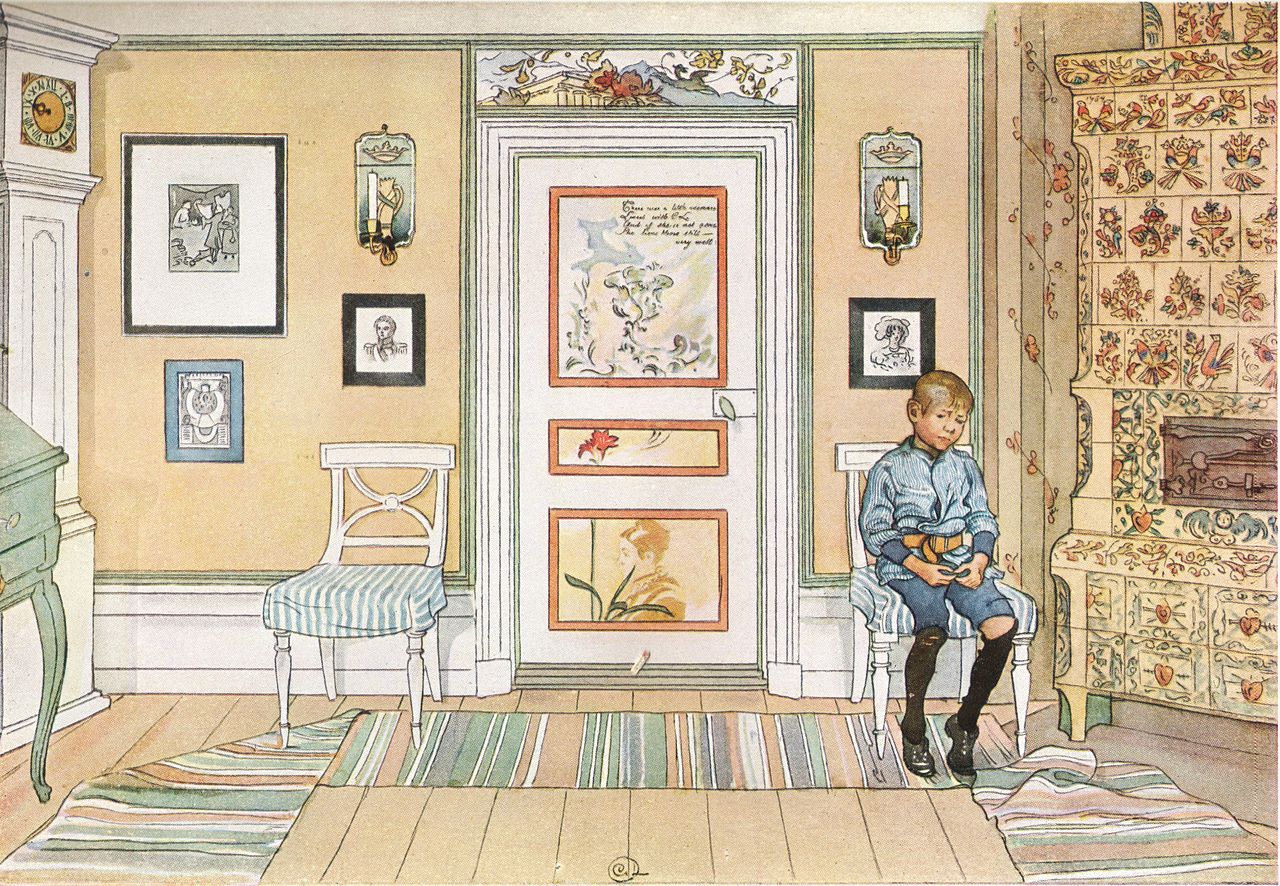
1920px-Carl_Larsson-Lathörnet
Cosy Corner 1894

“For, so long as there are interesting books to read, it seems to me that neither I nor anyone else, for that matter, need be unhappy.” Selma Lagerlöf

Larsson_-_Self_Portrait
Self-portrait 1895

“Where the spirit does not work with the hand there is no art.” Leonardo da Vinci

NB. Comments have been turned off for this and the next post but will be on for the final third post in the series.

Lucia visits St. Paul’s Cathedral

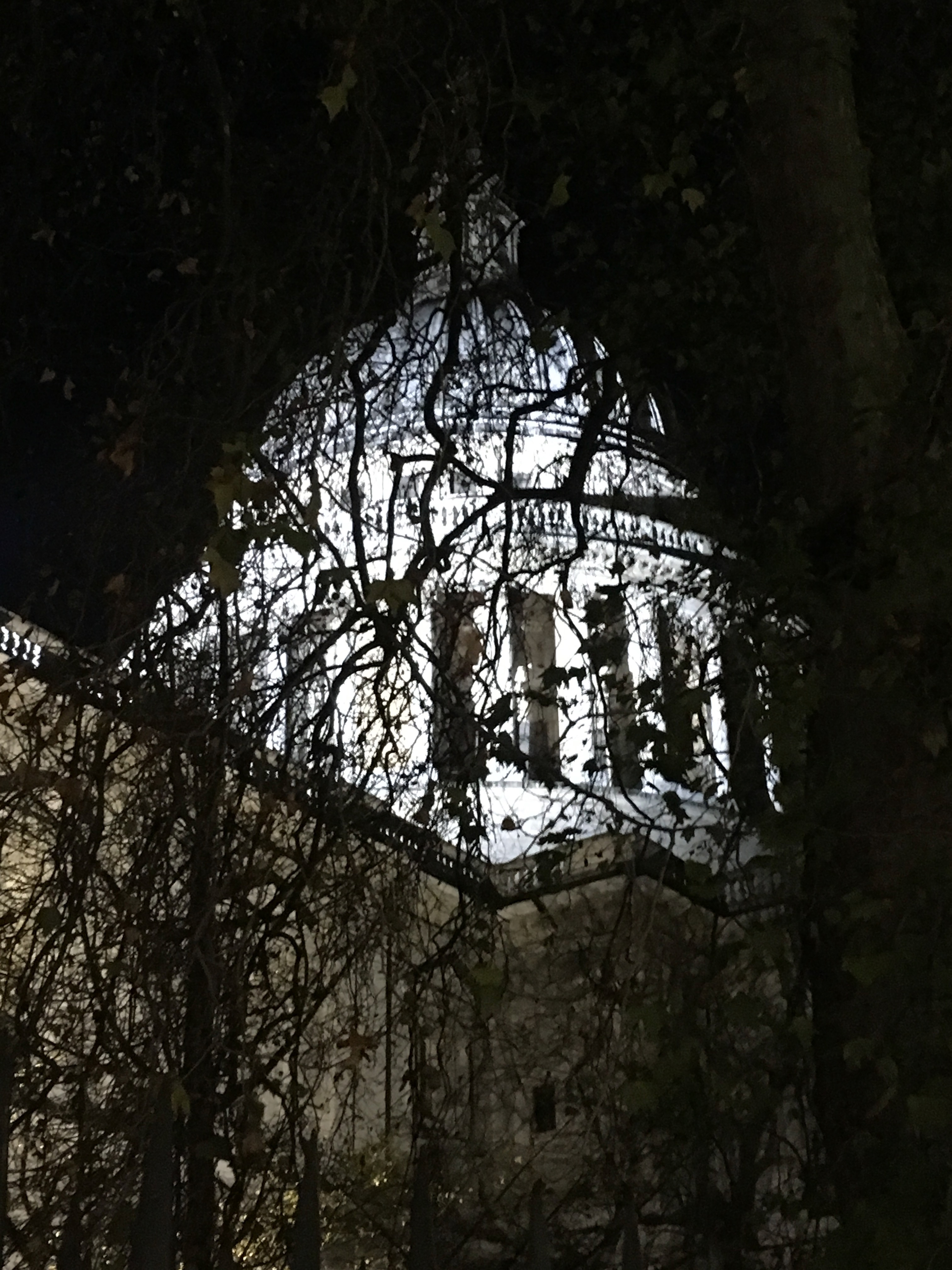
IMG_8367

Very little stops time in its tracks. Takes one back to our roots of dark and light.

As the vast and magnificent St. Paul’s Cathedral was cast into complete darkness, a hush descended over the crowd. The usual shuffles, sniffles, and coughs were awed into silence by the depth of dark and then the distant tones of Sankta Lucia could be heard. From behind us, she appeared and with her maids, they slowly made their way down the three aisles. All around us the glow of candles lit up their faces, the singing clearer, louder as they passed up to the front of the cathedral.

As photography was strictly forbidden (ignored by a few) this video from 2011 shows the entrance of Lucia at St. Paul’s Cathedral.

An overwhelming sense of purity and joy filled the building, the singing, still only lit with candles, wondrous and at times spine-tinglingly glorious. Too beautiful, tender, moving for words.

For once everyone was fully focussed, caught in the moment, no distractions. The wholeness was complete and utter.

As the bitter chill of outside penetrated the cathedral (it was minus three centigrade outside) people huddled closer to their loved ones.

This was the final song of the evening before Lucia and her maids walked back down the aisle…listen with some volume and wait until the moment the choir joins in. A shudder of emotion shook us all…many moved to tears. The pettiness of the world ceased to exist as the song carried us to new levels.

Lucia is celebrated on the 13th December in Sweden and I wrote about the festival here two years ago. For the first time this year, my family and I went to see the celebration at St. Paul’s Cathedral – a most unique and special occasion.

The Church of Sweden organises a series of Sankta Lucia services across London during December and the Ulrika Eleanora Church Choir takes part in them all. We were lucky enough to have internationally-renowned Swedish Soprano, Miah Ovenden, singing this year. Also, we enjoyed a Christmas Service with guest speakers including The Ambassador of Sweden who was joined in the congregation by numerous other Ambassadors, including those of Finland, which celebrated its 100 years of independence last week. I’d read about this on Khaya’s lovely blog and you can read ten things she loves about her second home here

I know we will be back next year to Lucia at St. Paul’s Cathedral…hopefully some of you might be able to join us.

POWER OF PATIENCE #WORDLESSWEDNESDAY

20170806_132816

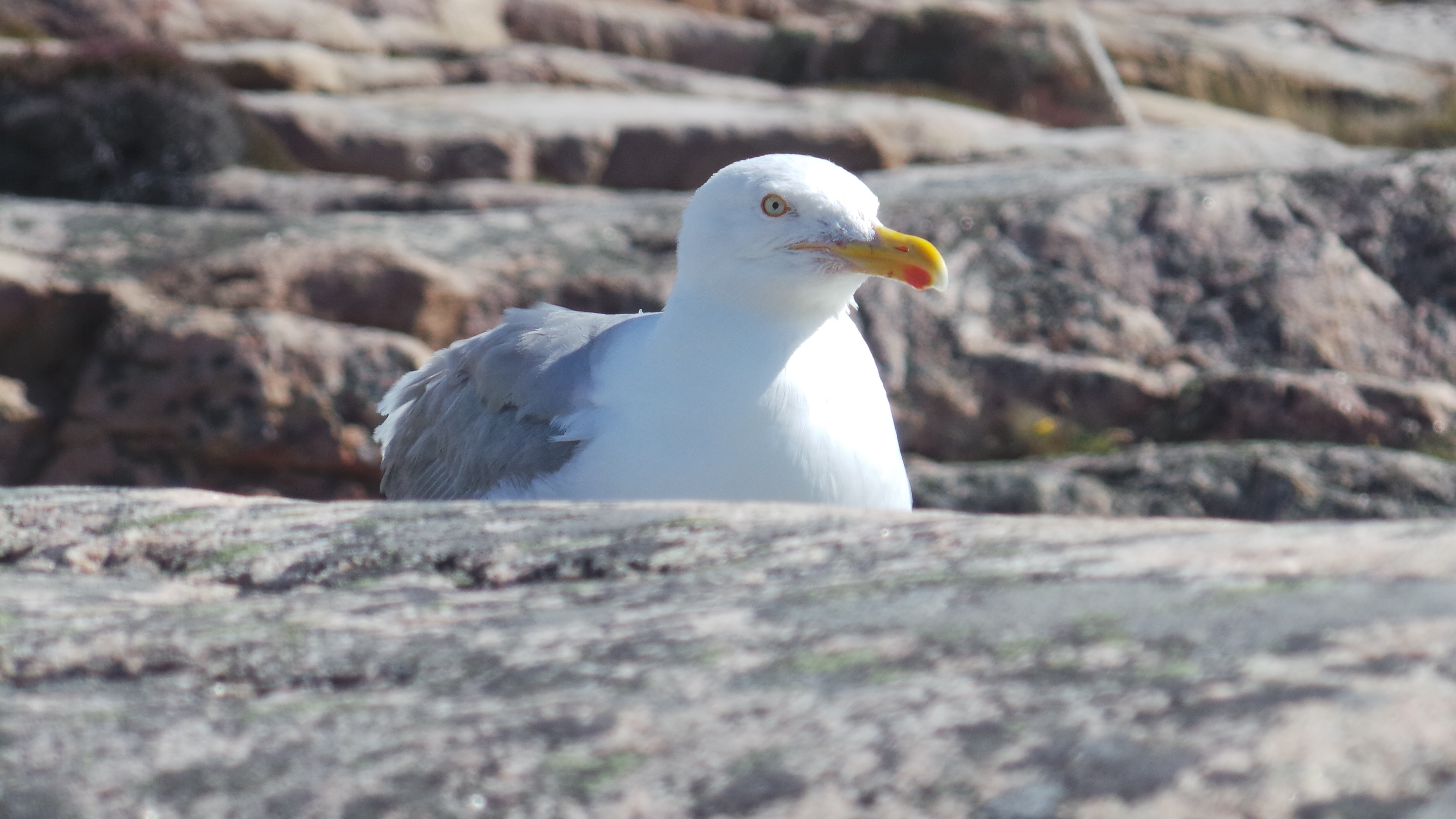
Often struggling with my impatient nature I regarded our unexpected visitor with awe and admiration. He waited calmly by our sides for over thirty minutes as we finished the picnic lunch by the coast one day during my summer break in Sweden.

How could we not reward such patience; his serene demeanour touched us all…with smiles we threw him food, which he approached in the same tranquil manner before leaving with a final look…of thanks and farewell I imagined. 

‘Patience is the companion of Wisdom.’ St. Augustine

I hope you enjoyed another snippet and photograph from my summer in Sweden…owing to work pressure comments have been turned for this post. Wishing you all a very special Wednesday.

RUST & SPLENDOUR #WORDLESSWEDNESDAY

20170806_134740

Welcome to a new series on my blog as I participate in the ever popular Wordless Wednesday – and of course, I’m breaking the rules straightaway! Wordless and Writer are not synonymous!

Many of you kindly asked to see photographs from my recent Summer in Sweden and although I won’t be posting separately I am happy to share a photo and brief description each week.

Wishing you a very special Wednesday!

Comments are turned off for this post.

Season of Mists *

snow covered stuga feb. 10

As Autumn steadily sweeps across us, the temperatures dipping further down with each day, nature’s exhibition of its colourful canvases growing ever more spectacular, we slowly ready ourselves for the winter. 

Winter coats, gloves, hats and scarves are made ready.  The radiators clatter to the sensation of heat coursing through the pipes for the first time in months. 

So off to Sweden I head for a few days to help prepare the summer houses for oncoming winter, when ice can reach a metre or two below the ground, when snow can pile metres high up against the walls. Minus twenty (centigrade) is not unusual. This is the final sorting before the dark days descend, radiators will be left on and this year to ensure there is no repetition of last Easter’s indoor flood following burst pipes, a heated lead has been placed in the water pipes between the houses to stop them freezing. Fingers crossed. 

I can’t wait to see the bountiful beauty the trees will offer – although even as we left in August the birch leaves were already tinged ochre and cracking at the tips. The ocean adorns itself with a wintry gown, the light flickering across the silver shimmery sea, the crispness of the air snapping at my lungs. 

This is my last escapade abroad this year; I will catch up with you all on my return until then I wish you a lovely final few days in October, a fun Halloween if celebrating and for those participating in NaNoWriMo best of luck! May stamina, perseverance and snacks carry you through until the end of 50,000 words. 

‘There are moments in our lives, there are moments in a day, when we seem to see beyond the usual. Such are the moments of our greatest happiness. Such are the moments of our greatest wisdom. If one could but recall this vision by some sort of sign. It was in this hope that the arts were invented. Sign-posts on the way to what may be. Sign-posts toward greater knowledge.’

Robert Henri (1865-1929), American artist & teacher

* From ‘Ode to Autumn’ by John Keats

PROMISED PICTURE POSTCARDS

IMG_1416

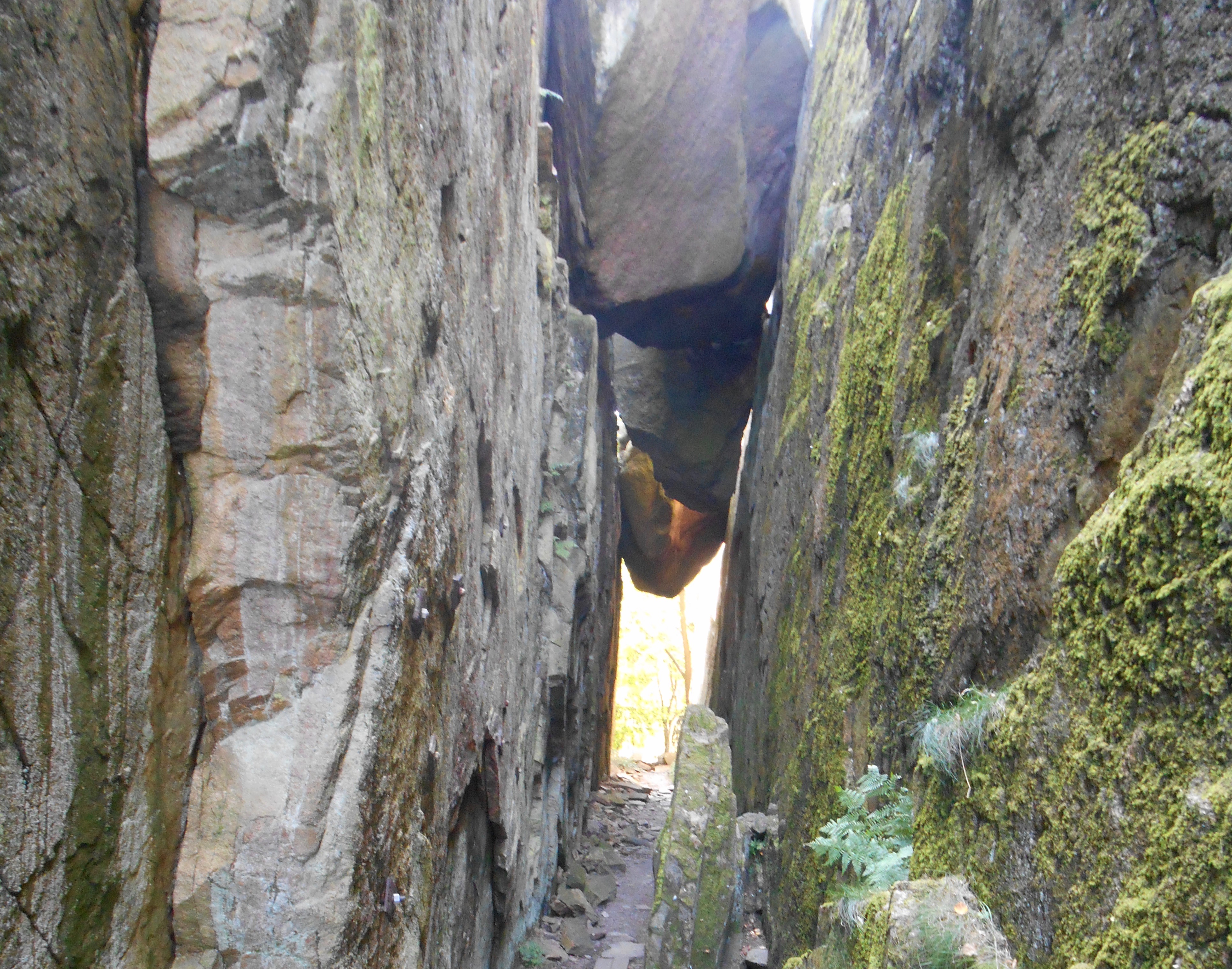
What do Ingrid Bergman and Camilla Läckberg have in common? Fjällbacka! This is a beautiful town on the west coast of Sweden about two hours north from Gothenburg. Ingrid  Bergman spent every summer here with her third husband and Camilla Läckberg was not only born in Fjällbacka but also set nine of her hugely successful novels in the town. It is one of my favourite places to visit with spectacular views from the huge rocks of Vetteberget. Below it are nestled the houses, shops and restaurants. It has over 100 steps to the top and en route courage is required to traverse under Kungsklyftan –  the three gigantic rocks trapped in the chasm above ones head.

OCTOBER

It was renamed the ‘King’s Cleft’ following a visit by King Oscar II in 1887.

photo 3-4

After the long walk a relax by the harbour front cafe is a must – even on a chilly sunny Spring day! Ah…perfect serenity.

photo 2

20160401_143427

20160401_143702

Forests! Years ago travelling by car across Sweden I felt the landscape was mainly the green corridors of forests.

20160328_114933

Only later did I discover I was not far off the mark with nearly 70% of the land being forested.

20160328_115023

Where we live is no exception; forest views all around as well as stunning walks amongst the trees; birches and firs growing side by side as well as the odd hunting tower!

Believe it or not, this photo is the genuine article. Sunset on a glorious evening as seen in reality. No photoshopping required!

20160409_195626

Mystery is embedded in the very heart of all forests and this one is no different. During one walk we came across this unusual stone built rectangular wall. Low in height, with no obvious entry point. We are still musing over its possible usage / meaning. Any ideas would be very welcome.

IMG_1433

This is view of the nearest lake to where we stay whilst in Sweden and this particular lake is one of over 95,000 lakes across the whole of the country. 

lake

I hope you have enjoyed my snippets of information and photographs from my latest trip to Sweden this Easter – posted by popular demand!! Thank you for all your interest.

20160409_195859

PS. This is my 100th post – Yippee!!