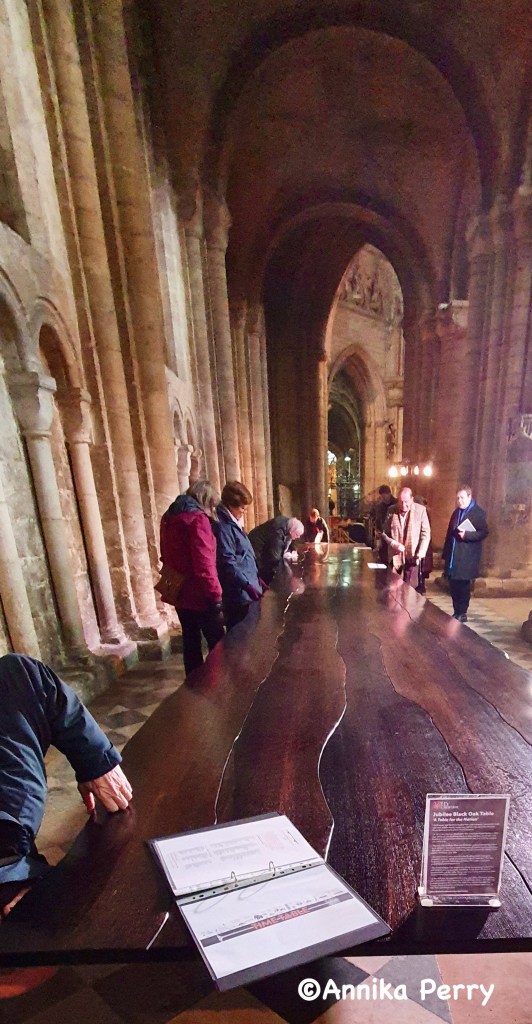
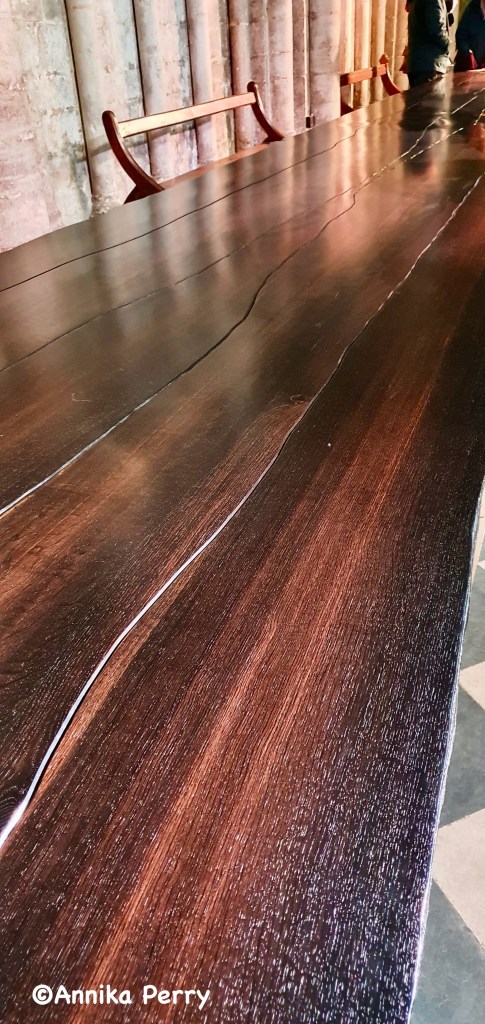
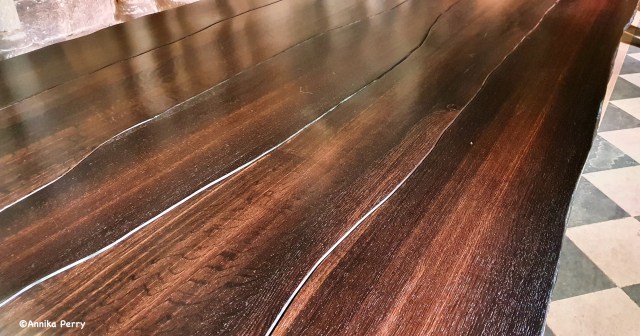
Beneath God’s arches resides the travelling table, Its glistening onyx boards a contradiction.
After all, it should not be here, how is it possible after its 5000-year journey?
One fair day as the Stone Age drew to a close an acorn took root amongst the giant oak forests in the East Anglian Fenlands.
As the moon cast its ethereal light upon the monumental 60-metre trees the sapling flourished.
It joined the canopies of the other oaks Shrouding the people beneath Protecting, becoming part of their landscape.
This, the Jubilee Oak, was indestructible. Until the world altered. Until the sea levels rose. Roots loosened, it crashed To its airless grave.
Untouched for five millennia Resting in the pitch black of peat A preserver. Untouched until the 21st Century, When at last Unearthed!
Fourteen metres of black oak released from its shroud of earth Fourteen metres of jet-black oak trunk Survived, intact.
The magical fusion of the ground’s iron and the tree’s tannins creating the black in the oak ensuring this holy grail of wood.
Experts consulted, advised and directed, a sawmill from Canada flew to help To saw on site Ten perfect consecutive boards.
With the craft of carpentry the combination of skill and passion the unity of artistry and knowledge ALL paid HOMAGE to the beloved Oak Tree
A table designed, boards planed and dried. The Table for the Nation completed.
In majesty, it resides beneath God’s arches.
Now it is time to pay OUR respects.
In reverential silence, visitors gaze upon the table, making a pilgrimage along its length Then back up on the other side.
Fingers caressing the boards, eyes admiring the sheen of darkness. A play of light and dark, An incongruous anomaly in reality.
Now and then people bend down, Admiring the copper sheath below, Then up they appear, once again walking along tracing the winding mysterious curves of the boards
Sweeping curves mirroring the expansive Fenland Landscape, as sweeping as the sea that failed to devour it.
Note: The above post was inspired by a visit to view the Jubilee Oak tree while it was in residency at Ely Cathedral, Cambridgeshire, UK. (It is currently at Rochester Cathedral, Kent.) The table was unveiled in honour of HM Queen Elizabeth II in 2022, the year of the Platinum Jubilee and hence its name.
The ancient oak trees grew to a height of 60 metres (197 feet) and dwarf oaks of today whose average height is about 20 metres (65 feet).
Read more about The Fenland Black Oak Project here.
It’s less than a week since I arrived back from Sweden and the transition to everyday life has been harder than ever. The break was perfect on all levels and once home I realised that my body made it across the North Sea whilst my soul was still residing in the summer house, wandering blissfully on the land, clambering on the rocks.
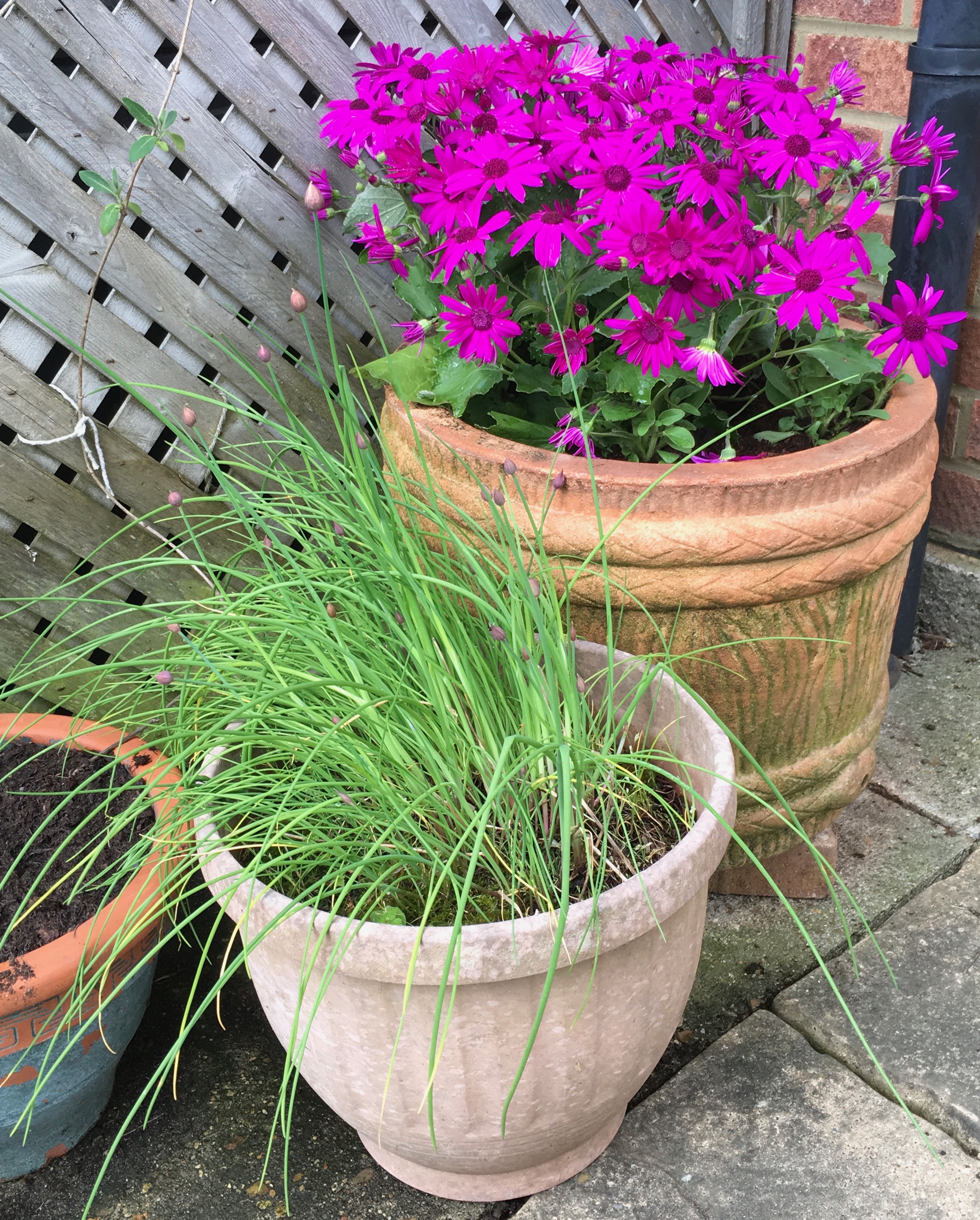
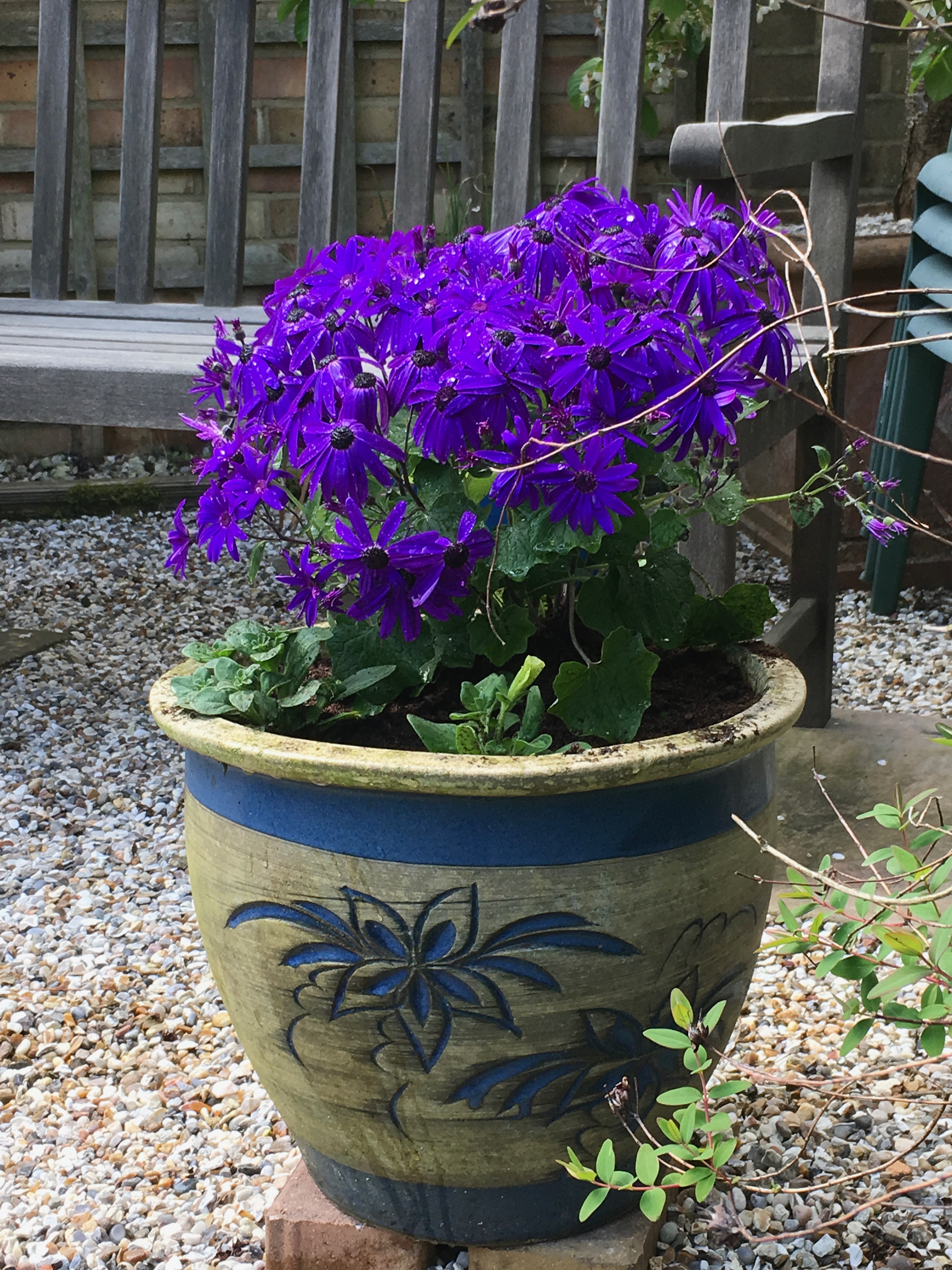
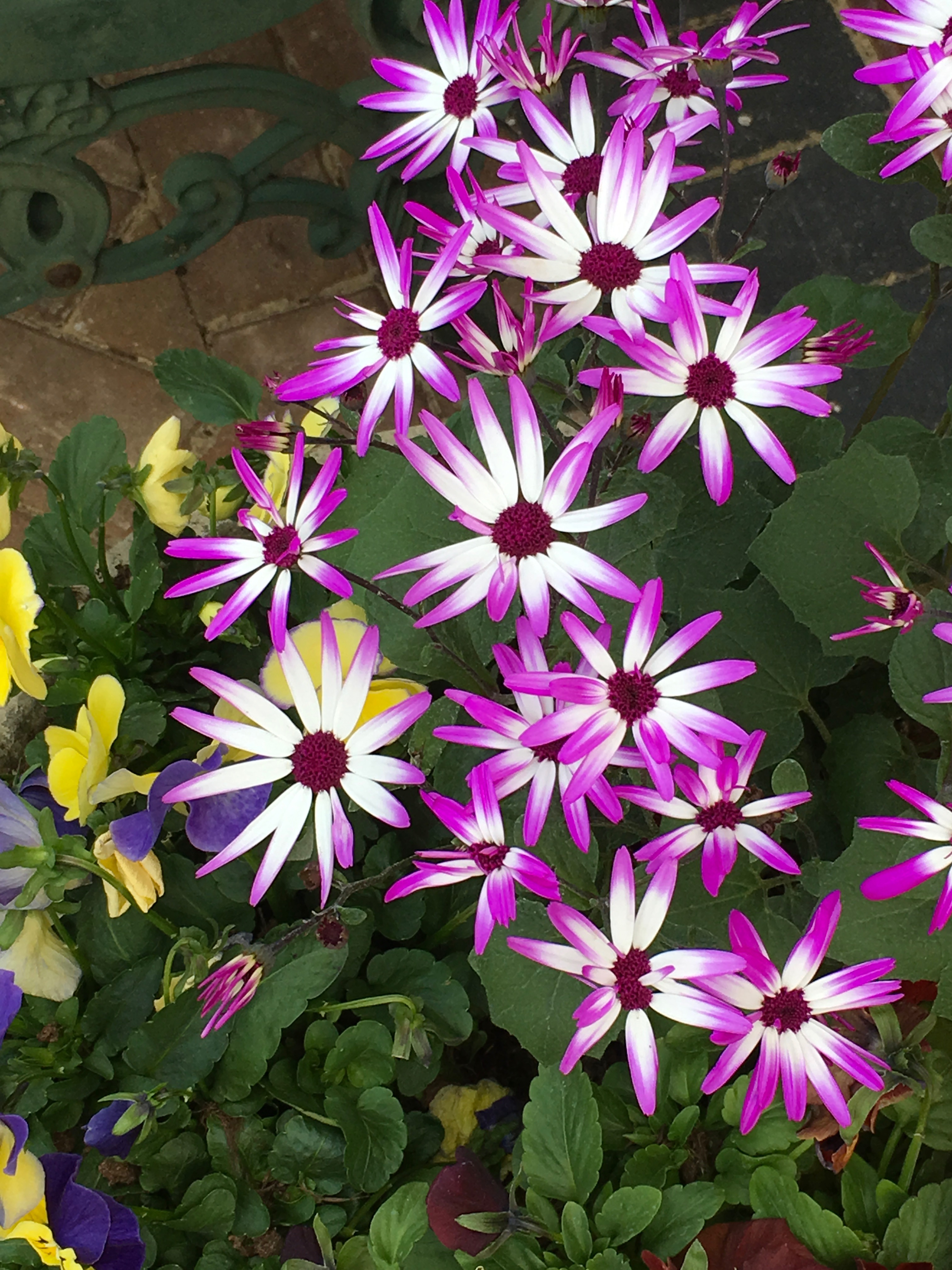
Senetti with Petunias and Flowering Chives
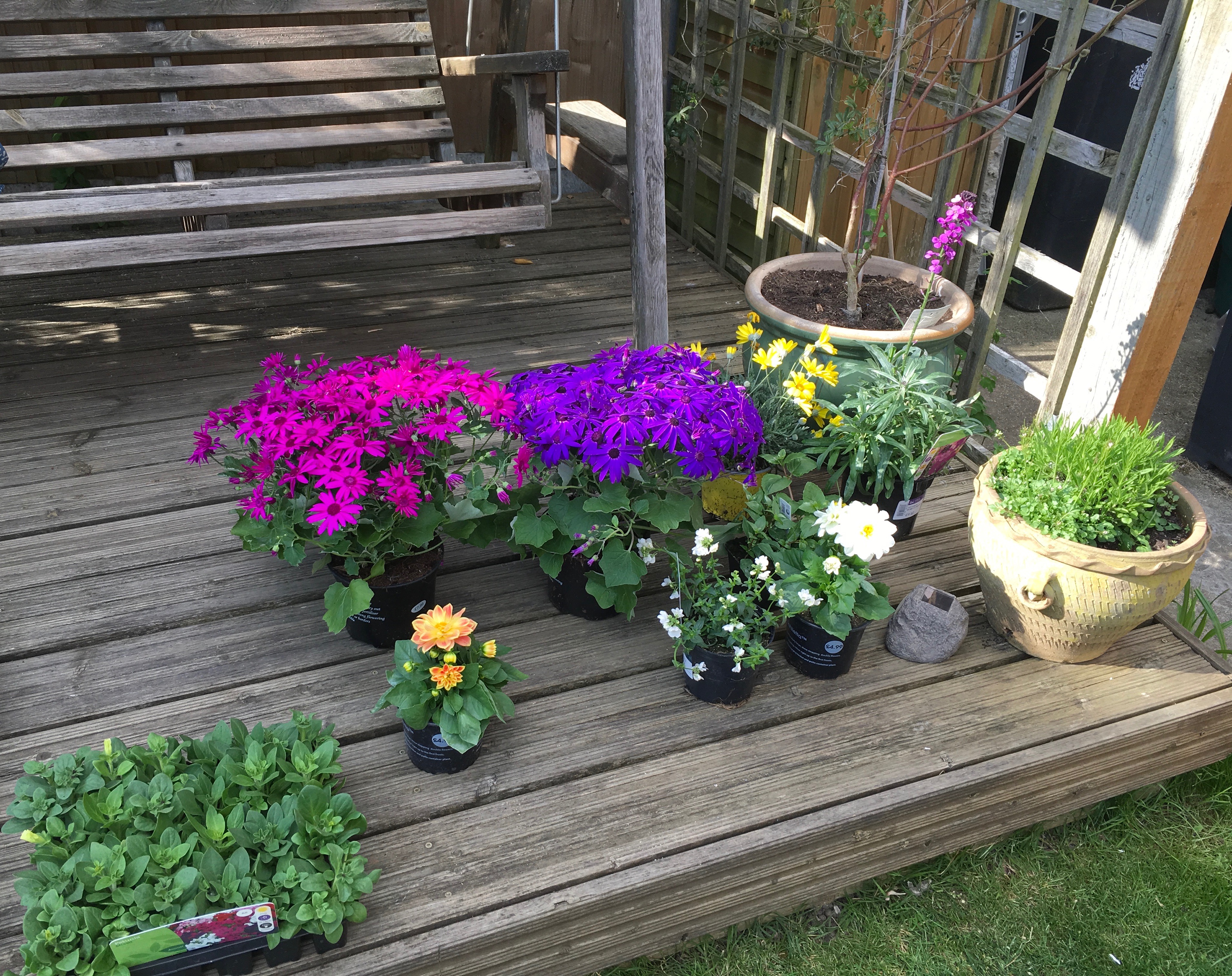
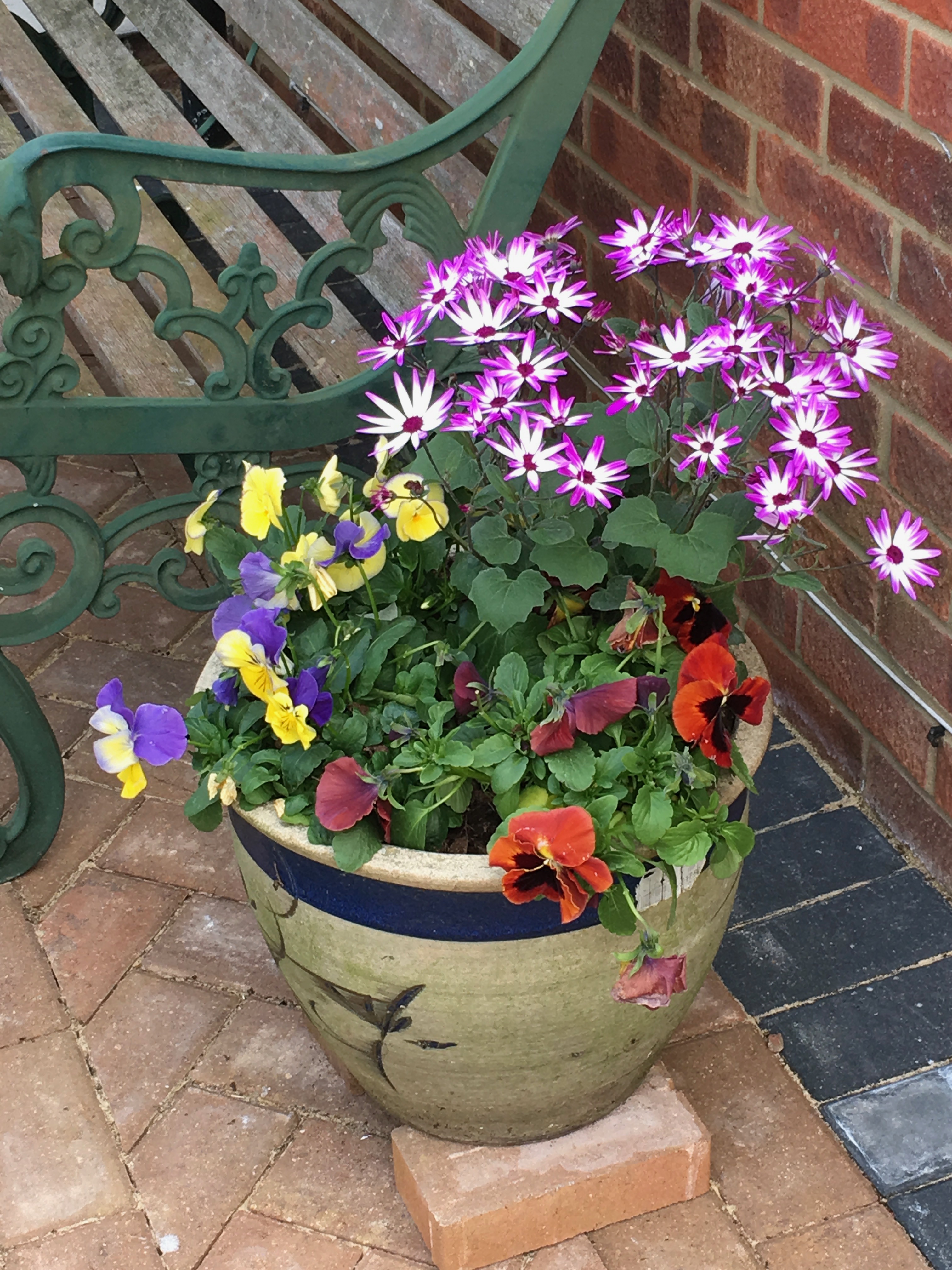
To aid the unification of body and soul I set out to do what often helps in these circumstances. When I was younger that would have meant a splurge at a bookstore after hours of browsing. As an adult and keen gardener I headed to the local garden centre and spurred on by the rare warm sunshine the temperamental trolley was soon filled to the brim. Muttering at the trolley under my breath I steered the plants to the car and kept my fingers crossed for a sunny Sunday.
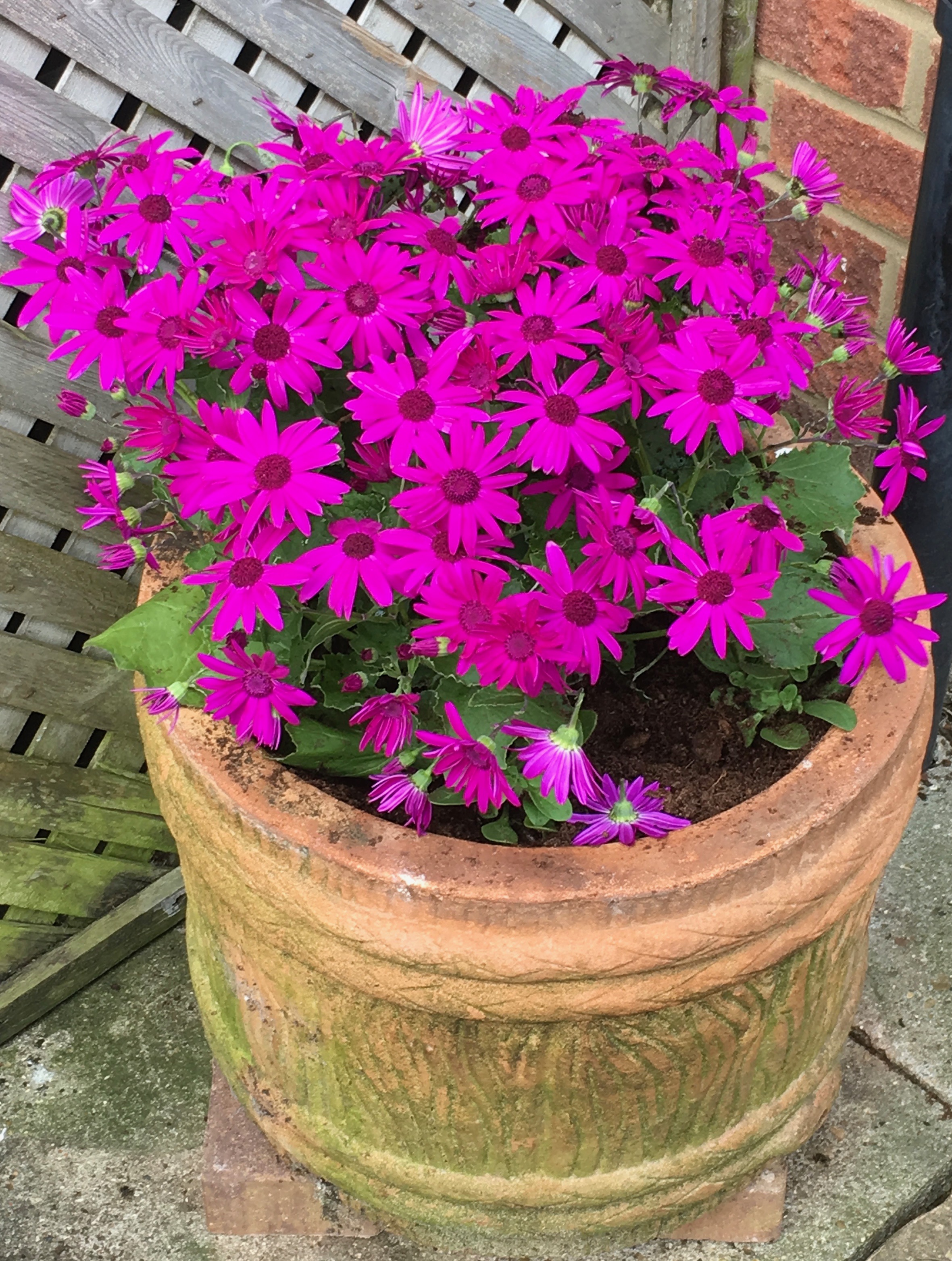
Senetti with Petunias
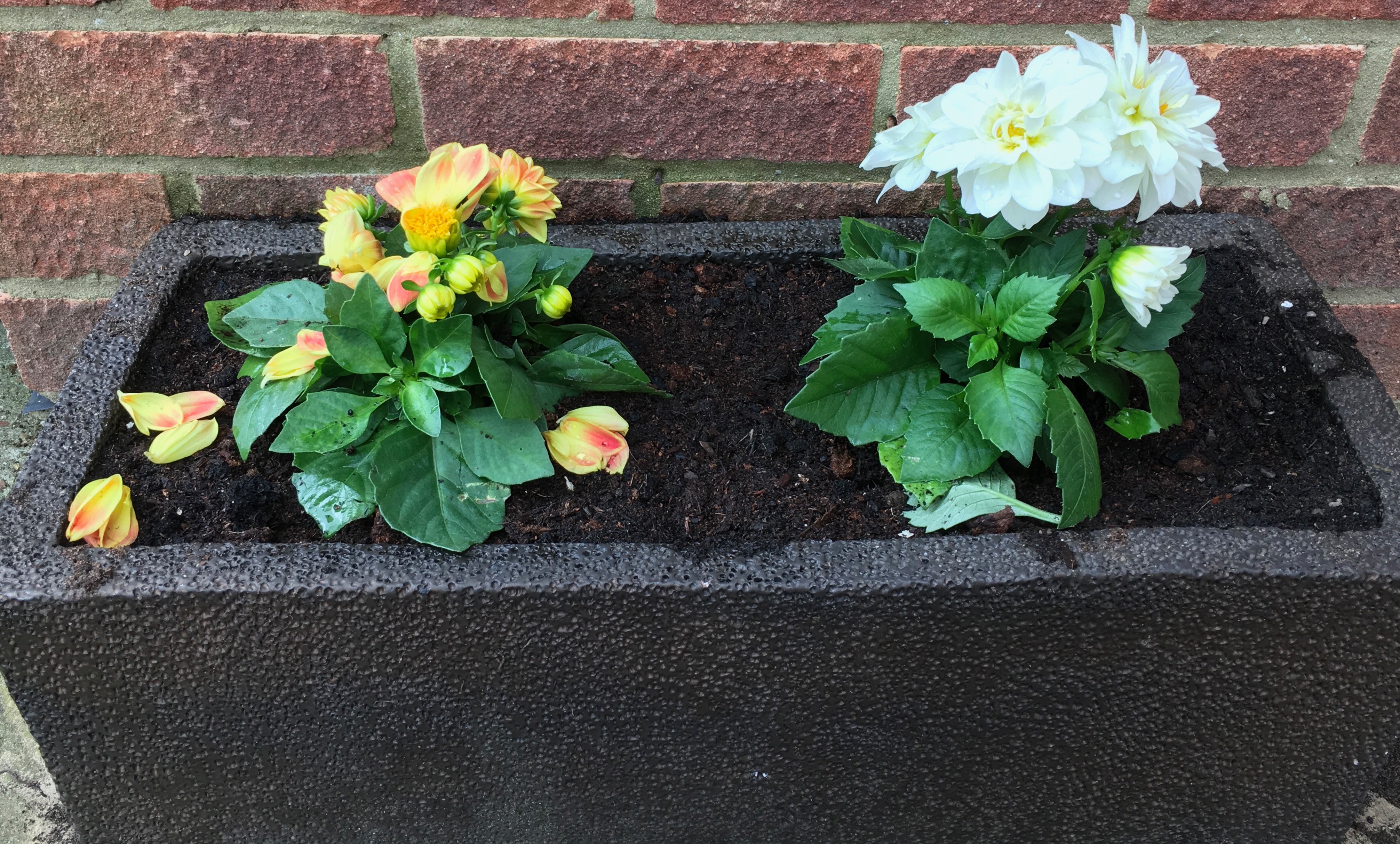
Today I woke to fair weather and keen to get started I left the housework and headed out to the garden. Quickly a new solace took hold of me, gently pulling or cutting the plants from the tight pots and planting with joy. Childlike glee swept over me as soil spilt onto the grass, the patio; little granules of compost sneaking their way into my shoes. One old and tired plant needed to be replaced and proved particularly stubborn on being pulled out. I tried digging it out with a trowel. No luck. Then it was time for the fork and with satisfaction I attacked the rock hard roots, hacking away! At last, I managed to replace it with a beautiful new flower. I could feel my spirits lift.
A few hours later everything was in place…happily including my soul!
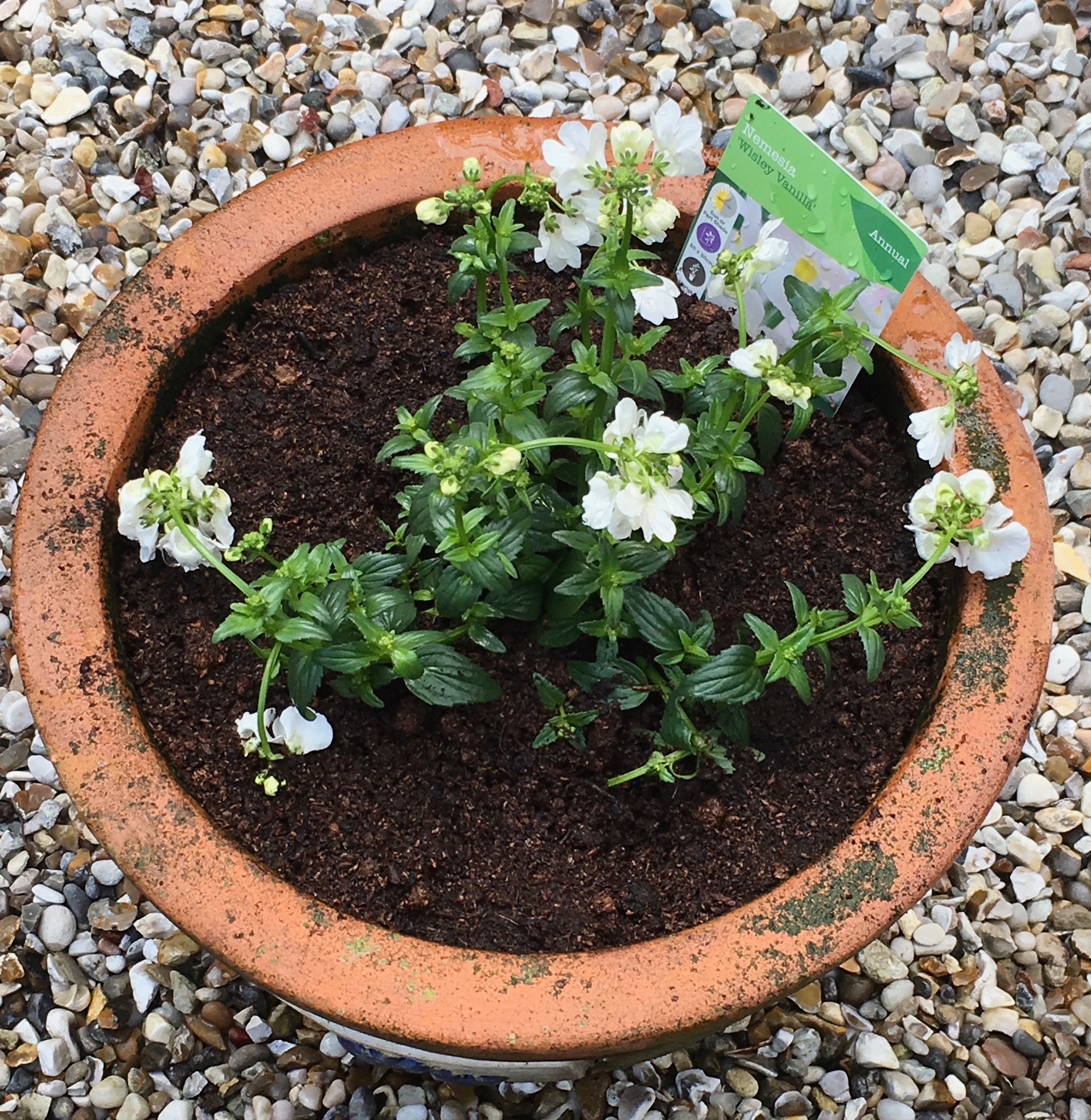
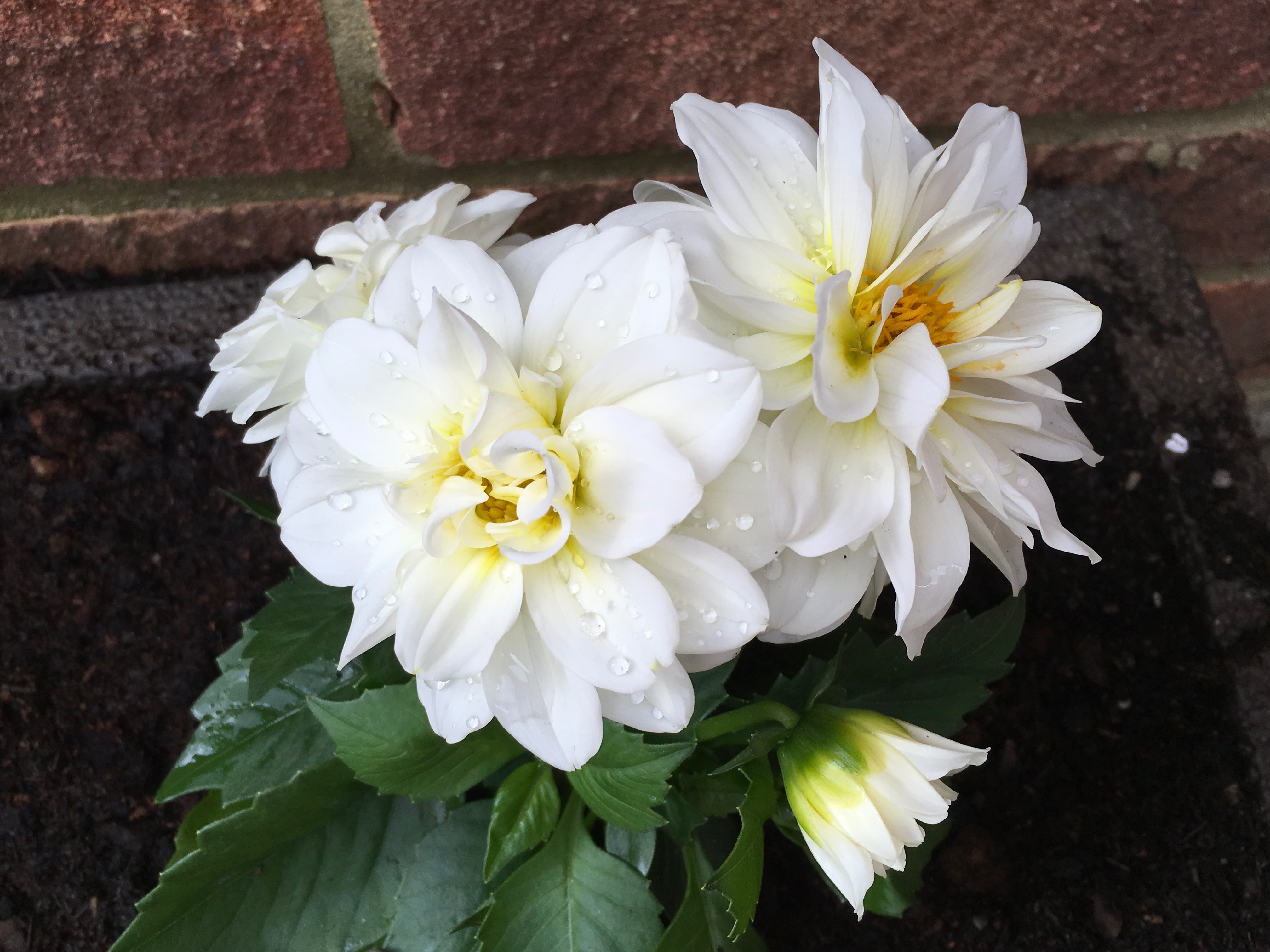
Nemesia ‘Wisley Vanilla’
That is when the idea for this post struck me…another book-style post is partially written but just didn’t feel right at the moment and I had initially left comments on my last post on Bert Håge Häverö but turned them off at the last moment as I was dazed and exhausted upon my return to the UK, feeling overwhelmed to respond.
Thank you all for being patient; I’m slowly catching up on your blogs and look forward to easing into normality in the coming week. Meanwhile, I want to finish with one poem featured on Brainpickings this morning. Maria Popova is a gifted writer and her articles are always a treat and consist of interesting, informative and thought-provoking essays on writers/artists/philosophers and it was:
‘Founded in 2006 as a weekly email that went out to seven friends and eventually brought online, the site was included in the Library of Congress permanent web archive in 2012.’ *
Today’s feature on poet Jane Hirshfield is particularly relevant as it was Earth Day yesterday. Enjoy.
ON THE FIFTH DAY by Jane Hirshfield
On the fifth day the scientists who studied the rivers were forbidden to speak or to study the rivers.
The scientists who studied the air were told not to speak of the air, and the ones who worked for the farmers were silenced, and the ones who worked for the bees.
Someone, from deep in the Badlands, began posting facts.
The facts were told not to speak and were taken away. The facts, surprised to be taken, were silent.
Now it was only the rivers that spoke of the rivers, and only the wind that spoke of its bees,
while the unpausing factual buds of the fruit trees continued to move toward their fruit.
The silence spoke loudly of silence, and the rivers kept speaking, of rivers, of boulders and air.
In gravity, earless and tongueless, the untested rivers kept speaking.
My recent Writing Group prompt proved rather challenging; involving both a genre in which I’m not adept as well as a topic that sadly holds little interest.
The topic was circus and more on that later. The genre was a limerick – although I enjoy composing some for a laugh after dinner, I’ve never seriously tried to write any.
My first port of call was ever reliable google and helpfully I discovered the basic principles of limericks; the first, second and fifth line have the same number of syllables (approx 7 -10) and rhyme, whilst the third and fourth rhyme but have fewer syllables (4-6). As often happens one site led to another and soon I became engrossed in the history of limericks, which came from Ireland but are thought to have originated in France and first appeared in England in the Middle Ages. To read more about limericks click here.
Circuses never held any fascination for me and way before the current spate of scary clowns, I’ve always found clowns frightening. On top of that I worried about the exploitation of animals which meant I have never been to a circus. However, I would be thrilled to witness the exploits of acrobats and trapeze artists, such as the ones in the limerick below – hopefully under far less eventful circumstances!
On writing my limerick I approached it from the story first and sketched this out. Quickly I realised this would not be one or even two limericks, rather an epic limerick or perhaps more accurately a poem with limerick verses. After endless revisions, tapping out the syllables repeatedly, this was my contribution – I hope you enjoy it.
I surprised myself by have an absolute ball writing the limerick and ‘perfecting’ it – just proving that it’s always good to write outside one’s comfort zone. You never know what will emerge!




 Annika Perry