‘A COMPELLING DEBUT BOOK!’

book-2808775_1280

A heartfelt thank you to everyone who has read and/or reviewed my book over the past couple of months.

It’s amazing to read your thoughts about my collection through your comments and reviews!

Reviews are the ultimate gift for authors and the latest one on Amazon for The Storyteller Speaks was the perfect start of the month for me!

Overwhelmed with joy, I read it over and over and was touched how Lauren Scott managed to bring in so many aspects of my stories and poems. My warmest thanks to Lauren for her wonderful review and for letting me share it here on my blog.

Featured Image -- 5975A COMPELLING DEBUT BOOK!

The stories and poems in Annika Perry’s debut book are indeed compelling. Each one evokes various emotions from everyday life.

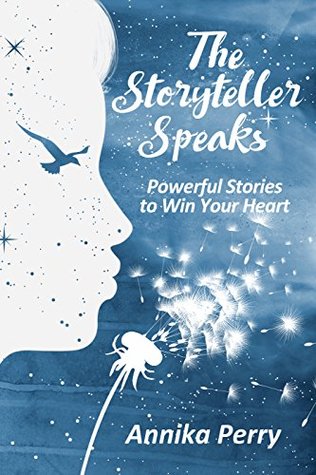
I’ve followed Annika’s blog for awhile now, so I wasn’t surprised at how wonderful the final outcome turned out to be. The cover alone is stunning! She has her magical way of playing with words to pull the reader in, but keep one hanging on until the end.

However, not all of her writing in this book is lighthearted; some is pretty dark. There were times when I smiled, moments when I was horrified, and occasions for tears. The beauty is that with each turn of the page to a new story or poem, the reader is pleasantly surprised.

With this being said, it was difficult to choose favorites, but I managed to pull out a few: Chillies in My Handbag, Bouquet of White, A Rare Passion, Stars of Wonder, and Loss of a Patriarch, which personally resonated with me because of my father’s passing last fall.

Another bonus to this creative compilation was the About the Stories section at the back of the book. I really enjoyed reading how each story was born.

Overall, anyone who chooses to read this wonderful collection of short stories and poems will not be disappointed. This was a wonderful start to Annika Perry’s writing journey, and I’m sure I’m not alone in anticipating new publications from this amazing author.  

5.0 out of 5 stars

by Lauren Scott’

If you want to check out The Storyteller Speaks it is available here at Amazon US or Amazon UK. Thank you so much!

Lauren Scott blogs at Baydreamer and this is her ‘space for sharing poetry and photography, and for initiating occasional discussions.’ It’s always inspiring and heart-warming to read her posts and chat away via comments. Do pay her a visit!

NB. I have turned off comments for this post.

MYRTLE THE PURPLE TURTLE: A BOOK REVIEW

7E1BFEF8-D209-461E-8196-4FC9D30E5638

‘Myrtle the Purple Turtle’ is one of the most striking, original children’s books released in recent years.

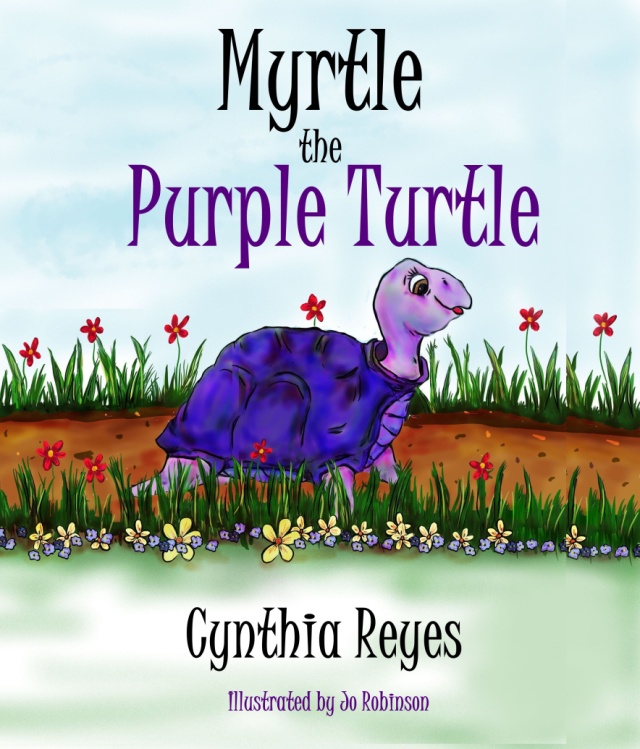
I was immediately drawn in by the welcoming cover of Myrtle proudly striding along and quickly became engaged with this wonderful character.

As a purple turtle, Myrtle has never considered herself any different from the other turtles and is happy and confident in her life. Until one day a rude turtle laughs and taunts her for even daring to consider herself a turtle.

What follows next is a touching and tender story to which we can all relate when faced with inconsiderate hurtful comments. As Myrtle sets out on a journey of self-discovery and understanding…with some help from her mother and friends along the way, she learns to accept herself and others.

I quickly lost myself within Myrtle’s world and empathised with her hurt and confusion … cheering her on as this feisty creature sought deeper understanding.

The language of the book flows with ease and it is well written in brief sentences, which are kept lively with the use of direct speech. Children and adults alike will be enraptured by Myrtle and captivated by her story.

The illustrations are the crowning glory of this book – they are superbly and deftly drawn with a huge emotional impact and are visually appealing. The drawings, which are vibrant and luscious, are fun and often cheeky; I couldn’t stop giggling at the image of the two head-butting turtles. The illustrations and story blend seamlessly together to lift the story onto a deeper level, exploring the themes of what makes us unique and ultimately learning to embrace ourselves and others. As Cynthia Reyes herself says ‘Love Your Shell’.

I thoroughly enjoyed ‘Myrtle the Purple Turtle’ and it is an entertaining and uplifting book which deserves to be on every child’s bookcase…it is one they (and you) will happily return to time and again.

I received a free no obligation preview copy of this book from the author and this is my honest unbiased review.

RATING:              5 out of 5

PUBLISHER:        Weaverback Press

AVAILABLE:       Amazon UK (Paperback)      Amazon UK (Kindle)

                              Amazon US  (Papaerback)   Amazon US (Kindle)

E6BCE995-289B-4D68-96B4-2347B7056FE3


SECOND CHANCE ROMANCE: A BOOK REVIEW

BOOK

After reading a series of intensive, high-octane thrillers in the past weeks, Jill Weatherholt’s  ’Second Chance Romance’ proved just the tonic I needed to relax and return to earth.

In this heart-warming novel published by Harlequin Love Inspired, Jackson Daughtry, a single father of five-year-old Rebecca, one morning comes to the rescue of Melanie Harper. She hit a tree whilst swerving to avoid a deer and Jackson’s paramedic skills come to good use as he helps her out of the car and then to the hospital. From this very first meeting, their lives are interwoven and irrevocably changed. 

Melanie is the niece of the very popular Phoebe Austin, Jackson’s business partner to the local cafe The Bean and since the death of his parents, Phoebe has been like family to him. Melanie wants her aunt to move with her to Washington, DC., which causes conflict for everyone concerned.

As a divorce attorney in the capital Melanie is a city girl through and through. However, the tragedy which struck her life a year earlier had resulted in her retreating into herself in the isolated, uncaring environment of urban life. When faced with the beauty and wondrous landscape of idyllic and harmonious Sweet Gum in the Shenandoah Valley she gradually opens up emotionally. The setting becomes an intrinsic part of the novel and the friendly, caring attitude of the community is sensitively and memorably portrayed.

The novel is told in the third person switching with ease and skill between the two main protagonists and ultimately allowing us closer access to their thoughts and feelings.

Being a romantic novel, the frisson between Jackson and Melanie is at the core of the story; its intensity and the continual emotional rollercoaster between them makes this a most compelling, addictive read. Whilst attracted to each other, they deny these feelings to themselves as differences over many issues makes any future seem untenable. Just as Melanie comes out of the hospital, Aunt Phoebe suffers a stroke and whilst she recuperates, the running of the cafe falls to Melanie and Jackson.  The past haunts them both more than ever when faced with working together each day and confronting their traumas.

Having been left to raise his daughter four years earlier when he was abandoned by his wife, Jackson finds it difficult to trust anyone. Meanwhile, Melanie is still lost to herself and the world following overwhelming grief…a tragedy that is only slowly revealed. Whilst  Jackson finds solace in his faith, Melanie lost hers. 

Faith is one of several deep and thought-provoking themes examined and woven into the narrative. Grief, fear, forgiveness and love are all seamlessly arced across the novel and hidden within the more everyday events. These include such gentle, seemingly inconsequential happenings such as a fair, apple picking, picnic and baking, which are all exquisitely described and very much part of the homily Mills & Boon genre. Numerous sub-plots such as the menacing return of woman long since disappeared and the romantic possibilities for Aunt Phoebe bolster the main story.

For me the star of this book is Rebecca, Jackson’s daughter – she instantly won a place in my heart! Her warm loving personality, belief and innate wisdom is brilliantly captured and helps unravel the darkness of sorrow within Melanie; I can just imagine the powerful impact of the hugs from this little girl. The reader’s instant affection for Rebecca only heightens the tension and drama as she faces danger and the possibility of being lost to them forever.

Although an easy read with a welcome escapist element, this is a well-crafted and written novel with a perfect fusion of romance and drama; I quickly became engrossed in the lives of all the characters and I didn’t want to leave my new friends as the novel came to an end.

Rating:                   4 out of 5 stars

Available from   Amazon US   or  Amazon UK

shenandoah-valley-1876374_1280.jpg

31 DAYS OF WONDER: A BOOK REVIEW

A brief lunchtime encounter at Grosvenor Park, London proves a pivotal moment in the lives of two young adults. Ben barely has a chance to introduce himself to Alice when she is whisked away by her domineering colleague to Glasgow. Not Glasgow, Scotland as Ben assumes, rather to see her irate boss, nicknamed after the city.

This misunderstanding sets in motion a course of actions that changes Ben’s life irrevocably as he becomes intent to find Alice once again…by getting to Glasgow whatever means possible! His loyal friend and flat mate, Dave, is on hand to help, even lending his folding bike to Ben. Before he knows it, he has been encouraged with his grandfather’s unexpected and unusual approval and involvement, to enrol on a charity bike race…one which is cut short by a tragedy within the family.

After the meeting with Alice in the park, he soon sees her again…but the reader (and Ben) is aware that this is a hallucination…one that seems very real and with whom he converses. Gradually her appearances drift further apart until the end when Ben’s childhood trauma is fully revealed and the reason for his supposed mental problems are explained.

Meanwhile, Alice continues to face a gauntlet of verbal abuse about her size at both work and from her parents when she visits them…and inevitably a downward spiral of eating ensues to escape her misery. Her daily humiliation saps her confidence and strength until she is weak, meek and at everyone’s mercy. The ray of hope in her days are Ben’s kind words in the park, a memory that supports her and she even makes up a relationship with him to her family and colleagues…one that to her surprise helps her ultimately and dramatically find her voice.

The daily battles in life take a turn for the positive as the memory of their meeting is the catalyst to changes in both their lives. 

31 Days of Wonder’ is a whimsical novel, often amusing – even laugh out funny at times – whilst also deeply profound and moving. It’s delightfully surprising in failing to conform to convention and become a straight forward romantic story and instead the lives of the two main character circle each other, their separate narratives mirroring but always kept apart.

It is told from a third person viewpoint of Alice and Ben, each entry by them punctuated by either her location, train times or Ben’s location and distance from Alice. Each chapter is a new day, counting up to the titled ‘31’ and with all such counting devices the book easily becomes a compulsive read, which is abetted by the short segments and chapters as well as being written in the present tense.

The theme of self-acceptance is all-pervasive in the book and reflects the author’s own journey to self-acceptance whilst battling with depression during the writing of this novel. After many re-writes over a long time, the author finally achieved the perfect ending…with light, positivity and hope reigning strong. 

This is a charming, beautifully written novel of self-discovery which is engaging and memorable. Definitely not to one miss and I am now keen to read Tom Winter’s other books.

I received a free copy of this book from the Netgalley in exchange for an honest and impartial review. 

Rating: 4 out of 5 stars

Publication Date: 10t August 2017

Publisher: Little Brown Book Group UK

** This is the first of many books I hope to read whilst away on my summer break amidst the serene beauty of the Swedish natural world.

THE MUSEUM OF YOU: A BOOK REVIEW

museum

‘When you grow up in the saddest chapter of someone else’s story, you’re forever skating on the thin ice of their memories.’

Grief. It’s all pervasive and its repercussions are felt throughout the generations, even to those newly born as tragedy strikes.

This is only too true for Clover, almost twelve, who has lived under the cloud of her mother’s death when she was only six weeks old. A ‘surprise’ to both her parents, her well-meaning father, Darren, has tried to protect his daughter from any further unhappiness.

His reluctance to talk about his wife, Becky, is clear to sharp-minded Clover as she sees her father’s deep sorrow and fear when she raises the topic with him and he replies with the oft repeated sound-bites, sharing only minimal information about her mother.

On the cusp of teenage years, Clover becomes desperate to break through the palpable dark shadow of her life and learn more about her elusive mother. However ‘she has recently become attuned to the way Dad takes the temperature of her mood and attempts to chart it. He’ll stop once she smiles – a small smile isn’t enough, it takes all her teeth to convince, and even then he sometimes inspects her expression like a worried dentist.’ In her attempt to get to know her mother Clover recreates Becky’s life from her belongings, which have long since been stored with other junk in the seldom entered second bedroom.

‘This was her mother’s room. This was her mother’s view. These are her mother’s shoes. She teeters over to the crowded space at the end of the bed, back and forth she treads, back and forth and back and forth as if eventually, she might step into her mother’s life.’

As the poignant and moving story unfolds, the reader gradually learns the reasons for Darren’s reticence and the patchwork of sorrow and guilt permeates the book.

The novel is written through two narrative strands, that of Clover and Darren. Both are in the close third person perspective and the author’s deftness and skill ensure that each voice is distinctive and it is easy to relate to each character. The sense of immediacy is achieved by the use of present tense for current day events which slides into the past tense for the story of Darren and Becky’s earlier life.

Clover’s courage, keen observation and emotional intelligence is strongly portrayed throughout the novel, not only through her relationship with her father but also with her kindly, loud and older neighbour Mrs Mackerel who has often helped care for her. As Clover experiences the first independent summer holiday she is inspired by the school visit to Merseyside Maritime Museum exhibition about the Titanic to create her own museum about her mother, with a special exhibition in the second bedroom entitled ‘Becky Brookfield – The Untold Story’. The descriptions of the various items recovered from the boxes and suitcases in the second bedroom punctuate the two viewpoints of the story, with each exhibit clearly named, logged and its history guessed at (often wrongly).

Darren is a brilliantly crafted character, flawed, slightly rough. He’s an academic at heart whose passionate interest and intent to study geography at university was cut short by his own mother’s illness and death in his teens. As Darren’s father effectively withdrew from life, silence filled the gap of his mother’s former presence. After losing Becky, Darren once again experiences intense grief as he is ‘poleaxed by the old ache of missing her (Becky)’.

The themes of love and relationship between parents and children is explored throughout the book, including that of Becky and her damaged younger brother, Jim, who grew up in a traumatic household. Despite her Uncle Jim’s chaotic life, Clover accepts him with the same unreserved love as her mother had. Meanwhile, further characters become as family and these include Colin, the odd but stalwart friend from school who is a constant presence in Darren’s life. There is also the outsider Dagmar who becomes an unexpected friend to Clover and finally her father’s female friend, Kelly and her two young sons. Ultimately they all become closely linked, caring for each and showing that ordinary people are extraordinary.

Locations feature heavily in the book, particularly as Darren has never left the area he grew up in. As a bus driver he drives back and forth between Liverpool and Manchester, recalling the street names, homes, allotment, sights and sounds and these quickly become familiar to the reader as the events of his past unravels in a veritable stream of consciousness.

‘The Museum of You’ is written with a unique form of whimsical realism, the grittiness of life interlaced with the magical recreation of Becky’s life in the form a one room museum. In places the novel can seem to be meandering and some might consider the pace too slow. Personally I was captivated by the unfurling of the story, the shifting perspectives, the varying tenses, the excellent dialogue and museum details providing an engrossing, thought-provoking, memorable read. At no stage did the book become mawkish or morbid, rather it’s a seductive tale, tenderly told and overall enchanting with a perfect feel-good factor for the summer holidays!

netgalleyI received a free copy of this book from the NetGalley in exchange for an honest and impartial review.

Rating:                          4 out of 5 stars.

Publisher:                    Random House UK

Available from          Amazon UK   or   Amazon US

Note:

The next few weeks I’ll be on holiday, relaxing in the wonderfully peaceful retreat in the forest, visiting family, friends, connecting with nature, swimming in the lakes and sea. Oh, not to mention, trying to make a dent in my burgeoning reading list – I’m so behind on reviews and feel mortified! Hopefully there will be lots of new ones for you to read in the Autumn. I’ll be popping in only a little on WP (when the weak signal allows) although my blog will be not dormant.

For the first time since I started blogging, I’m honoured to have written guest posts for two fellow bloggers this summer so I hope to see you there (I’ll be reblogging!). Furthermore, I’ll be posting three picture / inspiring quote posts during the next few weeks. 

I am looking at this photo again and can smell the heather, the rocks and the sea. I am sure I can hear the seagulls too.😊 Beckoning me…so off I go and to do something useful…….whatever that is! Meanwhile, I wish you all a lovely summer, may it be full of laughter, smiles and joy – the sun shining neither too hot or too little! 

20160807_115011

The Loyalist Legacy: Book Tour

the-loyalist-legacy

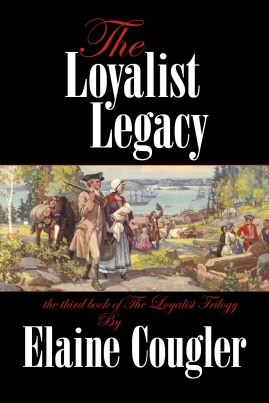
I am very excited to be part of Elaine Cougler’s book tour for her latest historical novel, The Loyalist Legacy.

‘Historical fiction is flourishing as never before,’ declared the head the British Historical Writers’ Association recently and Elaine’s final book in her Loyalist trilogy is testament to the popularity and success of this genre.

Set against the backdrop after the American War of Revolution (American War of Independence) and the War of 1812, The Loyalist Legacy is an intimate, personal and realistic novel centred around William and Catherine Garner seeking to rebuild their lives admist the terrible hardships and ensuing political fallout.  Her book can be read as a stand alone but of course would be richer to read in sequence.

With realistic insights into the challenging lives of Ontario’s early settlers, Elaine Cougler once again draws readers into the Loyalists’ struggles to build homes, roads, and relationships, and their growing dissension as they move ever closer to another war. The Loyalist Legacy shows us the trials faced by ordinary people who conquer unbelievable hardships and become extraordinary in the process.

The following encapsulates the essence of the book and I cannot help but want to learn more about the two main characters, their struggle and the change created in both them and their country.

When the War of 1812 is finally over William and Catherine Garner flee the desolation of Niagara and find in the wild heart of Upper Canada their two hundred acres straddling the Thames River. On this valuable land, dense forests, wild beasts, disgruntled Natives, and pesky neighbors daily challenge them. The political atmosphere laced with greed and corruption threatens to undermine all of the new settlers’ hopes and plans. William cannot take his family back to Niagara, but he longs to check on his parents from whom he has heard nothing for two years. Leaving Catherine and the children, he hurries along the Governor’s Road toward the turn-off to Fort Erie, hoping to return in time for spring planting.

The wonderful atmospheric writing of the following excerpt immediately drew me in and transported into the nineteenth century world of William and Catherine.

The tunnel sloped upward and, as the light grew brighter, they left the water behind. First out of the hole, Lucy watched as Robert turned back to help William tug their father, blinking, up into the sunshine. Aaron pulled her to the waiting wagon, and parted the hay to reveal a hiding place. She crawled inside, John came after and then her sons. They were almost blind in the shadowy half-light, brown with the sun filtered through the layered hay.

A bright spot of light opened where they had crawled in and Aaron shoved a jug of water toward them. “Godspeed,” he whispered and was gone. She prayed his part in this would never be known. The wagon lurched and they were off, the three escapees and her, now just as guilty in the eyes of the law as her men, and whoever was driving the wagon….

John dozed beside her, his long legs reaching to Robert and William who sat hunched at their parents’ feet. She had lain down beside John to try to cushion him from the bumpy road and hold his head on her shoulder. How could he sleep? She was acutely aware of each rut in the road and every stone the wheels scraped against as the wagon carried them to what she hoped was freedom. The horses snorted and panted up every hill and she found herself holding her breath hoping they’d make it.

They hardly stopped on the way out of the village, but each time they did everyone held their breath until the squeaky wheels started turning again. But the ride was uneventful. No one followed them; indeed, no one seemed to know they had escaped.

The wagon bed was covered with a thin tick meant to ease their journey and she thanked the planners for their effort even though it didn’t help much. Nevertheless the clip-clop of the horses’ hooves created a kind of rhythm and gradually her thoughts subsided into the sound as she released her fear and her excitement. Her body relaxed against John’s. The last thing she remembered was putting a handkerchief over her nose to keep out the bits of fresh hay floating in the murky air.


Whispering woke her. And a sudden burst of cool air, which wafted into the tight space, now dark. She pulled the cloth away and sat up. John groaned beside her and she felt his fevered forehead.

“Mama? Are you awake?” William’s low voice caught and he cleared his throat. “We’re stopping for the horses.” He crawled through the opening and she followed after him feeling her way in the darkness.

“What about your father? He’s burning with fever.” Picking bits of hay from her clothing she looked around but could see very little. A few distant stars shone weakly and a slip of a moon hung over them like a curved sword. Two men switched the teams but in the dim light she couldn’t see who they were. Only the occasional glint of harness bits and wide eyes—both horses’ and humans’—bore witness to their task. Mr. Beasley had been as good as his word.

Robert went to help the men and Lucy turned to John. William opened up a larger hole in the straw so his father could breathe easier. Very soon the horses were hitched again, the spent team tied to a wheel for a moment, and its driver, spent also after six hours of driving, brought Lucy a package of food from under the wagon seat. They each found a brief moment in the bushes, William helping his father out of the wagon for the purpose, and soon stuffed themselves back into the tight space.

The plan was to drive all night, the new driver had said, but Lucy wondered how much more she and John could take. Her rheumatism pained her at the best of times but bumping along in the back of this wagon was pure agony although she uttered not a word to her family. William had kept the plug of hay out of its hole at the back of the wagon and she was glad of the air. She plunged her hand into the sack to find what their rescuers had packed for them.

Hours later the wagon stopped again. William woke and hastily plugged the hole against the dawn light but soon removed the hay and crawled out, Robert right behind him. John’s eyes were on her and she took his hand.

“Where are we?” he asked.

“Another stop for horses, I expect.” She touched his cheek. “Come. We’ll have a stretch.”

Robert helped his father from the wagon and took him into the bushes.

“Where are we, William?” Lucy asked. “Do you know?”

“We’re going to Burlington Bay. That’s all Aaron told me.”

“Beasley kept his promise.”

William squeezed her rough hand and she winced. “What is it, Mama?”

She forced a smile and took back her hand. “Look. The sun is just clearing the lake.”

“That’s the last we’ll see of it today.” Robert had returned from helping his father. “The driver says we’re still many miles from Beasley’s place.”

03_elaine-couglerA lifelong reader and high school teacher, Elaine Cougler found her passion for writing once her family was grown. She loves to read history for the stories of real people reacting to their world. Bringing to life the tales of Loyalists in the American Revolutionary War, the War of 1812, and Rebellion of 1837 is very natural as Elaine’s personal roots are in those struggles. She lives today in the heart of Ontario, Canada, and is the descendant of Loyalists who lived through the times of which she writes.

Elaine Cougler can be found on TwitterFacebook Author Page, LinkedIn and on her blog.

The Loyalist Legacy is out now and available at  Amazon UK or Amazon US.

book-tour-logo-final


THE FOOD OF LOVE: A BOOK REVIEW

cover2

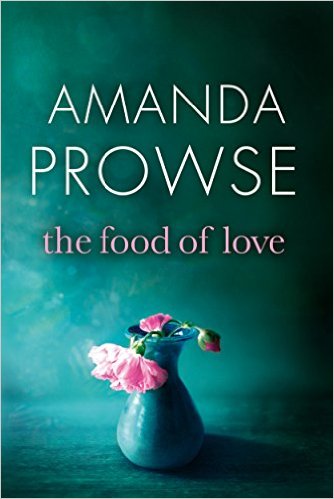
It’s not often I start a book and have absolutely no idea what it is about. NetGalley emailed me saying I’d been pre-approved for ‘The Food of Love’ and as that morning I’d just finished a rather graphic collection of Stephen King’s short stories I thought this gentle-sounding novel would be my soothing tonic.

‘The Food of Love’ – such a safe, innocuous title I immediately pictured romance centred on a taverna in Greece or a spy/love story set in Spain, the nights hot and with many evening scenes at a half-lit tapas restaurant. 

I could not have been more mistaken, although my theory seemed to hold sway for the very first part of the book which starts with a family on holiday in the warm climes of Florida. Freya Braithwaite and her husband Lockie are walking through Old Naples one evening with their daughters, Charlotte and Lexi. Charlotte is quietly confident albeit cautious and sensible whilst her younger sister is the adventurous one who begs to be allowed to swim in the dark. Even as she is being warned about the dangers, including that of sharks, she refuses to obey and disappears off the sea wall into the blackness below.

This brief flashback sets the picture of a perfect happy harmonious family where love and laughter are the norm in their idyllic lifestyle. Eight years later the book begins properly with the Braithwaite family at home in the UK and quickly I became engrossed in their lives; Freya is a freelance food writer (extremely pertinent to the book), whilst her husband is a freelance photographer. The family are captured with poetic, lyrical ease and in small sketches the author reveals the everyday, the ordinary wonderful life. Of course, as with all good books I was by this stage on tether hooks, just waiting for the turn in the story, waiting for the drama, the chaos.

A phone call from the school provides the catalyst to the ensuing novel where a normal meeting with a teacher unveils the potential problem with one of her daughters. Freya’s gnawing anxiety ahead of the meeting is portrayed with truth and I could easily imagine myself in her position and Freya’s insistent rejection of the teacher’s insinuations is equally believable – there was no way Lexi could have an issue with food! 

From hereon the book becomes a harrowing, even punishing read at times, as Lexi’s anorexia is dramatically discovered and her health rapidly deteriorates. The effects of her starvation are candidly described and the catalogue of Lexi’s increasingly critical health problems are meticulously revealed. Freya’s confusion, desperation and guilt is brilliantly captured whilst Lockie’s down-to-earth, angry reaction causes friction for the first time in their nineteen year marriage. He finds it increasingly impossible to accept what he sees as ‘pandering’ to Lexi as she undergoes various treatments. Furthermore the tension that has existed between the siblings continues to fester, especially since Charlotte finds herself sidelined, the milestones in her own life forgotten, ignored.

Although told from the third person perspective I identified closely with the characters, especially so with Freya and Lexi. The collapse of all their lives is told in raw albeit loving detail with the absurd amidst the calamity skilfully interwoven. Personally I found the topic uncomfortable, disturbing even and I would not be surprised if this holds true for many potential readers, however I can offer the assurance that it is handled with finesse and control; ultimately it is a book about four people thrown into the unknown and how we function as an individual, as a couple or as a family when faced with adversity, when the unimaginable becomes a reality and to what extent love can be the solution. 

I read the book in two days and found it, to use that well-worn phrase, ‘unputdownable’ and this was partly down to the ‘countdown’  paragraphs at the end of each chapter. Set some time in the future, the clock starts with eight hours left as Freya prepares for the life-changing event, and together with Charlotte, she is desperately trying to compose a letter to Lexi. Events, memories from the past are unveiled as they struggle to compose their missives. The burning question is of course whether Lexi is alive or dead?

‘The Food of Love’ is a compelling, heart-wrenching, even painful book but all the same a heart-warming and rewarding novel which I can highly recommend to anyone with an interest in so-called ‘domestic’ dramas. 

I received a free copy of this book from NetGalley in exchange for a honest and impartial review.

netgalley

Rating:                          4 out of 5 stars.

Publisher:                     Lake Union Publishing 

Release Date:              1st December 2016                               

Links:                             Amazon UK or   Amazon US 

THE FIRE CHILD: A BOOK REVIEW

fire child

‘You will be dead by Christmas.’

This dramatic declaration, uttered by eight-year-old Jamie to his new step-mother, Rachel, is pivotal to ‘The Fire Child’ and as the summer months count down to Christmas the tension and intensity of the book builds a to nail-biting finale. 

From her single life in London Rachel is quickly whisked off her feet by handsome but mysterious David and soon she finds herself in the midst of his family legacy and home of Carnhallow House in Cornwall. David is a loving and kind husband but often distant from her, both emotionally and also physically as his work takes him to London. His mother, Juliet, is welcoming but the sinister looms ever closer. Whilst Rachel quickly forms an attachment to her step-son, Jamie often appears disturbed by Rachel’s presence and he is haunted by visions of his dead mother; beautiful, angelic Nina who died in an accident eighteen months earlier. Nina who now it seems is proclaiming Rachel’s imminent demise. As Rachel seeks help for the boy, she finds her sanity brought into question as the past begins to catch up with her.

Tremayne weaves a wonderfully tight story with multiple threads coursing through the writing. Who is lying? Jamie? But why? Or is it David with his deep sense of duty to keep the family legacy alive? Or even Rachel herself? 

Following in Nina’s footsteps, Rachel tries to continue the excellent restoration carried out by Nina of the stunning estate which sits upon the tin tunnels dating back to the previous century. Nearby lies Morvellen Mine – the site of Nina’s death.

The emotional detachment of both David and Jamie is mirrored in the remote location of the house. The suffocating, claustrophobic atmosphere is brilliantly brought to life; Rachel’s isolation emotionally and physically is emphasised in every chapter and rendered more immediate through the first person perspective. Her loneliness is palpable and reflected in the increasingly colder climate, darker days, gloomier light.The novel is steeped with tension, spine-tingling and even though I read this on warm summer days I still felt chilly and had goosebumps. The book has many similarities with Daphne du Maurier’s chilling ‘Rebecca’ and its powerful use of pathetic fallacy evoking a sense of a dark foreboding threat, madness and even death.

Half-way through the book I felt it had reached its climax and I honestly wondered where it would go; how or even if the author could continue this crescendo of suspense. I needn’t have worried. Through the use of David’s voice in the third person interspersed with Rachel’s continued narrative the author brings the book through unimaginable twists and turns to its dramatic conclusion. 

‘The Fire Child’ is a compulsive read, eerie, tense, well-crafted and cleverly plotted. I found myself walking and trying to unravel its intricacies – who was the real victim? Who was the culprit?  How and why did really Nina die? My only reason for not giving this book five stars is that I never totally empathised with any of the characters. Admittedly they were fully developed and well portrayed but I hesitated in giving my heart to any one of them. That said, this is up there with the best of this year’s psychological thrillers.

Finally a thank you to S. K. Tremayne (a pseudonym for journalist Sean Thomas who also writes as Tom Knox) for the fascinating history of the 4,000-year-old  tin mining industry of Cornwall, highlighting just some of its horrific and terrifying practices. The factual elements were seamlessly incorporated into this work of fiction.tinmine

A Cornish Tin Mine Ruin

netgalleyI received a free copy of this book from NetGalley in exchange for a honest and impartial review.

Rating:                          4 out of 5 stars.

Publisher:                     HarperCollins UK

Publication Date:        16th June  2016                         

Price:        

£ 6.00  Hardback – Amazon UK       

£ 4.99 Kindle (available 28th March 2017)  –  Amazon UK                                                                  £ 7.99 Paperback (available 9th February 2017)  – Amazon UK

From  $ 5.81 Hardback – Amazon US

A BOY MADE OF BLOCKS: A BOOK REVIEW

cblocks

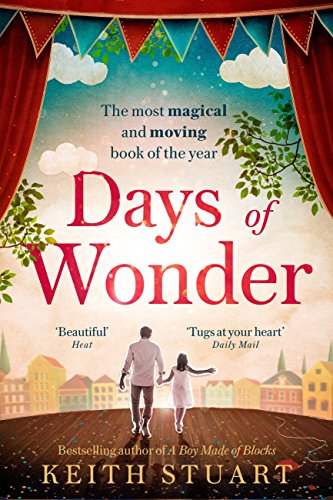
A Boy Made of Blocks is a debut novel by Keith Stuart and is inspired by his experience with his own autistic son.

In the book, Sam is eight-years-old and only recently diagnosed with autism.  The trauma of bringing him up – described early on as ‘he (Sam) was like Joe Pesci in Goodfellas – small, funny but at the flick of a mental switch, easily capable of extreme and demented violence’ – has reached crises point with his mother, Jody and his father, Alex living apart in a trial separation. 

Alex has never connected with his son and mostly left Jody to care for Sam whilst using his job as an estate agent as an excuse to avoid the family home.  

The book is told solely through Alex’s first person point of view and I personally felt this is flawed on two levels. Firstly, it restricts the novel to the character of Alex and although we see Sam and Jody through his eyes, I would have enjoyed a direct view of their world through their eyes. As it is Jody becomes rather stereotyped and typecast. 

Furthermore, Alex’s initial self-pitying, self-absorbed litany (admittedly often self-depreciating and funny) does at times become tiring. It is only as the novel develops that he is redeemed and finally becomes a likeable character with whom I felt empathy.

It becomes increasingly obvious that Alex’s relationship with the world is almost as alien as his son’s. Alex’s isolation and loneliness is not as a result of  autism but started the day he saw his older brother killed by a car when they were children leaving school. A day and a death he has never come to terms with and that eventually tore the family apart, driving his sister (Emma) into a life of a globe trotter, never settling down with anyone, anywhere.

The transformation of Alex and Sam’s relationship and of their lives as a whole occurs as the result of Minecraft – an impulse purchase by his wife to help Sam fit in with his peers at school.  Based on the author’s real-life experience with his son and with his own in-depth knowledge of the gaming industry as a writer, it is only with the introduction of Minecraft that the book takes off. (As well as helping provide the title of this book!)

Minecraft acts like an extended metaphor throughout the book – the more Sam interacts with the game, the more he becomes connected to Alex and the world as a whole. The games’s low and high points – its hell, demons, creepers and finally treasure – mirrors their lows and highs in real life. Whilst staying at his best friend’s (Dan) flat, Alex joins Sam in the virtual world of Minecraft and together they start ‘chatting’ for the first time in Sam’s life as they build and build. It is this journey that finally causes Alex to see his son as a real person and not merely as a problem to be handled. ‘I saw Sam as an obstacle, something I’d have to work around. But that was wrong. Sam was the guide. Sam was my guide.’ Finally Alex realises they have more in common than he ever imagined.

The beauty and magic of the world of Minecraft is brilliantly and descriptively explained, weaving its way through the book as it widens the world for Sam.  

The ghost of Alex’s brother refreshingly haunts the pages, recounting  the events of their childhood lives and also providing an amiable side-plot through the possible romance between Dan and Emma. An aunt adored by Sam and to whom he naturally connects.

The tense in the book is unusual as it is present tense throughout and brings a sense of immediacy and involvement with the story.

A Boy Made of Blocks builds to a satisfying exciting conclusion, with me rooting for Sam along with the rest of his family and friends.

Overall, I like this book a lot but curiously enough I don’t love it. It is very well written and constructed. The start lacked the fizz and unputdownable factor of many other books, although it did pick up and I am very glad to have finished it.

Sam is pivotal for the story and the success of the book – at times I felt he was the only one making sense of the confusing mess of this world. He has depth and immediately likeable, personable and always original. Sam shines through for me. The lesson he has learnt is applicable to us all: ‘Life is an adventure, not a walk. That’s why it’s difficult.’

netgalleyI received a free copy of this book from the NetGalley in exchange for a honest and impartial review.

Rating:                           3.7 out of 5 stars.

Publisher:                      Little Brown Book Goup UK

Publication Date:        1st September  2016                         

Price:          £ 6.99       Kindle       –   Amazon UK          

                     £ 7.99        Paperback – Amazon UK

                    $ 20.41        Hardback –   Amazon US

Mourning Has Broken: A Book Review

mourning2

I read this book during a time of loss and sadness. When my spirits were so low neither music nor books could enter my heart. Numerous books remained unread, the words and stories therein unable to penetrate the wall. 

Then I recalled reading about Carol Balawyder and ‘Mourning Has Broken’; her book on loss and grief. On a whim I bought it.

My attention was seized from the very first few sentences and as I devoured it within two days ‘Mourning Has Broken’ left a deep and profound impact on me.

The writing is exceptional and beautiful. Poetic in places, full of wisdom. Her words spoke directly to me, then at times mirrored my experiences of loss exactly. I have never highlighted so much in a book since my student days. Nor have I I talked so much about a book – I am sure my family by now feel they have read it too!

Within nine months Carol first lost her mother then her sister, Diana, to cancer.  Years before her father had passed away. As she struggled to cope with the ensuing grief, she turned to writing. These turned into two essays which are collected here in one book. Carol calls them essays; for me the word is too heavy, ponderous.

The writing flows with ease and is never ‘preachy’ in tone. Whilst the book is about how to deal with the pain of losing family members; it becomes much more – a personal exposition of Carol’s life and familial relationships and ultimately ‘Mourning Has Broken’ is as much a book on living and surviving grief as on mourning and loss.

Through skilfully crafted snippets Carol provides detailed images of her life when young with her father, mother and sisters (elder one, Louise). At times funny, at times sad, the overwhelming feeling regarding her parents is one of sadness and mourning – even before their deaths. Always kind, considerate and giving Carol realises she never had the relationship she wanted with them.  Averse to showing any physical or verbal affection she regrets her parent’s lack of hugs and ‘I love you’. Where her father was a secret alcoholic, her mother lived by an array of confusing rules, many of which young Carol inadvertently ran foul. 

pinkrose2The second part of the book opens with the ‘unfathomable’. That after five years of fighting lymphoma her sister’s battle is soon over. As the family and the two sisters gather for Diana’s final days in hospital I cried. The helplessness, despair is portrayed with Carol’s usual deep sincere honesty. 

As she recounts her sister’s fight with cancer (whilst Carol was at the same time also being treated for a ‘safer’ form of cancer) the reader follows her soul-searching; both to understand the past, its guilt, joys and lows and to comprehend present pain. Searching for spiritual meaning, searching for a way to live on. Her self-awareness is at times unforgiving, always touching. 

Throughout Carol’s gentle and compassionate nature shines forth. The book is both heart-felt and heart-warming. 

I cannot recommend it highly enough. It is not, as I thought, a only book for those suffering loss. It is for everyone, whenever. I wished I’d read it earlier. 

Now I will let some of Carol’s wonderful writing in ‘Mourning Has Broken’ provide a glimpse of this life-changing book. 

I know that we were circling, like birds of prey, around his death.

I remember once telling a therapist that my father was my hero. “It’s hard,” he answered, “for any man to stand up to that kind of idolization.”

I love therapy sessions where I am allowed to lie down, just as I love corpse pose in yoga. Why can I not give myself permission to lie down in my own home without a feeling of guilt that I should be doing something else? Something productive?

Morphine. Morpheus. One who shapes dreams. In a dreamlike state but still aware. What are you thinking of in these last hours of your life? What are you feeling? Where are you?

I don’t tell her I think my sister is hanging on like a leaf hangs on to a branch in late November. Sooner or later it will have to let go.

What needs letting go is a future with her.

Death changes everyone.

Before entering a bookstore,  I always ask for guidance that I may find the book which I need to be reading at this time in my life.

Still, at her funeral service, I read these lines from Thich Nhat Hahn: Time is too slow for those who wait/too swift for those who fear/too long for those who grieve/too short for those who rejoice/but for those who love, time is eternity.

Do we ever really bury those we loved dearly? Is there really any such thing as closure?

Mourning, I realize, must come in small parcels. To realize the immensity of the loss at once would be too overwhelming and unbearable. It must be done in bits and pieces of dreams disappearing one sliver at a time.

In the spring before Diana died, she and her partner, Jean-Louis, planted a wild rose bush at our parent’s gravesite. Now, as I walk towards the grave I am struck by the single rose in glorious bloom amidst all the dead ones. My immediate thought is that Diana’s spirit is in the pink wild rose for in her own life, she was a pink wild rose.

In this void, the voice of Karen Armstrong, one of the most progressive thinkers on the role of religion in our society, reaches me. God was not something you could prove with rational thought or words. God was something to be experienced, and you could have this God experience through music, poetry, silence, compassion, and kindness.

“Faith and hope,” she once told me, “are gifts of grace. They are the lighthouse which shines on our days of darkness.” 

carolFrom ‘Mourning Has Broken’ by Carol Balawyder

Note: Use of the quotes are reproduced from the book by kind permission of the author.

RATING:   5 out of 5 stars!

PRICE:        £ 1.99   Kindle       –   Amazon UK          $ 2.99   Amazon US

                     £ 6.02   Paperback – Amazon UK         $ 8.50     Amazon US