
“The emotions are sometimes so strong that I work without knowing it. The strokes come like speech.” Vincent Van Gogh
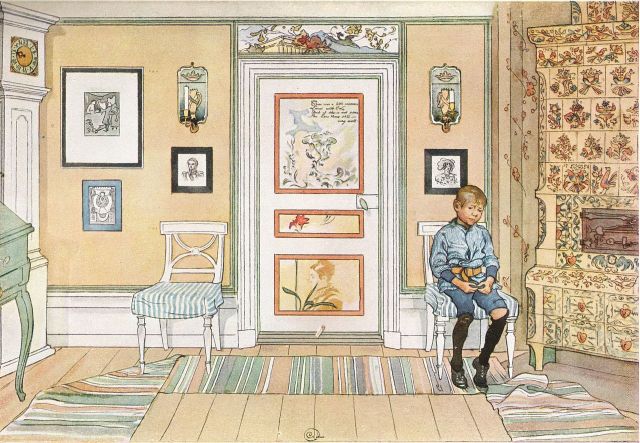
Welcome to my third and final instalment about Carl Larsson and his watercolours of the beloved family home; a place where he ‘experienced an indescribable delightful feeling of seclusions from the hustle and bustle of the world’.
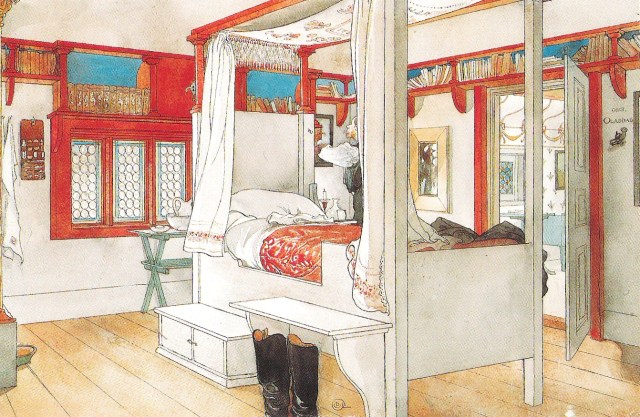
Carl Larsson (1853-1919) was heavily influenced by William Morris and the Arts and Crafts movement in the UK and over the years Karin and Carl transformed their humble abode and in the process created a lasting legacy for interior design in Scandinavia and beyond. Their charming, evocative and distinctive style in furnishings is still highly influential and inspiring homemakers today.
“If light is in your heart you will always find your way home.” Rumi
Whilst Carl, with some help from carpenters, made the furniture, carved the doors and cupboards, Karin was responsible for the textiles and tapestries at ‘Little Hyttnäs’ as well as the rugs.
The idea to paint pictures of the home was first suggested to Carl by Karin during a rainy summer in 1894 when she feared her husband would fall into depression. Inspired, he continued to paint all aspects of their house and lives within and outside it.

“A picture is a poem without words.” Horace
Following Carl’s acceptance of an invitation from the publisher Bonnier to print some of his watercolours, twenty-four of the paintings were reproduced in the now famous ‘Ett Hem’ book. Initially sales were slow in Sweden until a German version became an instant bestseller in Germany, selling 40,000 copies in three months.
Carl and Karin Larsson were said to have been overwhelmed by its success however Carl always felt that the pictures of his family and home ‘became the most immediate and lasting part of my life’s work. For these pictures are of course, a very genuine expression of my personality, of my deepest feelings, of all my limitless love for my wife and children.’

‘Ett Hem’ has never been out of print and has had over 40 print runs. Today the family home is owned by their descendants and open to tourists during the summer.

We shape our buildings; thereafter they shape us.” Winston Churchill
NB. I look forward to reading your thoughts about the posts in this series and I will respond upon my return to the UK later in the month.

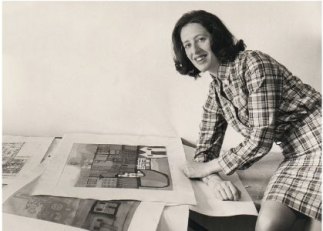 Artist and printmaker Helena Markson is a person whose name and fame should have spread far beyond her field of expertise. Born in London in 1934, she studied at Salisbury School of Art and then at Central School of Art before becoming a successful professional printmaker. Initially she co-directed a Fine Art Printmaking workshop, soon after she set up an etching studio in London before teaching at Chelsea College of Art and St. Martin’s School of Art in London. During this time she exhibited many of her prints. Her lifelong career took her across the UK, to America and Israel and she worked until her death in 2012.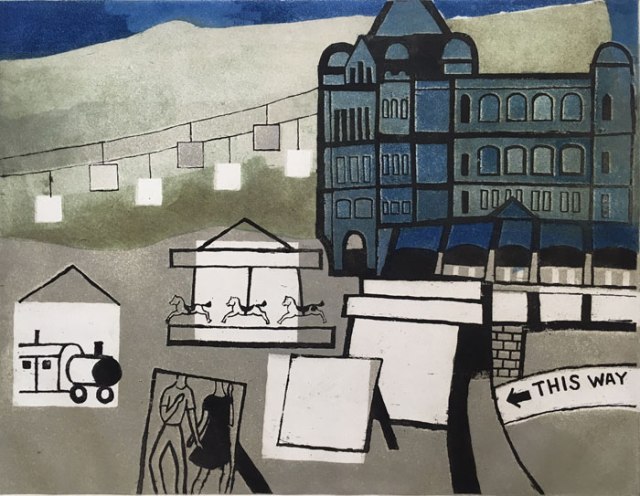
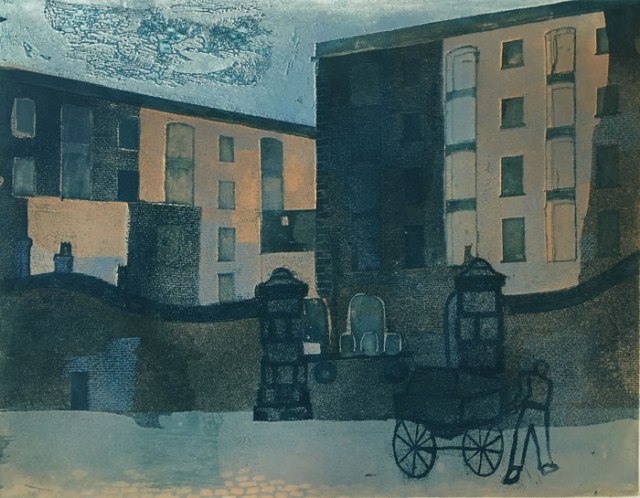


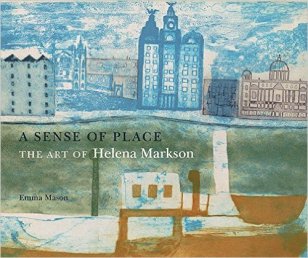 Helena Markson’s beautiful prints are open to view in collections around the world including the Museum of Modern Art in New York and Tate Britain in London. A book celebrating her work has recently been released and is entitled
  Annika Perry