A Midwife’s Revolt: A Book Review

sleeping women

Painting: Courtesy of B.Haynie

Recently I had the opportunity to join NetGalley, an online book reviewing organisation.  Publishers send in their books months prior to release and ‘professional readers’ are then asked to review the book. The feedback and recommendations are considered highly valuable to the publishers and future readers alike.

badge_proreaderI will be reviewing one new book here on my blog on a monthly basis – do look out for them and hope you enjoy the reviews.

The Midwife’s Revolt  by  Jodi Daynard

cover60583-mediumWithin the first few sentences, this book immediately and powerfully transported me to the life of women left behind home during the American Revolution.

The story follows newly-wed Lizzie Bolyston as she sets up home on a farm on the outskirts of a new town South of Boston.

Related in Lizzie’s voice the reader quickly enters the head and heart of this strong young lady as she faces increasingly tougher struggles.

Firstly grief blindsides her but with help of friends she slowly overcomes both this and then the prejudice to what is regarded as her ‘witch’ like skills of healing and midwifery. She is exceptional in both and gradually, the ‘medical arts’ taught to her by her mother, help provide a living for Lizzie whilst saving dozens of lives.

As the war deepens Lizzie finds herself embroiled in political intrigue centred around her close friend Abigail Adams, the wife of the future Second President of America. For a while Lizzie even finds herself attempting to disguise herself as a man during her espionage escapades. After all, the book starts with the sentence: ‘My father once told me I had the mind of a man.’

However this is not a traditional thriller as parallel to the assassinations and treachery runs various strands of the romantic nature.

Lizzie finds herself courted by a man, Mr Cleverly- but can she trust him? Equally she is attracted to another, Thomas Miller – yet again she is faced with the same dilemma of those unstable times – is he trustworthy?

The actions of her servant and close friend Martha also raises further doubts as to faithfulness and friendship. This suspicion causes great heart-ache for both women. Life for them all is never simple nor straight forward and nothing is quite what it seems.

I must make a quick mention to another powerful being in the book, whose existence is still etched on my brain – the wonderful and faithful horse, ‘Star’, her husband’s beloved animal. Life is never fair, Star!

Jodi Daynard’s writing is fluid throughout and its authentic contemporary feel never wavers. At times I have to remind myself this was actually a work of fiction and not a factual story.

The harsh and bleak life is brilliantly rendered, so raw I suffered with the women through their troubles and the winters of hunger. How I celebrated with them as they ate their far too rare servings of warm apple pie!

Their struggles with the farm are graphically related and whilst celebrating feminism and its strength, I rejoiced when they received the occasional help from a man with some of the hard graft.

The book climaxes with a dramatic battle on their very doorstep where the battles of the heart are reconciled and the future of America is more secured.

Although I approached this book with trepidation – the time period alone of the American Revolution  filled me with fear – I can honestly say there is never a boring moment in the book.

It has a  strong pace throughout, the characters, whether good or evil,  are vividly portrayed and the true grit and courage of the women shine through.

This is truly a gem of a book. Do read it now and escape into the past!

Publishers: Lake Union Publishing

Release date: 7th April 2015

N E W S F L A S H      N E W S F L A S H    N E W S F L A S H

I just found out that I am now on the short list on the Ink Tears Short Story Competition 2014.

Yes, I am thrilled to have reached this far.

Winners will be announced end of this month.

“From the eyes to the river
From the river to the sea
From the sea to darkening clouds
From the sky back down to me
Follow my tears…”
by Eddie Reader, singer/songwriter

Love Poem

The Peripheral A Sunny Sunday morning greeting to you all.

I told you before that I have been writing since I was a girl and as a present to my patient mother I made a big collection, had it bound and gave it as a Christmas present.

I called the book  ‘The Peripheral’, which was the name of a magazine I used to produce when young for my friends and family.

Whilst visiting my mother yesterday we skimmed through the book and I saw this poem. I wrote this when I was 12-years old.  Poetry is not my forte and I was surprised to find this but wanted to share it with you as it is equally relevant today.

LOVE

Love

A thing to be cherished

Treasured forever

Love

A thing between all

From the ‘superior’ humans

To the ‘humble’ hedgehogs.

Love

A thing needy to all

Always there, ready to delight

The eager youngsters

The ageing parents.

Love

Never ask for its presence

Love, real love

Unquestioningly comes

It never falters

Or flickers away.

Love

Its strong pulse is ever near

Never closing its doors

Where happiness flows in.

Love.

“Joy is a net of love by which you can catch souls.”

Mother Theresa

Update: Current word count on first draft of novel: 40,531 words

Netflix for Books

PastedGraphic-1

You’ve heard of subscription television; now prepare yourselves for subscription books – the ‘netflix for books’ is here to stay. 

What does this really mean though? 

How much brighter does this make the world for the reader and the writer ?

Is it effectively a modern day virtual library? Hardly.

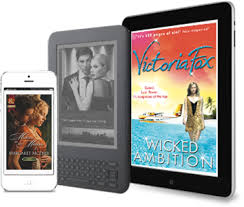
Although Amazon were not the first to introduce subscription books, their release of Kindle Unlimited (KU) five months ago brought subscription books to a world wide market. At first glance the deal is enticing for readers. To be able to borrow ten books per month for £ 7.99/month sounds tempting.newcorn partII

However unless you are a exuberant bibliophile you will never read the ten books allowed and if one or two books per month is the norm, then you could find yourself paying more than you would if buying books themselves. With so many books available for exceptionally low prices the monthly direct debit could easily become more expensive.

It is not only readers who should beware and approach with caution; writers too are beginning to struggle under the Kindle Unlimited contract. 

Writers are paid a percentage amount according to the number of reads of their book. This comes from a monthly pool of money set aside by Amazon.  Already some writers have noticed a 40%-75% drop in their revenue.

Income has fallen further for writers as customers have started reading KU books instead of buying new ones. There is a real risk that buyers will read the more established authors, which might have cost more previously, instead of taking the chance on an unknown new author whose books were previously much cheaper but still cost on normal kindle or paperback.

imagesThis catastrophic decline in income has resulted in some writers withdrawing from the Kindle Unlimited programme and instead selling their books under the much more generous ebook terms. 

The extremely restrictive demand by Amazon for exclusivity on books on KU has further cut sales for authors as they have been unable to release their books on other platforms.

The top five big publishers are so far withholding most of their titles from Kindle Unlimited and therefore the choice on KU is rather limited for the reader as the top selling authors (which many people want to read) are not represented. 

Subscription books are still a force to be reckoned with as other platforms, such as scribd* or oyster, do exist and their terms are far more generous towards the writer and do not demand exclusivity. 

Finally let us not forget that faithful ‘old’ paperback and hardback books. Will their new found stability following the introduction of ebooks flounder under the onslaught of subscription ebooks? Will this become the next substantial obstacle for the publishers of hardcopy books?

Will KU see a fall in their subscription as writers flee from their terms and conditions? 

Will readers demand a better and bigger selection of books for their monthly fee? 

Will Amazon cave in to writers’ demands for similar contract terms as other subscription services and thereby tempt in the bigger-hitting authors to join them?

Do you have any experience of Kindle Unlimited? Either as a writer or as a reader? I would love to hear your comments and share your experiences. Only by doing so can we empower ourselves to make the best decisions as writers and readers.

“I find television very educating. Every time somebody turns on the set, I go into the other room and read a book.” 

Groucho Marx

THE POWER OF THE CREATIVE SPIRIT

100_7552

Welcome to you all and to the first of a new month. Spring floats on the breeze and sitting out on a weather-worn bench in the garden I rise my face to the dazzling sunlight. As the daffodils tilt and twist to capture its warmth, so do I.

On such a morning I find myself pondering the nature of the creative spirit and at times its unimaginable strength in the face of insurmountable agonies.

These musings follow in the wake of reading about Frida Kahlo. She was not an artist for which I hold any particular affection although I know of her work. What I did not know was of the life of pain she endured until her untimely passing aged only 47.

Firstly as a child she suffered from polio but made a recovery to normal life. Then aged 18 she was severely injured when the bus she was travelling on collided with a trolley car.

As a result of these injuries she was never free from pain again. In the following years she had over 35 operations and many episodes of agonising pain that resulted in her being bed-ridden for many months at a time.  Among other sorrows the physical damages rendered her unable to have children.

Where this life would fell many, Frida instead discovered, with her parents help, her love of painting and throughout her life she painted over 150 paintings. Furthermore she travelled in Central America, the USA and Europe. On a personal level she married the famous painter Diego Rivera – twice!  Throughout their tempestuous mutually adulterous relationship she never stopped painting.

The indomitable spirit of the creative being within us is alive and waiting to be tapped. It takes courage, persistence and passion to continue to work through pain and illness of any sorts. Its rewards are unquantifiable.

Reading about Frida’s life and knowing so many who continue their creative work in spite of (or perhaps as a result of) their hardships is a true inspiration – to myself and  hopefully to you all.

‘Our existence is not an accident but a mystery…We can entrust ourselves to this mystery, for we are part of it. Indeed we are it.’

By  Jean-Pierre Weil, ‘The Well of Being’

A Break and Biographies.

100_5458

It’s amazing what wonders a break can make.

Last week was half term and I had therefore decided to give my first draft a welcome rest – we needed to give each other some breathing space. Instead I had a restful and fun time with the family. On Monday out came my iPad, my Keyboard and once clipped into place I was set to go.

I found I was writing with renewed vigour and energy as well as a greater sense of enjoyment and satisfaction. My fingers struggled to keep up with my thoughts, stumbling over each other on the keys. One downside of this extra vitality is that my poor brain never seems to stop buzzing and even half asleep I will find myself trying to recall sentences to write down in the morning. The world of my characters are becoming such a large part of my real world that even in my sub-conscious the border between real and imagined is blurring.

When I started this project I knew many of the ‘rules’ of writing a novel and realised from the beginning that I had committed a cardinal sin in my approach. My error – never starting,  no matter keeping up to date, a biography of my characters. Week after week I have winged it, just writing away, everything held in my head. It seemed to work well enough although I was forgetting names of smaller character. After the weeks holiday my memory had lapsed even further so yesterday I finally started my biographies.

First there is the obligatory visit to a good stationary shop for  a new notebook. As all writers know, you can never own too many of these. After throwing away a small fortune on a blue striped ‘Pukka Pad Project Book’ I returned home and set to work.

On a separate page I wrote the name of a character featured in the story and then added detail.  As I need to reinforce my time-line I have given birth dates to everyone as well as surnames, siblings, school names, type of work. I finally got round to writing a clear description of each character, including any particular features, eg. a lop-sided walk, nervous habit of fidgeting, their speech manner. etc. Furthermore I have added their likes and dislikes as well as their fears. Also I like to describe the characters’  clothing, the feel of the material, the look.

Below are a couple of character biographies I completed last year for another book idea which as yet has not been developed further. They should  give you an idea of what is involved.

My Fictional Biographies Examples.

Christine Brazier.

Christine was born on 12th May 1978 in North Yorkshire and lived in a small village called Bellingham. She later attended the highly prestigious Harrogate Ladies College and later studied medicine and in 2002 graduated from Durham University.  She is currently a paediatrician at Leeds General Infirmary. Christine did not have an easy childhood, losing her mother to cancer aged ten and thereafter, although her father cared for her, she lacked love and warmth in a normal family setting. Her older brother was largely disinterested in her. As a result Christine has become a very uptight and controlling person, almost a perfectionist. Although she will listen to others she has often already made up her own mind. This flawed character trait is crucial to the story. She is a keen health fanatic and enjoys spinning at the local gym, road running and races and is addicted to tweeting.  Her guilty pleasure for relaxation is on-line bingo – but always within limits. To start with she has no sense of humour. As the story progresses and she loses control of her life we see her change to a more easy-going, relaxed person, willing to accept help from others as well as learning to laugh in adversity. Christine is divorced with two children who mean the world to her. Christine is very skinny, tall and has green eyes and dark red hair cut short and  straight. She has a habit of tilting her head to one side when listening to others. When talking she tends to talk in short clipped sentences at work and her frustration with people she considers working too slowly is palpable.

Owen Boyd. Journalist, later Christine’s friend.

Owen was born on 23rd March 1968 in a poor suburb of Bradford. He is a disillusioned reporter on the Yorkshire Post, which is based in Leeds, and he has become bitter over the years about his lack of career advancement. His dreams of working for the nationals has never materialised. He left school at 16 to work at the local paper and attended college part time to gain his national certificate in journalism. Boyd, as he is referred to at work and outside, has scruffy blond hair with blue eyes and does not have a keen sense of style. This shows up more than usually as he is tall and has a solid build.  His comfortable style of clothes for work does not sit well with the modern sleek expectations of the office.He never walks or saunters, rather strides purposefully forth as if on a mission.  Following his years of experience in the print press he feels this gives him unique knowledge of how to work and he resents taking orders from younger more senior but inexperienced managers. This often leads to confrontation. However he is often right and his dogged obsession with the smallest detail and meticulous research skills have stood him in good stead.  Following a bitter divorce and estrangement from his teenage daughter Boyd has  became addicted to prescription drugs and started smoking again. His love for the outdoors hasn’t dulled with time and he is still a keen cyclist and gardener. In his childhood he had a passion of keeping tropical fish and this interest has been revived since living on his own and he now has one room at home filled with fish tanks.

“The spirit of man is nomad, his blood bedouin, and love is the aboriginal tracker on the faded dessert spoor of his lost self; and so I came to live my life not by conscious plan or prearranged design but as someone following the flight of a bird.”

Laurens Van Der Post

Word count of first draft:35,108 words

Colourful Collective Nouns

ow.jpeg

I love the colourful collective nouns I discovered recently and feel ashamed they’d passed me by all my life until now. There are so many to choose from but below are a few I want to share with you. Hope you enjoy them: whether collective noun pro or a novice. Enjoy.

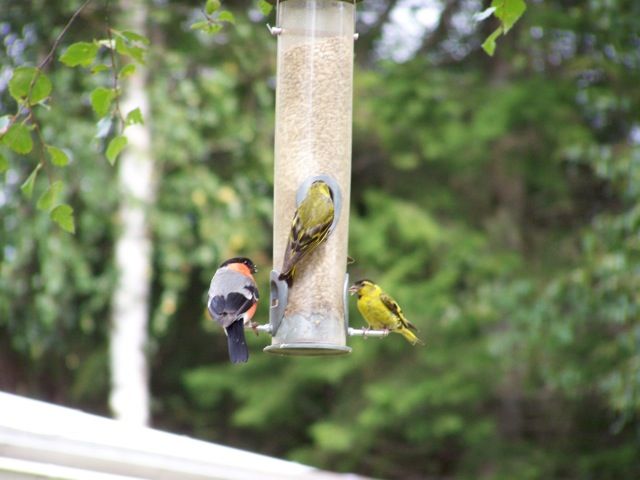
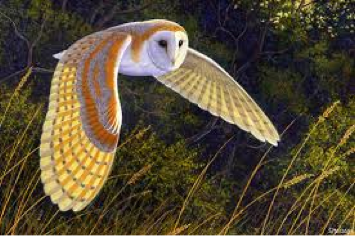
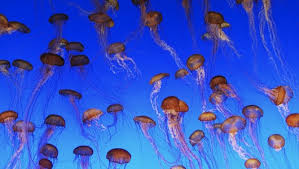
Whilst trekking through the jungle (or sailing in a small boat across the ocean) there is the  risk of being assaulted by an ambush of tigers.  Creches around the world entertain the young children by a storytelling of ravens The floral display of flowers will never seem the same again after witnessing a bloom of jellyfish and continuing on the herbaceous theme, those poor Jellyfishplucked game birds; not bad enough being shot, now they risk becoming a bouquet of pheasants. Maybe the sight of them caused the gaze of racoons or resulted in a bellowing of bullfinches. What about those majestic circus performing African mammals, clambering precariously on top of one another until you have a tower of giraffes. After witnessing all their strenuous effort the sleepiest of animals slowly dash for their pillows and duvets and as their eyelids battle with drowsiness there is soon a bed of sloths. Not all animals are so lethargic bullfinchesas the magnificent nocturnal birds of prey swoop to create a parliament of owls. Imagine them holding court over the country, power of the land in their stately talons – and who knows, perhaps much wiser lawmakers than their human counterparts. The most appropriately collective noun must surely be a flamboyance of flamingos as they gather in their thousands (or at times over a million) on the African lakes. One of our busiest rodents are a scurry of squirrels as they dart about the land, collecting nuts and seeds, stopping occasionally for a swift glance around before leaping away, up the tree, over the fence, down the alleyway.  Finally, let the past be safely stowed away within a memory of elephants.

 “in every landscape the point of astonishment is the meeting of the sky and the earth.”

by Ralph Waldo Emerson

In Print

Kindle3

I want to share some good news with you all.

This morning I sat in bed having a leisurely breakfast. How decadent I know, but since it’s half term at the moment, I happily grab a few moments of relaxation whenever possible.

Having read the back few pages first of Writers’ Forum (March 2015) I turned to the front pages. A few seconds later I squealed with delight as I found my piece on The 17th Century Kindle printed in the ‘NewsFront’ section of the magazine.

I had sent this to Writers’ Forum a couple of weeks ago and since I hadn’t heard anything from the magazine I had forgotten about my submission.  Again, a real boost and I am happy to share this interesting story to a much wider audience. The piece submitted to Writers’ Forum was much briefer than my blog post on The 17th Century Kindle as the guidelines clearly stated that items should not be more than 200 words.

We are awakened through poetry;
we are affirmed through ritual,
we are fulfilled through music.

by Confucius

Hearts

Wicker Woman

The last few weeks we have been bombarded with hearts – Valentine heart cards, heart decorated wrapping paper, teddy bears cuddling huge red hearts. Hearts swaying from shop ceiling as they join in the extravaganza called Valentines.  How could I fail but to recall a piece of flash fiction I wrote last year and is aptly named ‘The Little Heart’. Romantics be warned – this is not a love story.

The Little Heart

In my bubble I bump against life, insulated from its joys and sorrows. My child gesticulates wildly, his face alight with excitement and there must be words. Such sweet words from that gentlest of voices, but for me inaudible. The fog within me wraps around my nerves, slowly strangling all the senses.

“They’re here to help you,” my husband promised.

“You’re the one who needs the help,” I screamed.

In those days I could shout, argue, feel, love, rage.

“Take it!” The man in white orders. Glancing down in my hand, I obey. The beguiling beauty of the hollowed heart of the blue tablet pulsates reassuringly. I glimpse closer. It’s not a heart, rather a soft-scooped “V”. V for victory to the zombie that in the ensuing days commandeers my body. It overwhelms me and all that remains is a modicum of myself, a spectator to this tragedy.

“She’s much calmer. Happier even.” The words drift painfully to my brain.

My son appears, hugs me and his sad wild eyes penetrate my soul. He leaves – his ghostly presence imprinted on my mind. I was tricked into this hell. Trapped. I’ll fight my way out. For my life and child.

The End

“His soul swooned slowly as he heard the snow falling faintly through the universe and faintly falling, like the descent of their last end, upon all the living and the dead.”

From Dubliners by James Joyce

The Journey So Far…

100_2345

I thought it was time I wrote an update about this amazing Novel Writing Journey I embarked upon at the start of the year and which spiralled into this blog.

For the past six weeks I have managed to retain a respectable weekly word count and am now up to  30,000 on the first draft.

I thought it might be tough, but had not foreseen the depths of the lows and the heights of the highs. Ironically enough, none of these were caused by the actual physical writing itself – once I sat down and wrote, the words flowed easily and quickly.

One of the highs involved finding my name long listed for the Inktears Short Story Competition! A whoop of surprise followed by yes, all the effort is worth it. For the opportunity to be able to share ones writing with others and for it to be recognised. As always I am fully aware of the fun, enjoyment and satisfaction of writing itself.

The high of finishing a chapter and realising that is good, although recognising the improvements I can make and noting down new ideas to add later.

The writing highs are a gem. When upon re-reading a particular paragraph I tingle with delight in the way that it works; perfect.

The lows are the why bother moments? These surely engulf every writer. What is the point? This is going nowhere?  Sound familiar? Of course. Most of the time I booted these thoughts out of my brain with a ‘don’t you dare come into my head and hibernate’. Most of the times these reprimands were successful. The negatives fled my head, leaving room for constructive thoughts and ideas; off I set on writing.

However, there were days – and now I realise there will be many days – when no amount of arguments or walks would ease the bad away. It was as if a physical sticky cud of earth had infested itself in my brain and commandeered it.

At first I fought. Valiantly, I tell myself. To no avail. In the end I felt as if I were under the orders of the Daleks –  ‘resistance is useless’ – and so succumbed to their control. My prison however was writing inactivity and when the house was cleaned, the car washed (yes, even in winter!) and the fish fed, I retreated for an hour or two for down time. My vice? Netflix and an episode or two of ‘Breaking Bad’ or ‘The Good Wife’. One day of such R&R was usually enough to break the bleak cycle and the next morning my fingers would be flying over the keys again.

So, when dark thoughts my boding spirit shroud,
Sweet Hope, celestial influence round me shed,
Waving thy silver pinions o’er my head!

By John Keats

The 17th Century Kindle

Book Open

It took a photo and a snippet of an article yesterday to reinforce to me the precious nature of the written word. In recent times the written word is fighting for our attention in so many forms; there are not many moments a day when we are free from the tidal wave of information, articles, stories, newsfeeds. Consider this then, the world’s first Kindle.

That is how the Jacobean travel-library has been described by the librarian at the University of Leeds. Created in 1617 the library of 50 miniature books are encased in a wooden box which itself resembles one large book. Once the box is opened three shelves are revealed, carrying books ranging from history, poetry and philosophy/theology.

With each word typeset by hand, each page hand-printed and hung to dry individually, the precious nature of every single word is highlighted. Today it is cheap and easy to type a word, which leads to a sentence, which leads to a story. Then press print and the copy is in our hands. To have a book bound costs slightly more but the workmanship is not labour intensive.

These 50 miniature books are bound in soft vellum with fabric ties. Furthermore the spine of each book is gold-tooled with a wreath and flower and the covers of each are adorned with a gilt angel holding a scroll which engraved with the words ‘Gloria Deo’, meaning ‘Glory to God Alone’.

50 BooksBook Being Held

The folio-style box is bound in brown turkey leather and ornately decorated on the inner leaf with the catalogue written in gold on blue vellum set into three painted cathedral arches and columns.

This 17th Century travel-library was the only manner large amounts of literature could be transported on trips for the discerning Jacobean traveller.  Without disruption from tablets, computers, mobile phones the traveller could recline at leisure to read uninterrupted one of the books.

Big Book ClosedOne book open

The collection is a true rarity and as a University of Leeds graduate I am proud they have managed to acquire one of the four in existence. The acquisition was made possible by funding of £1.3 million from the Heritage Lottery Fund. The remaining three miniature libraries are held at the British Library, the Huntington Library California, and the Toledo Museum of Art Ohio.

The first collection was commissioned by the MP William Hakewill as a gift to a friend and within five years he asked for a further three collections to be made, which were then given to friends as presents.

Sources:

I read about the above in ‘L.Leeds’ Alumni Magazine. Issue 16. Winter 2014-2015. This article itself was previously covered in ‘Daily Mail’ and US ‘Slate’. The photographs were sourced from the ‘Daily Mail’ online.

There are two mistakes one can make along the road to truth… not going all the way, and not starting.
Buddha