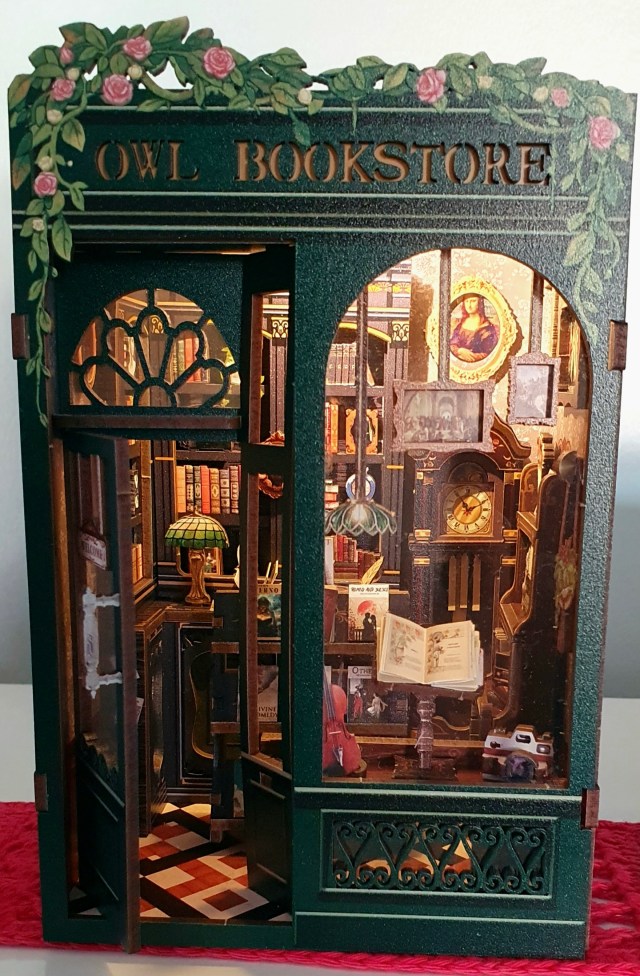
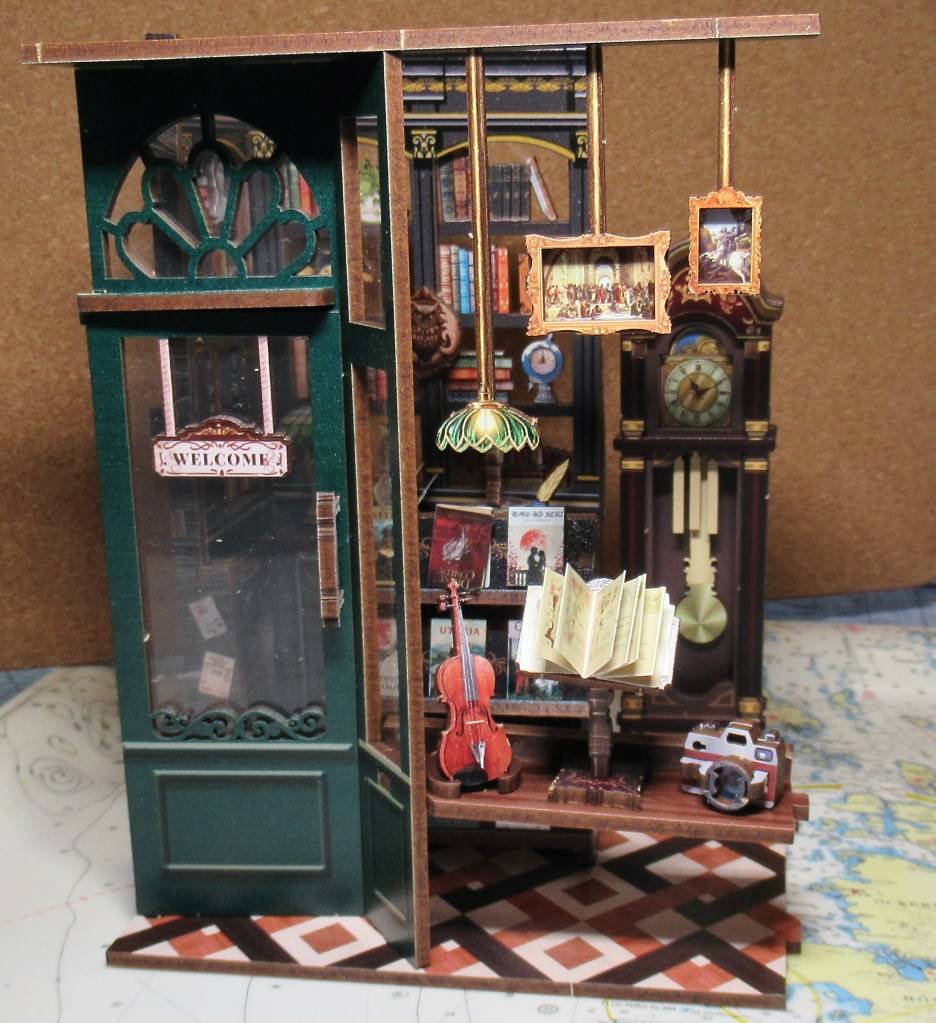
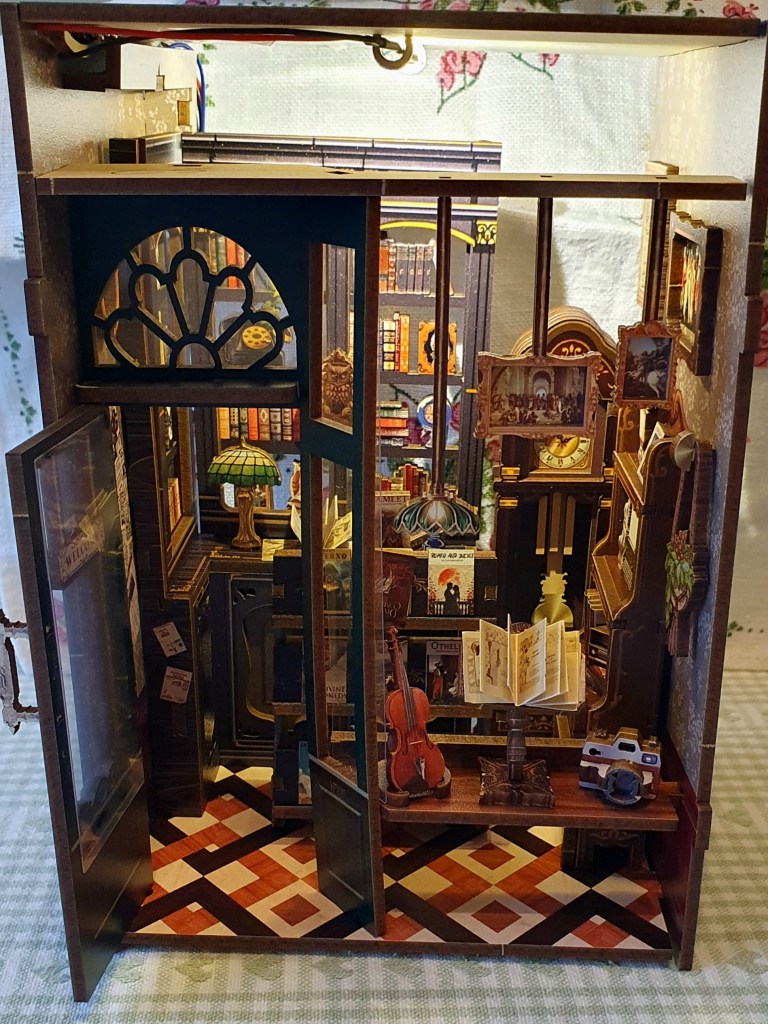
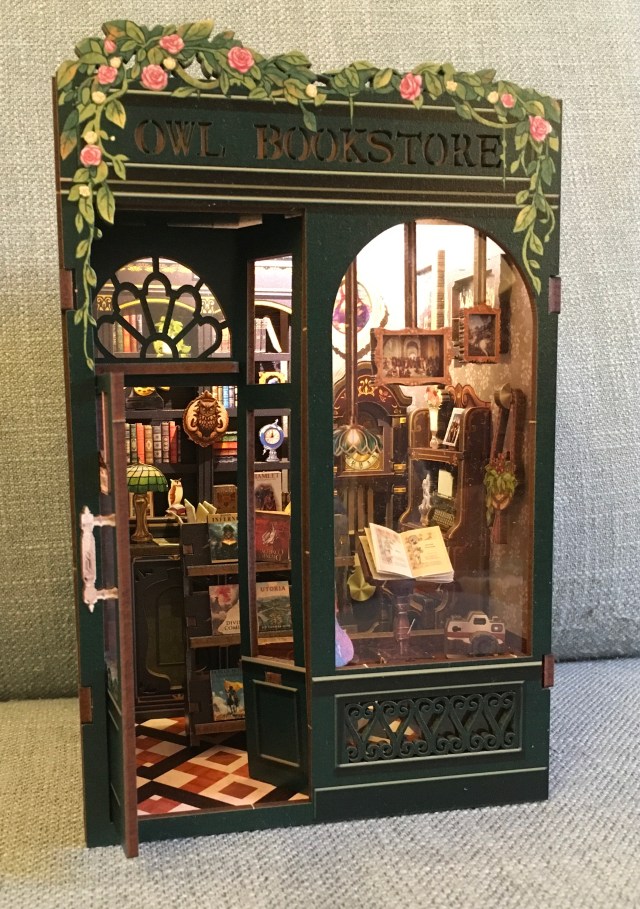
It was with excitement and trepidation that I began the construction of my Book Nook Kit which was a Christmas present from my husband. As a novice to crafting I started cautiously but quickly fell in love with the creating the book store, the quiet concentration just perfect for losing myself … and finding utter peace!
Peruse instructions
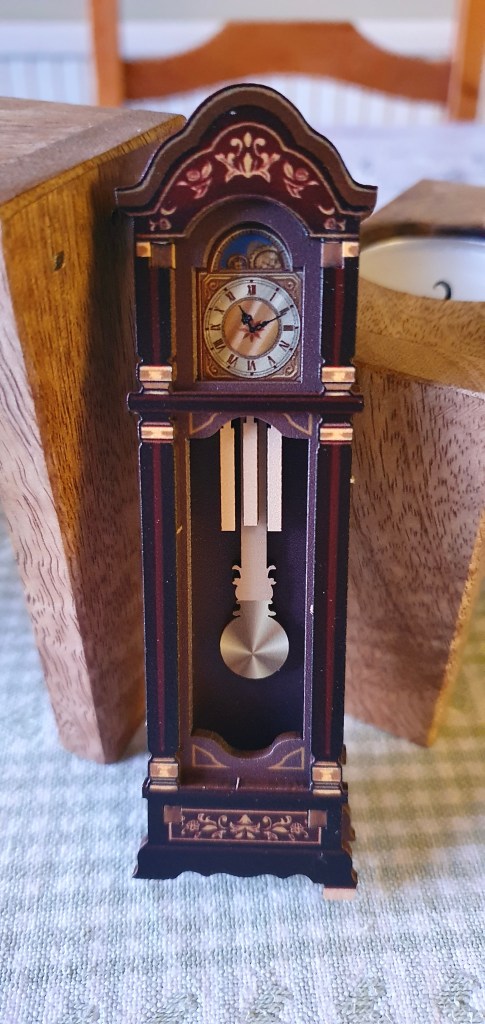
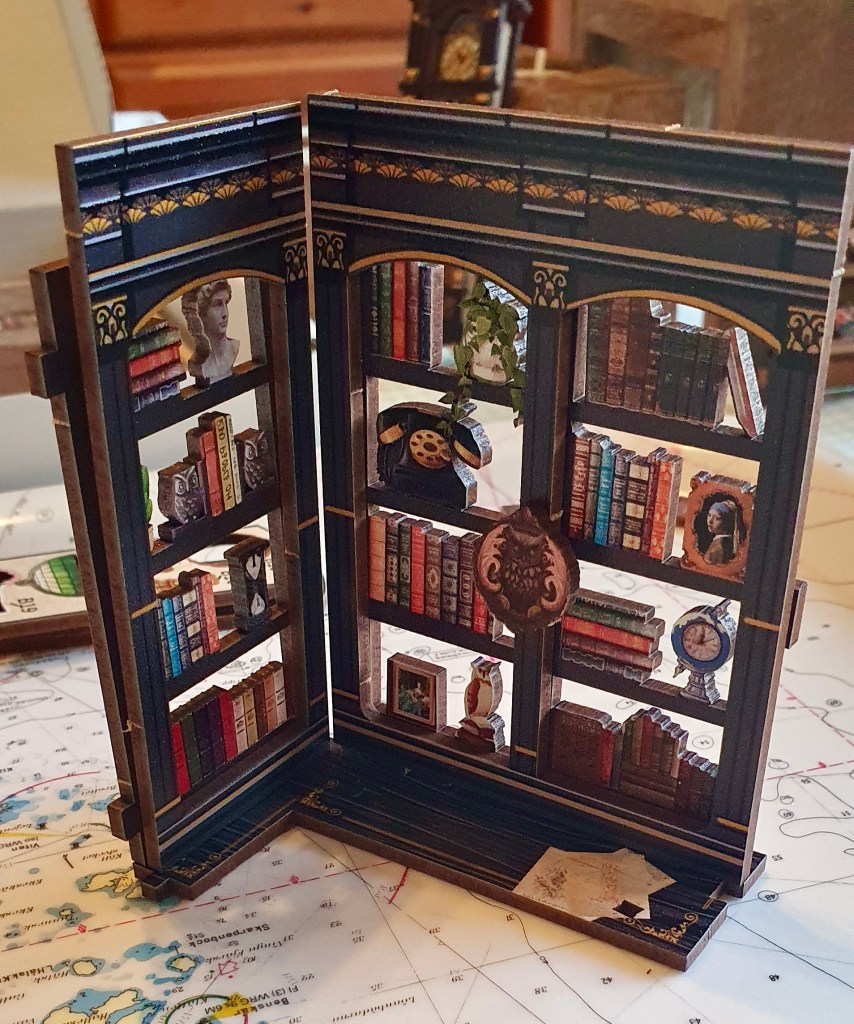
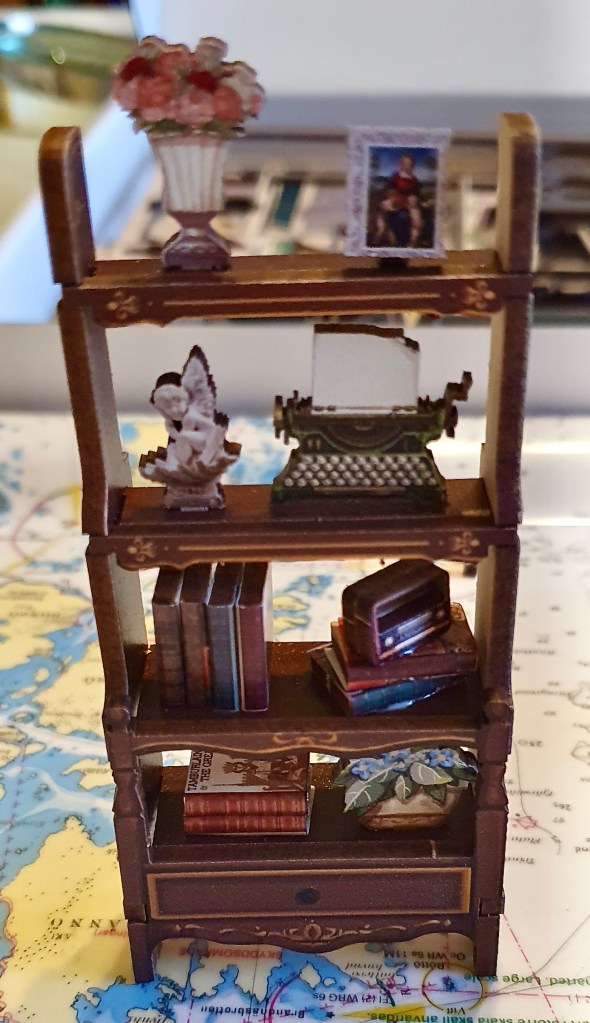
Snap out parts, click into place
Glue edges, fold card
Repeat for 27 steps, until at last.
The enticing light
beckons eager new readers
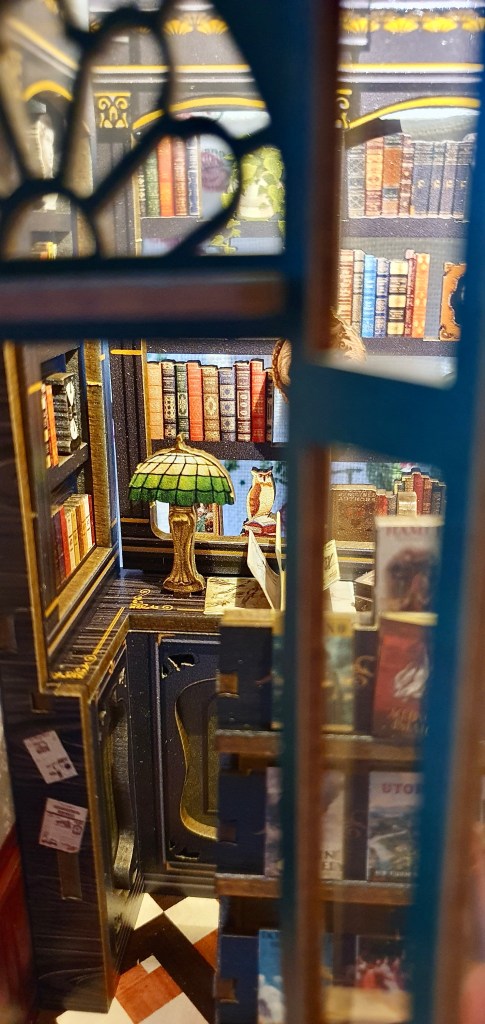
An awed hush descends.
Finally,Lessons Learned:
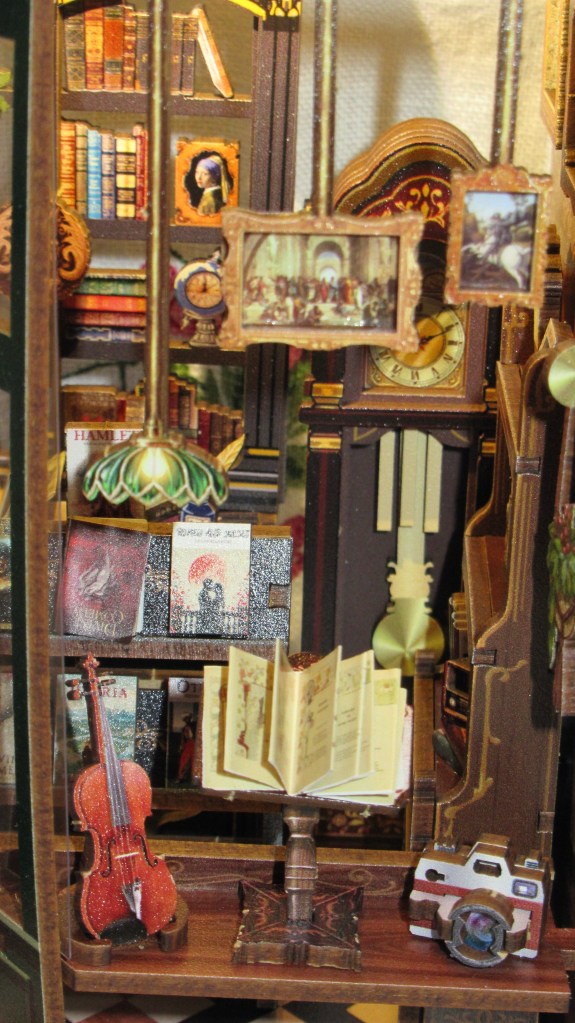
Read instructions carefully and with diligence. Early on I missed a step and that resulted in the top of the violin breaking away. Not an issue as I could glue it back on but I did reel in my enthusiasm a bit and stopped it racing away with me!
Be gentle but firm with snapping out the individual parts and equally so when clicking them all into place.
When gluing use the edge of eg. a cut up old credit card to apply a very thin layer of glue. None of this lavishing it on from childhood days! Delicate and restrained is key!
Use a sharp edge such as a ruler to help achieve sharp edges on the concertinaed books.
Patience … and relish the sensation of losing myself in such a project!
Believe in myself — I can and did do this!
I love these type of craft kits and can’t wait to start the next one!
(PS. My next one just arrived and one I couldn’t resist since I’m a huge fan of ‘Friends’ – a coffee house kit that immediately reminded me of their Central Perk haunt!)
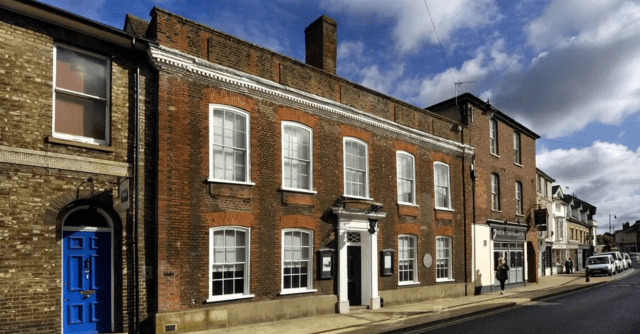
Down a narrow side street in a small market town in Suffolk is the entrance to the home of one of Britain’s most renowned artists – Thomas Gainsborough. Born in the town of Sudbury in 1727 the home of his birth and childhood is now a popular and iconic house / museum.
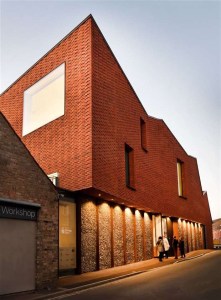
In the past few years, the ramshackle previous home has undergone a major refurbishment and it was with excitement and slight trepidation that I headed down the street, past the house from the 1400s to the new main entrance – a bold modern three-storey building.
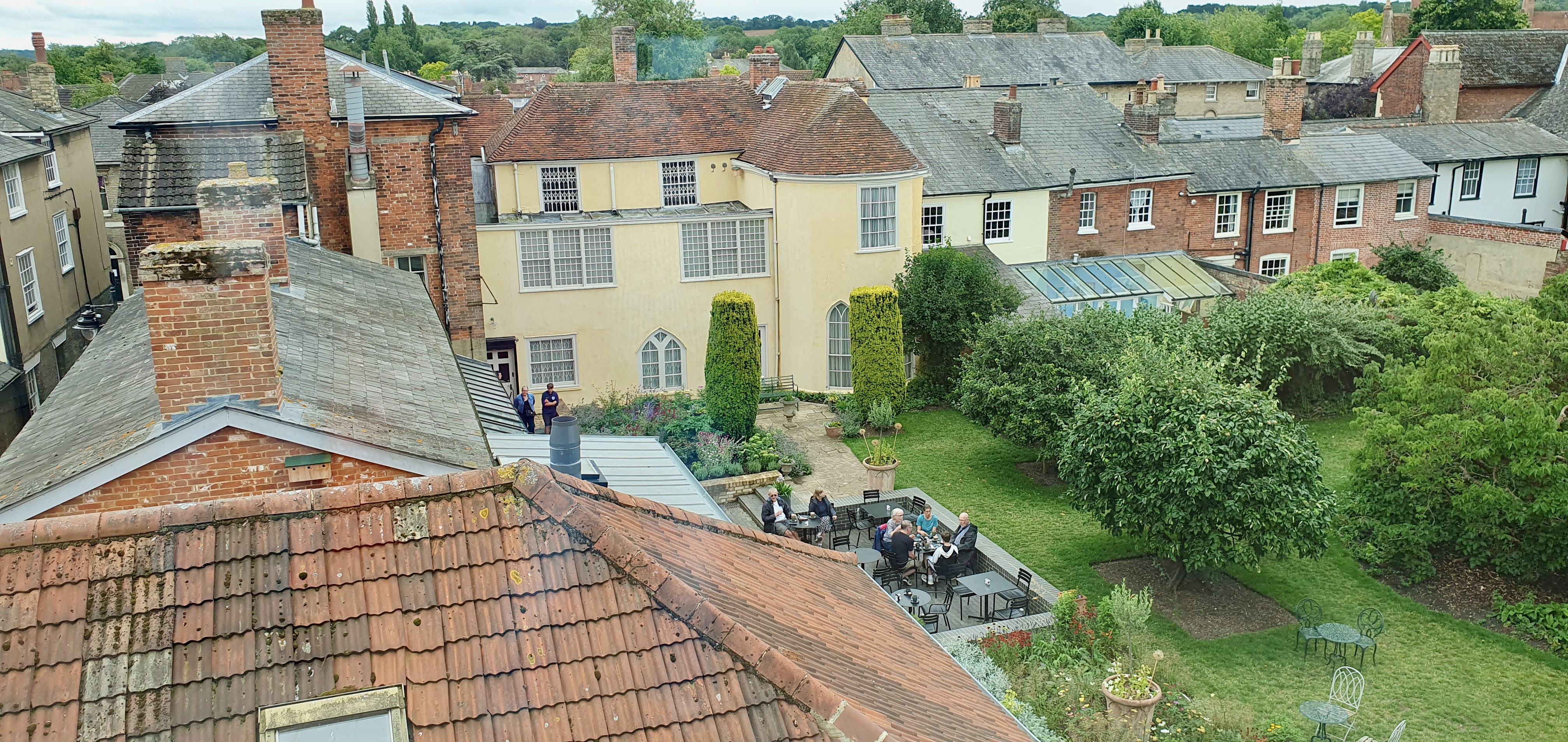
We were warmly greeted by staff and the new museum was explained in detail. First, we were advised to head to the top floor for panoramic views overlooking the town. What excellent advice and although I know the area well I could not help but be awed by the views of below and especially of the building and garden of our destination – Gainsborough’s House.
Standing there, in the newest of buildings, looking out to one built six hundred years ago, one would expect incongruity, a clash of centuries, but the addition and changes blend thoughtfully and cohesively together.
Once downstairs, having seen a couple of extra exhibitions on the other floors, we pushed open the heavy dark door leading to the start of the visit proper.
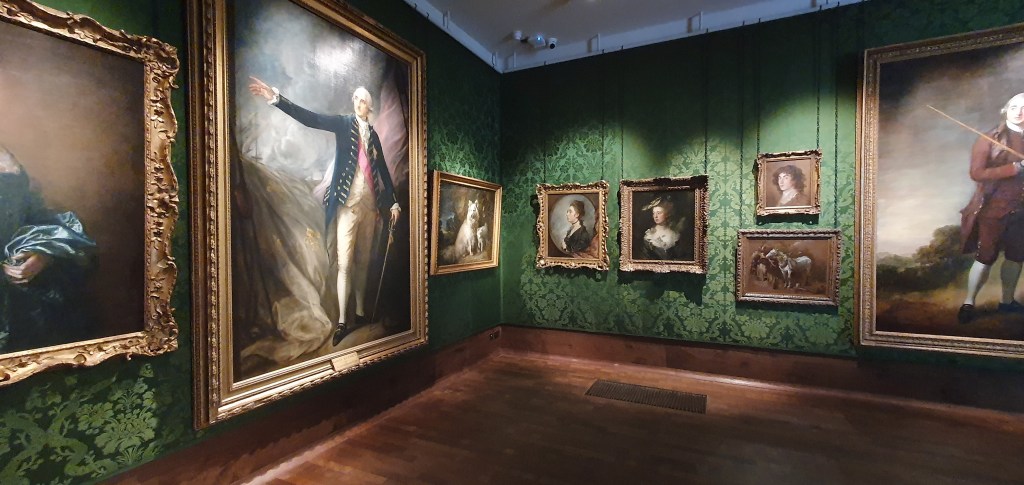
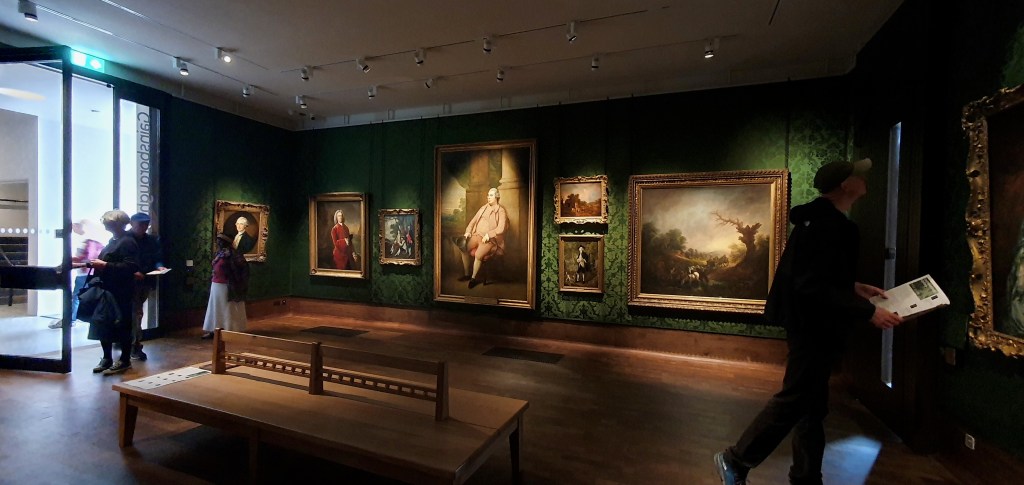
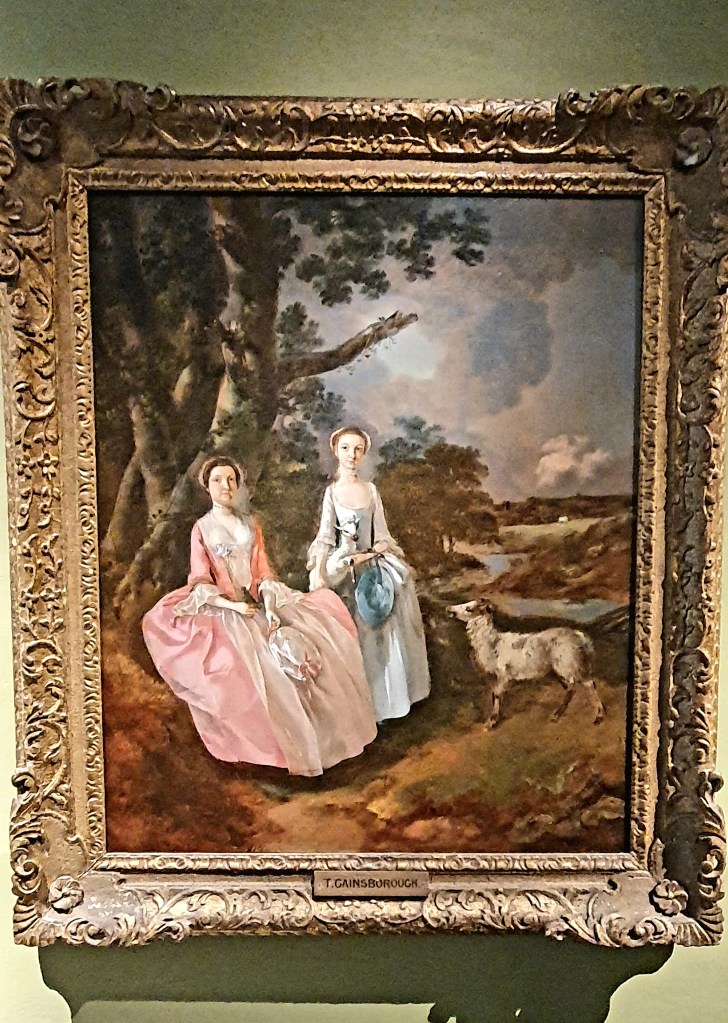
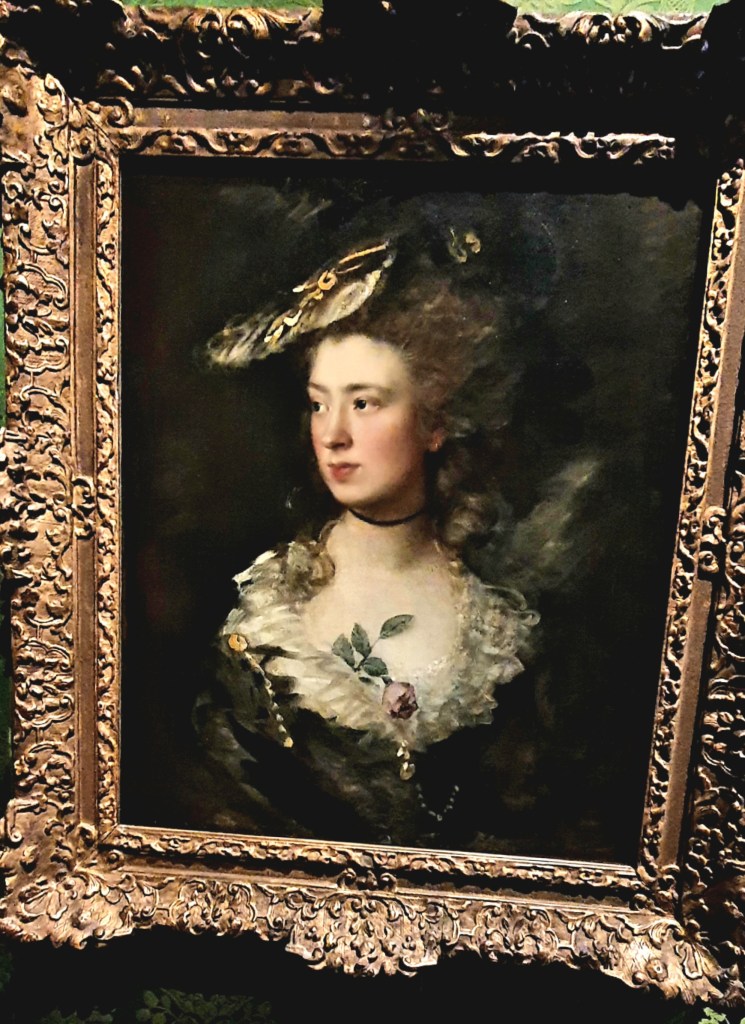
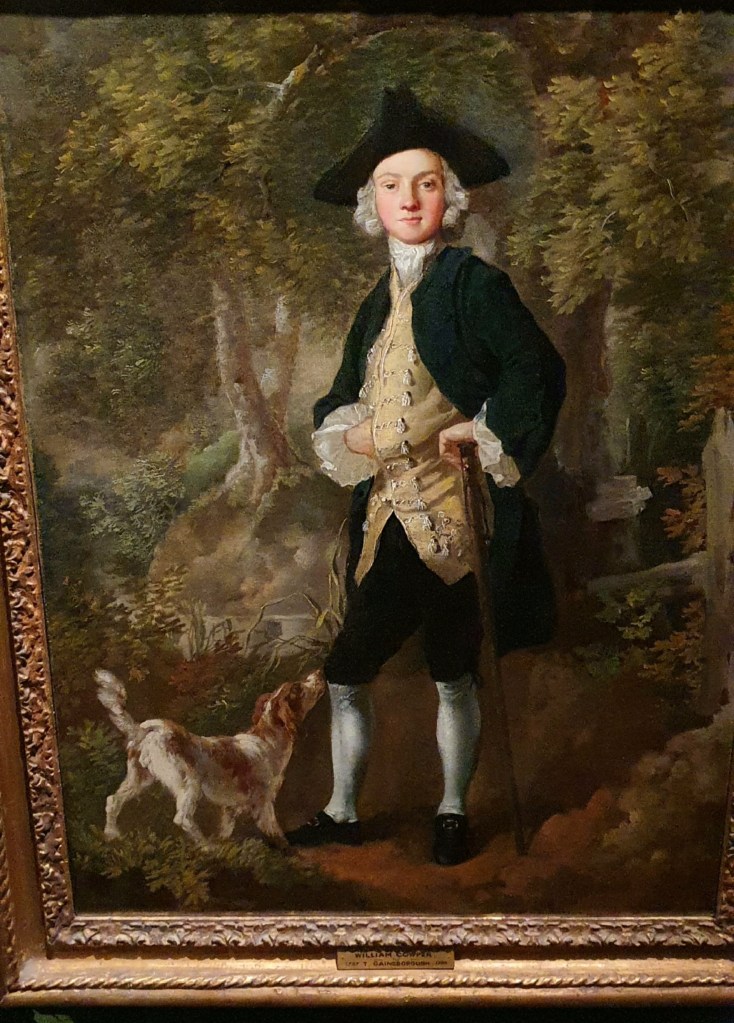
Initially, the dour gloom overwhelmed me before I took a sudden gasp of breath; within the gallery room hangs the most wondrous display of Gainsborough’s paintings.
I had seen many before and it is as if I were welcoming friends. They are perfectly lit.
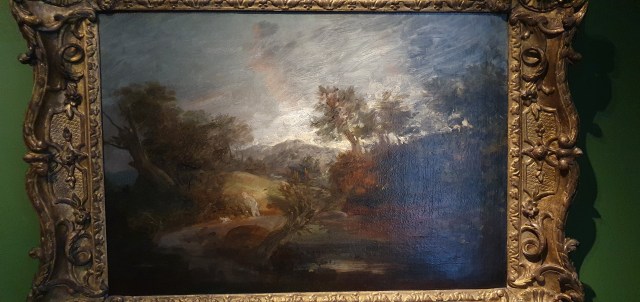
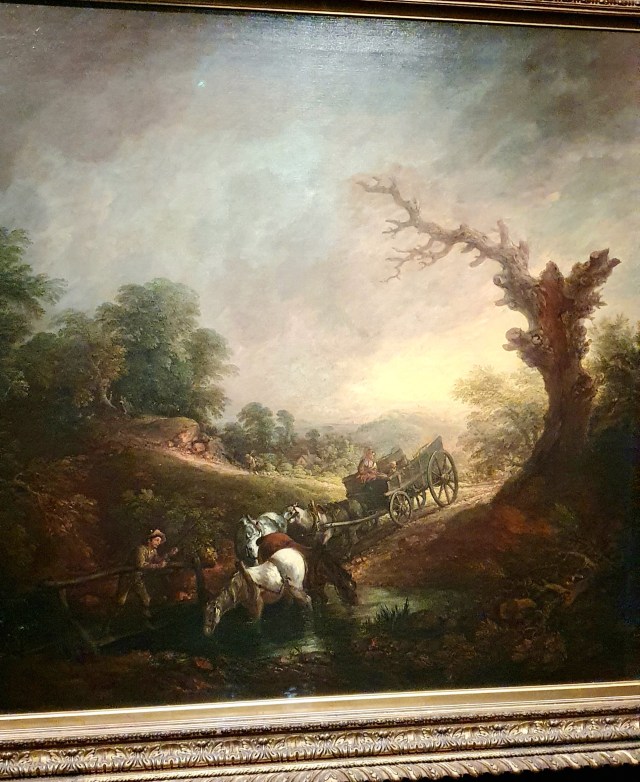
The heavenly light from the landscapes emits its own brightness and life.
The portraits are exquisite, the women captured with depth and elegance.
The men display at times hidden pomposity, ensuring their grandeur and wealth are on display for all. One wonders how the artist had the patience with them all, only to learn he did not! Gainsborough did not enjoy having sitters and probably as a result turned out to be an extraordinarily fast painter.
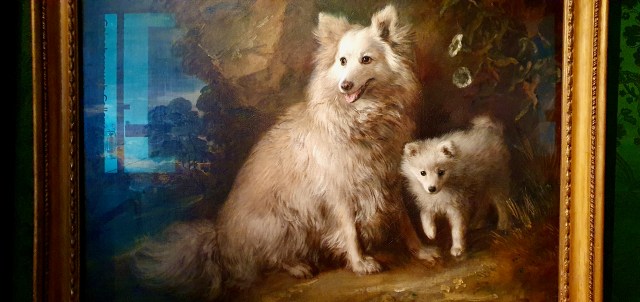
All around is such incredible art I can’t help but sit down in the tranquil reverential silence and absorb the magical beauty surrounding me, including the stunning painting of these two dogs, their eyes so full of life I felt they were about to come bounding out the picture.
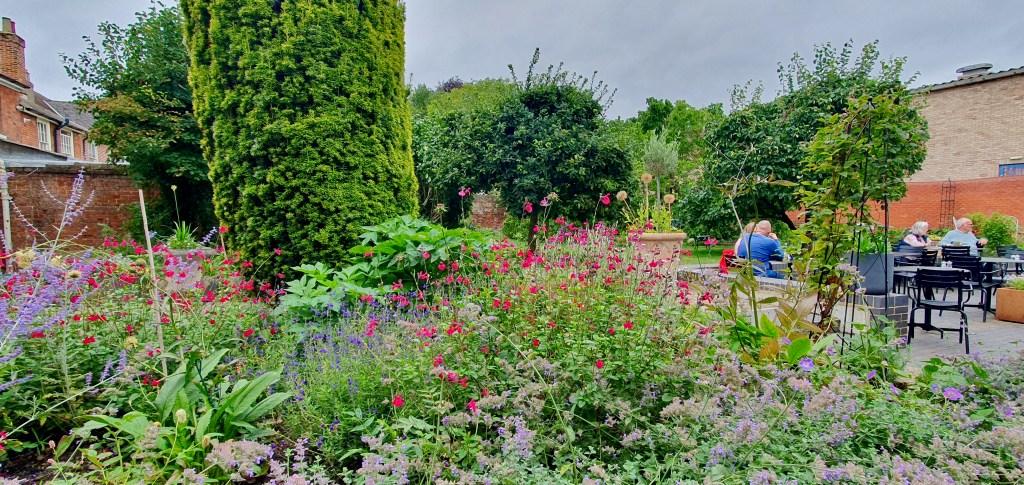
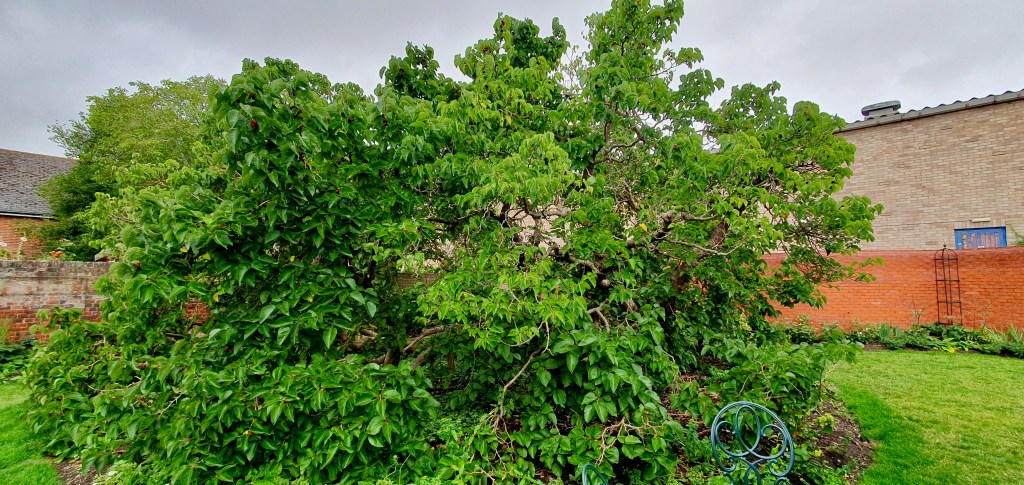
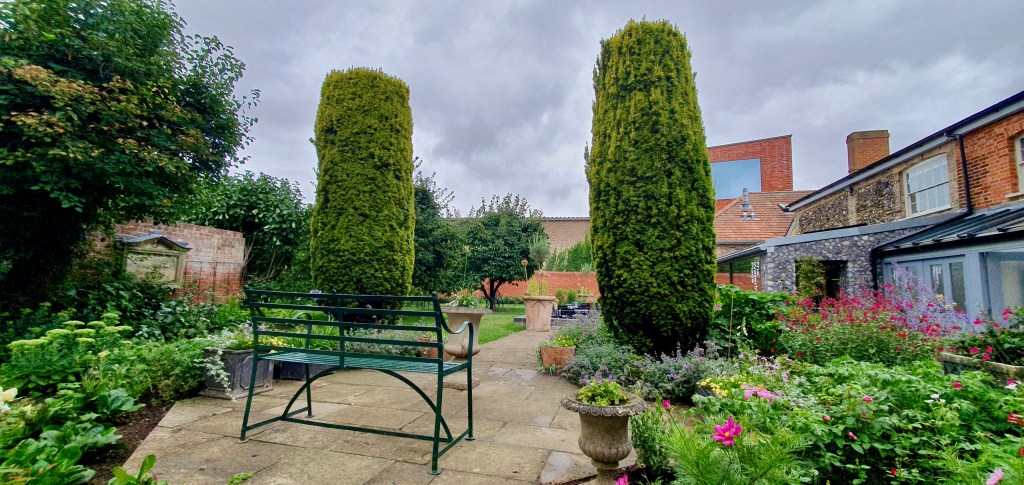
From this unexpected and dramatic introduction, we headed out to the serenity of the garden. Here an ancient four-hundred-year-old mulberry tree still bears fruit.
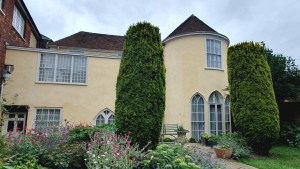
The yellow-painted house was just ahead and it was with intrigue I entered the house.
As Gainsborough’s House originally dates back to the medieval period some of the original beams from the era are visible. Also on show is an example of the style of the original build using wattle and daub (sticks & mud basically!). Gainsborough’s father, a merchant, ensured the family home was revamped in the modern Georgian style and much of the house remains as such.
On previous visits, the downstairs front room was a higgedly-piggledy collection of a tiny squashed cafe, a little shop corner and displays. Now the beautiful entrance hall leads us to the painting room.
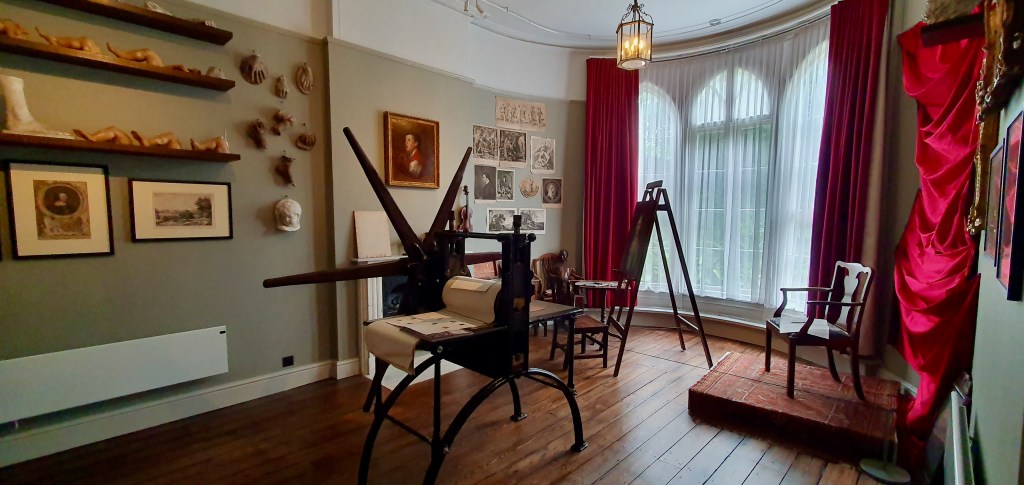
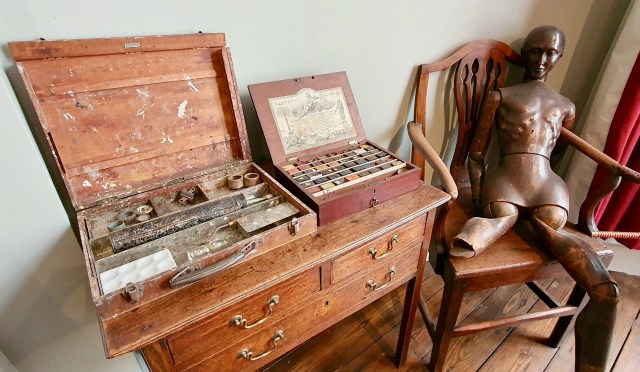
This is the contemporary interior of what would have been a typical studio. As was the norm it is north facing (to avoid issues with changeable shadows through the day) and the room contains a rich array of artefacts. An easel with a canvas by Thomas Gainsborough’s nephew Thomas Gainsborough DuPont, who was the artist’s only assistant, is casually on display while nearby artist’s brushes are set on a wooden table ready to be picked up and used.
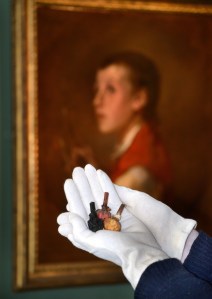
A glass case houses a unique collection of paint bladders – these are small animal bladders which contained the artist’s paint and a wooden stopper to ensure they were kept fresh. A large selection of these were found in the attic and there is good reason to believe they belonged to Gainsborough himself.
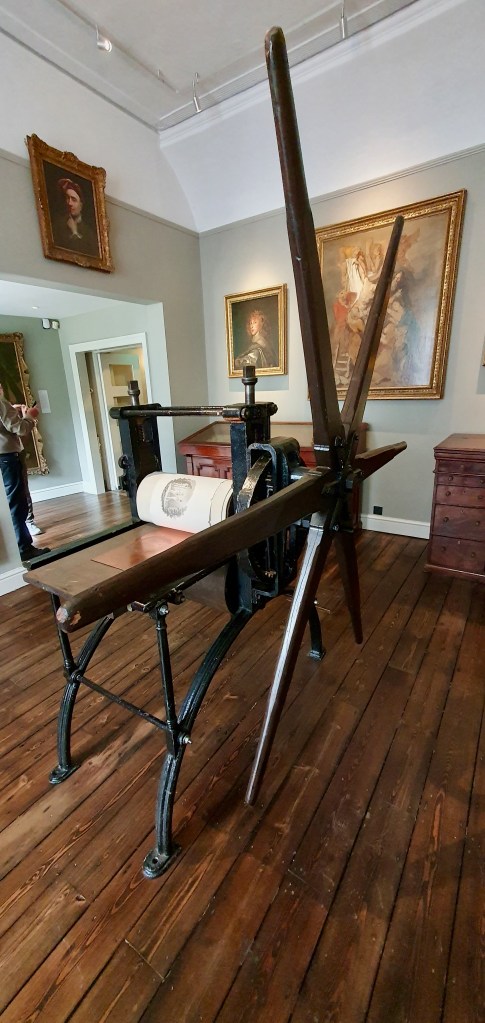
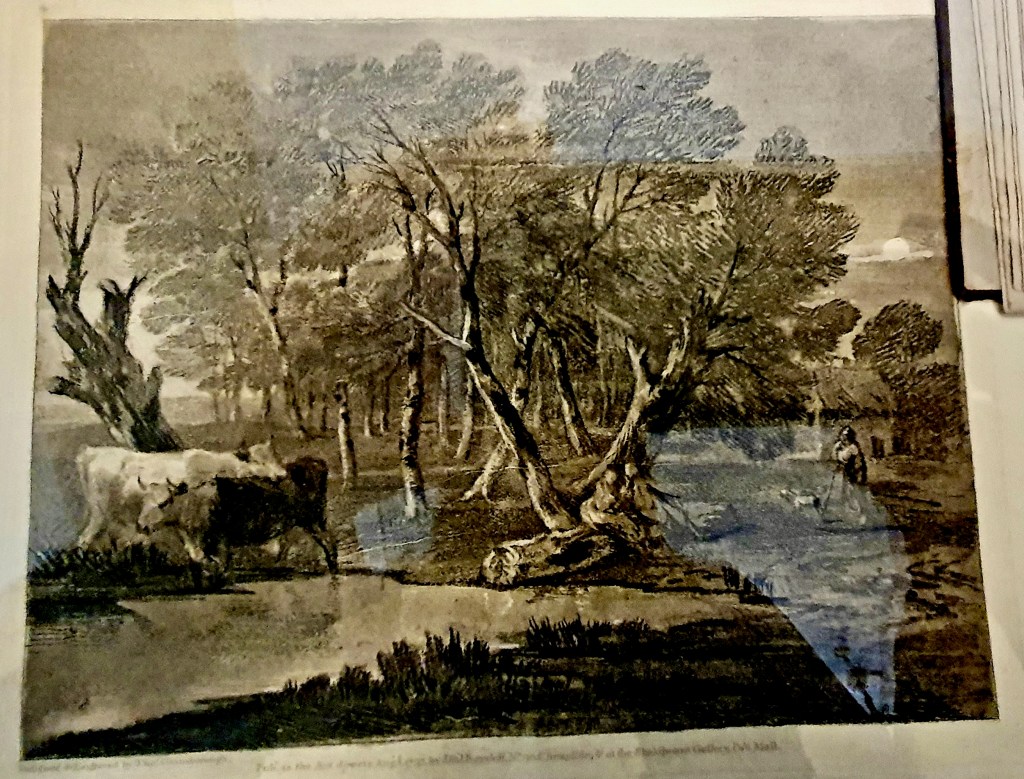
In the middle of the room is a most magnificent Star Printer which creates pictures from copper plate etchings and there is a stunning one made by Gainsborough on display.
Walking around the house one cannot help but reflect what it would have been like for Gainsborough to grow up here. His passion for painting was nurtured and encouraged by his father and Gainsborough was allowed to leave for London to learn more about the craft aged thirteen. His passion for nature, particularly the county countryside, is evident in his work although he turned to portraits, partly as a necessity to earn a living and he was a great admirer of Van Dyck’s work which is reflected in his paintings.
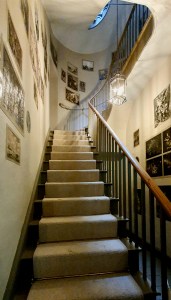
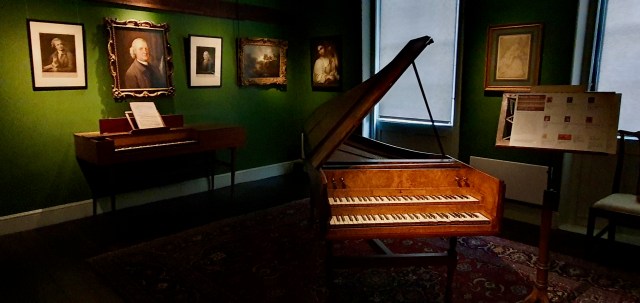
Gainsborough’s other love was music and the Music Room upstairs, which is accessed by the elegant and sweeping staircase, houses the country’s only double-manual harpsichord and this dates from 1738.
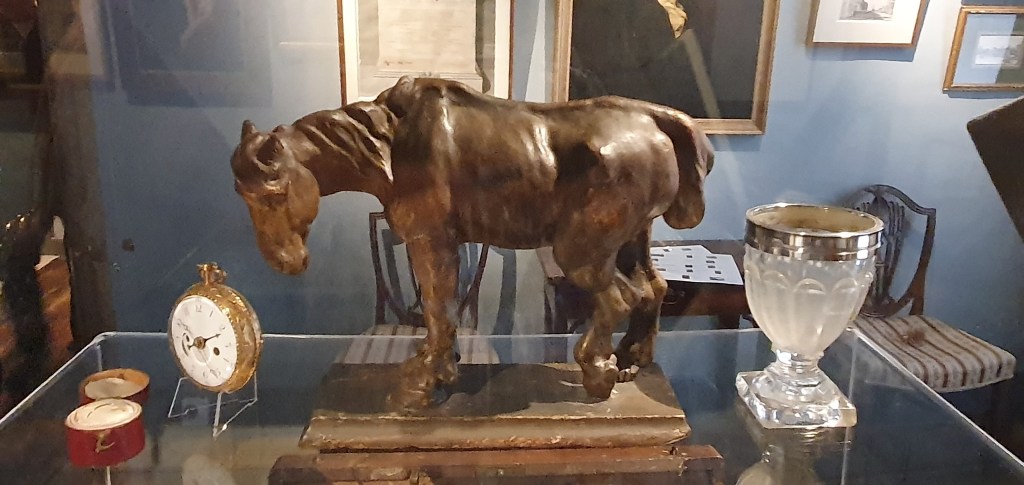
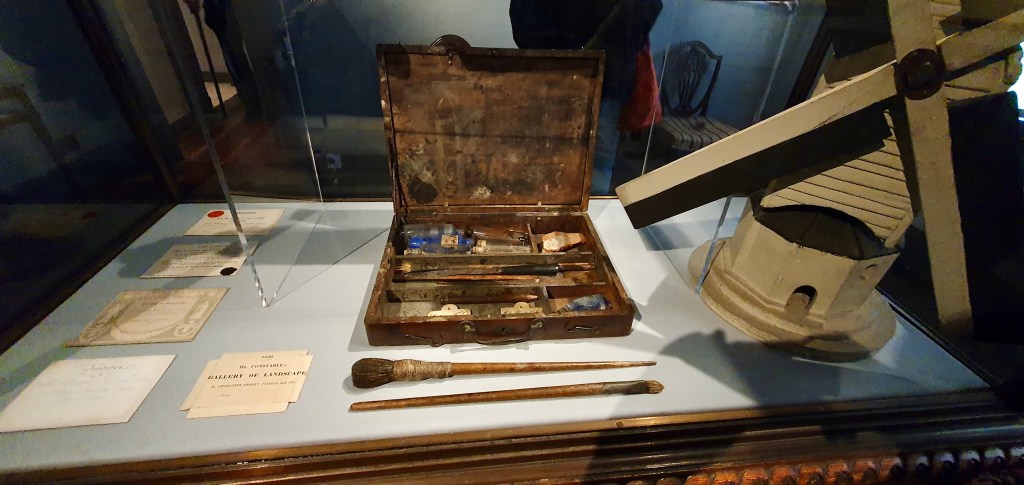
In the Constable room several of this other famous artist’s work is on display. John Constable was a close friend of Gainsborough and is said to have been influenced by Gainsborough creatively. Constable’s landscapes are legendary and great to see some of the smaller ones here. A case displays some of John Constable’s original set of brushes and also one of the artist’s most treasured items, a model of a horse made by Gainsborough.
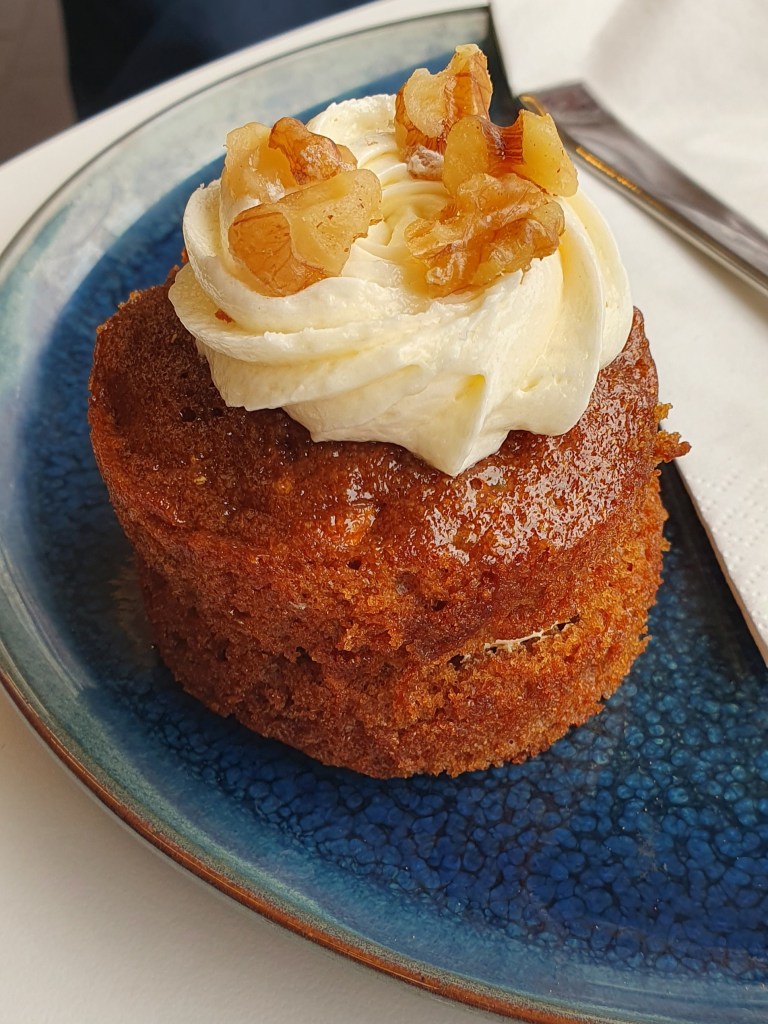
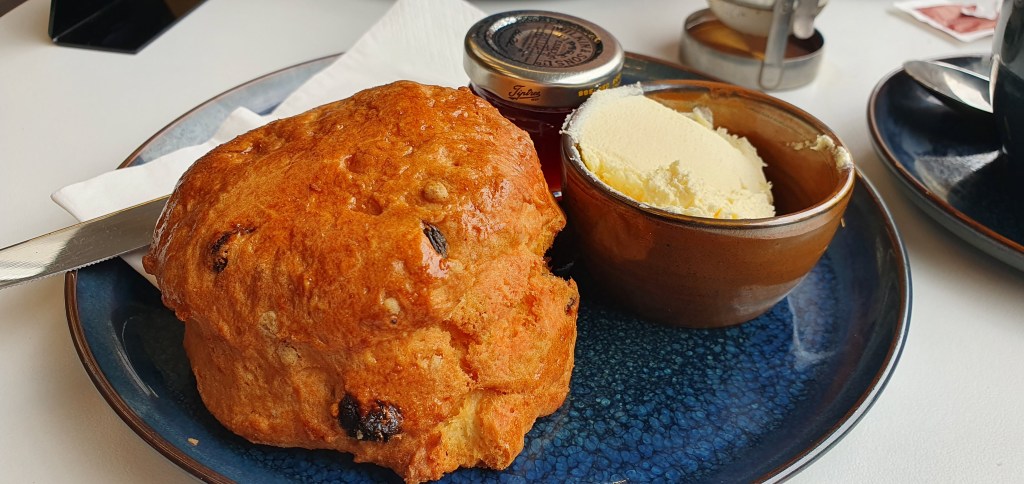
With our hearts and minds replete with art and history we headed back to the garden and the new cafe. In harmonious quiet we contemplated the incredible history on our doorstep, the stunning art in such a close and intimate setting, all in the original home of the great artist. Mulling over the visit, we turned around and laughed – as we enjoyed our cakes we noticed another Gainsborough hanging nonchalantly behind us!
* “We love a genius for what he leaves and mourn him for what he takes away.” Thomas Gainsborough
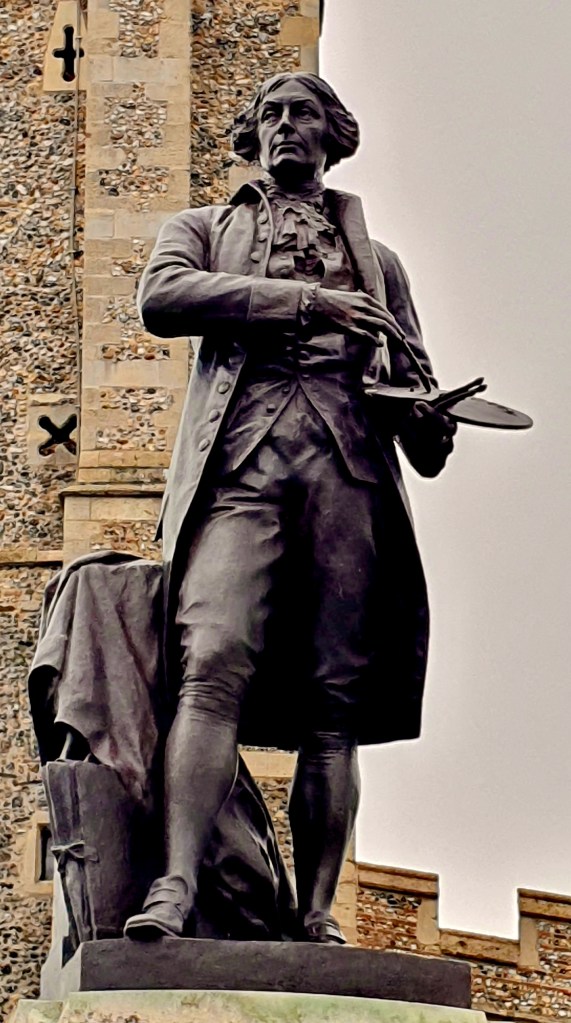
Bronze statue of Gainsborough in a long overcoat, open to reveal his waist coat and cravat, as he looks over the market square in Sudbury, towards Gainsborough House, pausing from painting and resting a brush on the palette.
“As we look at his pictures we find tears in our eyes and know not what brings them.” John Constable
‘Dear Creative Spirit’ is one of the first exercises set by Julia Cameron in her ‘The Artist’s Way’ and after my initial hesitation of what to write, I found myself inspired as I addressed my own Creative Spirit.
I came across a rough draft of this recently and since have edited it to this final version here – I hope it gives others the ability to trust in their gift. Lack of confidence in one’s capabilities is often the hindrance to even start writing and sharing one’s work.
Clearing out is a task I throw myself at with glee! For some this is a chore, understandably so, whilst for myself, the opportunity to revisit past items, letters, papers is an act of time travel!
Amongst the haul, I unearthed a calendar beneath a desk, papers were strewn on top, dust neatly and evenly covering the surface. I cleaned down the pretty cover and flipped through the images.
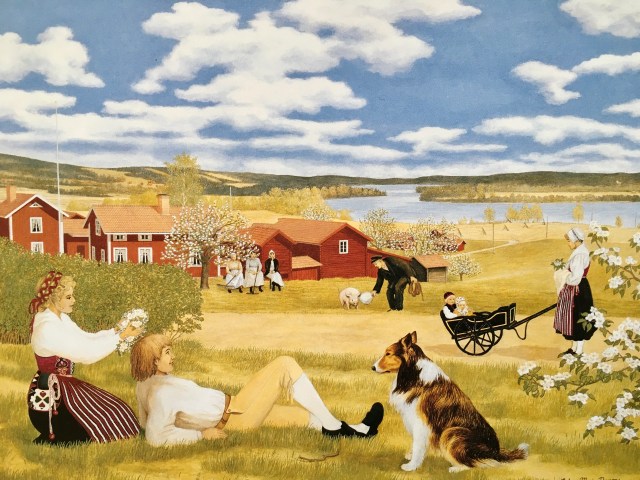
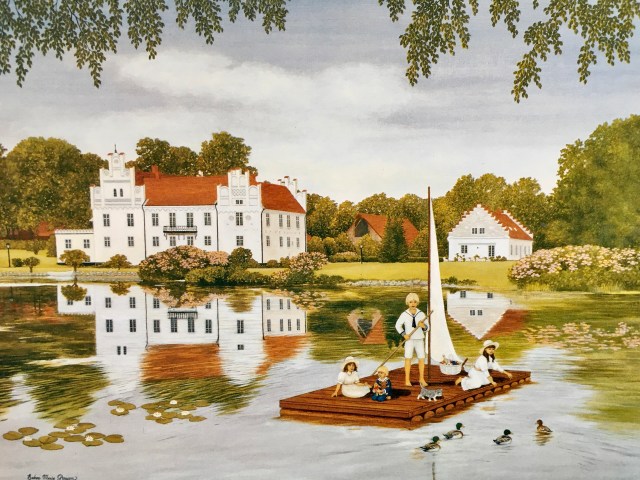
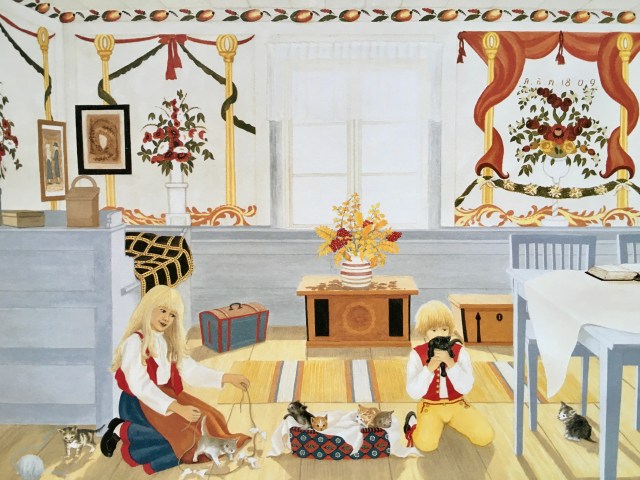
The artist is Erkers Marie Persson and for many years she painted for the Swedish Calendar. In her paintings, she tries to capture the wonder of bygone eras when generations mixed easily with each other. The pictures included in my post are taken from this delightful calendar which our company gave away to customers! Thankfully, I retained one as well!
Over Easter, I will be enjoying a ‘home-holiday’ and taking a mini-blogging break, popping in now and then. I wish you all a peaceful and relaxing holiday time!
“A childhood without books — that would be no childhood. That would be like being shut out from the enchanted place where you can go and find the rarest kind of joy.” Astrid Lindgren

 Annika Perry