‘My True Final Letter’

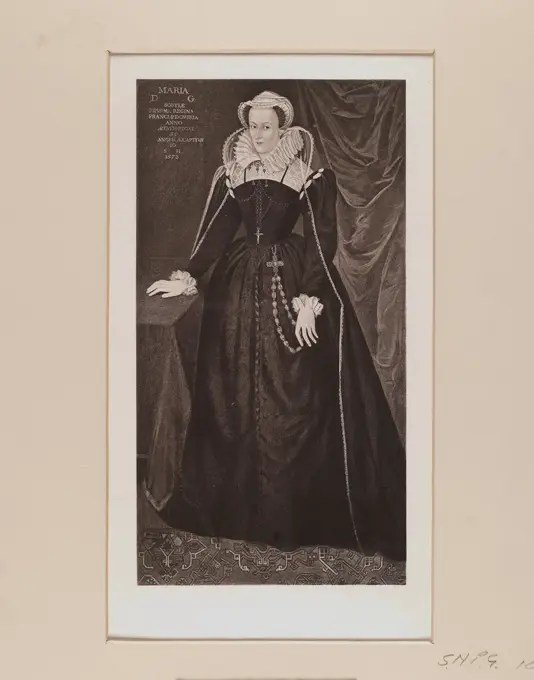
The eighth day of Februari 1587. My Majesty, Cousin Elizabeth, They will say that my last letter is the one to Henri, my dearest brother-in-law, King of France. We are close, but not the way we were at times, Elizabeth. The letter to him will be about the final housekeeping for my staff, it will become my last political act, ultimately my testament to the future. The inner truth resides within me, my dear cousin. I know, how can I think of you as dear after your cruelty these past decades? Years that are inherently bent and twisted, distorted beyond any recognition. Every year became a lifetime yet fleeting and gruelling. I wake on the four-poster bed, the heavy drapes a cocoon from my life, my fate, my death. The majestic red material in tired folds, the red blood of martyrs. Do you want to make one of me, cousin? Cousin, what a sweet word of family. The familiar, a close relation and we know each other well. Don’t we? As I open my eyes in the morning, the dreams of our childish giggles echo into the bedchamber. Do you recall the games of tag, darting between the roses in the gardens, around the lakes? Of course, being older, I often let you win. Maybe I should have overruled you already then? My kindness has perhaps become my downfall. Those were the times of joy, before the tragedies in our lives, when our chortles bubbled up to life-affirming laughter. ‘Most unladylike,’ our guardians reprimanded us, as once again we ran away to play on the manicured lawns. The day you sequestered me in castle after castle, year after year, you banished the laughter out of us, out of our people, our country. As a sovereign, I thought I would one day visit these illustrious habitations, just never as a regal prisoner, wanting for nothing, wanting for everything. We never stood a chance, your majesty. History has ruled our every step even before our conception. Blame! What a simplistic, naive concept, and I don’t hold it in any regard. None lies with you. Yet the fault is all yours. I hold you close in my heart, dear cousin. I hate you with every fibre of my being, you contemptuous Queen. My legacy will haunt you and your England forever. This, Elizabeth, is my last letter to you and to you alone.  It may not survive me but it is writ. Yours grievously, Your Cousin, Mary, Queen of Scots

©Annika Perry
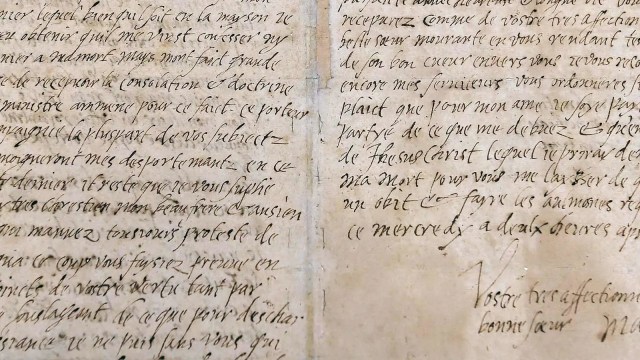
‘My True Final Letter’ was inspired by an article about Mary, Queen of Scots’ actual last letter on display at the National Library of Scotland. Why would her final writing be to her brother-in-law when surely her cousin, Elizabeth, Queen of England, must be first and foremost in her mind? 

For over two decades, Elizabeth had kept Mary as an enforced ‘guest’ across the country. Mary reigned as Queen of Scots from 1561 to 1567. However, she was forced to abdicate and flee to England after a rebellion by the protestant Scottish lords. Elizabeth, Queen of England, felt that her cousin threatened her position, yet for years managed to keep her alive in captivity. However, in February 1587, Mary was implicated in a plot to overthrow Elizabeth. Queen Elizabeth’s ministers insisted she sign her cousin’s death warrant. 

Note: Photographs from the National Library of Scotland
* TO LOVE A GENIUS

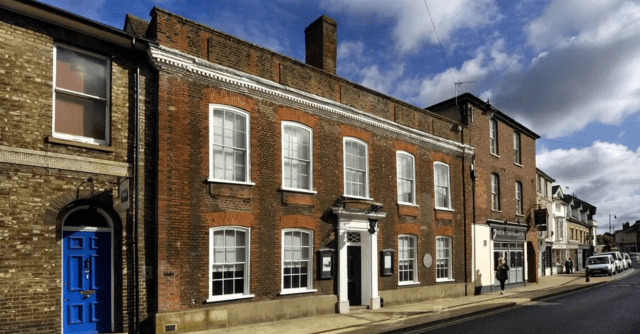
Down a narrow side street in a small market town in Suffolk is the entrance to the home of one of Britain’s most renowned artists – Thomas Gainsborough. Born in the town of Sudbury in 1727 the home of his birth and childhood is now a popular and iconic house / museum.

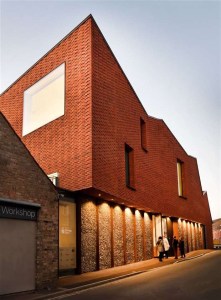
"Modern anglar, red brick building of new gallry space."

In the past few years, the ramshackle previous home has undergone a major refurbishment and it was with excitement and slight trepidation that I headed down the street, past the house from the 1400s to the new main entrance – a bold modern three-storey building.

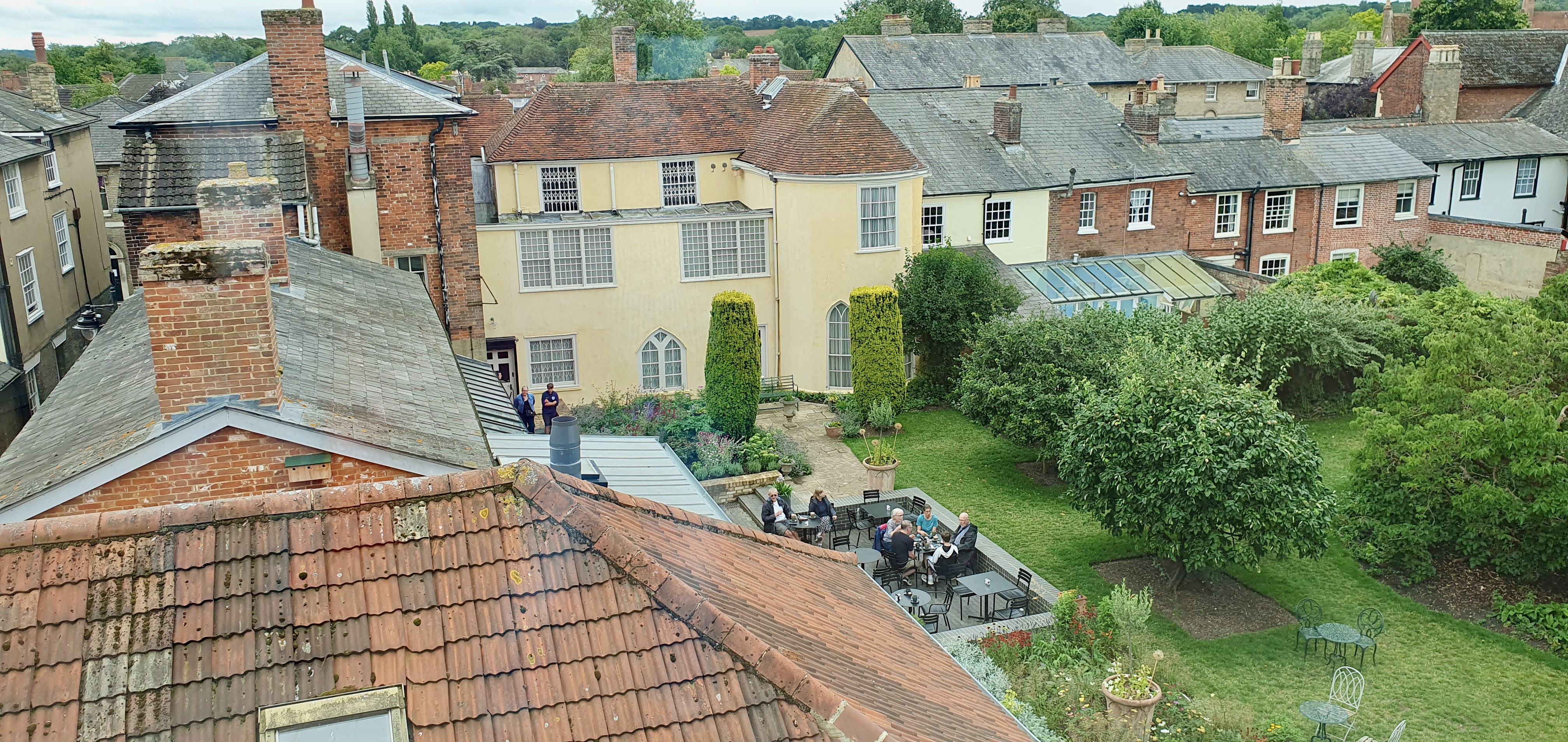
We were warmly greeted by staff and the new museum was explained in detail. First, we were advised to head to the top floor for panoramic views overlooking the town. What excellent advice and although I know the area well I could not help but be awed by the views of below and especially of the building and garden of our destination – Gainsborough’s House.

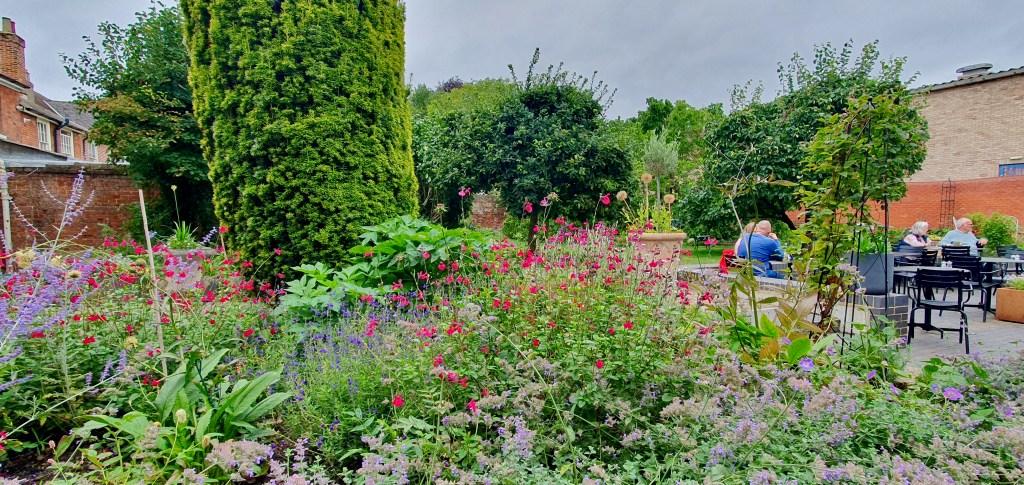
"View looking down onto the rear yellow of Gainsborough house, set behind pretty garden with patio seating area for cafe to the left."

Standing there, in the newest of buildings, looking out to one built six hundred years ago, one would expect incongruity, a clash of centuries, but the addition and changes blend thoughtfully and cohesively together.

Once downstairs, having seen a couple of extra exhibitions on the other floors, we pushed open the heavy dark door leading to the start of the visit proper.

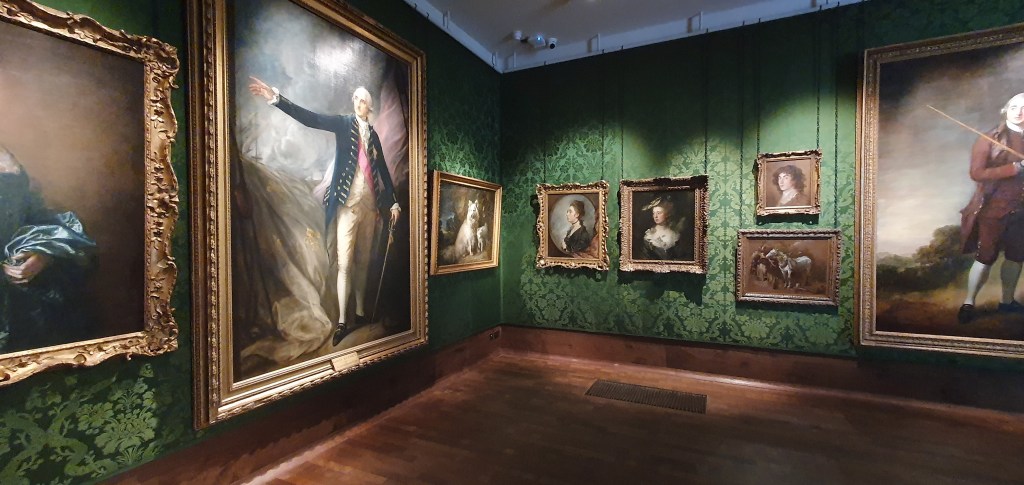
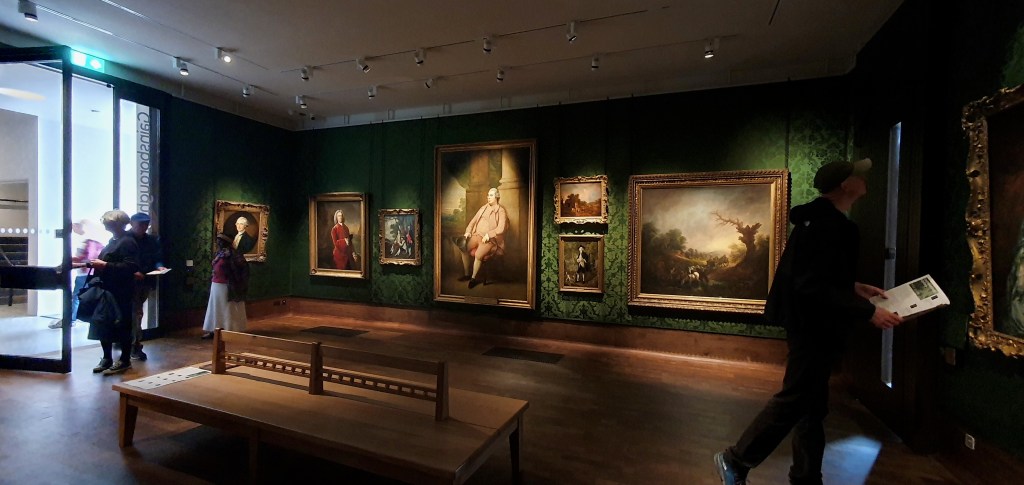
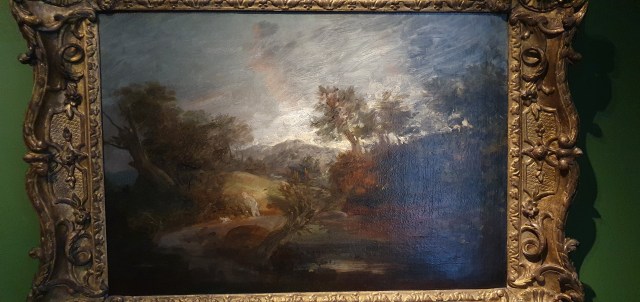
Initially, the dour gloom overwhelmed me before I took a sudden gasp of breath; within the gallery room hangs the most wondrous display of Gainsborough’s paintings.

I had seen many before and it is as if I were welcoming friends. They are perfectly lit.

"Landscape scene with big grey and red lit up sky, trees leaning to the left, hills in the disatnce."

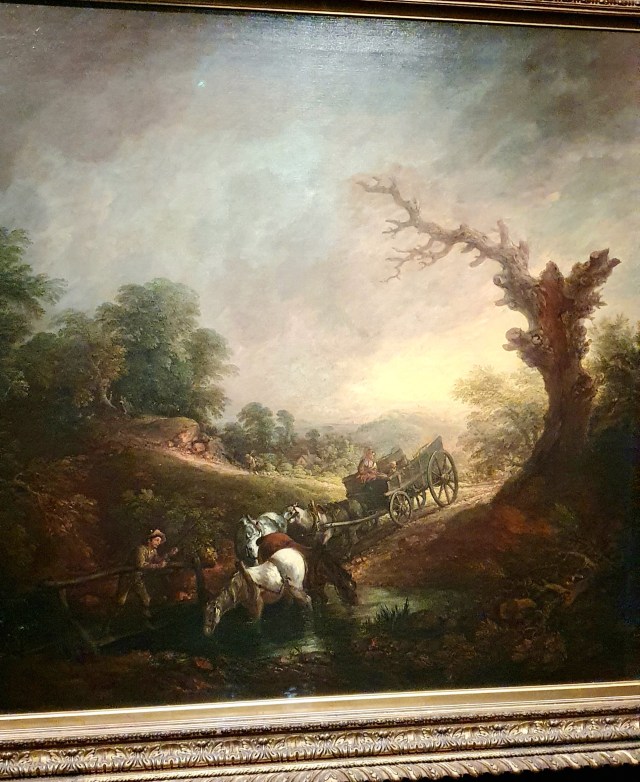
The heavenly light from the landscapes emits its own brightness and life.

"Beautiful close up of painting of horses and carriage, the horses drinking in the river, a man trying to encourage them on."

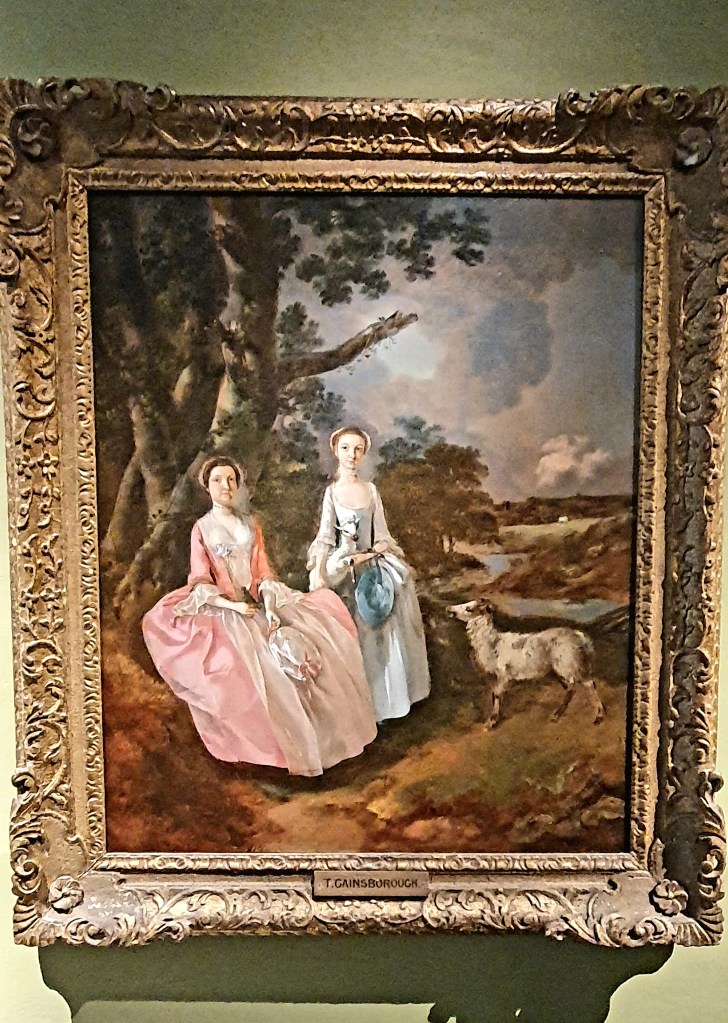
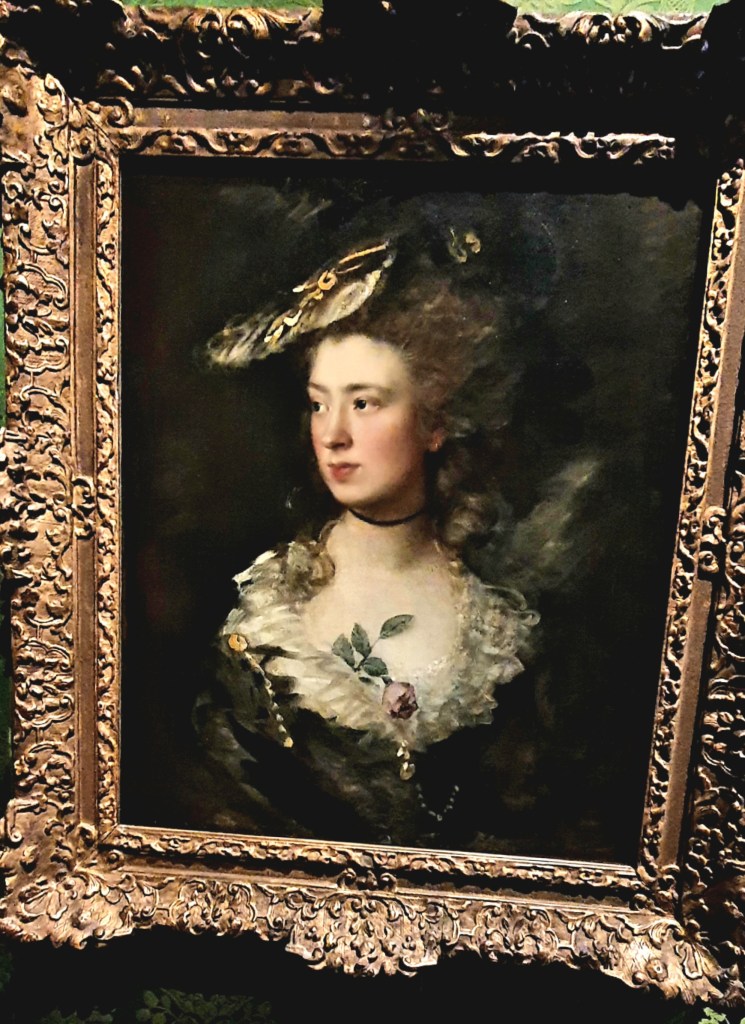
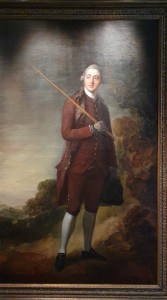
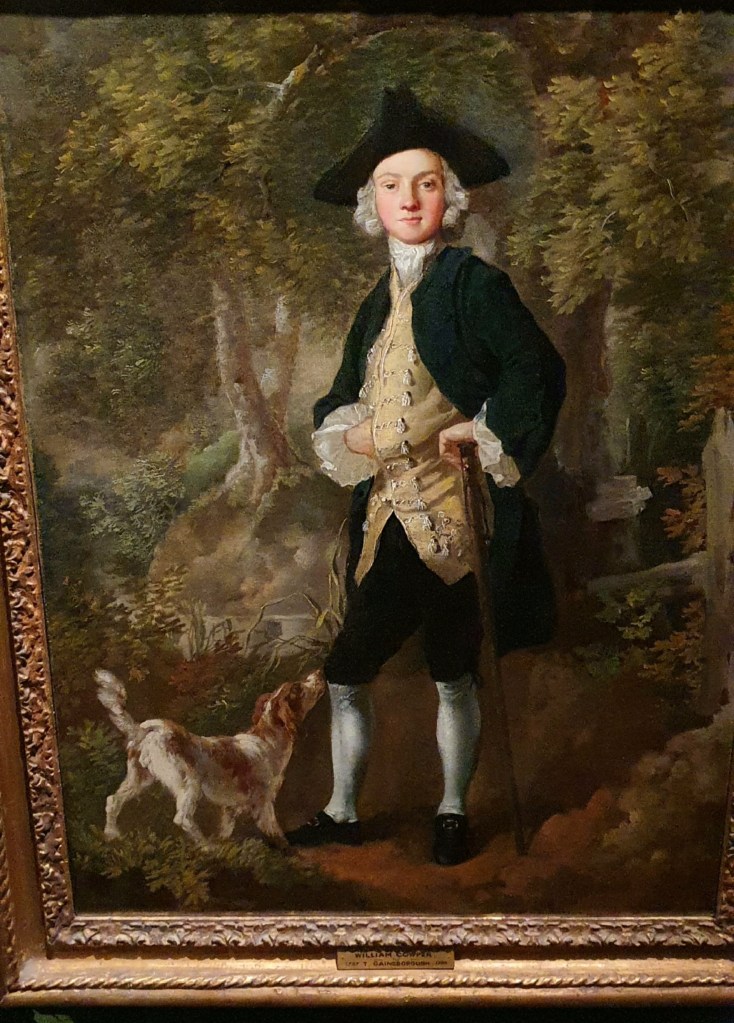
The portraits are exquisite, the women captured with depth and elegance.

The men display at times hidden pomposity, ensuring their grandeur and wealth are on display for all. One wonders how the artist had the patience with them all, only to learn he did not! Gainsborough did not enjoy having sitters and probably as a result turned out to be an extraordinarily fast painter.

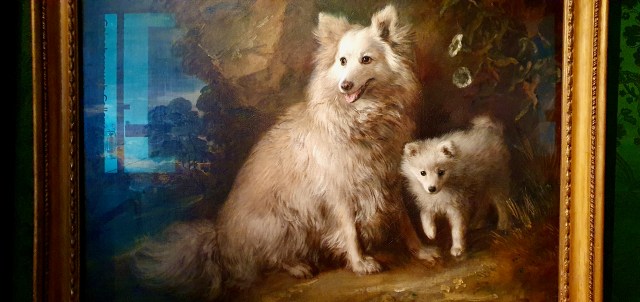
All around is such incredible art I can’t help but sit down in the tranquil reverential silence and absorb the magical beauty surrounding me, including the stunning painting of these two dogs, their eyes so full of life I felt they were about to come bounding out the picture.

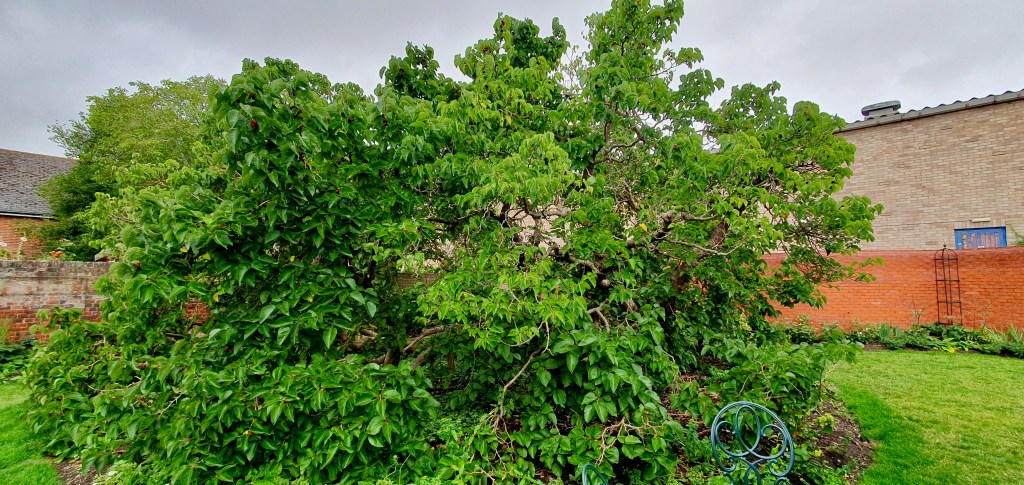
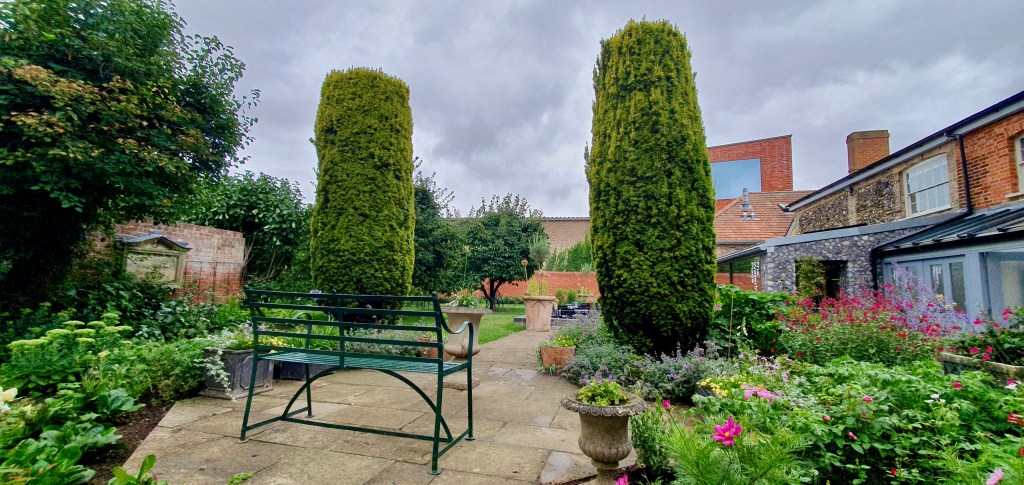
From this unexpected and dramatic introduction, we headed out to the serenity of the garden. Here an ancient four-hundred-year-old mulberry tree still bears fruit.

The yellow-painted house was just ahead and it was with intrigue I entered the house.

"Close-up of yellow facade of rear of house, showing the routund to the right, the red tils and three arch windows on the lower floor."

As Gainsborough’s House originally dates back to the medieval period some of the original beams from the era are visible. Also on show is an example of the style of the original build using wattle and daub (sticks & mud basically!). Gainsborough’s father, a merchant, ensured the family home was revamped in the modern Georgian style and much of the house remains as such.

On previous visits, the downstairs front room was a higgedly-piggledy collection of a tiny squashed cafe, a little shop corner and displays. Now the beautiful entrance hall leads us to the painting room.

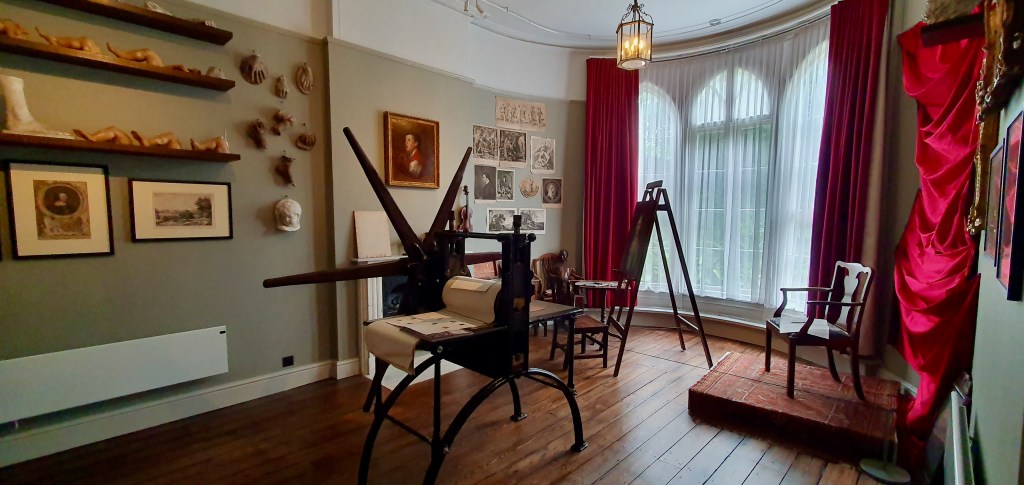
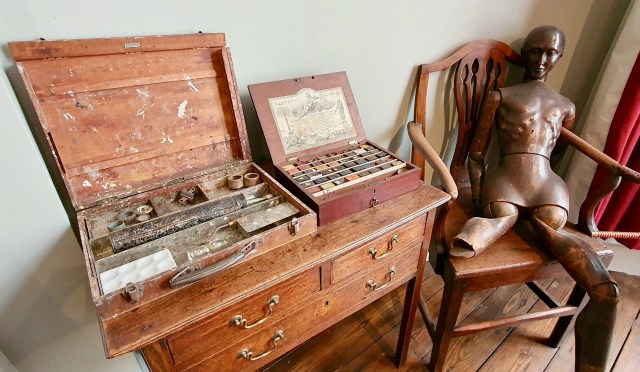
This is the contemporary interior of what would have been a typical studio. As was the norm it is north facing (to avoid issues with changeable shadows through the day) and the room contains a rich array of artefacts. An easel with a canvas by Thomas Gainsborough’s nephew Thomas Gainsborough DuPont, who was the artist’s only assistant, is casually on display while nearby artist’s brushes are set on a wooden table ready to be picked up and used.

"Wooden wooden chest of drawers and on top two boxes, one of traditional  painting tools the other of painting blocks. A metal manaqun rest on a chair next to this."

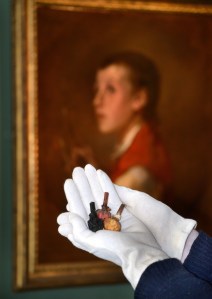
A glass case houses a unique collection of paint bladders – these are small animal bladders which contained the artist’s paint and a wooden stopper to ensure they were kept fresh. A large selection of these were found in the attic and there is good reason to believe they belonged to Gainsborough himself.

"Three colourful painters bladders held by curator with white gloves."

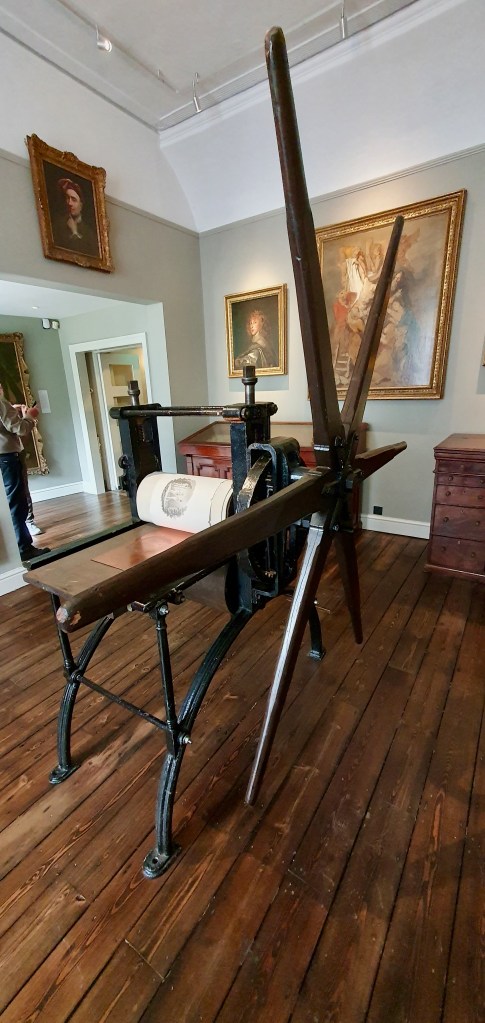
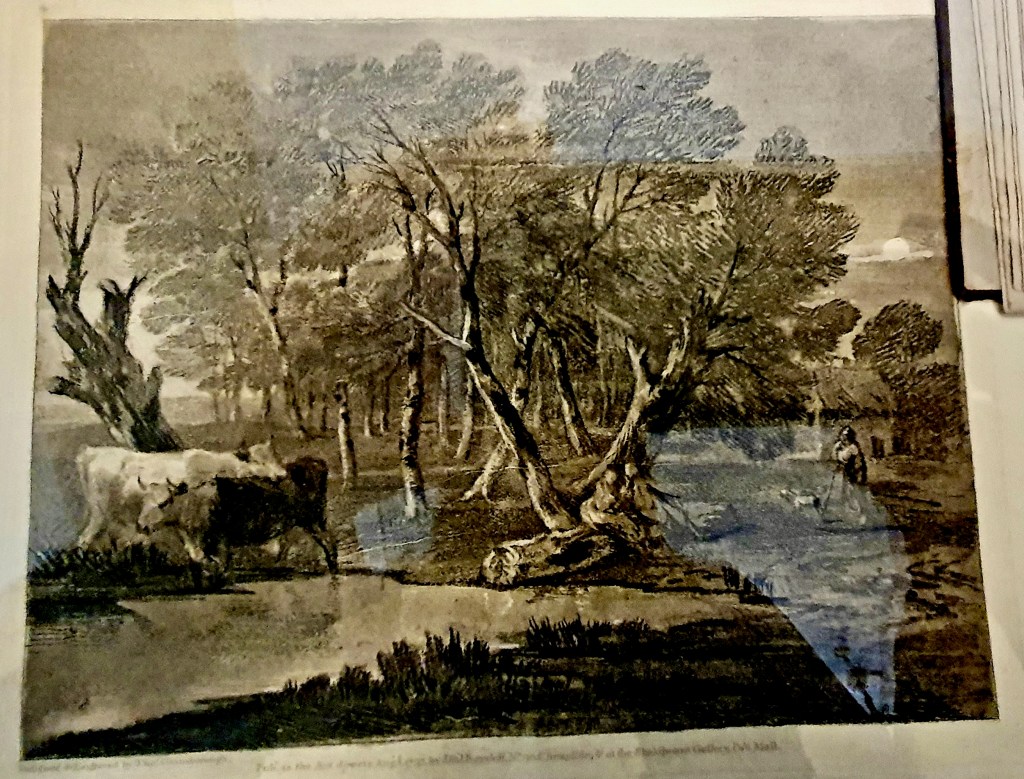
In the middle of the room is a most magnificent Star Printer which creates pictures from copper plate etchings and there is a stunning one made by Gainsborough on display.

Walking around the house one cannot help but reflect what it would have been like for Gainsborough to grow up here. His passion for painting was nurtured and encouraged by his father and Gainsborough was allowed to leave for London to learn more about the craft aged thirteen. His passion for nature, particularly the county countryside, is evident in his work although he turned to portraits, partly as a necessity to earn a living and he was a great admirer of Van Dyck’s work which is reflected in his paintings.

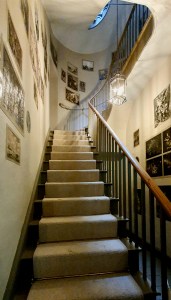
"Tall staircase leading up, pictures of paintings stuck onto the walls."

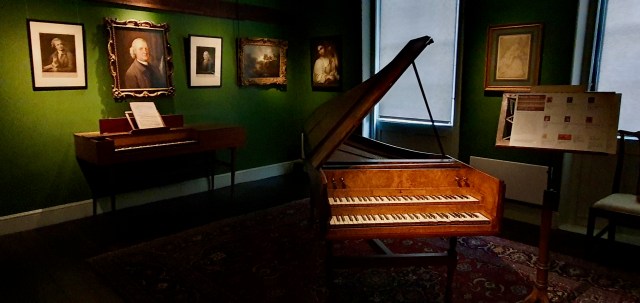
Gainsborough’s other love was music and the Music Room upstairs, which is accessed by the elegant and sweeping staircase, houses the country’s only double-manual harpsichord and this dates from 1738.

"Harpsicord, like a grand piano but smaller, the top lid open and on the green walls many paintings."

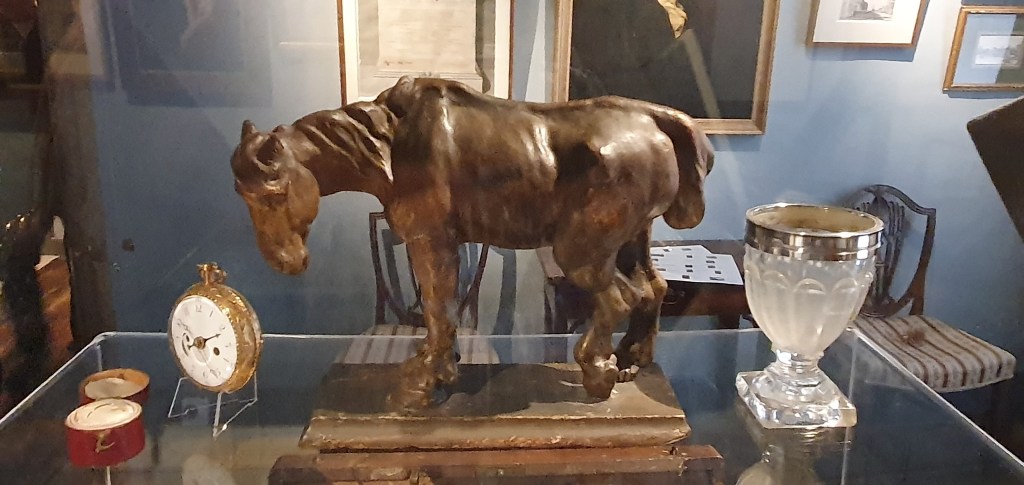
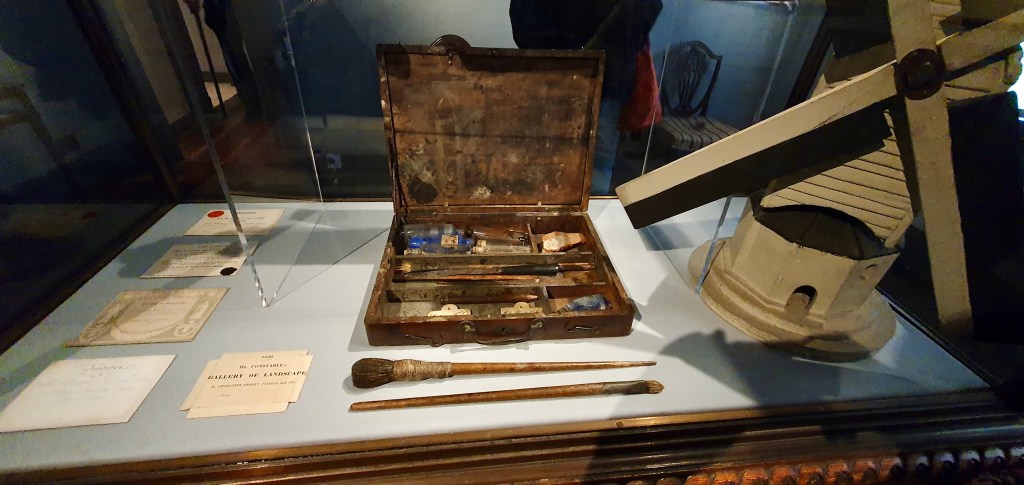
In the Constable room several of this other famous artist’s work is on display. John Constable was a close friend of Gainsborough and is said to have been influenced by Gainsborough creatively. Constable’s landscapes are legendary and great to see some of the smaller ones here. A case displays some of John Constable’s original set of brushes and also one of the artist’s most treasured items, a model of a horse made by Gainsborough.

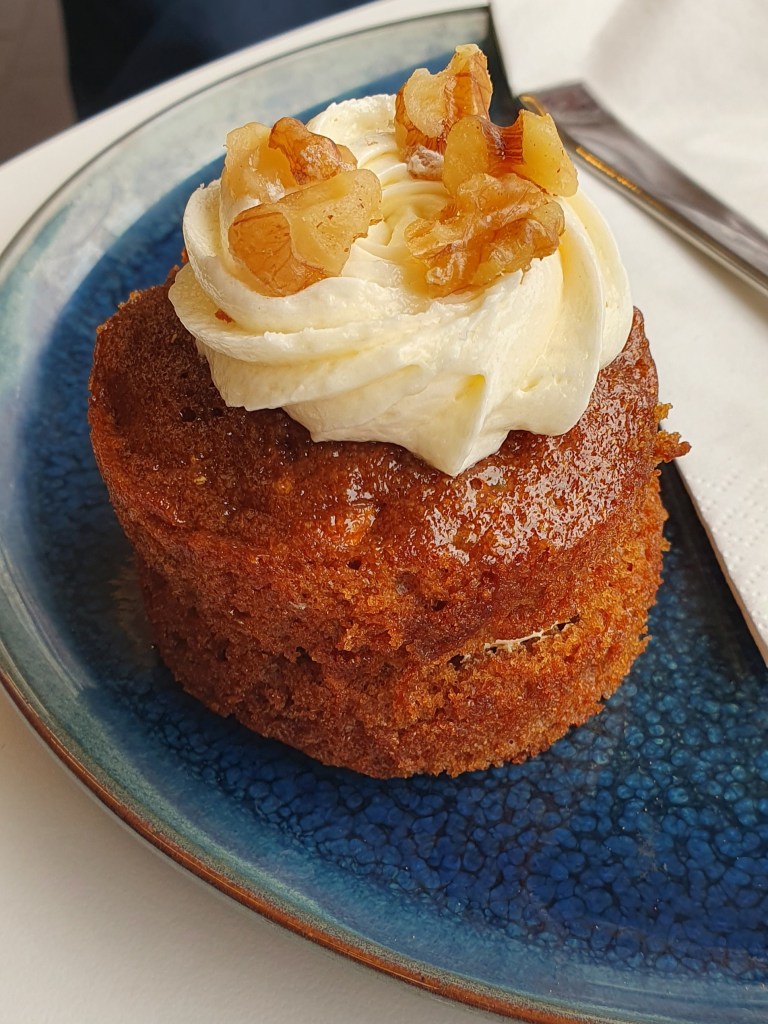
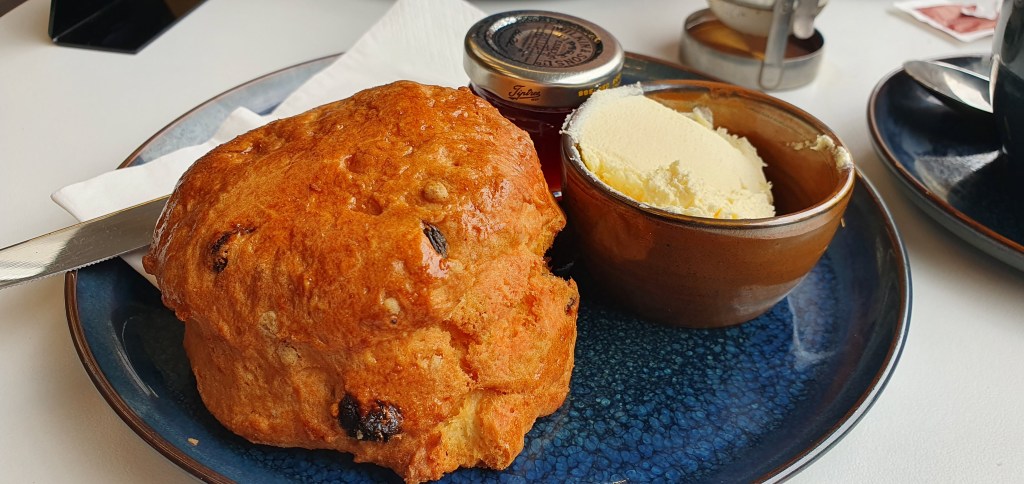
With our hearts and minds replete with art and history we headed back to the garden and the new cafe. In harmonious quiet we contemplated the incredible history on our doorstep, the stunning art in such a close and intimate setting, all in the original home of the great artist. Mulling over the visit, we turned around and laughed – as we enjoyed our cakes we noticed another Gainsborough hanging nonchalantly behind us!

* “We love a genius for what he leaves and mourn him for what he takes away.” Thomas Gainsborough

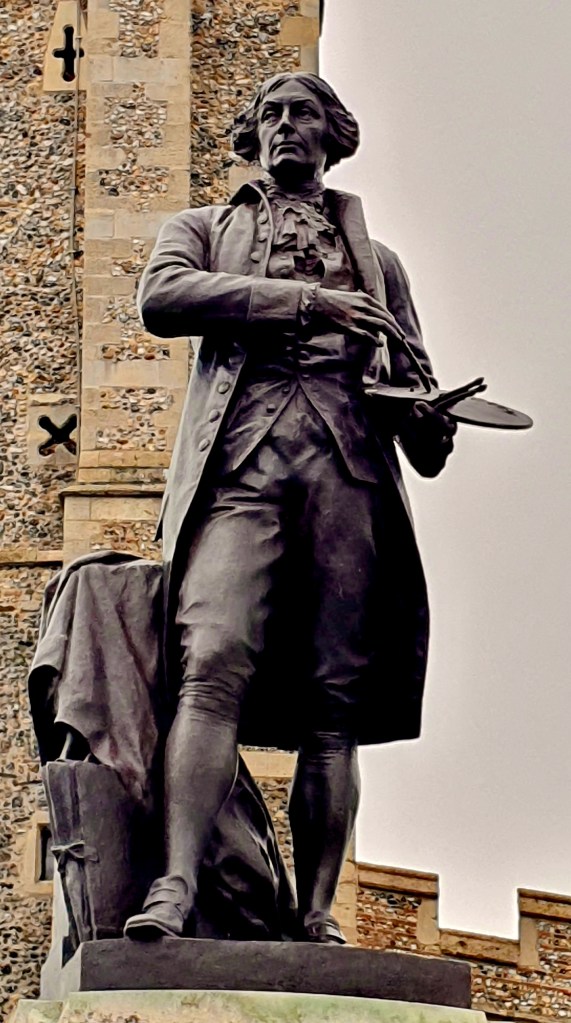
Bronze statue of Gainsborough in a long overcoat, open to reveal his waist coat and cravat, as he looks over the market square in Sudbury, towards Gainsborough House, pausing from painting and resting a brush on the palette.

“As we look at his pictures we find tears in our eyes and know not what brings them.” John Constable

HOMAGE (to an old Oak)

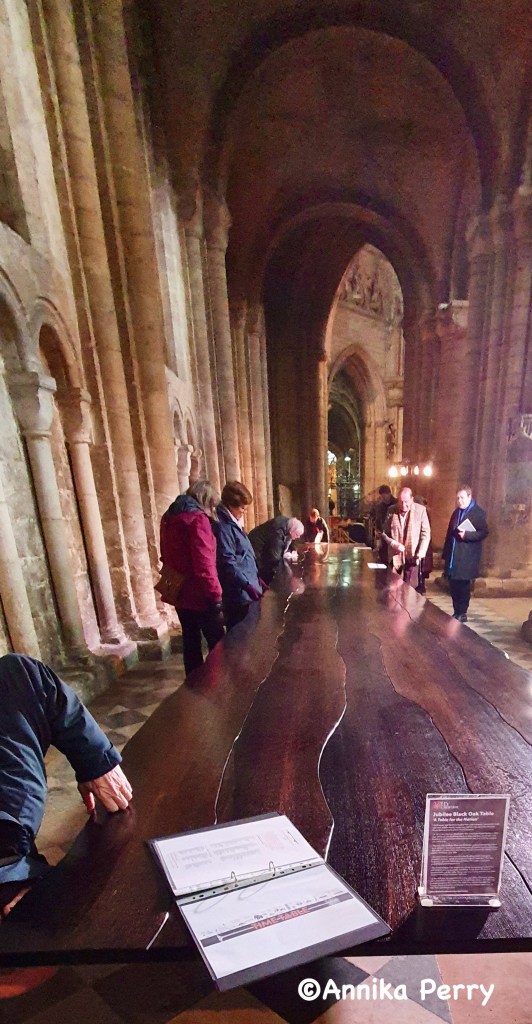
"My photo of the Jubilee Oak Table in Ely Cathedral. It is taken from one end and one can see the full length down. At the furthest end a group of visitors are gathered, touching the table, peering underneath, reading information leaflets. The table is set in the expanse of the cathedral with lofty stone arches all around."

HOMAGE (to an old Oak)

Beneath God’s arches resides the travelling table,
Its glistening onyx boards a contradiction.

After all, it should not be here,
how is it possible
after its 5000-year journe
y?

One fair day as the Stone Age drew to a close
an acorn took root amongst the giant oak forests
in the East Anglian Fenlands.

As the moon cast its ethereal light
upon the monumental 60-metre trees
the sapling flourished.

It joined the canopies of the other oaks
Shrouding the people beneath
Protecting, becoming part of their landscape.

This, the Jubilee Oak, was indestructible.
Until the world altered.
Until the sea levels rose.
Roots loosened, it crashed
To its airless grave.

Untouched for five millennia
Resting in the pitch black of peat
A preserver.
Untouched until the 21st Century,
When at last
Unearthed!

Fourteen metres of black oak
released from its shroud of earth
Fourteen metres of jet-black oak trunk
Survived, intact.

The magical fusion of the ground’s iron and
the tree’s tannins
creating the black in the oak
ensuring this holy grail of wood.

Experts consulted, advised and directed,
a sawmill from Canada flew to help
To saw on site
Ten perfect consecutive boards.

With the craft of carpentry
the combination of skill and passion
the unity of artistry and knowledge
ALL paid HOMAGE to the beloved Oak Tree

A table designed, boards planed and dried.
The Table for the Nation completed.

In majesty, it resides beneath God’s arches.

Now it is time to pay OUR respects.

In reverential silence, visitors gaze upon the table,
making a pilgrimage along its length
Then back up on the other side.

Fingers caressing the boards, eyes admiring the sheen
of darkness. A play of light and dark,
An incongruous anomaly in reality.

Now and then people bend down,
Admiring the copper sheath below,
Then up they appear,
once again walking along
tracing the winding mysterious curves of the boards

Sweeping curves mirroring
the expansive Fenland Landscape,
as sweeping as the sea that failed to devour it.

The black oak
Present
In all its glory.

©Annika Perry, June 2023

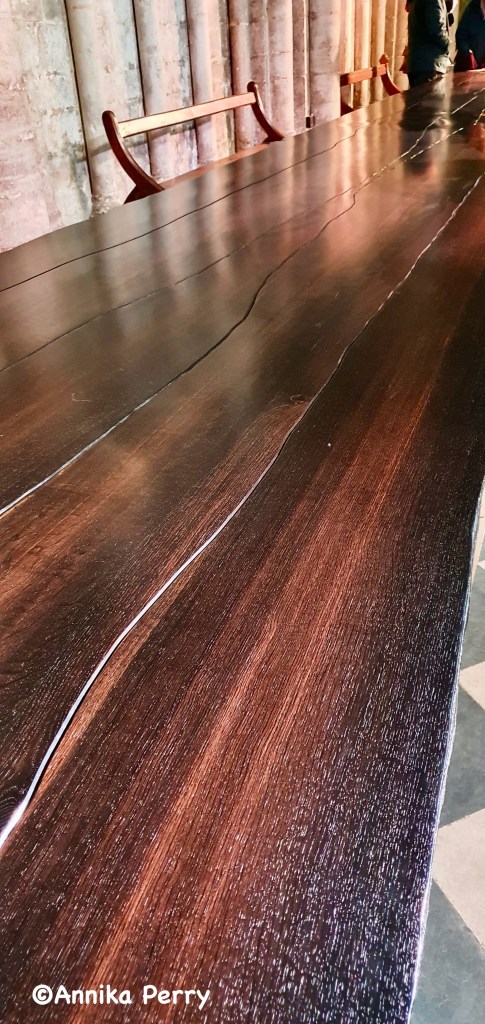
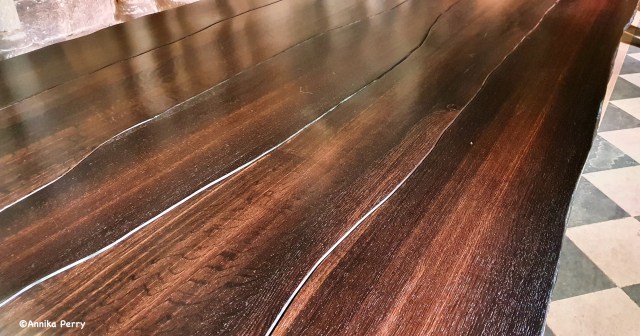
"A close-up of the table showing the beautiful patina of the wood."

Note: The above post was inspired by a visit to view the Jubilee Oak tree while it was in residency at Ely Cathedral, Cambridgeshire, UK. (It is currently at Rochester Cathedral, Kent.) The table was unveiled in honour of HM Queen Elizabeth II in 2022, the year of the Platinum Jubilee and hence its name.

The ancient oak trees grew to a height of 60 metres (197 feet) and dwarf oaks of today whose average height is about 20 metres (65 feet).

Read more about The Fenland Black Oak Project here.

"A cross-section of the table, showing the varying sheen of dark to light brown surface and highlighting the beautiful sweeping planed wood."