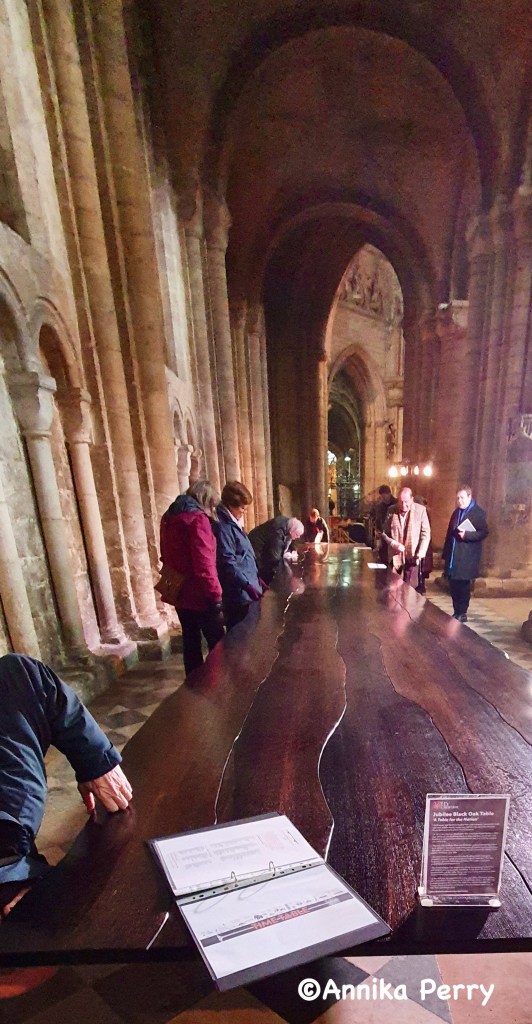
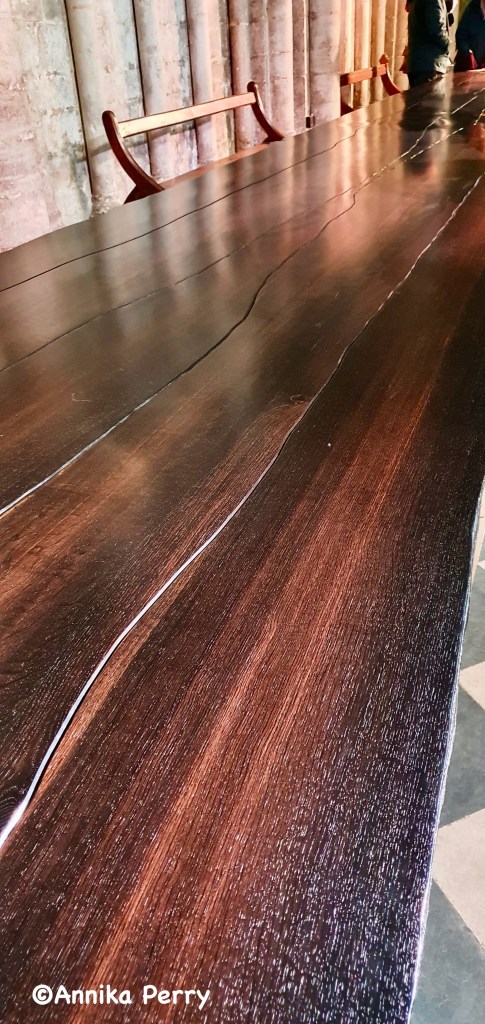
Beneath God’s arches resides the travelling table, Its glistening onyx boards a contradiction.
After all, it should not be here, how is it possible after its 5000-year journey?
One fair day as the Stone Age drew to a close an acorn took root amongst the giant oak forests in the East Anglian Fenlands.
As the moon cast its ethereal light upon the monumental 60-metre trees the sapling flourished.
It joined the canopies of the other oaks Shrouding the people beneath Protecting, becoming part of their landscape.
This, the Jubilee Oak, was indestructible. Until the world altered. Until the sea levels rose. Roots loosened, it crashed To its airless grave.
Untouched for five millennia Resting in the pitch black of peat A preserver. Untouched until the 21st Century, When at last Unearthed!
Fourteen metres of black oak released from its shroud of earth Fourteen metres of jet-black oak trunk Survived, intact.
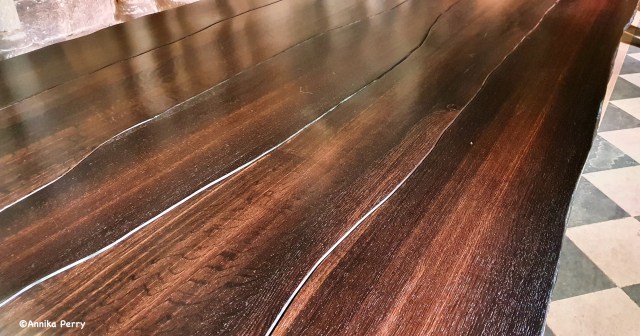
The magical fusion of the ground’s iron and the tree’s tannins creating the black in the oak ensuring this holy grail of wood.
Experts consulted, advised and directed, a sawmill from Canada flew to help To saw on site Ten perfect consecutive boards.
With the craft of carpentry the combination of skill and passion the unity of artistry and knowledge ALL paid HOMAGE to the beloved Oak Tree
A table designed, boards planed and dried. The Table for the Nation completed.
In majesty, it resides beneath God’s arches.
Now it is time to pay OUR respects.
In reverential silence, visitors gaze upon the table, making a pilgrimage along its length Then back up on the other side.
Fingers caressing the boards, eyes admiring the sheen of darkness. A play of light and dark, An incongruous anomaly in reality.
Now and then people bend down, Admiring the copper sheath below, Then up they appear, once again walking along tracing the winding mysterious curves of the boards
Sweeping curves mirroring the expansive Fenland Landscape, as sweeping as the sea that failed to devour it.
Note: The above post was inspired by a visit to view the Jubilee Oak tree while it was in residency at Ely Cathedral, Cambridgeshire, UK. (It is currently at Rochester Cathedral, Kent.) The table was unveiled in honour of HM Queen Elizabeth II in 2022, the year of the Platinum Jubilee and hence its name.
The ancient oak trees grew to a height of 60 metres (197 feet) and dwarf oaks of today whose average height is about 20 metres (65 feet).
Read more about The Fenland Black Oak Project here.
We left without fanfare, a couple pulling out of the drive without a fuss. The ado was all within me, here an orchestra was in mid-flow, a crescendo of excitement, a flurry of violins, the brass instruments joining in! As we turned down the road did I spot a bagpiper wishing us farewell?!
Our first trip away for nearly two years already felt surreal and mirrored my many dreams of this moment. Days earlier it was with disbelief that the suitcases found their way down from the loft, the cool box washed and aired! My packing list was referred to repeatedly (yet how did I forget my Kindle which later resulted in a magical time surrounded by books in the local W H Smith’s!)
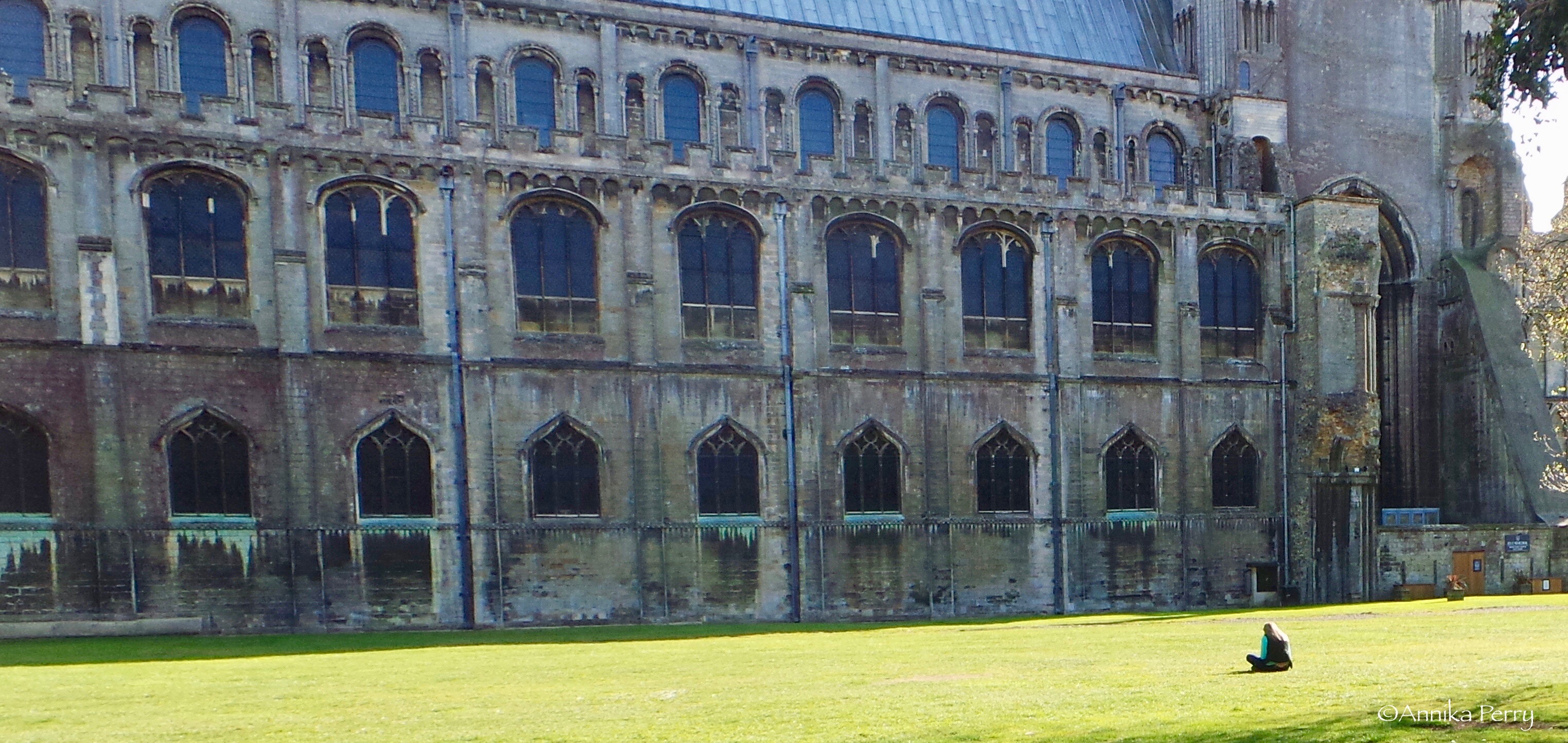
The origins of Ely Cathedral reach back to 672 when Etheldreda, daughter of Anna, king of East Anglia, founded an abbey on the site. It flourished for 200 years until it was destroyed by the Danes. In 970 it started again as a Benedictine community.
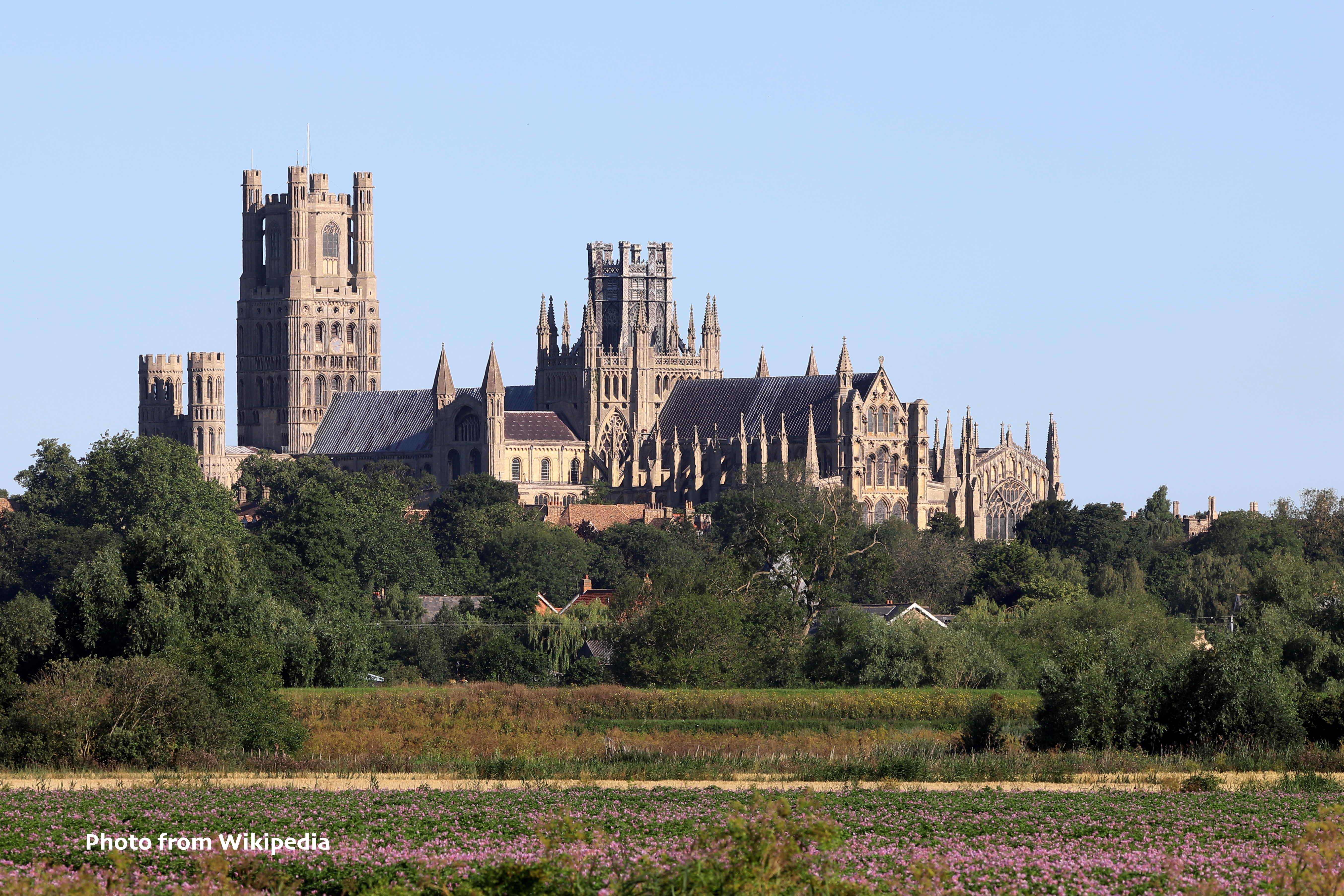
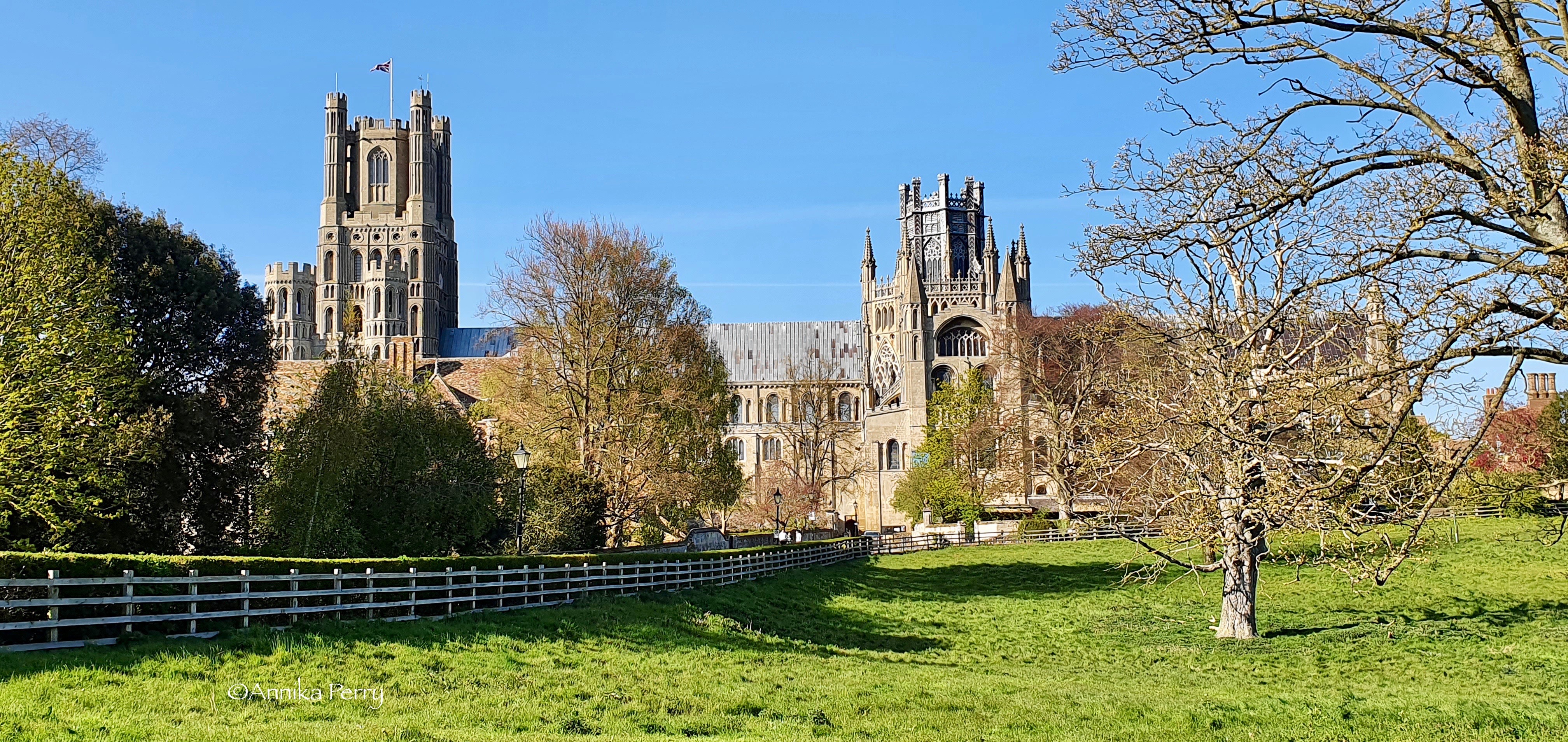
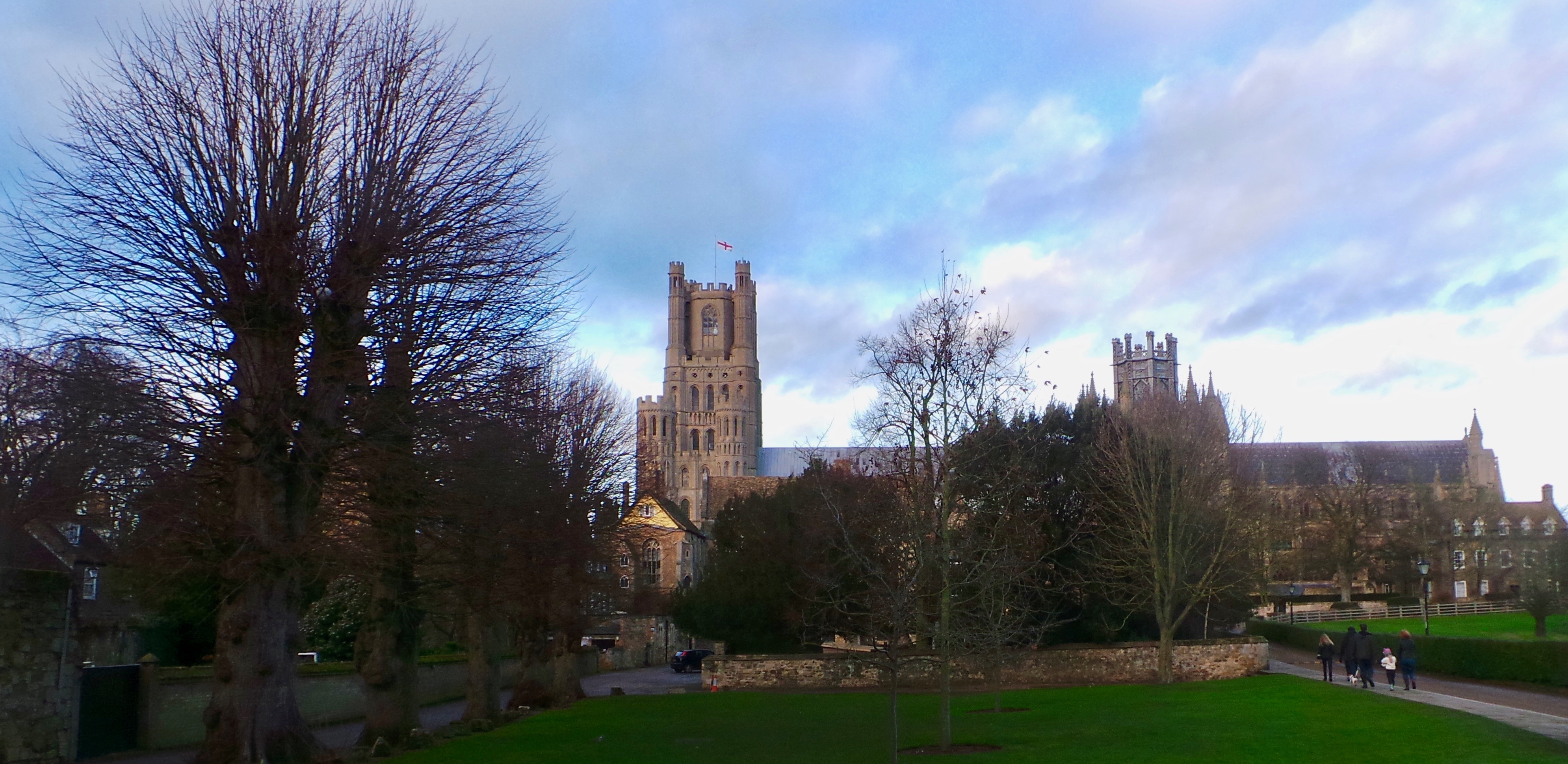
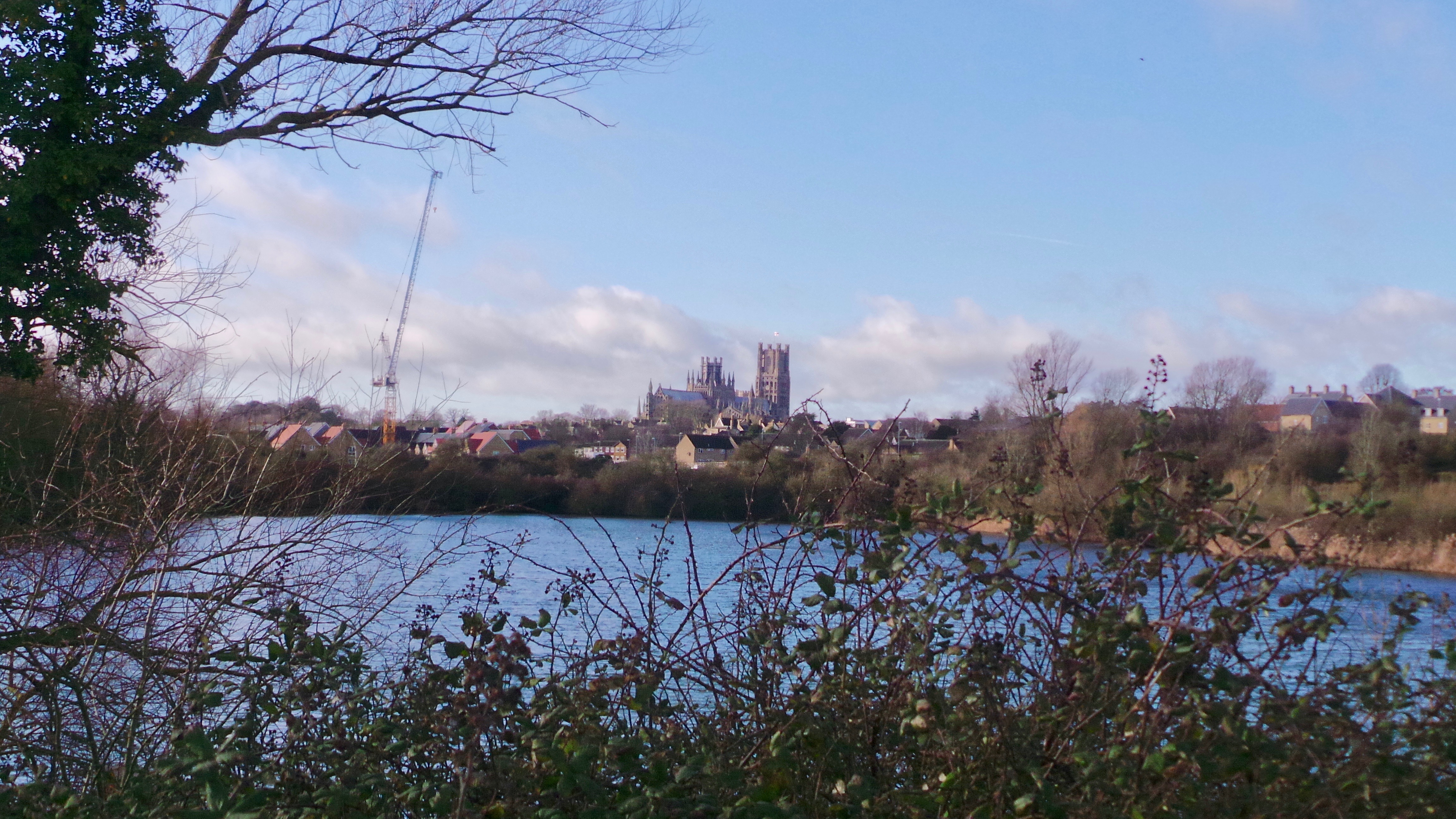
From afar the cathedral of Ely dominated the skyline, a glorious breathtaking sight, an architectural wonder! A constant as we approached the city and how it must have seemed a miraculous creation to the citizens nearly a thousand year ago.
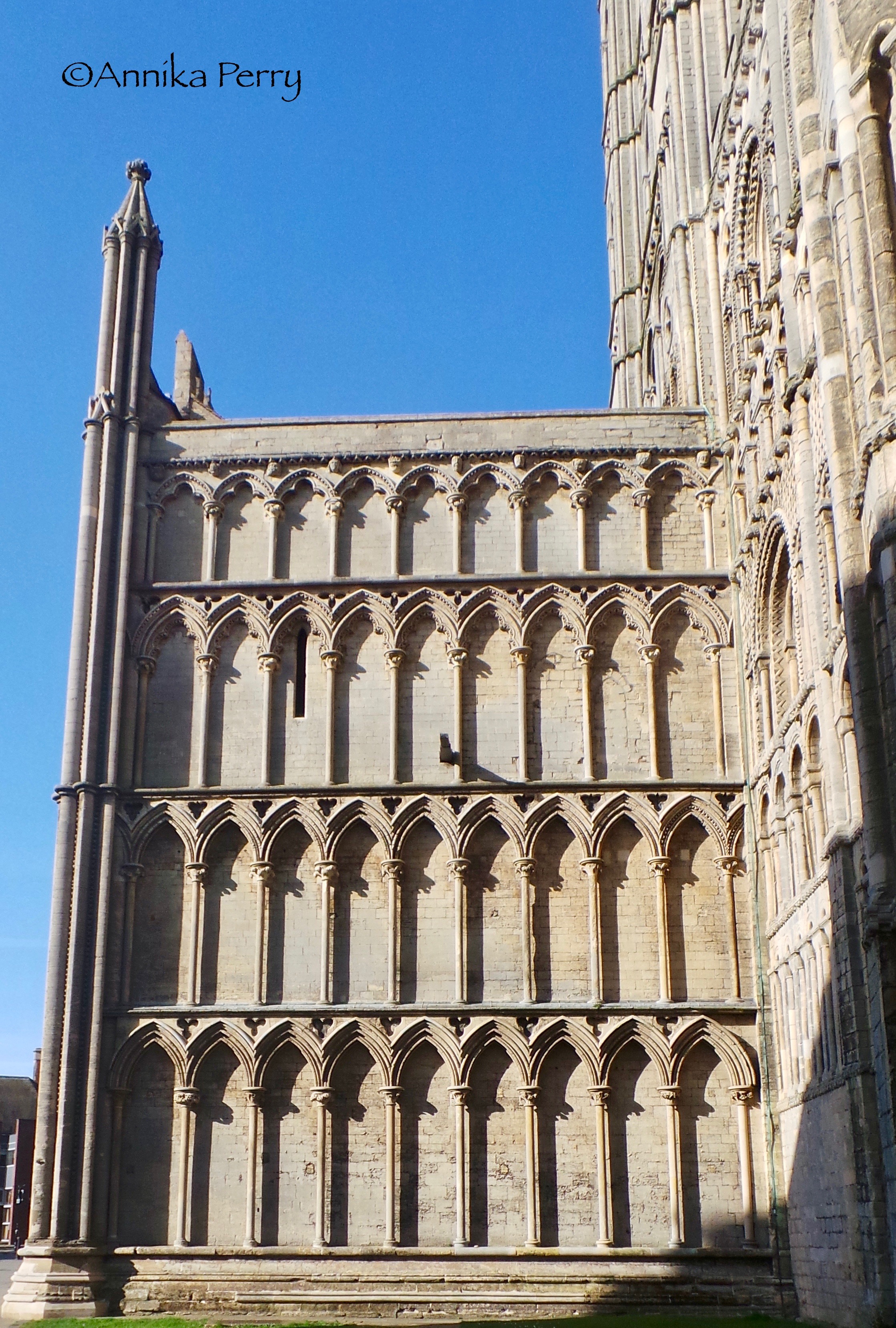
The current cathedral dates back to 1083 when it was rebuilt under leadership of Abbot Simeon. Work began when he was 90 years old!The monastic church became a cathedral in 1109.
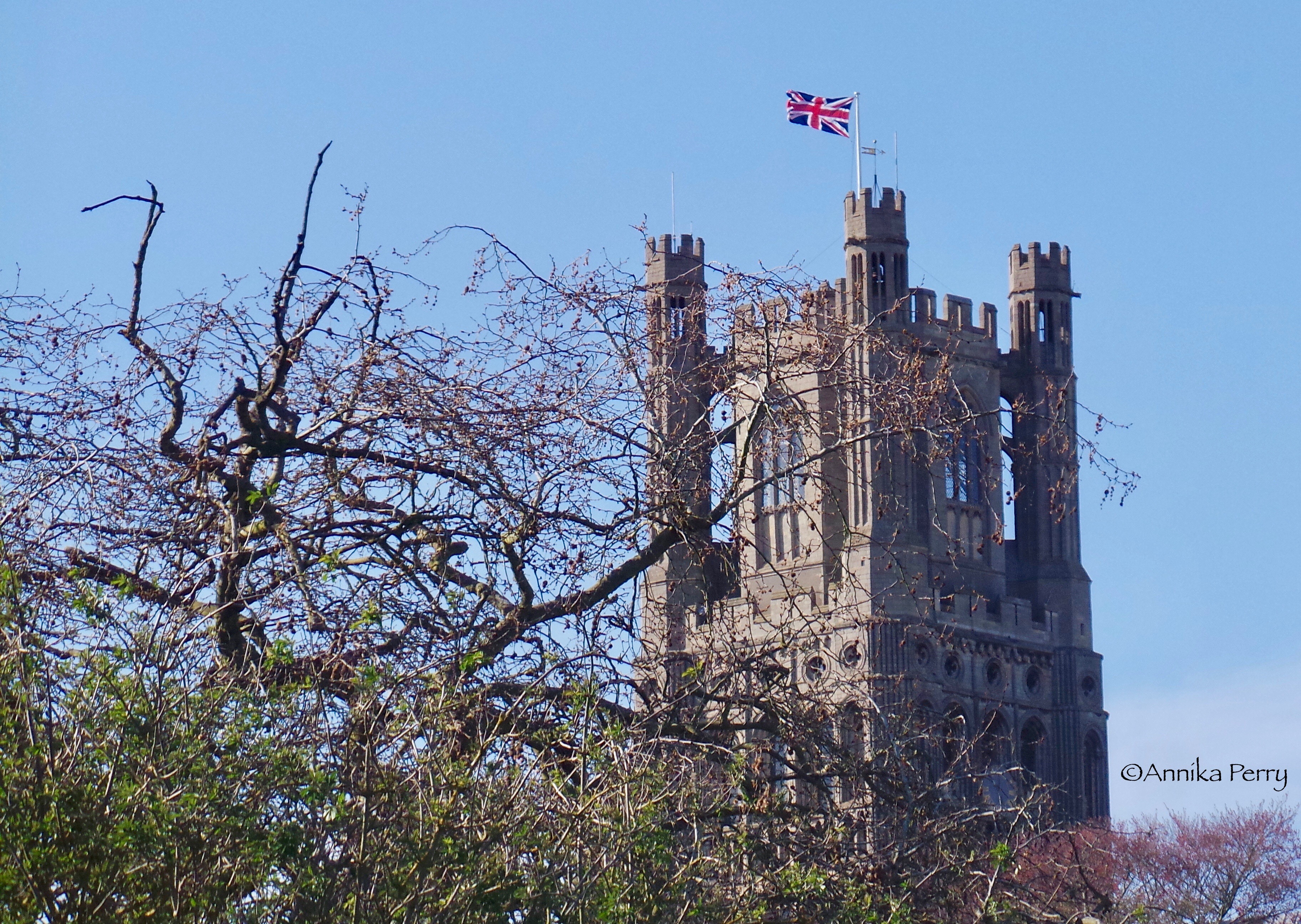
The West Tower was completed under Bishop Geoffrey Ridel (1174-89)
The monastery at Ely was dissolved in Ely by Henry VIII in 1539. It suffered less than many other monasteries yet countless statues were destroyed together with carvings and stained glass.
The cathedral was refounded in 1541. The first major restoration took place in the eighteenth century, then in 1839 and lastly in 1986, completed in 2000.
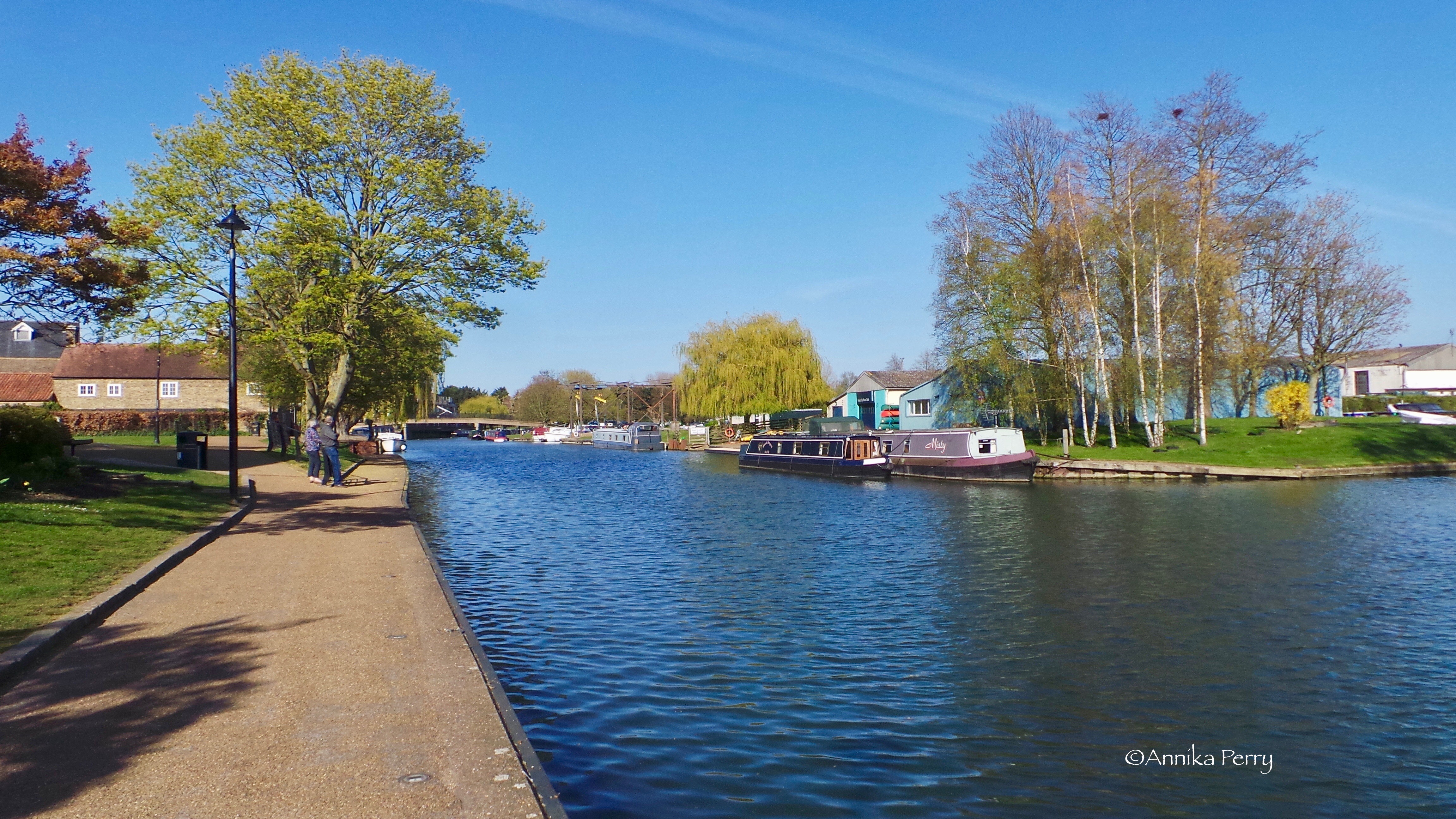
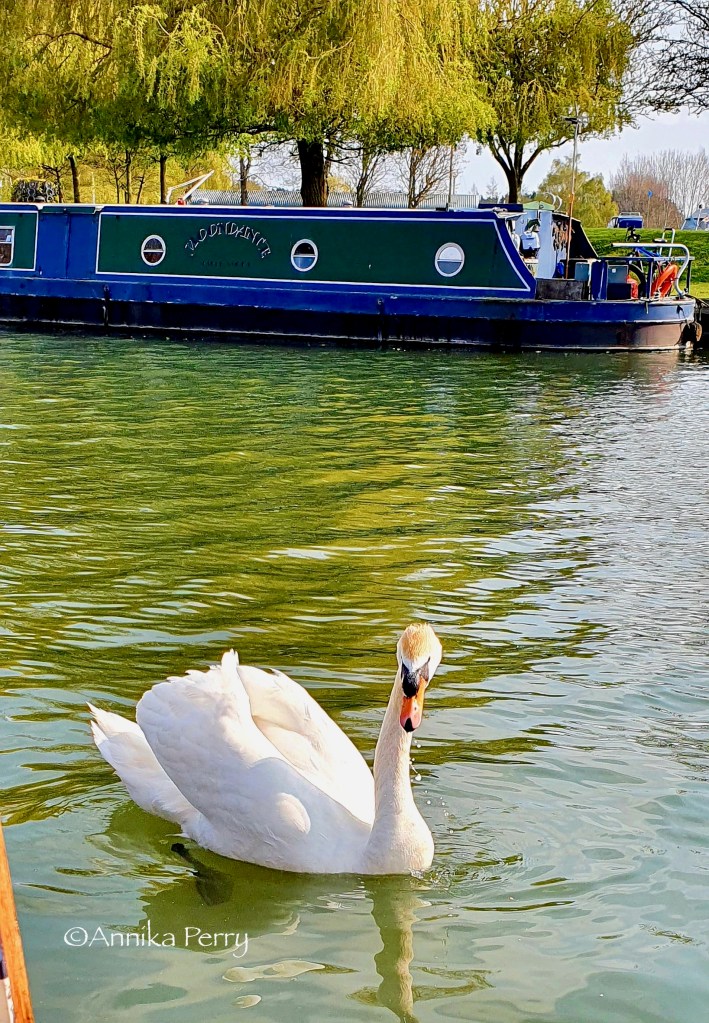
Along with the cathedral the River Great Ouse is the heart of Ely and it was here we headed upon our arrival. We took a gentle stroll along the promenade of canal boats and pubs, through the park to the fields beyond. To one side the river, beauty of the natural world, to the right the regular rumble of trains, in between we walked a parallel path. The honks of swans and the hoots of trains became the backdrop to our stay. Our stay on a canal boat.
Ely is an ancient Cambridgeshire city that lies on an ‘island’ in the Fens which were mostly drained in 1630-52.
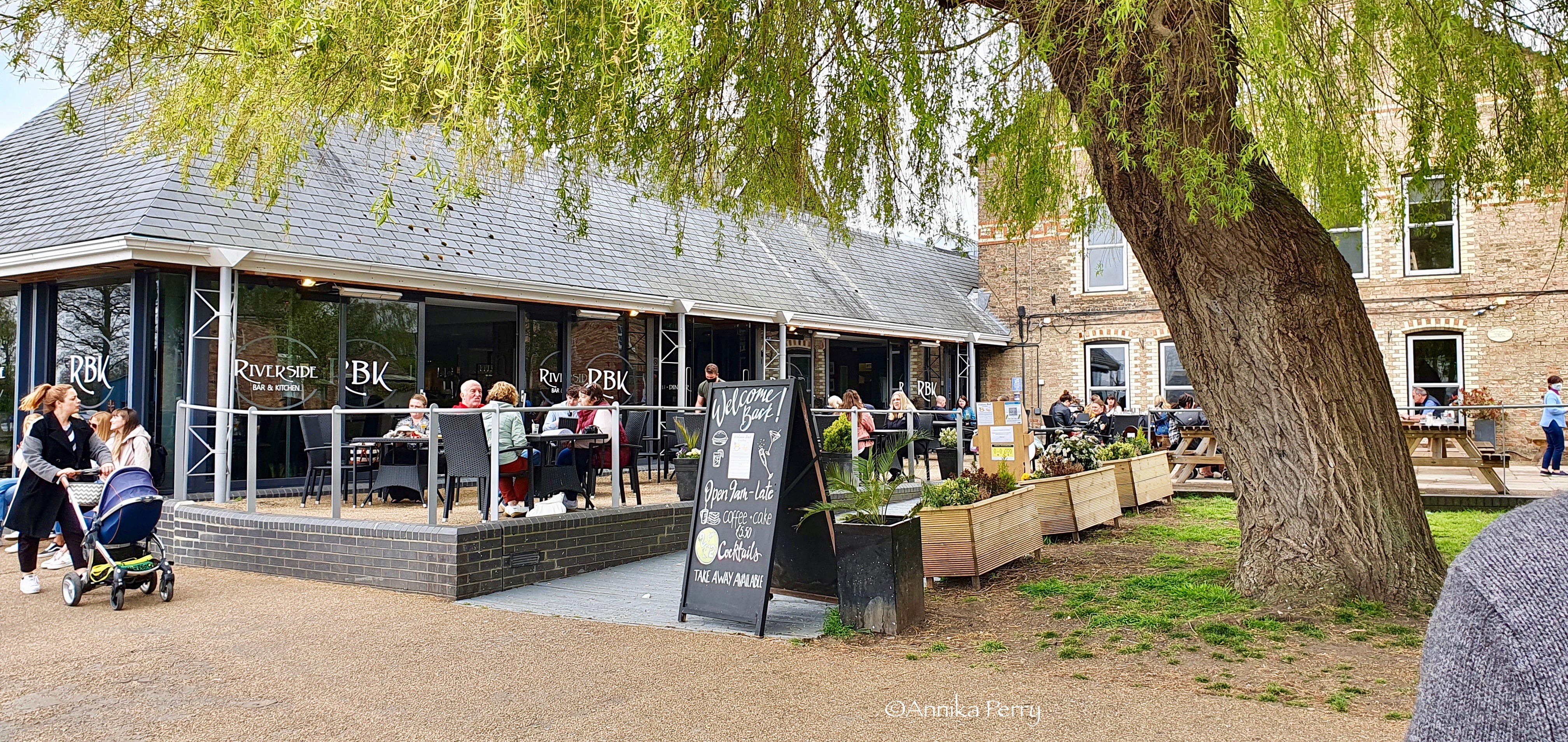
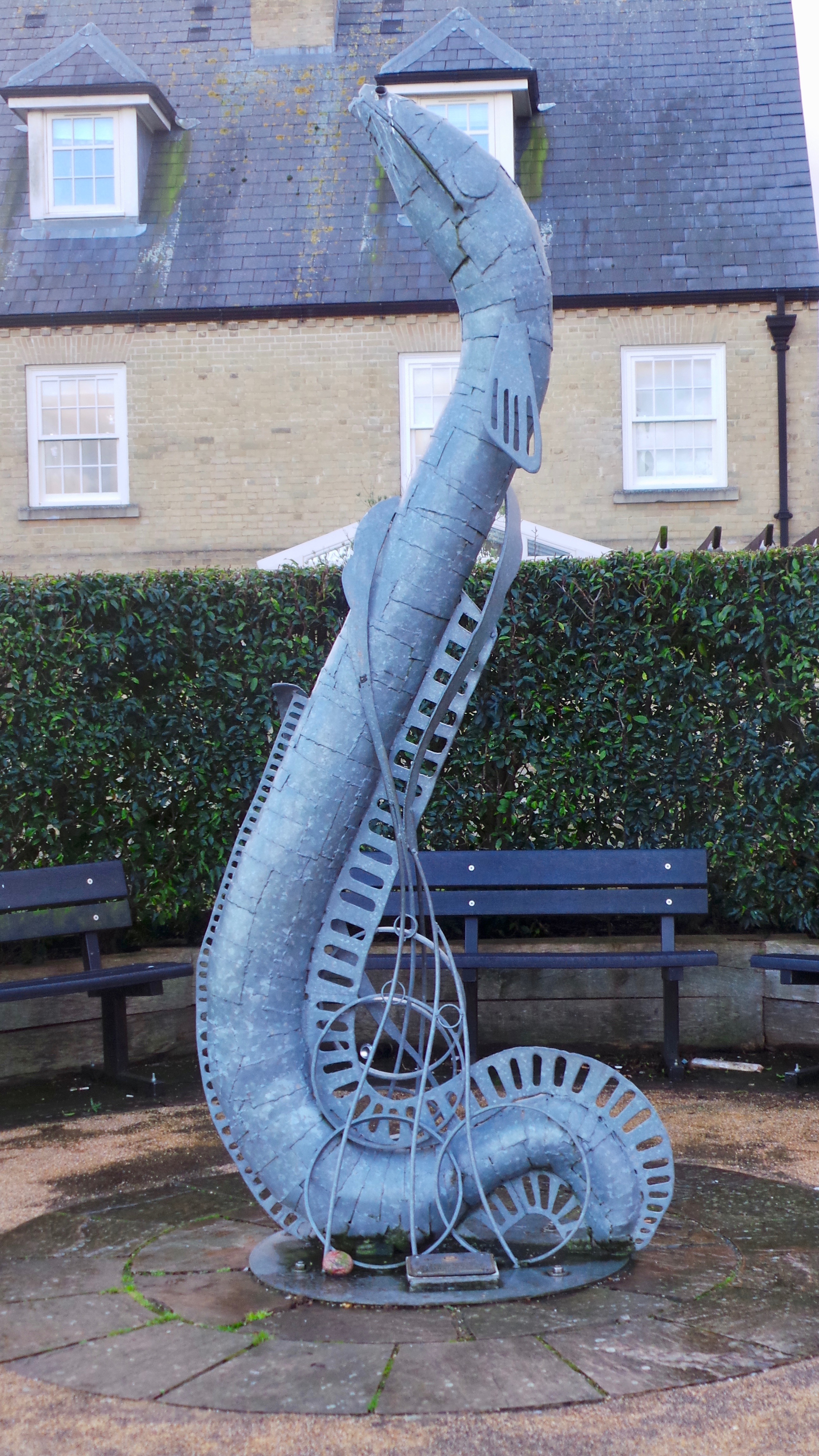
Yet time tick tocked by and now my husband picked up the pace, a short cut through the woods became a long lost way past shops and houses. Ahh … there was the Jubilee Park and its famous Eel statue. There was the goal … The Riverside Restaurant!
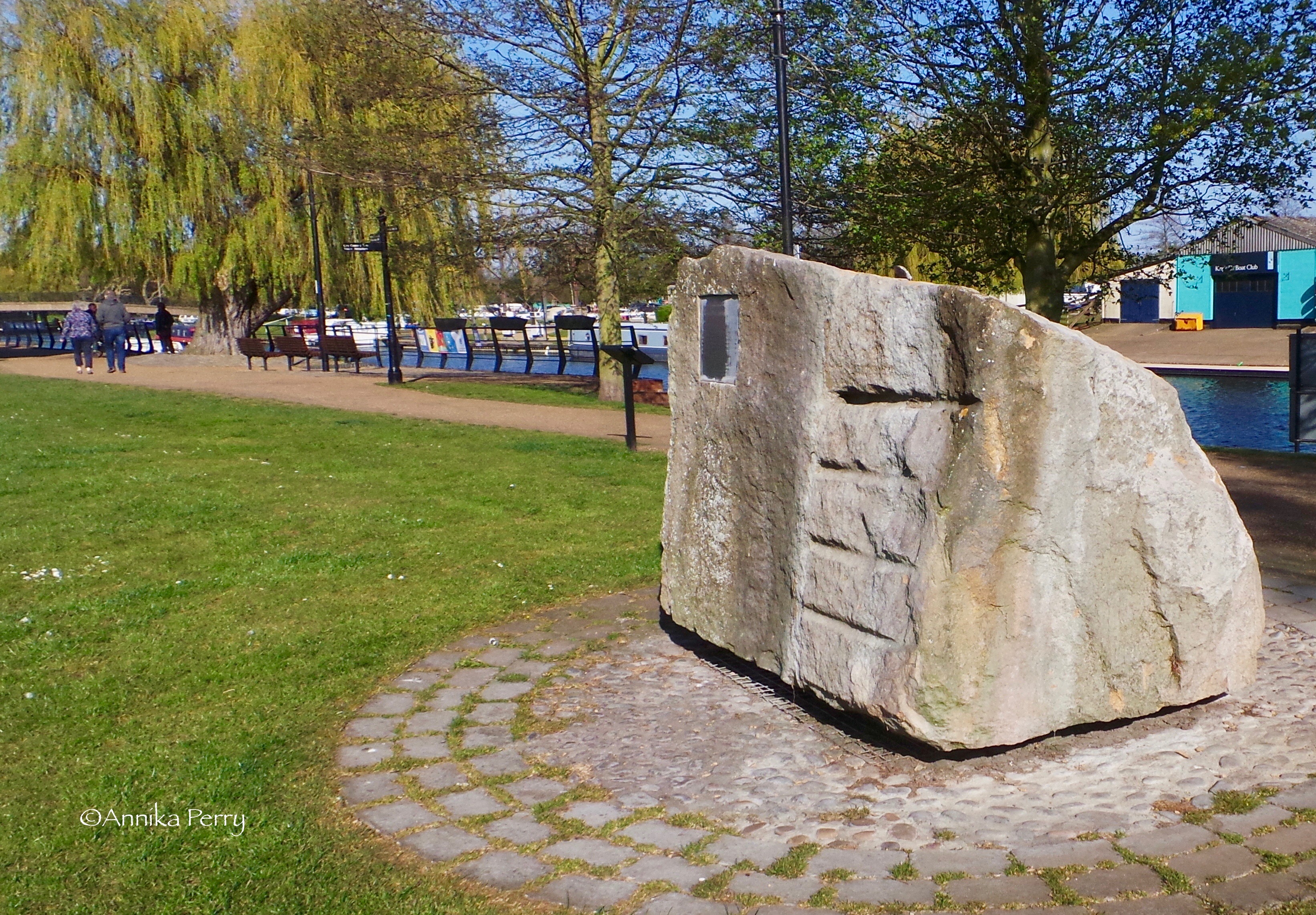
The statue of the eel in Jubilee Park represents the local eels which were caught in the fens for food and are thought to have given the name to the Isle of Ely – first mentioned in AD 700s by Bede!
Sample stone of large tonnage quarried from Barnack, at the time in Northamptonshire, and transported to Ely via the waterways. All for 8000 eels a year!
Masks donned we confirmed our booking and registered our arrival before being shown to our table. With only outside dining permitted we happily took a seat overlooking the river and path, safely distanced from other souls.
I picked up a menu yet found myself unable to read! A skill learned from young abandoned to this momentous occasion, the first meal from home for over a year. As my drink arrived I teared up when the food came, I cried! With joy and sadness. A joy that this was possible again with confidence, trust (& jabs!). Sadness for what we have all endured, are enduring and for some countries still overwhelmed by horrors. More than aware of the fragile nature of all our lives.
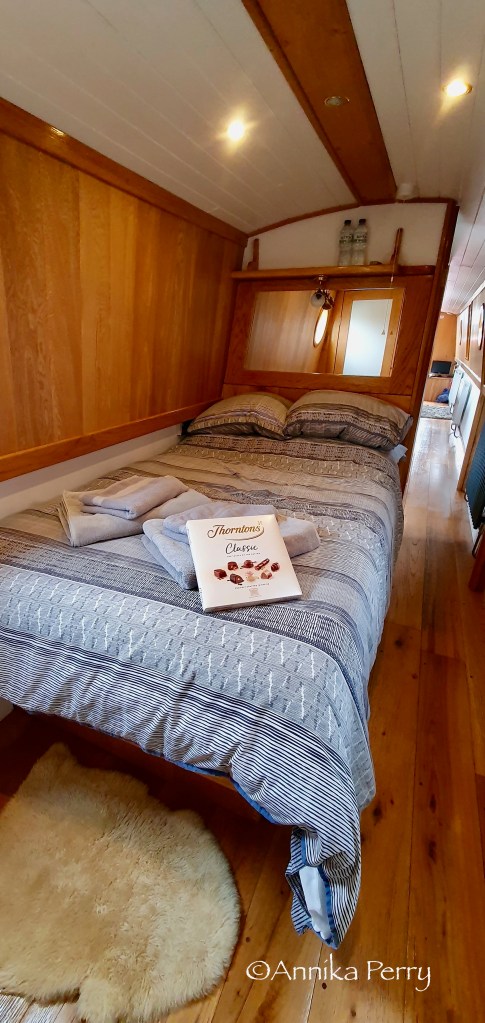
At last, it was time to check out our canal boat and even gaining entrance was an adventure, through a boatyard, along a metal walkway and across another boat. Already the front of the canal boat beckoned me to unfold the seats and table, to just absorb the peace of the water.
Inside the spaciousness was a welcome surprise, as were the chocolates and wine!
We were set!
Finally, under current restrictions, the cathedral was not open but I have visited this glorious building previously including the stunning Stained Glass Museum. You can read my post about it, An Illuminating Art, here.
For the trainspotter fans, a couple of videos of the railway traffic through Ely are available on my YouTube channel here and here.
I traveled through the centuries on my recent visit to the UK’s only Stained Glass Museum, located in Ely Cathedral. Over 1,000 examples of stained glass windows are held in their collection dating back to the 14th Century, although the craft is thought to have originated in the late 600s.
All topics are explored from the religious to everyday life, from science to farming, from nature to portraiture. The techniques vary enormously as new skills were introduced over time and the differences will be evident in the photos. The concepts and trends changed dramatically during the centuries.
The introductory window above is a contemporary design entitled Inner Space (1979). This blended art and science and is an interpretation of electron photomighraph of hydra tissue (micro-organism). It illustrates many various techniques of modern design including texturing, acid-etching, tracing as well as traditional leading.
These three traditional -style windows are 600 years apart in age but look as striking and vibrant as ever. Furthest left is Geometric Grisaille (1200-1250s) which is a design expressing the simplicity of the Cistercian monastic ideal and aided the meditation for the monks. The middle panel, The Dawning of the Last Day (1871), is unusual in that it was designed by a clergyman in memory of his father and noticeably moved away from the Gothic Revival towards original motifs. The last of three, The Good Shepherd (1867), uniquely weaves together a painterly style of the figure with the gothic revival surrounds of the rich foliage.
The influence of the Arts and Crafts movement is evident in the window furthest left. Fathers of the Church (1904) depicts St. Augustine, Venerable Bede and St. Cuthbert. The next two windows were commissioned as part of the revival and popularity of stained glass windows in the 1800s and there was a push to return to the ‘True Principle’ of Gothic style windows. The Dance of Solomon (1856), formerly within Ely cathedral, is a lively panel, and one of four depicting St John the Baptist’s life, and martyrdom. The Arms of Queen Margaret of Anjou (c.1840) was designed by a heraldic scholar to blend the arms of 15-year-old Margaret who married Henry VI.
The Typography Panel (c.1930) was most likely a sampler created to demonstrate letter writing on glass, and the use of painted cross-hatching is clearly evident. To the right, this fish experimental piece (1950s) makes effective use of flashed glass and acid-etching within its two layers (to add depth) of pink and blue glass.
Angels are the common factor for these first two windows. Inspired by William Morris and his circle who hoped to rescue the decorative arts from commercialisation and industrial methods of production, the first window is one of two entitled Angel Musicians (1910-1912). It was influenced by famous late 19th-century designers when angel figures were typical of the Italianate style. The centre panel was created 400 years earlier and the Angel Musician (1440-80) shows a unique style of painting particular to the Norfolk area in the UK, which through its riches of the woollen trade produced the majority of stained glass windows at the time. The Annunciation of the Virgin (c.1340) is the oldest of the three panels and created in an era of illiteracy when religious education involved painted windows. It is the finest example of English glass painting of the ‘Decorated’ Gothic style.
This slideshow requires JavaScript.
Roundels have existed as a form of stained glass windows since their inception. The most modern is self-explanatory entitled Five Victorian Studios (1987). The opulent roundel of gold shows The Suicide of Charondas of Catanea (c.1530) and establishes the theme of justice as he broke his own laws and thereafter committed suicide. It was most likely produced in the Netherlands which was famous for its thousand or so small and exquisite roundels. The last of the three windows heralds from a church in Burgandy, northern France. St. Vincent on the Gridiron (c.1225-50) is part of a narrative by Gothic glass painters and depicts St. Vincent’s suffering for his faith as he is roasted on a gridiron.
These final three windows are from the very early days of stained glass window design. The central panel, Peasant Figure (c.1340-49), was once part of a large and important window in the Lady Chapel of Ely Cathedral and at one stage it would have been richly decorated. It is highly unusual for the mere figure of a peasant to be depicted in a glass window. Also rarely created were windows for patrons, which is the case of Donors of William and Matilda Cele (1350-1400) who ensured the survival of their name and contribution for 700 years and onwards. The bird in Bird Quarry is slightly older and produced in the 15th-century. These simple diamond shaped quarries were made in their thousands using white glass, glass painting and silver stain. They often depicted animals with amusing human motifs; here the robin is shown carrying a rosary.
Along one wall of the exhibition, there were mock-up models of stained glass studios showing the various stages of creating a window and some of these are pictured below.
In the quiet hush that can only signify a Sunday morning, my husband and I enjoyed the rare luxury of a breakfast together, exchanging small gifts and cards, before heading to the car for our day’s outing.
Twenty years ago we met for the first time and this was an occasion to be marked. We’d pondered how a few days earlier. Should we replicate the evening itself? That involved a flurry of pubs visits, one so empty and dull the security guards outnumbered the guests, the other so packed we sat like sardines on sunken sofas, embedded within the aged fabric. Even through rose-tinted vision of time passed we shook our heads in an empathic no!
Our interests took us elsewhere and with the promise of a few rain-free hours, we set off to a place we yearned to see again. Two years ago we’d paid a flying visit to Ely and it’s stunning cathedral set amongst the beautiful landscape of the Fens. We looked forward to seeing it again, enjoying the time and space to revel in its gifts.
1,000 or so steps
The car park in Ely by the Maltings, the Victorian brewery, kindly offered us free parking and requested we mention their generosity to our friends…duly done!
Nearby an eel sculpture stood prominently in a park to commemorate Ely, known at one time for its eels and named after the Saxon word for the fish -eilig!
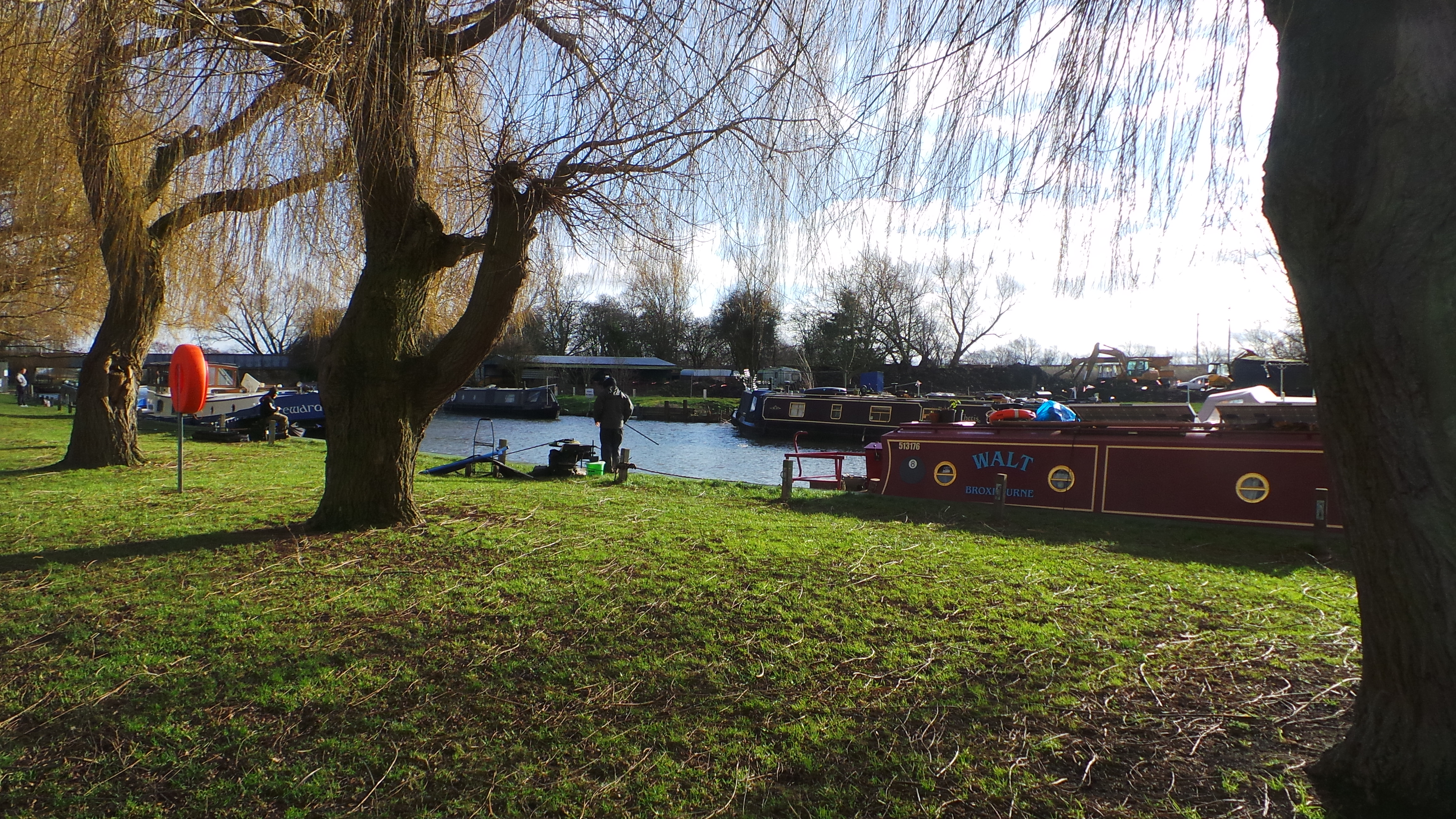
The walk to the river opened up to reveal a bustling holiday atmosphere as canal boats and small pleasure cruises teemed on the water, the golden willows whispering their greeting to the river, children, and dogs competing for attention.
Fishermen sat far apart along the river bank, nearly absorbed into the dark green of the grass, they seemed to blend seamlessly together in the picture.
2,000 or so steps
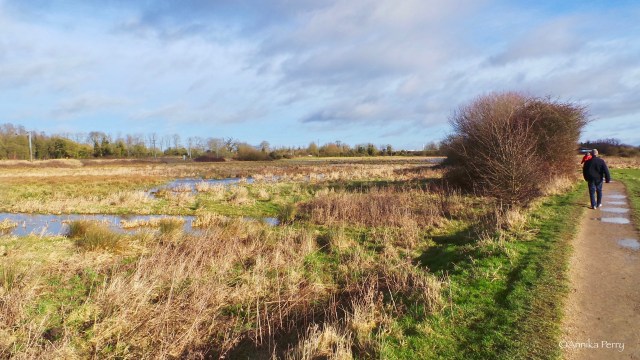
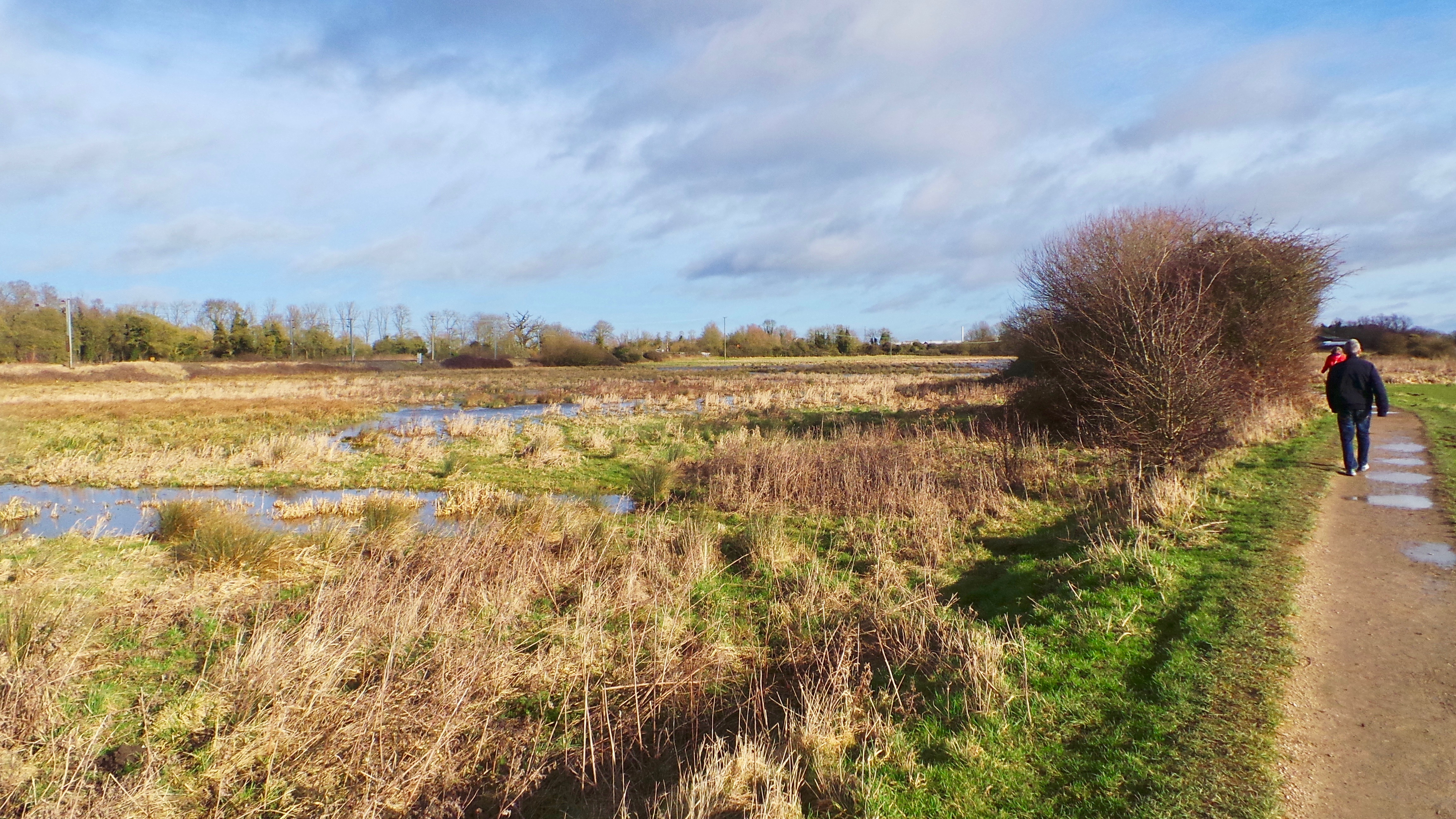
Astonishingly, the busy lively riverside promenade was left behind as we ducked below a railway bridge to the path along the swollen river. Here only the serious walkers set out. The raised path stood just above the water level of the flooded field to our left, the yellow decaying weeds a fluttering reminder of the winter still upon us.
3,000 or so steps
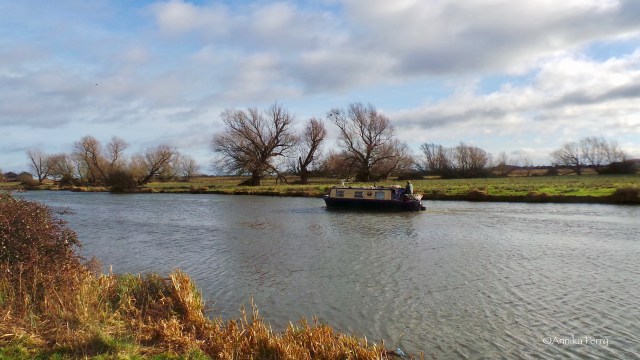
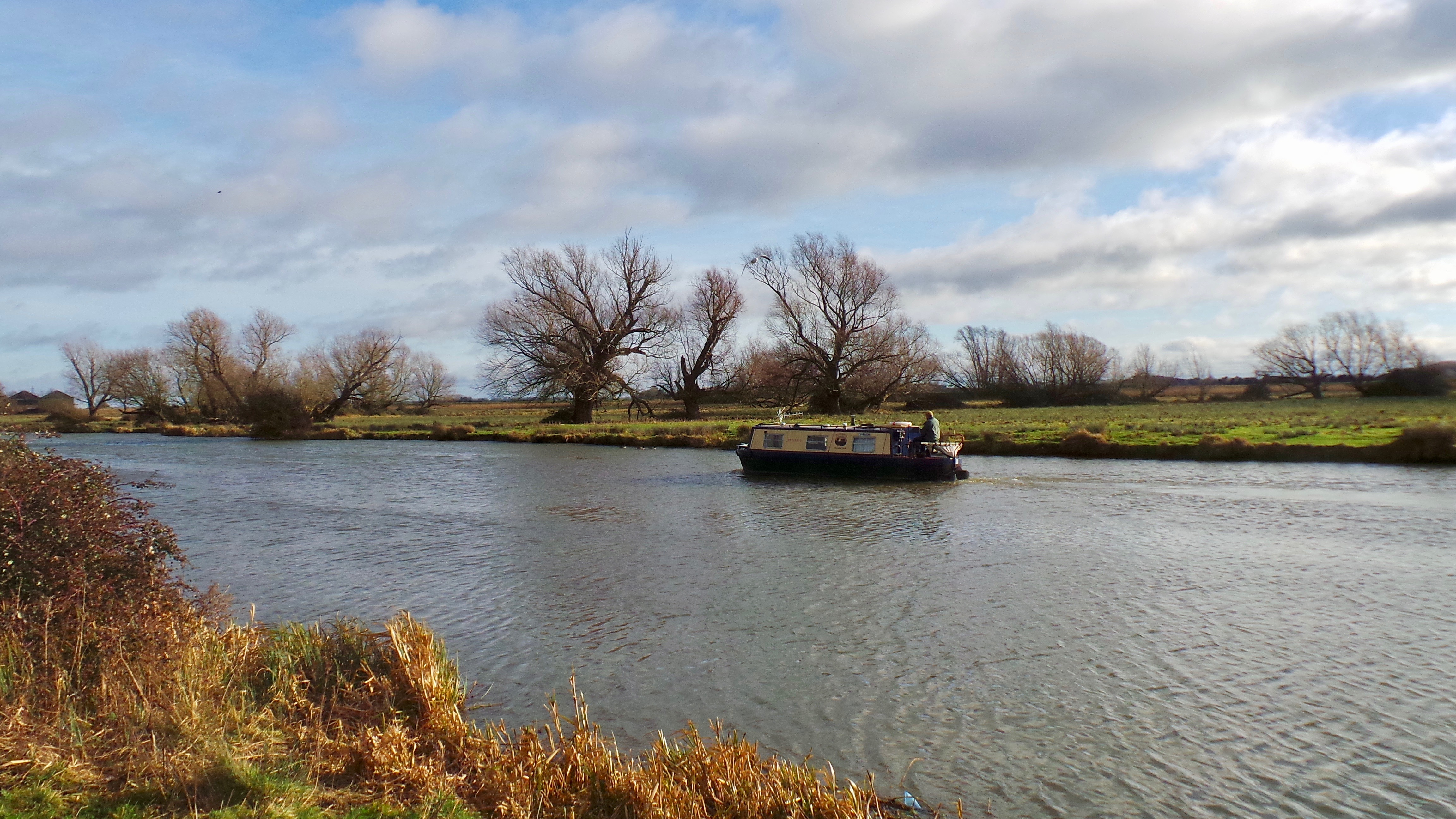
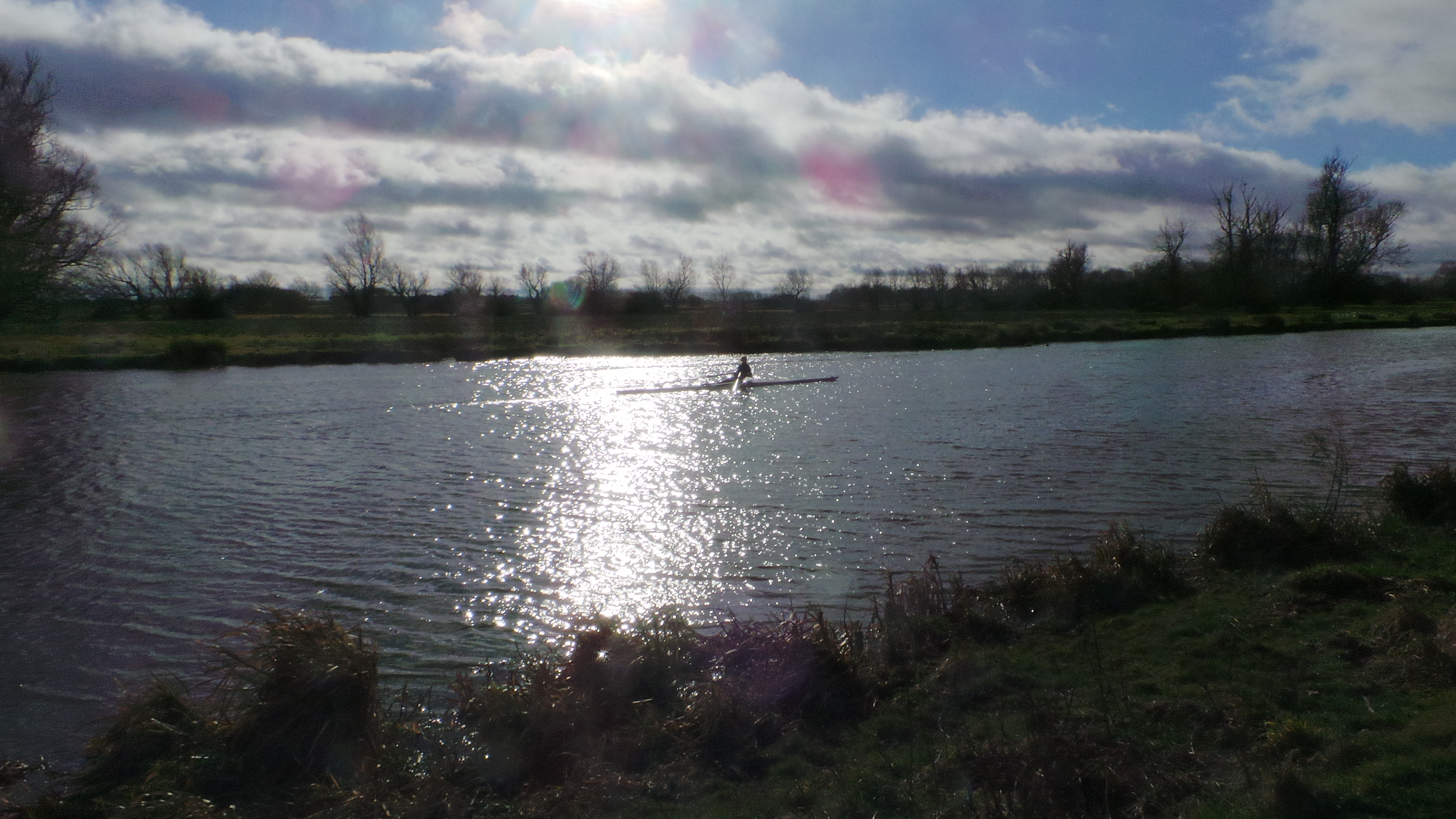
To the right, the mighty river (by British standards) flowed with majestic elegance.
Ahead arrow-sharp rowing boats raced past at dazzling speed, the long oars barely seemed to dip into the water, effortlessly carrying it along. The University of Cambridge has a boathouse here and often practice on the river; not surprising considering the extremely busy River Cam, clogged with punts and the numerous tourists!
4,000 or so steps
We continued to traverse through the Fens flat landscape, the marshland of 1,500 square miles (3,900 square kilometres) stretching ahead, gently curving at bends. Here the sky opened up to lofty heights, the soft clouds of whites, pinks, greys dotted upon the lightest of baby blue hues. A gentle peace cascaded, rolled over us as we ambled on, my camera to hand.
5,000 or so steps
To the left, a sudden rush and hoot stopped me in my tracks – I hadn’t noticed the railway track before, set up just above the water level, the mechanical surprisingly not at odds with the calm of nature.
The menagerie of birds seemed quite unperturbed, the dogs continued to walk calmly on as did we.
6,000 or so steps
I’ve never walked across a railway track before and approached this one with discernible excitement, heightened as the lights started to flash and the alarm sounded. Here is the video I took of the Train as it passed closely past us. (Since WP suddenly will not allow me to post videos I set up a YouTube channel to allow me to share this!)
7,000 or so steps
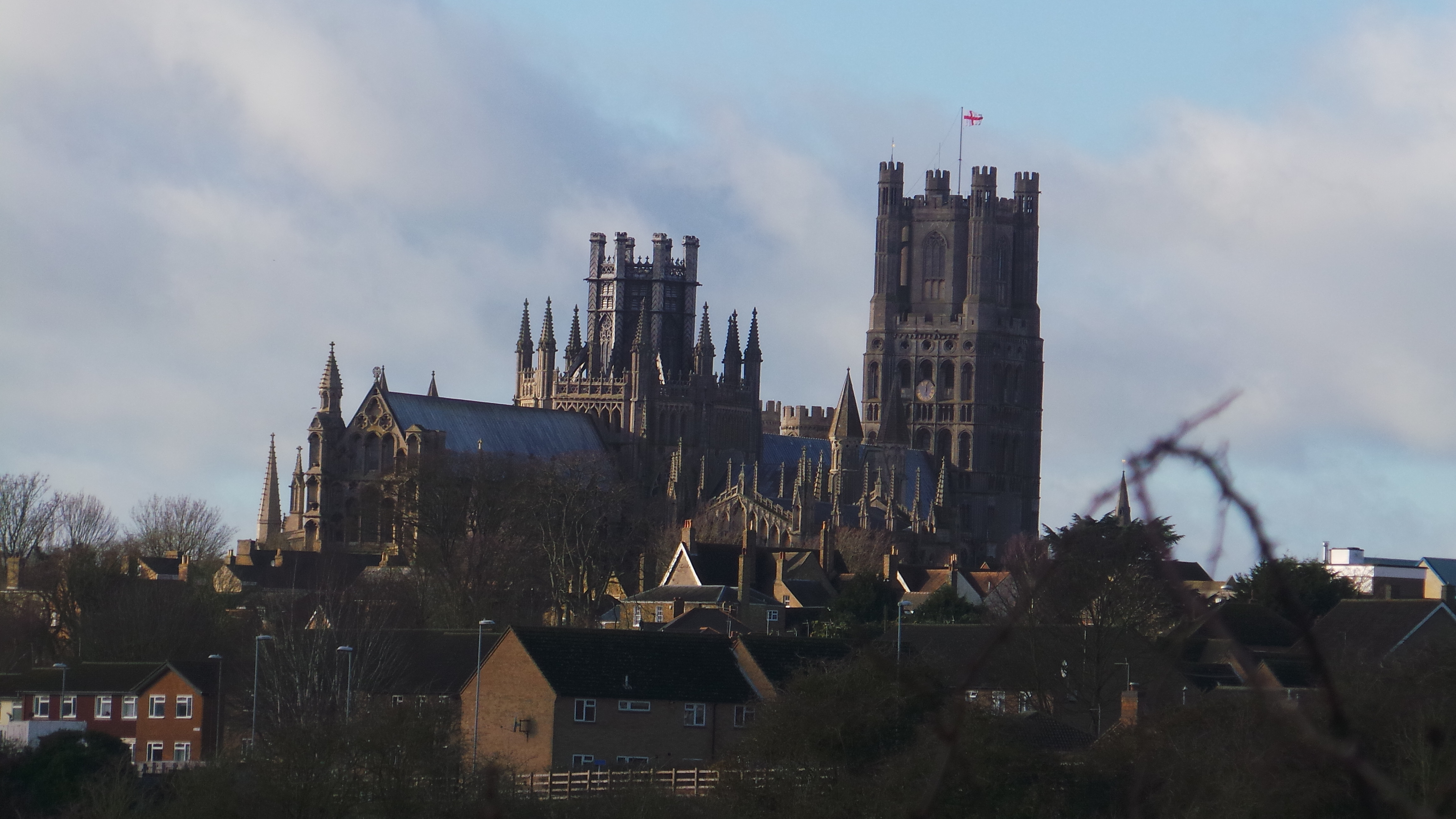
Yet again the wonderful Cathedral dominated the horizon as it sits on the hill in this ‘Isle of Ely’. Visible from miles around the towers reach up to the heavens and there is no danger of becoming lost with this constant reminder of the town centre.
8,000 or so steps
We near the cathedral. Originally a church was built on this site in AD 672 before the Normans started work and it was deemed a cathedral in 1109 and thereafter the town formed around it.
9,000 or so steps
We approached the awe-inspiring cathedral which is fittingly known as the ‘Ship of the Fens’ after its famous and unique Octagon tower which replaced the former Norman tower.
This collapsed in 1322 and was replaced with a structure made from eight great oaks which served as the frame for the famous lantern inside.
This slideshow requires JavaScript.
The interior of the cathedral filled me with wonder and overwhelming gratitude. It is unusually light for a cathedral, and I wandered down the nave, before glancing up to its ceiling. The amazing painted wood panels were installed in the mid-1800s by the Victorians in an attempt make the cathedral appear even more medieval.
This slideshow requires JavaScript.
Walking around I admired the architecture, the stained glass windows and at one stage noticed the playful rainbow of colours on a pillar from one of the windows.
Along the walls, plaques and statues of people buried or interned are placed along the walls and floor. One was a Robert Steward, a knight who died in 1571 and looked peaceful in his repose.
10,000 or so steps
These last steps were used to visit the UK’s largest stained glass museum housed within the cathedral; more about these treasures in my next post. Tired but full of joy we ambled back to the car, letting the glorious sky sweep over us.
On the drive home we were treated to a sumptuous sunset; a glory and riot of colours which made driving difficult but a wonder to behold for me, the passenger.
Thank you for joining me on this 10,527 steps day out. Have you recently had a special day out? Celebrated an anniversary? As always it is a delight to read your comments and thoughts.









 The first 100 or so Steps




 Annika Perry