THE WINDING ROAD: A BOOK REVIEW

Sadly cancer is a disease that touches nearly all of us. Either by being personally afflicted or knowing family and friends with the illness or even worse, losing or tragically lost their lives to it.

It was during a planned operation that Miriam Hurdle’s cancer was discovered by chance, and just in time to possibly give her some chance of survival. In The Winding Road: A Journey of Survival Miriam Hurdle chronicles her battle with a particularly aggressive and dangerous form of cancer, melanoma on the inner organs. Specialists doctors were consulted and a gruelling ‘treatment’ plan was drawn up, and yet her chance of survival was slim – 10-20%.

Although one might expect a book about cancer to be grim, Miriam Hurdle’s is anything but this. There are two streams of narrative throughout the book and both are perfectly interwoven.

The factual details of her life before, during and after the cancer is full of clarity, as well as being exceedingly informative and explanatory. Interspersed are sections in italic which capture her thoughts, emotions and above all her love for her family and friends.

This enduring love for her husband and her daughter as well as the loving care from her friends is paramount and one feels that they helped boost this courageous woman through some of the toughest imaginable treatments. I imagine she lost count of the loving emails and cards she received as well as the meals cooked and delivered with such thought and kindness.

Although I am not a person with outspoken faith I can understand how Faith gave much support and comfort to the author, particularly during the challenging year of treatment; one feels it almost carried her through.

Throughout the writing is fluid and an extra sense of immediacy is achieved by the use of direct speech; the ones between Miriam and her daughter, Mercy, are incredibly emotive.

I am in awe of Miriam’s strength and perseverance during her cancer battle but also in her courage to revisit the year by writing this book. Her title could not be more apt as it was indeed a long and at times torturous ‘winding road’.

I highly recommend this moving, powerful and inspirational book to all interested in both personal cancer experiences as well as to those wishing to clearly understand what cancer patients are going through or perhaps, sadly if one is personally struggling with the disease.

RATING: ⭐️⭐️⭐️⭐️⭐️

AVAILABLE:

AMAZON UK: Kindle Paperback

AMAZON US: Kindle Paperback

NOTE:

Miriam Hurdle’s memoir about her cancer ordeal, The Winding Road: A Journey of Survival is one-year-old today July 30th. For two days from Sunday, 12:00 am, July 30 to Monday, 11:59 pm, July 31, 2023, the book will be available for free on Amazon.

ABOUT MIRIAM HURDLE

Miriam Hurdle is a member of the Society of Children’s Book Writers and Illustrators (SCBWI). She published four children’s books at twenty-six years old. Her poetry collection received the Solo “Medalist Winner” for the New Apple Summer eBook Award and achieved bestseller status on Amazon. Miriam writes poetry, short stories, memoir, and children’s books. She earned a Doctor of Education from the University of La Verne in California. After two years of rehabilitation counseling, fifteen years of public-school teaching and ten years in school district administration, she retired and enjoys life with her husband in southern California, and the visits to her daughter, son-in-law, and granddaughters in Oregon. When not writing, she engages in blogging, gardening, photography, and traveling.

Please connect further with Miriam Hurdle on the following links:

Website / Amazon / Author Page / Twitter Facebook

HOMAGE (to an old Oak)

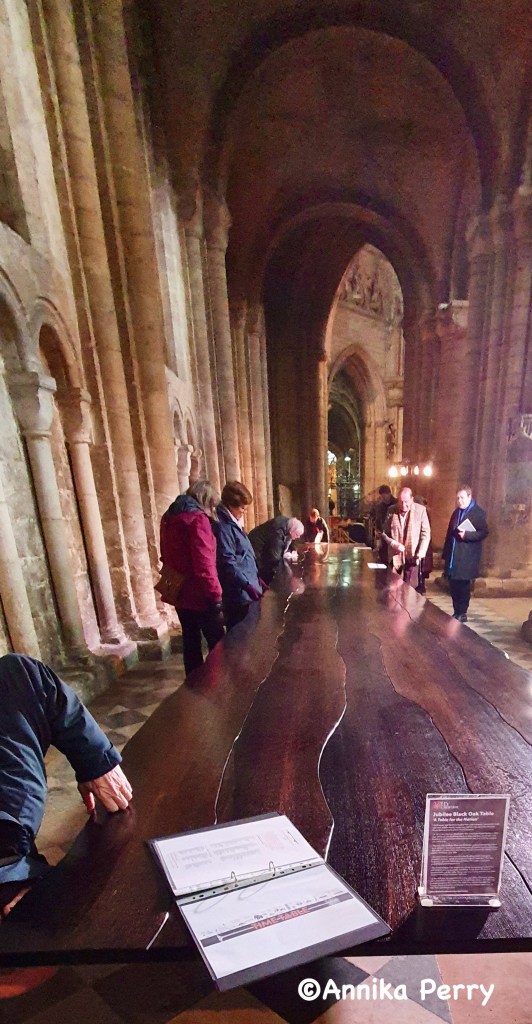
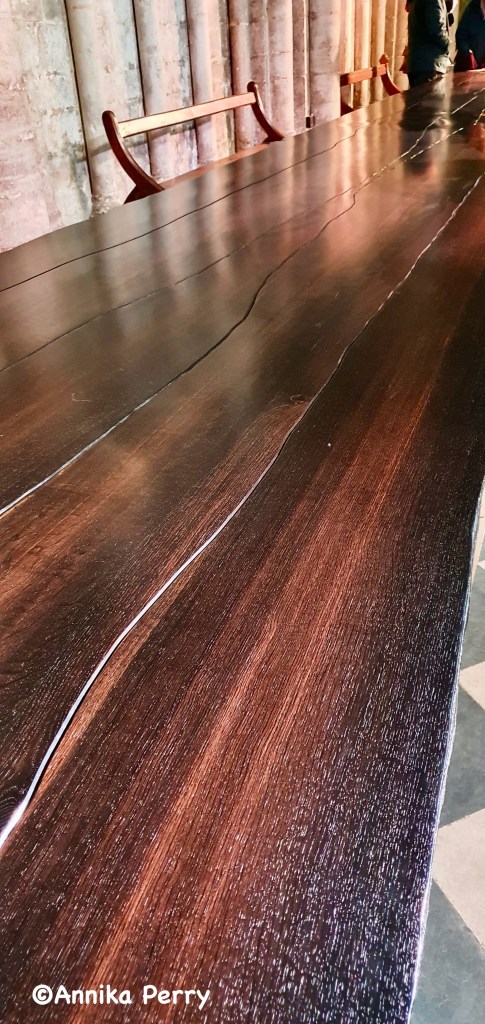
"My photo of the Jubilee Oak Table in Ely Cathedral. It is taken from one end and one can see the full length down. At the furthest end a group of visitors are gathered, touching the table, peering underneath, reading information leaflets. The table is set in the expanse of the cathedral with lofty stone arches all around."

HOMAGE (to an old Oak)

Beneath God’s arches resides the travelling table,
Its glistening onyx boards a contradiction.

After all, it should not be here,
how is it possible
after its 5000-year journe
y?

One fair day as the Stone Age drew to a close
an acorn took root amongst the giant oak forests
in the East Anglian Fenlands.

As the moon cast its ethereal light
upon the monumental 60-metre trees
the sapling flourished.

It joined the canopies of the other oaks
Shrouding the people beneath
Protecting, becoming part of their landscape.

This, the Jubilee Oak, was indestructible.
Until the world altered.
Until the sea levels rose.
Roots loosened, it crashed
To its airless grave.

Untouched for five millennia
Resting in the pitch black of peat
A preserver.
Untouched until the 21st Century,
When at last
Unearthed!

Fourteen metres of black oak
released from its shroud of earth
Fourteen metres of jet-black oak trunk
Survived, intact.

The magical fusion of the ground’s iron and
the tree’s tannins
creating the black in the oak
ensuring this holy grail of wood.

Experts consulted, advised and directed,
a sawmill from Canada flew to help
To saw on site
Ten perfect consecutive boards.

With the craft of carpentry
the combination of skill and passion
the unity of artistry and knowledge
ALL paid HOMAGE to the beloved Oak Tree

A table designed, boards planed and dried.
The Table for the Nation completed.

In majesty, it resides beneath God’s arches.

Now it is time to pay OUR respects.

In reverential silence, visitors gaze upon the table,
making a pilgrimage along its length
Then back up on the other side.

Fingers caressing the boards, eyes admiring the sheen
of darkness. A play of light and dark,
An incongruous anomaly in reality.

Now and then people bend down,
Admiring the copper sheath below,
Then up they appear,
once again walking along
tracing the winding mysterious curves of the boards

Sweeping curves mirroring
the expansive Fenland Landscape,
as sweeping as the sea that failed to devour it.

The black oak
Present
In all its glory.

©Annika Perry, June 2023

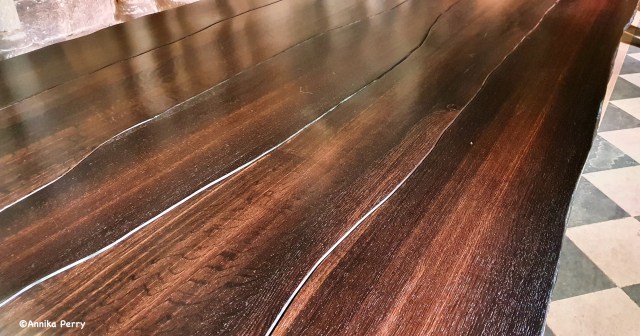
"A close-up of the table showing the beautiful patina of the wood."

Note: The above post was inspired by a visit to view the Jubilee Oak tree while it was in residency at Ely Cathedral, Cambridgeshire, UK. (It is currently at Rochester Cathedral, Kent.) The table was unveiled in honour of HM Queen Elizabeth II in 2022, the year of the Platinum Jubilee and hence its name.

The ancient oak trees grew to a height of 60 metres (197 feet) and dwarf oaks of today whose average height is about 20 metres (65 feet).

Read more about The Fenland Black Oak Project here.

"A cross-section of the table, showing the varying sheen of dark to light brown surface and highlighting the beautiful sweeping planed wood."

AN UNEXPECTED GREETING

©Håkan Vargas

He didn’t know if he had a name. The very concept of names did not exist. Rather a memory fluttered at the edges of his emotions, the fuzziness of fun, a memory of rolling on the ground, play fighting with the other brown bear cubs. Overall an undefinable affection for others existed within this bear.

Then two years of isolation had wrapped itself around him like a winter duvet and through it Bruno (let you and I give him a name!) revelled in each and every season.

Through the colourful Spring, flowers erupted with dazzling displays and wildlife awoke around him. In Summer Bruno feasted on berries and odd morsels of elk meat however the midges became as bothersome as a thorn in his pad and the heat baked his fur. He sought shelter under the towers of spruce, a humming retreat of whispering shade and cooling plush moss. Autumn felt like the twilight of his life, a brightness remained yet the welcome bite of cold taunted his senses. Winter was Bruno’s favourite season, a time to strike out across the snow, sinking into it with a slightly satisfying scrunch, a caress.

Yet this second winter a loneliness gathered upon him just as the snow rested upon the fir tree branches, layer upon layer of inexplicable malaise.

The wolf, shall we say, Lobo, had been tracking Bruno for days. Rather ineptly Bruno felt, the wolf’s scent drifting across the landscape, his noisy traverse audible for all able to hear subsonically.

There he was across the frozen lake, a dusting of snow upon the icy tundra. Bruno stood still in the safety of the trees before stepping cautiously forward. Lobo mirrored Bruno’s stillness across the lake, and then he suddenly appeared from the camouflage of the dark trucks. Halfway across they were nearly nose to nose; Bruno and Lobo paused.

Bizarrely Lobo lowered his head into a subservient pose in front of the bear and meekly he inched forward to Bruno, his neck twisting away and with one final step rested his head upon Bruno’s neck and buried it into his thick brown pelt. Bruno reciprocated by bending his head forward and together the two wild beasts hugged in camaraderie.

The unique moment captured in a photo, their unity and togetherness preserved beyond the few seconds.

In a perfect synchronistic motion, they pulled away, as if on a general’s command to part ways, each stepping back a few steps, the longing yawning aching arch of friendship collapsing into the opening chasm. With a barely discernible nod between them, the bear and wolf returned to their lonely existence deep in the forest.

©Annika Perry, June 2023

©Lassi-Rautiainen

THE KEEP

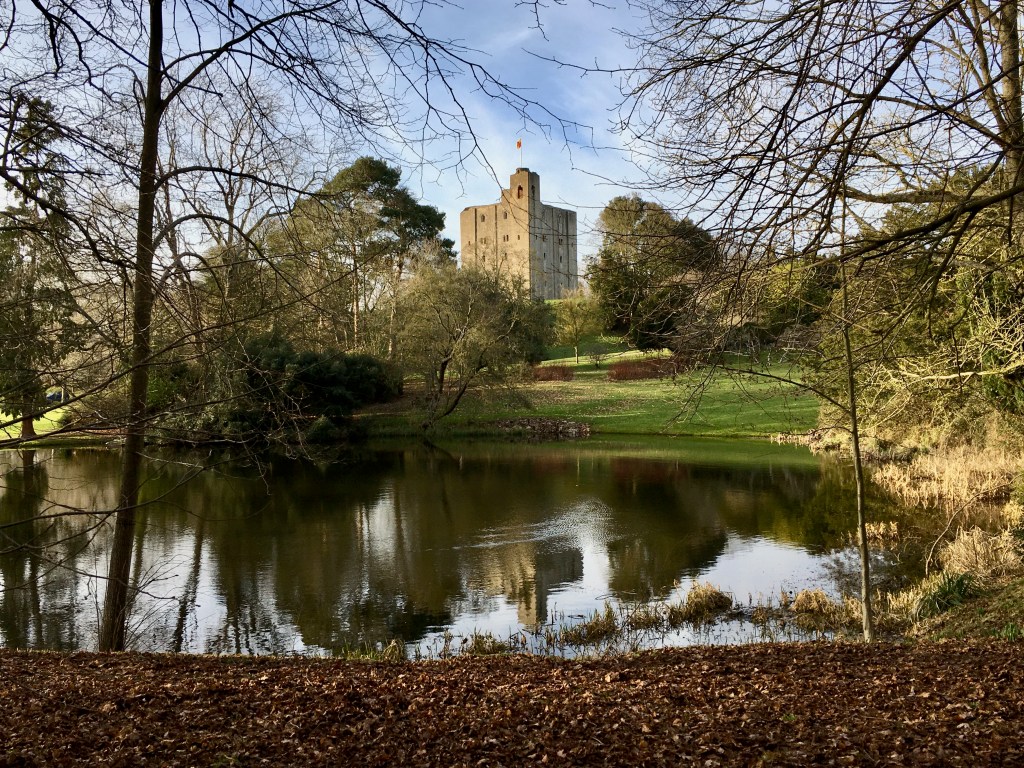
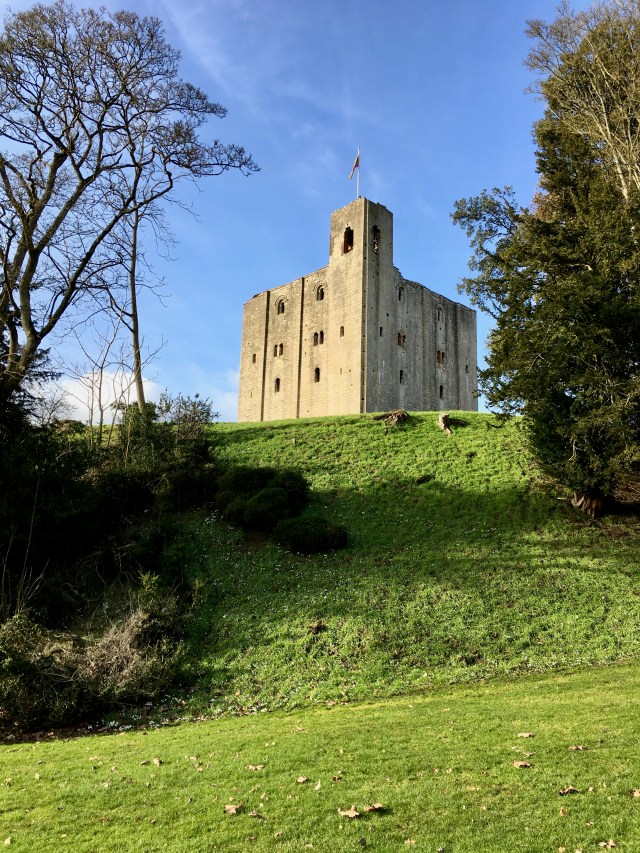
What better way to dispel the gloom and weariness of a long winter than visiting a 900-year-old outstanding Norman castle and its beautiful idyllic grounds on a sunny Sunday in February!?

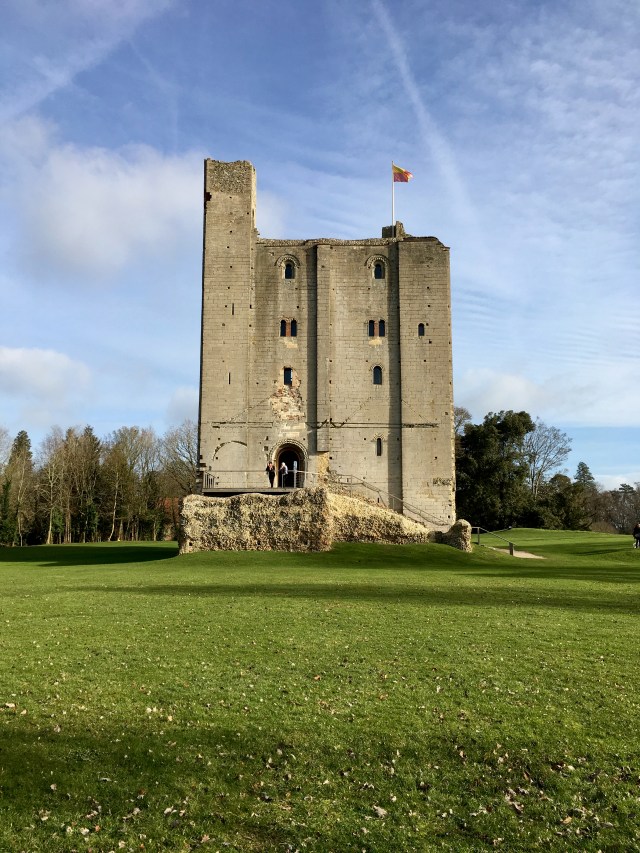
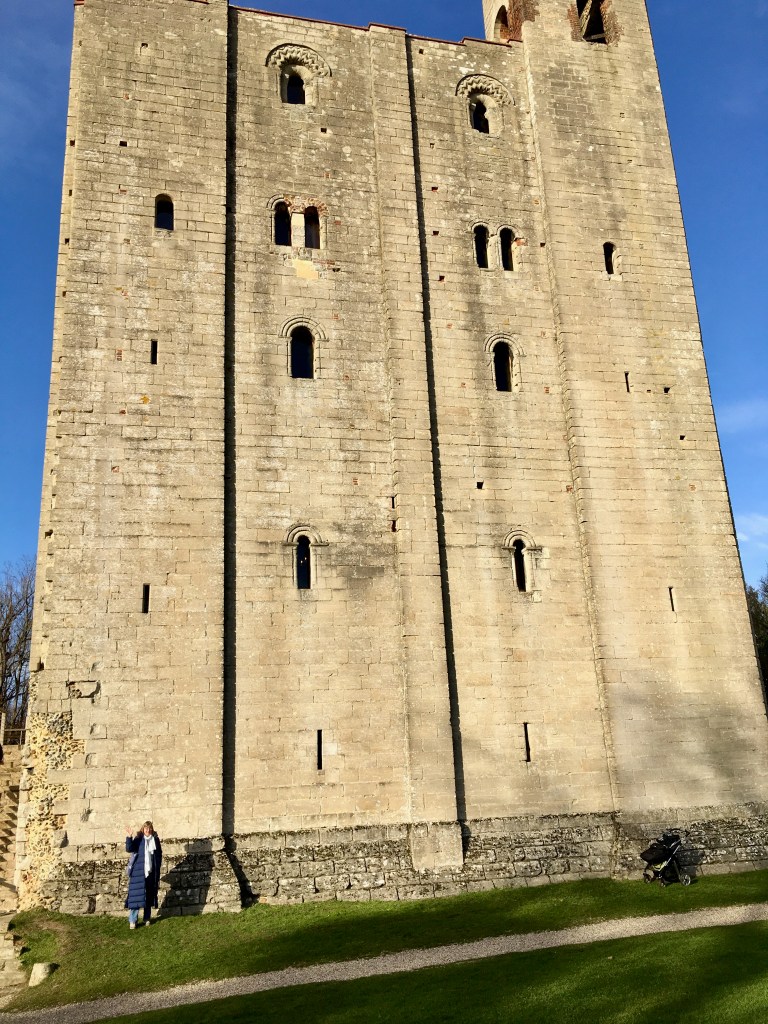
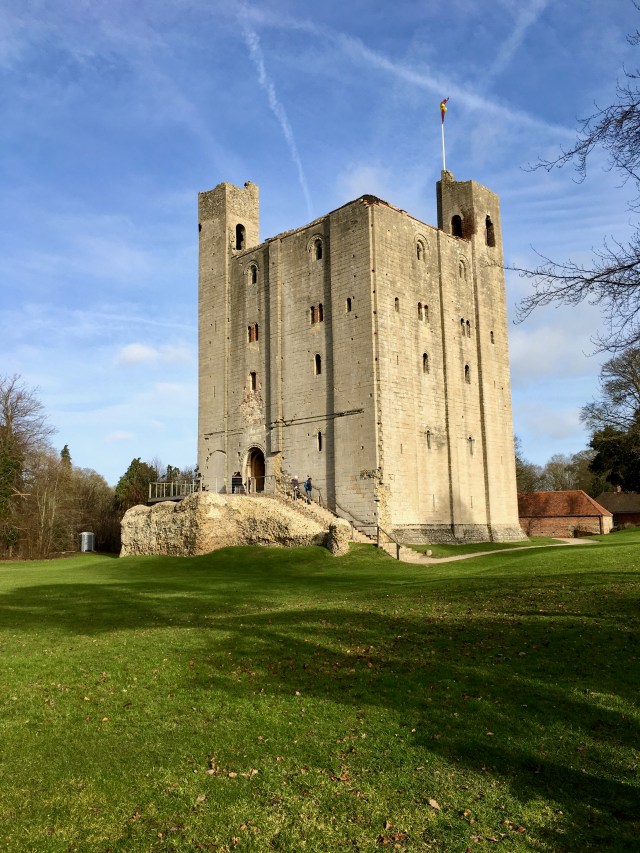
The imposing Hedingham Castle is visible from miles around, towering above the quaint village, the stone stark edifice both daunting and majestic.

Following the Norman invasion of England, the majority of the Anglo-Saxon lands were taken over. The lands of Hedingham, North-East Essex, England were given to Aubrey de Vere I by William the Conqueror in 1080 in recognition of the knight’s fierce valour and loyalty. The family were zealous crusaders! The original castle was built of timber in the traditional motte and bailey style however Aubrey de Vere II ordered this to be torn down. It was replaced in 1140 by the building of the remarkable Norman castle and as the family were extremely rich they could afford to face the whole building in stone which was unusual for the time! As one of the great Norman castles Hedingham Castle hosted many royal visitors including Henry VII, Henry VIII and Queen Elizabeth I (probably en route to Gosfield Hall, read more on my post here)!

The de Vere family became powerful and influential members of the royal court, many of its ancestors holding important positions within the royal circle, including that of Lord Chamberlain to the monarch. Furthermore, they provided vital military force in their own right and became ennobled when granted the title Earl of Oxford.

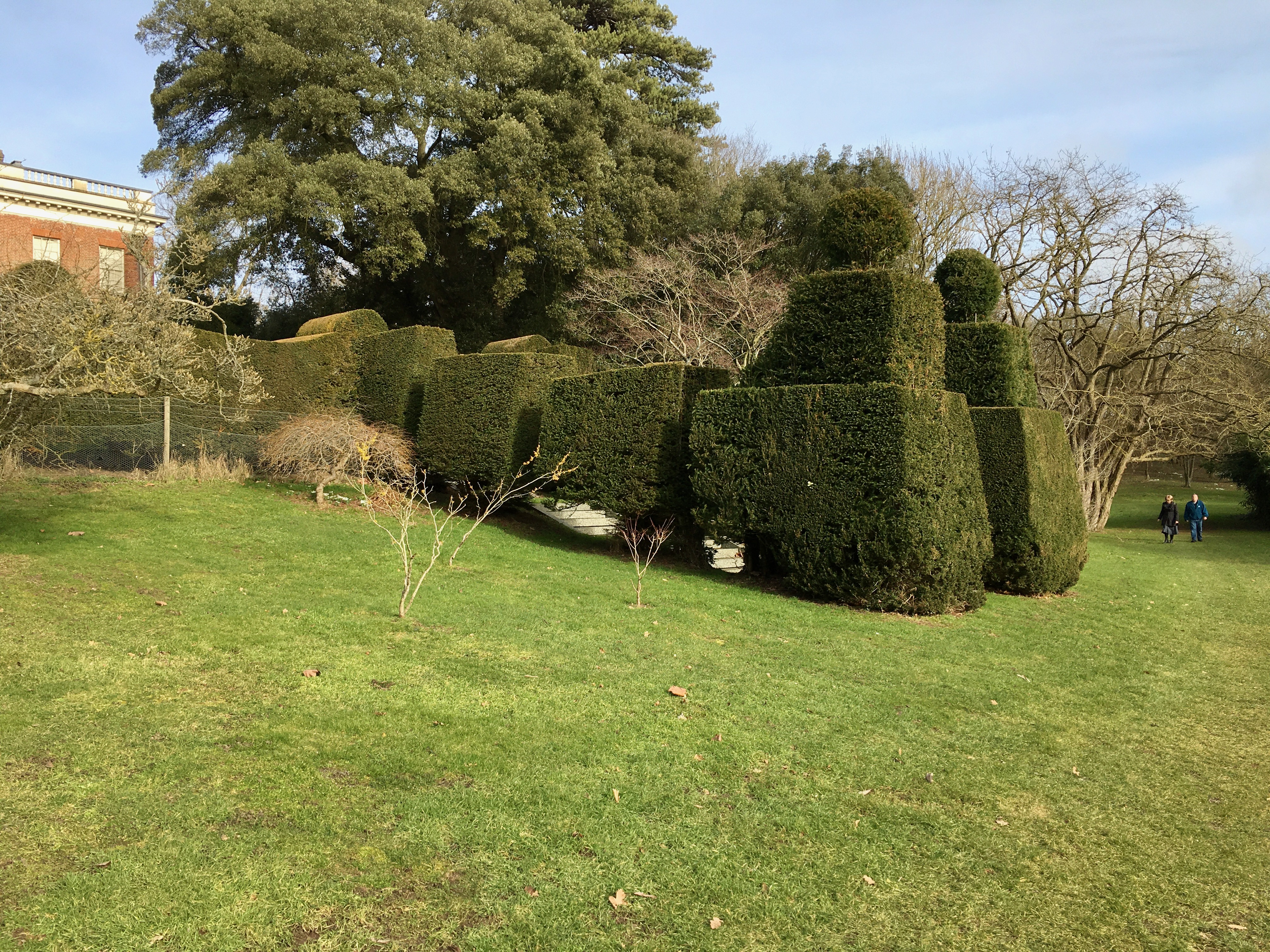
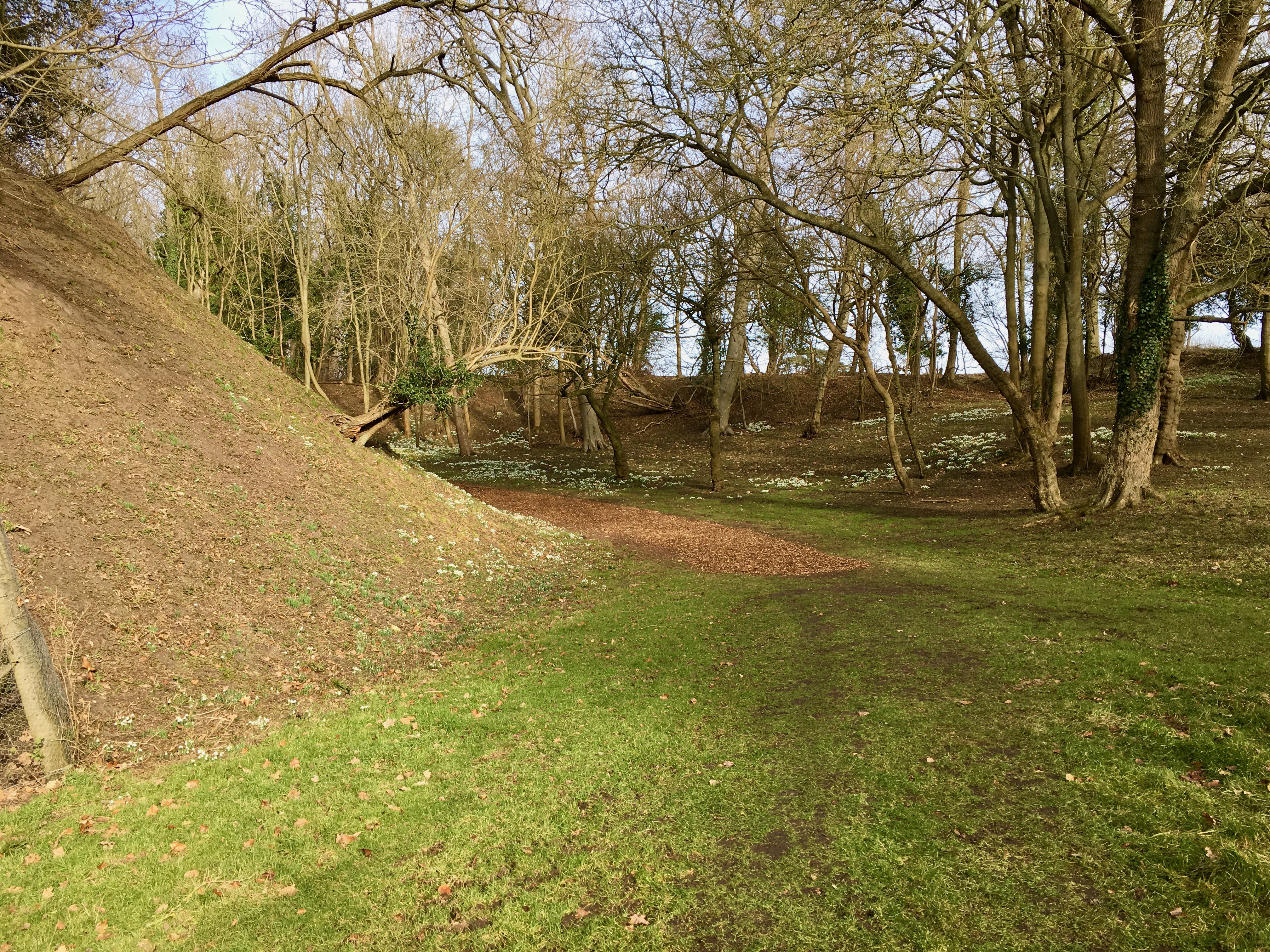
Hedingham Castle, a key military stronghold, is built on a hill which gave it an excellent defensive position. A deep moat runs around the castle and in Norman times the area would have been kept clear to ensure visibility of approaching enemies from miles away. As its defensive significance waned in the eighteenth-century trees were planted to create soft woodland witnessed today on the long moat banks carpeted by snowdrops in February and these are still popular in the 2020s.

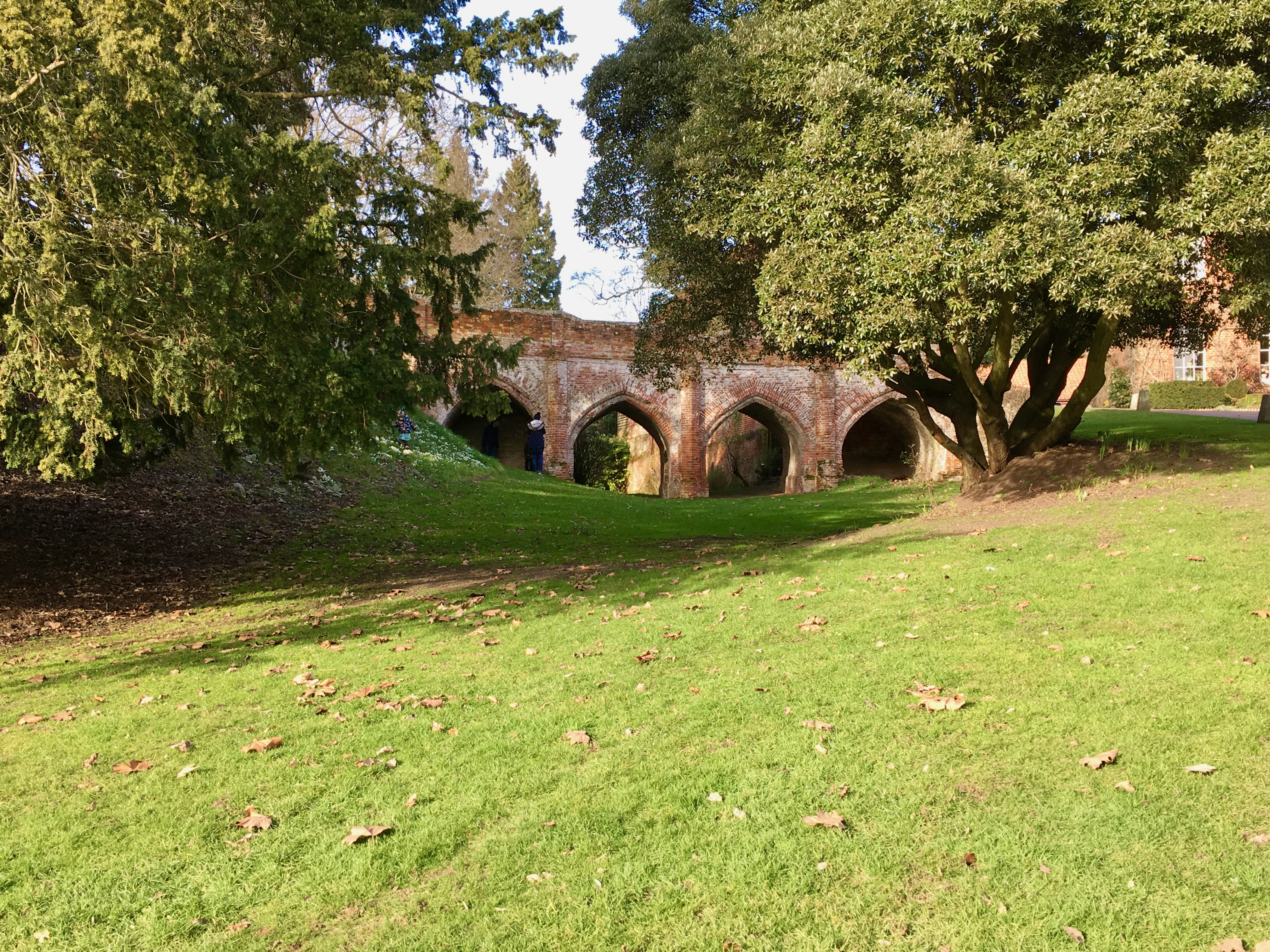
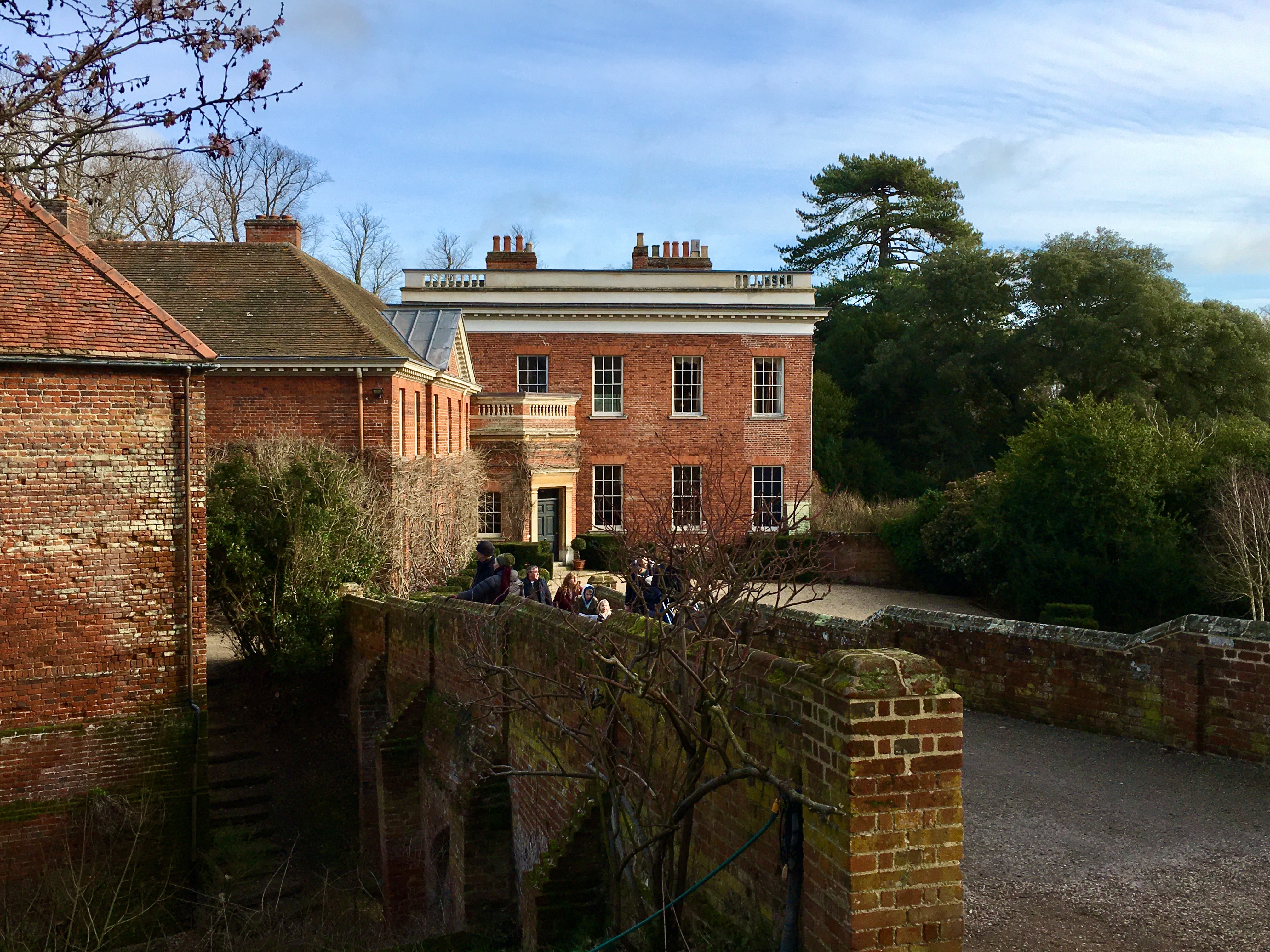
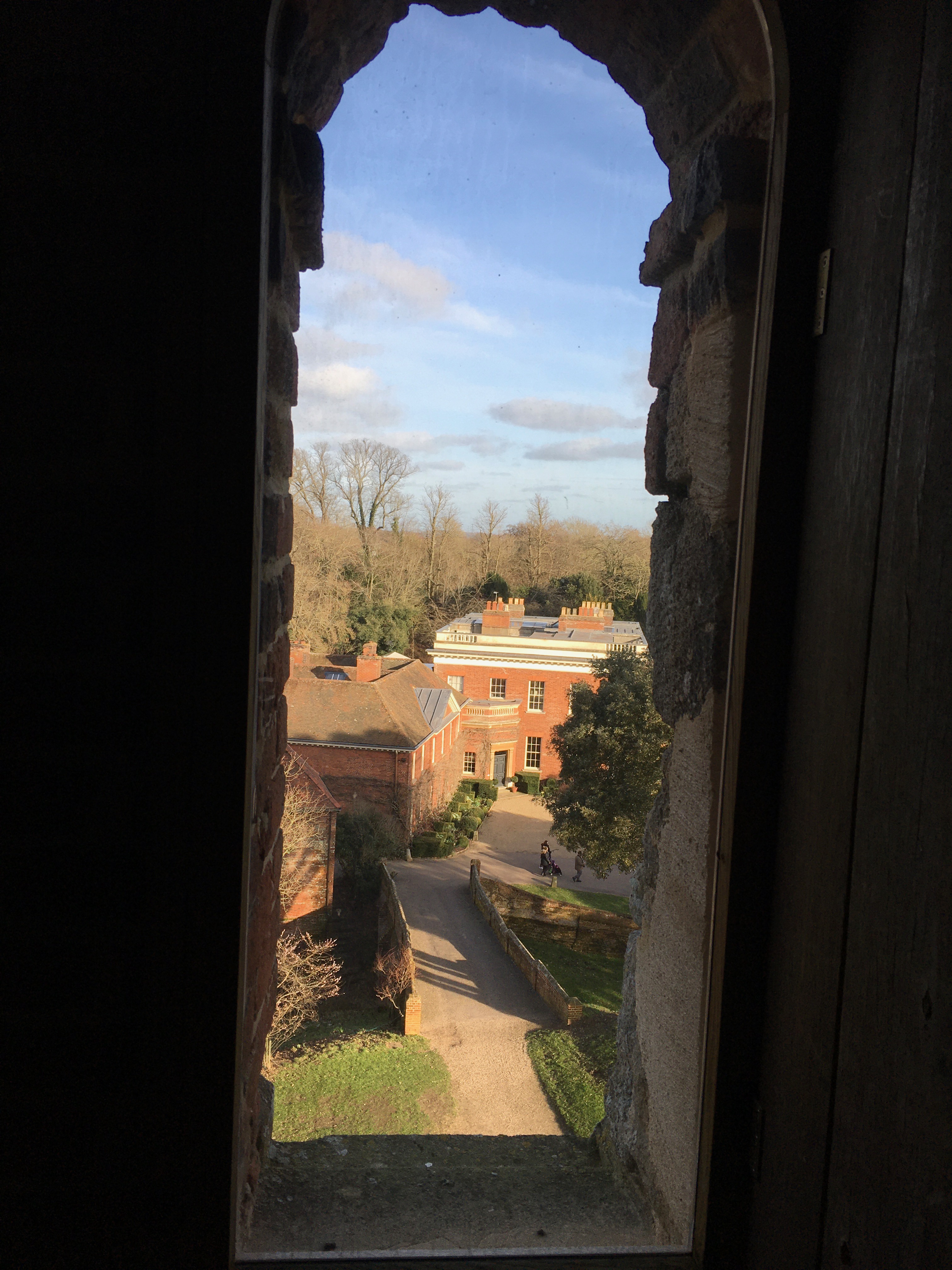
The original point of entry onto the castle grounds would have been a wooden drawbridge however this was replaced in 1496 with a Tudor bridge. On the grounds just outside this brick bridge a new owner of the castle, Sir William Ashhurst (a banker and politician) ordered the building of the Queen Anne House in 1719 and this still exists and it overlooks the lakes and landscaped gardens. The house replaced the 1498 buildings which included barns, stalls, granaries and storehouses.

The large green expanse surrounding the castle is known as the tilting lawn and here the knights would practice their fighting skills as well as hold regular jousting events. Also, archery and other battle skills were honed and displayed here. Nowadays, throughout the summer, there are mock traditional jousting festivals replicating the activities of the medieval knights – the power of the horses and the ability of the ‘knights’ are truly awe-inspiring.

In the seventeenth century, the castle became superfluous as a defensive building and it was quickly falling into a state of disrepair. As a result in 1600 the 17th Earl of Oxford demanded that the majority of the castle be pulled down and what is left today is the main keep. This keep is one of the most impressive keeps in the country; another famous one is at the Tower of London.

The keep is neck-achingly high and standing below it one can barely see the top 37 metres / 110 feet above. The walls are incredibly thick and strong at nearly 4 metres / 12 feet wide. This was a castle and keep built to keep the enemy out and its nobles, knights and families safe!

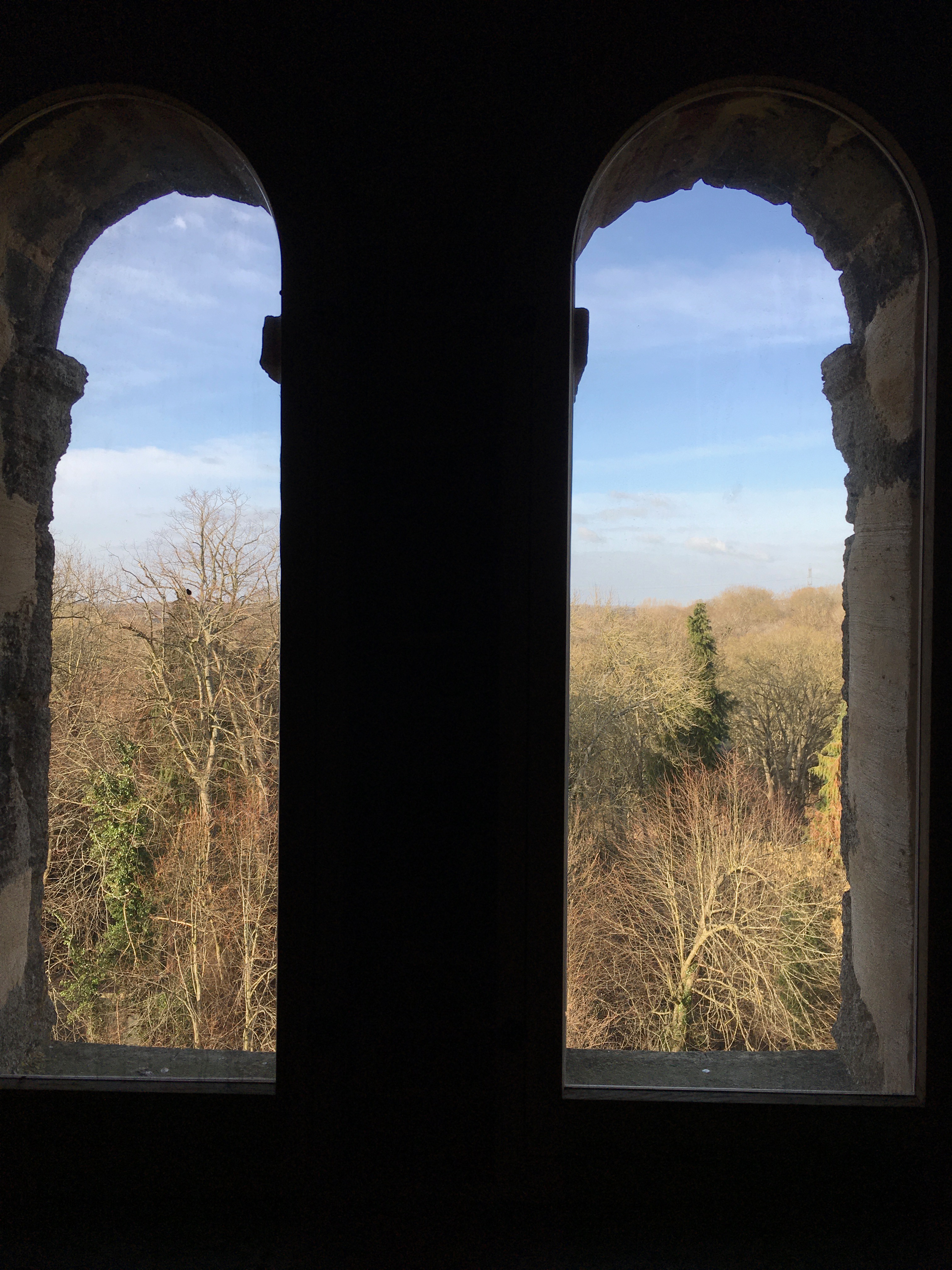
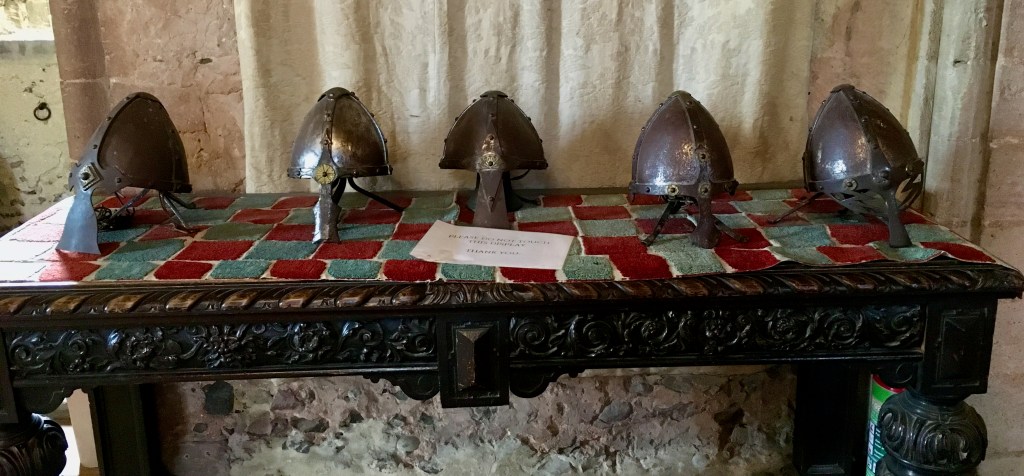
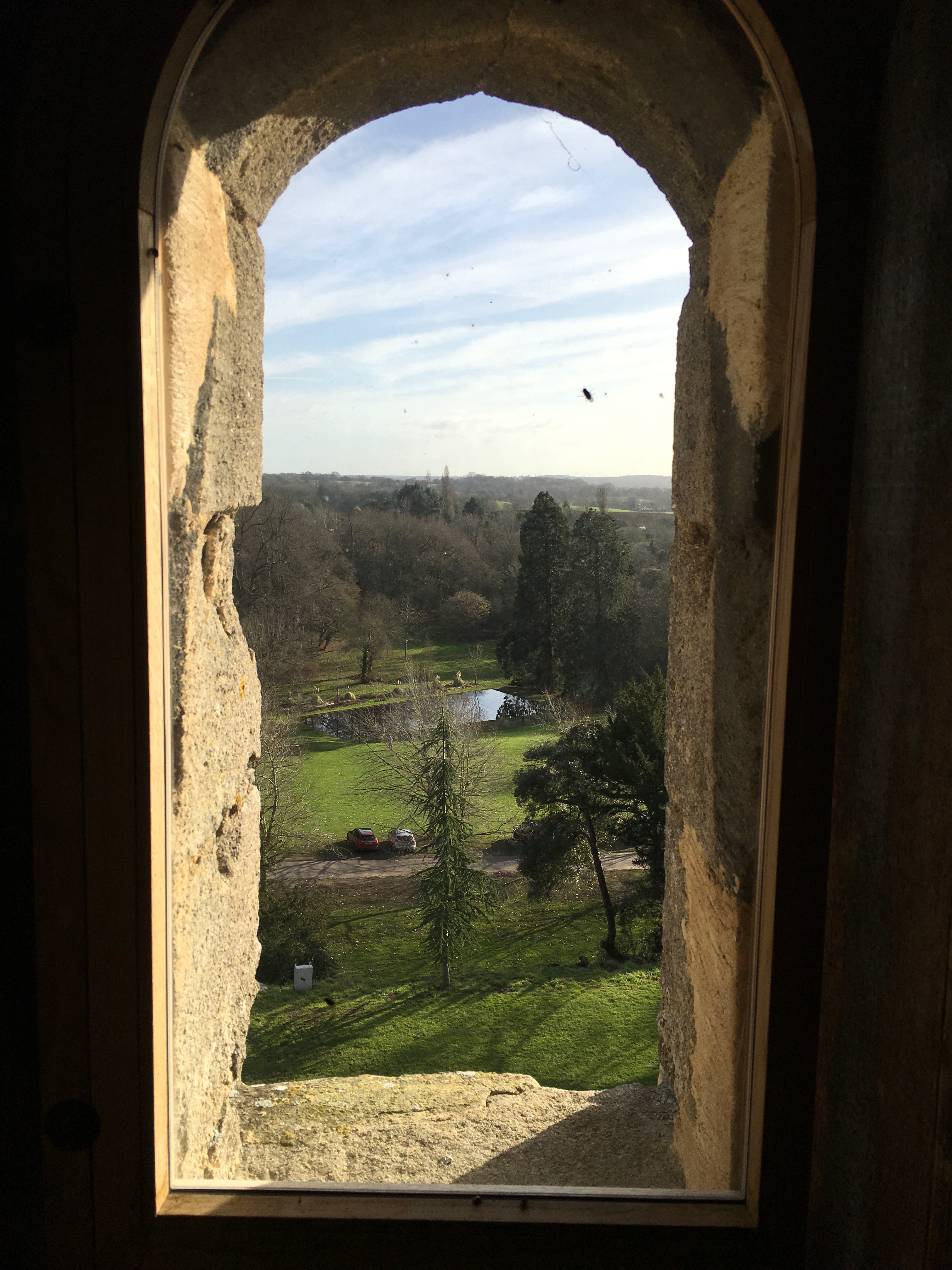
On the lowest level of the castle were the dungeon and storage. A stone staircase from outside leads onto the ground floor of the castle and here, on the garrison floor, the soldiers would have been sequestered. The small slits of windows surrounding the room let in just enough light and were wide enough for archers to shoot out at approaching enemies but small enough to make sure that no missiles entered the keep.
A garderobe (primitive toilet) is housed in one corner of the garrison floor, and is mostly a seat with a long open drop to the outside!

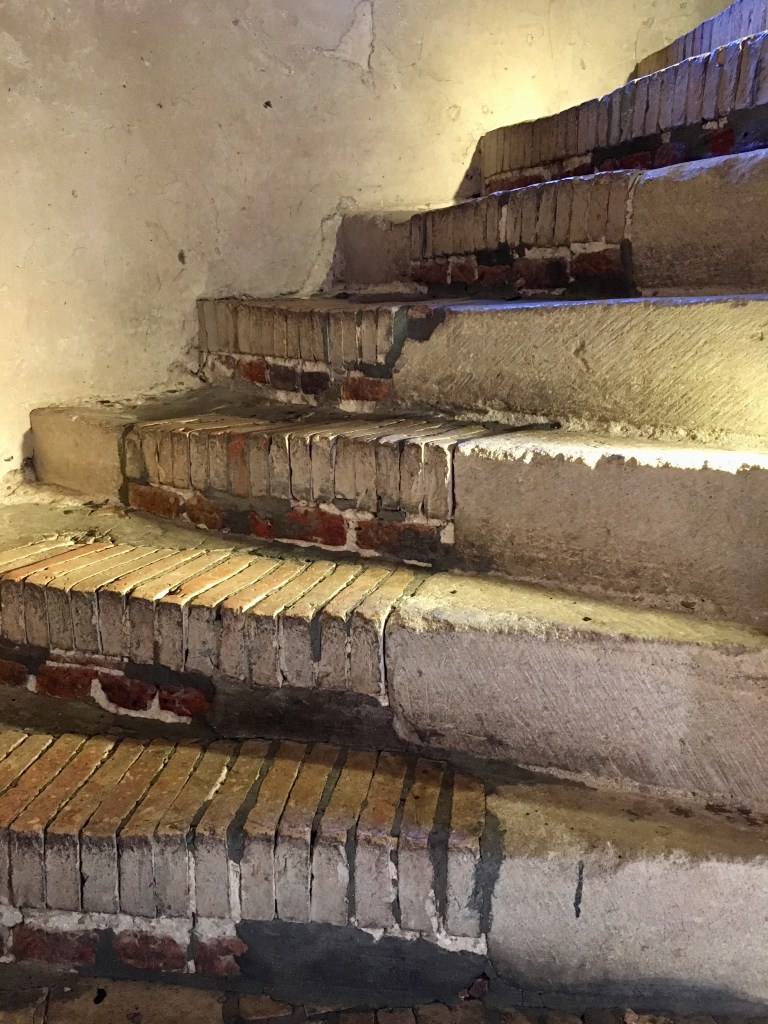
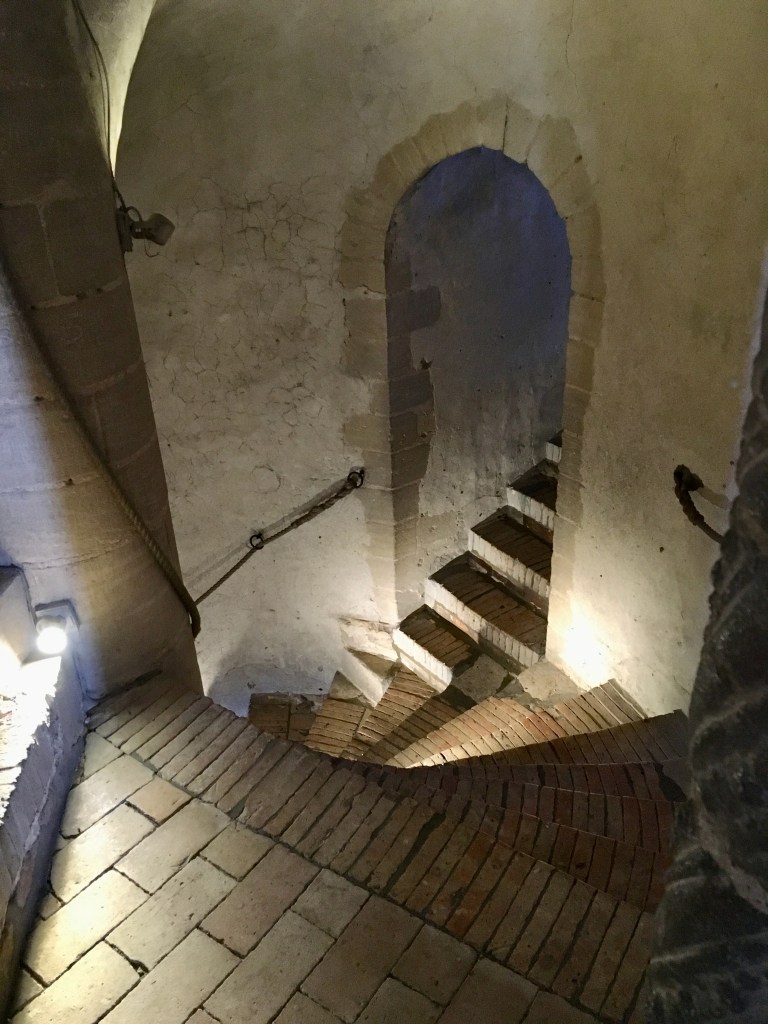
The beautiful mysterious staircase runs within the walls up to the other levels of the keep. The original stone steps were replaced by brick in the fifteenth century and the next floor leads to the stunning banqueting hall.

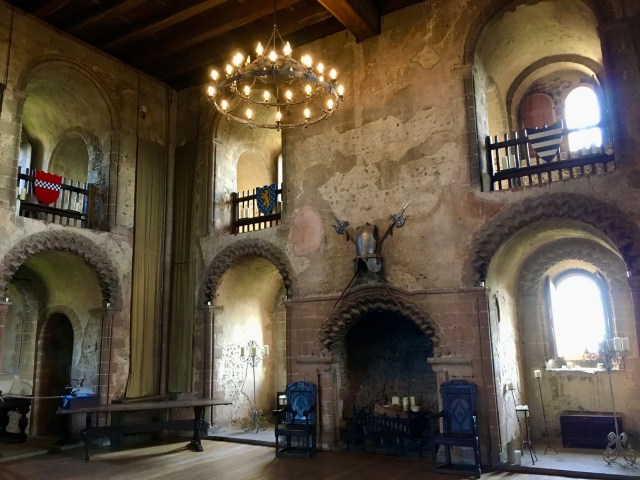
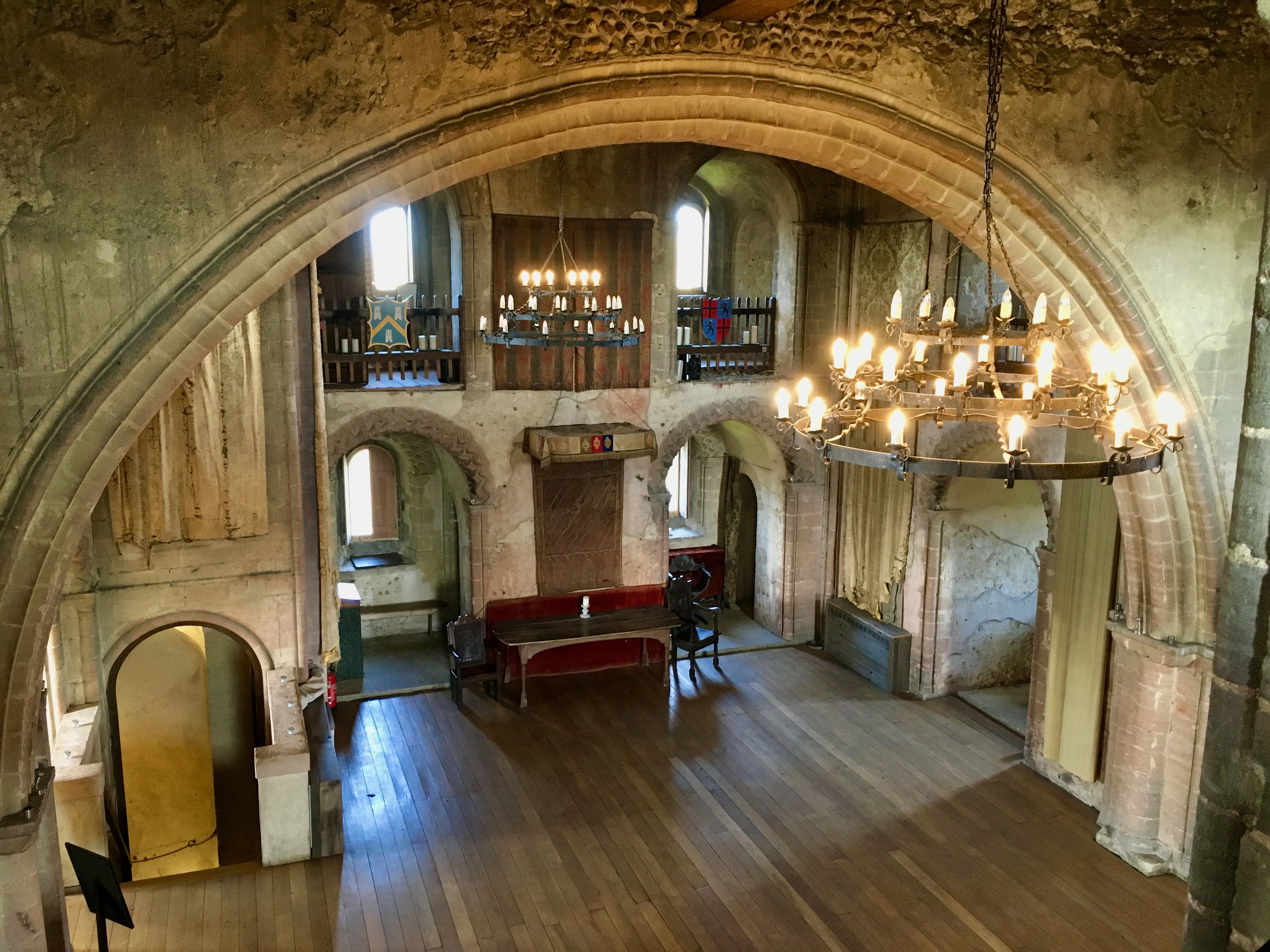
The hall is one of the finest domestic interiors still fully intact. It is a splendid room and towering across its length is an awe-inspiring breathtaking arch. The arch is the largest existing Norman one in England at 8.5 metres / 28 feet wide and 6 metres /20 feet high. The room would have been the headquarters for the Earl of Oxford; here the Earl lived with his family and from here the castle and estate were administered. The walls would have been covered by rich tapestries and rugs. The vast space would have been kept warm by the giant fireplace with its distinctive elaborate double chevron patterns renowned in Norman times – carvings seen throughout the castle.

Compared to the rich and luxurious carvings and wall hangings, the furniture would have been simple, with trestle tables, benches and wooden chests while rushes covered the floor.

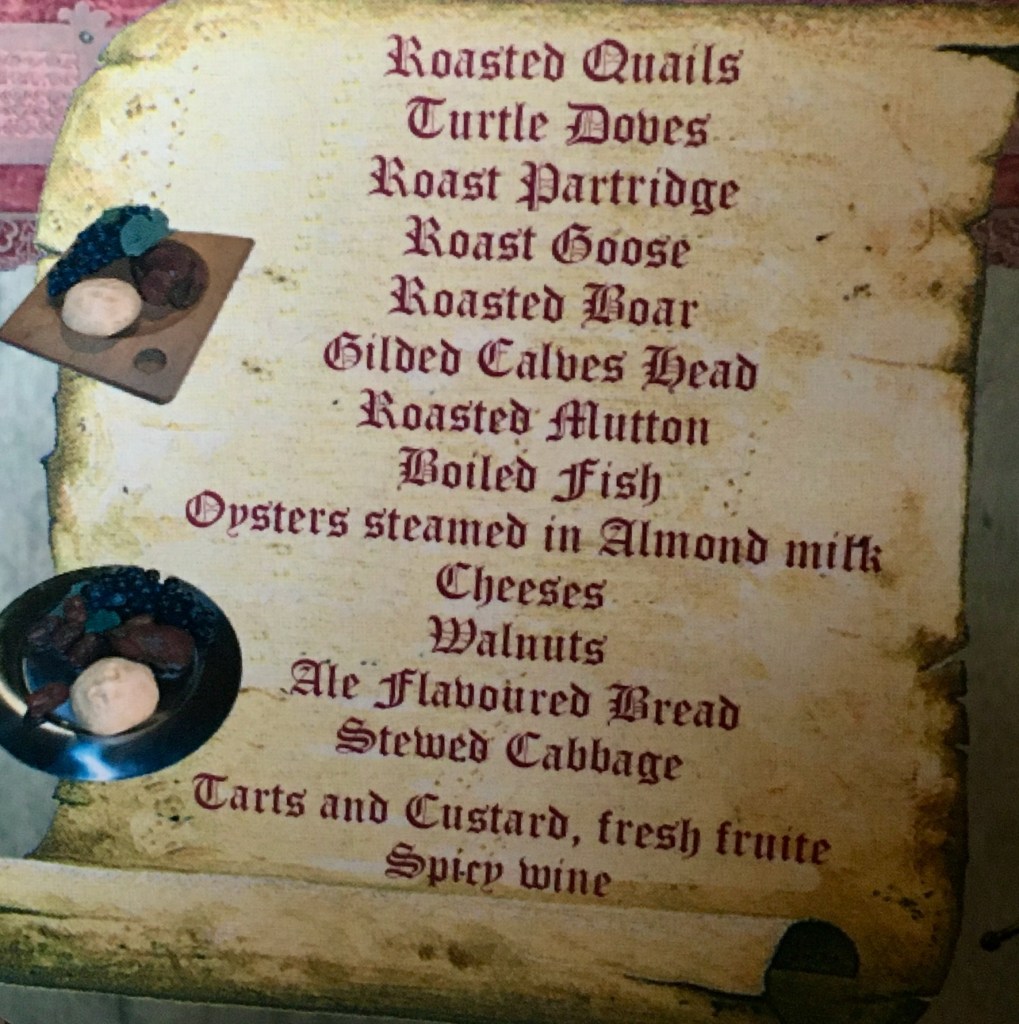
The diet of the time was based heavily on game such as deer and pheasant while the diners were entertained from the minstrel’s gallery above.

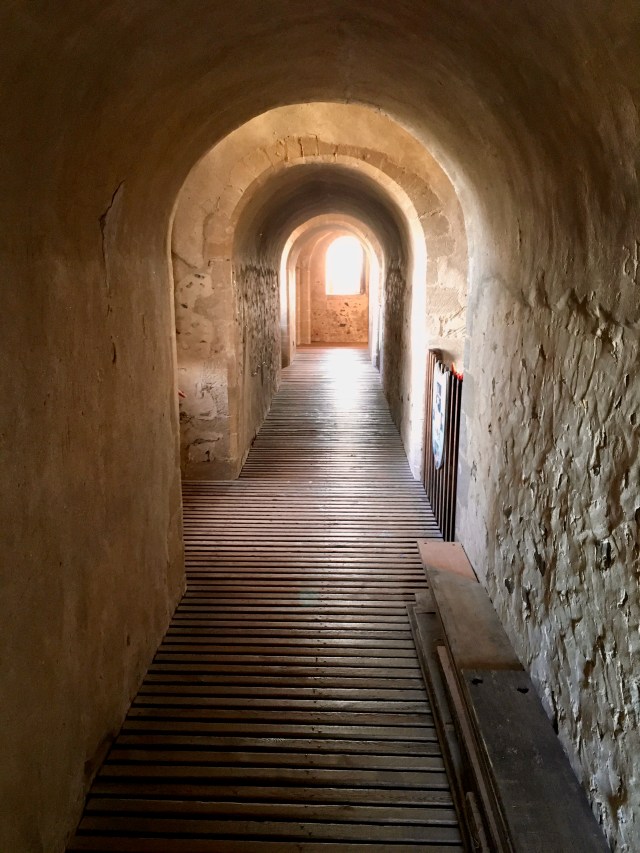
The ever-narrowing inner staircase leads to the minstrel’s gallery, a haunting corridor tunnelled inside the thick castle walls and running all around the banqueting hall. From here the travelling musicians, jesters and magicians would perform their craft, clearly visible from below.

The Minstrel’s Gallery

The top level of the keep was the dormitory section of the castle and more simplistic in its decor and layout.

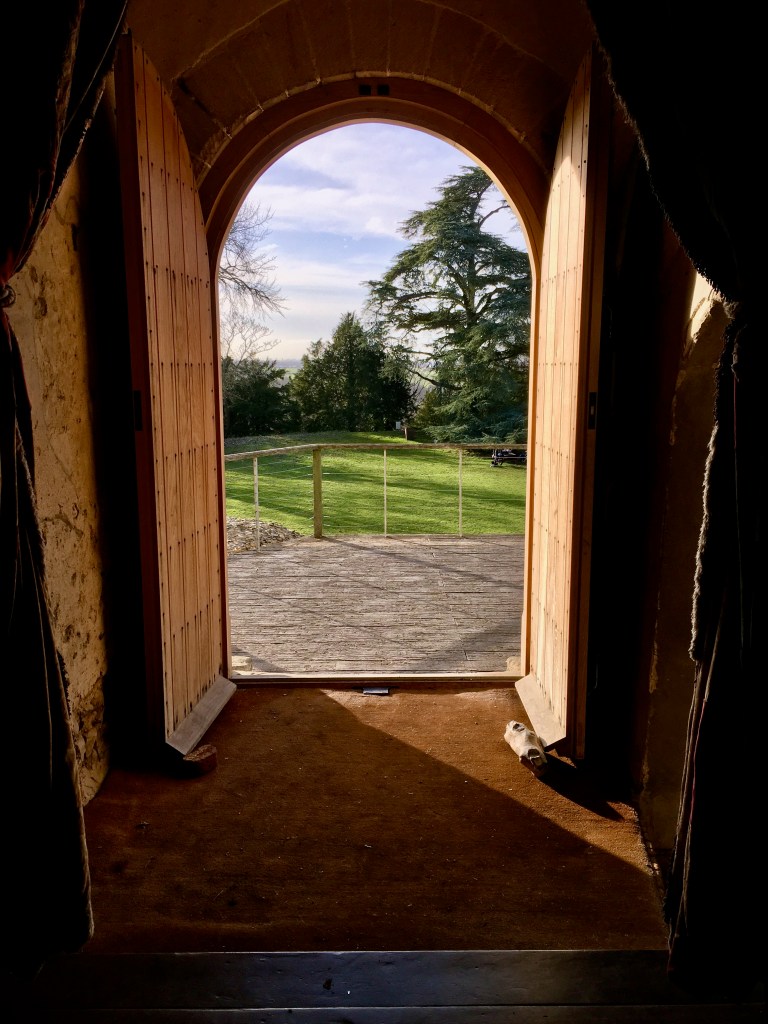
It is time to exit through the magnificent double chevron-carved arched double doors of the castle. These doors date from the 1870s and were originally from the Blue Boar, a local pub in the village.
The main double-door entrance onto the tilting lawn

After a memorable morning of exploration, one becomes fully immersed in the incredible history of Hedingham Castle. A castle which was twice successfully besieged for short periods, once by King John in 1216 and a year later by the future King Louis XV11. A castle whose owner, Edward de Vere, 17th Earl of Oxford, is strongly rumoured to be the true writer of Shakespeare’s work (if interested read more here). A castle filled with the aura of its extraordinary past.
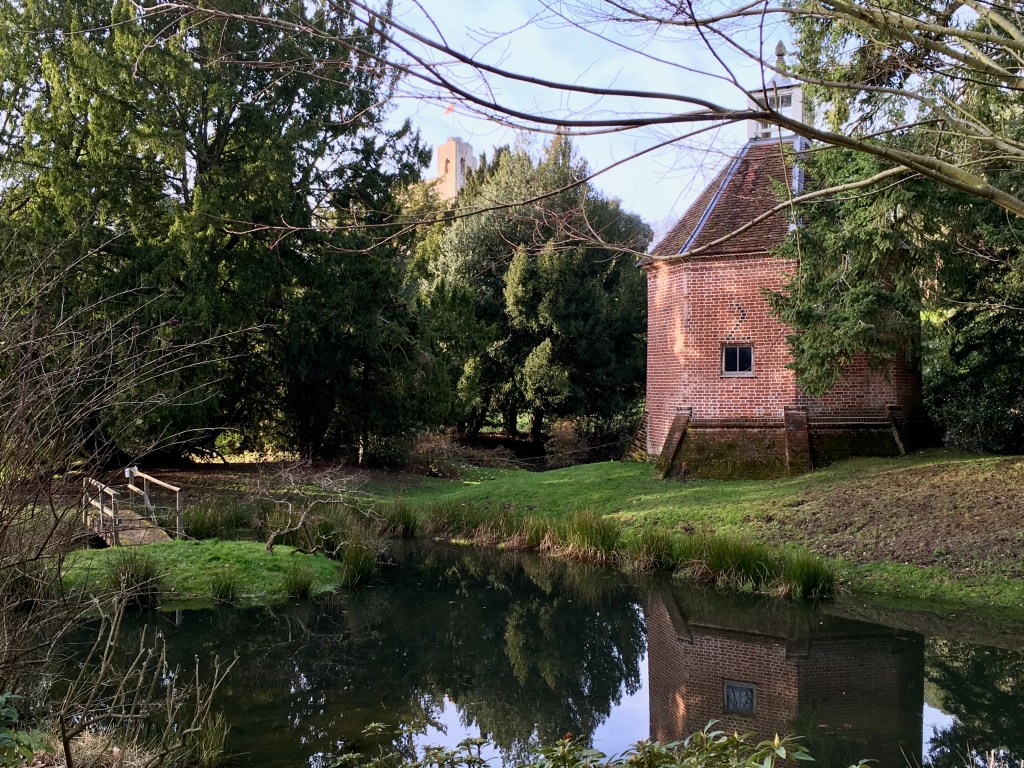
The dovecote which was built 1720

Stepping out into the sunshine was that the sound of battle? The voices of medieval folk on the tilting lawns? With a head full of facts and figures, with imagination over-heating on stories from the past, a refreshing stroll of the grounds beckoned. A time to stop and admire the snowdrops, the beautiful gardens and the lakes. Near one lake stands a dovecote from 1720 whose 460 nest boxes supplied meat and eggs for the family.

The twentieth century saw Hedingham Castle fall back into the fold of the de Vere family. Its new owners, the Lindsays, are part of the famous family through inheritance. Through their hard work, the castle and its grounds are once again part of the community through its open days of jousting, car shows and open-air theatre as well as being a popular place for school educational visits. Furthermore, it is a unique and memorable location for weddings!

NOTE: Post, writing and all photos ©Annika Perry, February 2023

EVERYBODY’S FREE (TO WEAR SUNSCREEN)

I stumbled across Everbody’s Free (To Wear Sunscreen) for the first time last week and was struck by its profound wise message. Certain sections of the sage advice caused me to cry up at my youth, and others had me laughing at how the world never changes! How could anyone sum up life in just a few minutes but they did!

Here are just a few snippets:

‘The older you get, the more you need the people you knew when you were young.’

‘Don’t be reckless with other people’s hearts, don’t put up with people who are reckless with yours.’

‘Know that worrying is as effective as trying to solve an algebra equation by chewing bubblegum.’

‘Do one thing everyday that scares you.’

‘Keep your old love letters, throw away your old bank statements.’ (Exactly what I did last summer when sorting boxes in the loft!)

If you’ve heard the song before I hope you enjoy listening to it again. If you’re hearing Everbody’s Free (To Wear Sunscreen) for the first time, prepare to feel as if your emotions have gone through the tumble dryer, coming out uplifted, seeing the world with new clarity and peace! And don’t forget to slap on the sun cream! I always do!

The song is based on a hypothetical commencement speech by newspaper columnist Mary Schmidt for the Chicago Tribune which was published in June 1997. Like so many others, musician Baz Luhrmann thought the essay was one given at a graduation ceremony at MIT by Kurt Vonnegut but as Baz Luhrmann tried to gain permission to use it for his song he discovered its true origins. Everybody’s Free (To Wear Sunscreen), also known as The Sunscreen Song, reached number one in Ireland and the United Kingdom.

MORE THAN COFFEE: A BOOK REVIEW

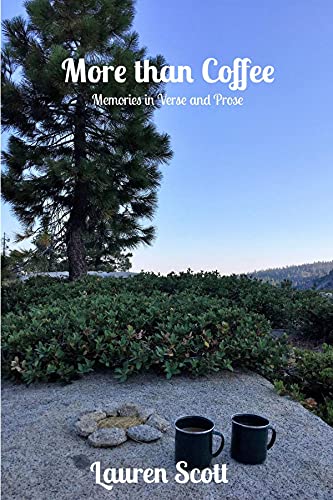
‘More than Coffee’ by Lauren Scott is a beautiful and reflective celebration of life; a book of poems and prose that flows with ease between memories of the author’s life, of the six decades of a loving marriage of her parents and of her family, to present day hiking trails, between the wonder of nature and the seasons to the amusing encounter with spiders!

The pieces are imbued with warmth, love, light humour and sadness; overall togetherness. Life in all its facets is explored and ensures that the reader reflects on their own lives and those closest to them, reminding us of the treasures within even the most insignificant of items or events.

A late-comer to hiking and camping, Lauren captures the magic and enriching moments of being in the wonder of solitude in nature.

‘It’s about those quiet, nostalgic moments sitting on a smooth slab of granite, captivated by the sights and sounds of wilderness surroundings.’

The book begins with her first ever hike in her fifties and in ‘Silver Heirlooms’ she describes setting out her mother’s silverware which brings moving reflections on how this previously normal household cutlery is now filled with nostalgic significance and poignancy as her grief over the loss of her parents eases to help her move forward.

The power of nature is captured throughout and it is a privilege to join her on the trail, pausing to appreciate that ‘listening to the whispers/among the trees/our time here/is a gift.’ Just as Lauren Scott feels that the ‘tranquility embraces’ so the reader is enveloped in a heartwarming embrace.

The book fulfils the promise of being a ‘snapshot of memories’ and one of my favourites could easily be turned into a novel, I feel. ‘Ninety-seven candles’ is a beautifully penned piece about her father-in-law Wil and his extraordinary life. During his nigh hundred years of life, Wil has twice been joyously married yet endured two heartbreaking losses. However, his positive attitude and gentle humour still shine through.

A humour shared by her father, who when asked the secret to reaching his nineties, declared with aplomb, ‘the olive in the martini’.

Through her gifted writing, Lauren captures the fun first meeting with her husband; who knew selling a fridge could be so life-changing! On their first date, it was ‘as though we’ve danced together a million times before’. Lauren has a gift for seeing beyond the ordinary and in ‘Cake’ she weaves in descriptions of her bridal shower, her parents and children – the universal force of love and life is re-affirmed.

Since singing is part of Lauren’s being it is perhaps not surprising that the powerful and intense poem ‘Belonging’ is a love song to her husband and soulmate, Matt.

Do you trust me? Will you
take my hand and let me
lead the way to a place
transcending the boundaries
of our reality? Let us get
lost in the tranquility –
dancing to the majesty of
the surroundings, feeling the
rhythm vibrate through our
bones. For as long as our
hearts desire, this is our
destination. For time is
but a memory. Its existence
leaves no trace on the path
where we tread. There is
only you, me, and the
intensity of our belonging
to each other.

‘The Phone Call’ especially resonated with me as a recent ‘empty-nester’; I related to the gems of long chats with children moved away, the love and pride as they make their way into the world, but the pain too. As Lauren’s son is soon to embark upon his path across the country he tries to reassure his parents and show them how this is a positive experience for them – a comment that had me laughing out loud and so typical! ‘Mom and Dad can reap the benefits of having the house to themselves.’

In ‘More than Coffee’ Lauren realises her dream to be ‘the narrator of my own stories’ and it is with gratitude, joy and chuckling that I could sit down, with a cuppa, and join in this wonderful, uplifting and absorbing collection; peace settling upon me. I only hope I will learn to collect my memories with equal clarity, wisdom and warmth, to reach a deeper understanding of life and its joys and tragedies. ‘More than Coffee’ is a true tonic for the soul and I cannot recommend this book highly enough!

Rating: 5 out of 5 stars

Publication Date: 21st September 2021

Available:

Amazon UK: Kindle £ 3.32 Paperback £ 6.88

Amazon US: Kindle $ 4.99 Paperback $ 2.34

ABOUT LAUREN SCOTT

Lauren writes poetry, memoir, and fiction short stories who lives in California with her husband of thirty-three years and their chocolate lab; they have two grown children. She has authored two collections of poetry: New Day, New Dreams (2013) and Finding a Balance (2015). Her latest book, More than Coffee: Memories in Verse and Prose was published in 2021. And in 2022, she contributed four poems to the anthology: Poetry Treasures 2: Relationships. Lauren writes about family, experiencing loss, finding joy in the smallest things, and nature from her many backpacking and camping adventures.

Parallel to her passion for writing is her love for reading. Whether it is a gripping thriller or a heartwarming romance, she enjoys exploring different worlds and meeting diverse characters, drawing similarities to reality that translate into her own writing. Her writing projects are sometimes serious – drawn from painful subjects and raw emotions – or they spotlight her silly side – pulled from humorous moments captured in photographs.

Lauren is inspired to write from her love of nature and the marvelous wild world that surrounds her: the smell of the woods, the sound of a babbling brook, and the chorus of birds singing. Recent backpacking trips with her husband along the California coast and Sierra Nevada mountains have stirred up thoughts to pen about love, lost friendship, family, and the possibility that anything can happen. Hikes along the Paper Mill Creek remind her that life is fragile. From trout hatchlings to swallowtail butterflies, Lauren marvels at how the world is interconnected and that every living thing matters. She hopes her readers will find a little nugget of delight, comfort, or understanding in her poetry and stories – some detail that resonates with them beyond her words.

Finally, Lauren Scott shares her beautiful poetry, vignettes on life, and fiction short stories on her engaging blog Baydreamer ~ a thread of words from every stitch of life ~. Enjoy meeting her there and join Lauren for a cup of virtual coffee and chat.

THE ENIGMA OF ROOM 622: A BOOK REVIEW

There is a wall! In nearly all fiction novels there is a distinct wall between the story and the writer – the latter remains well hidden and remote from the book. However, in The Enigma of Room 622, the first book I read in 2023, the author smashes through this concept and becomes one of the main protagonists. With daring and excellent writing Joël Dicker breaks down the infamous fourth wall within acting (and by extension in writing) and directly addresses the reader while at the same time becoming one of the key characters.

I started reading this beautiful book gifted to me for Christmas without scanning the inner dust jacket information, without perusing its back cover. Sometimes I just want to be surprised and wow, this book achieved that in abundance!

After a couple of pages, I found myself doing a double-take! Was the writer’s name really the same as the initial character? Were they both the same writers? The answer was an unequivocal yes!

A careful reading of the blurb showed I was right and I was thrilled! Could Joël Dicker carry this off and retain it throughout the whole book as he investigated the mystery and interviewed people along the way? Could he slowly unravel the story in the first person perspective while at the same time creating a full-fledged novel of 563 pages in the third person? Absolutely!

The Enigma of Room 622 is a multi-layered novel that begins with a very simple set-up.

A famous writer, recently broken up with his girlfriend, leaves for a break at Hotel de Verbier in Switzerland. He finds himself in room 621a. The scene is set—what happened to room 622? A mysterious unsolved murder it turns out and his recent friend and aspiring writer Scarlett urges him to investigate the story. She believes this can help him recover from his girlfriend woes, and the writer’s sorrow following the death of his mentor/publisher. In the process, she hopes this will help Joel create his next global blockbuster.

Quickly the novel develops into a partial thriller involving a Swiss international bank, as well as espionage, plus a murder mystery and also tilts towards romance in the form of the trickiest and pivotal of love triangles.

The plot line reminds me of an intricate Venn diagram with various engaging storylines on the periphery which intersect throughout the book. Furthermore, the author interweaves a multitude of characters and plots across thirty-five years with a deft seamless touch that has the reader hooked throughout!

Macaire Ebezner is a president in waiting to the largest private Swiss bank and he is married to the stunning Anastasia, supposedly part of a Russian dynasty. As well as a banker (a role that honestly rather seems to bore him) Macaire enjoys the excitement of working as a spy for the Swiss secret service to aid the county.

Macaire’s presidency is in doubt however when he learns that the board plan to vote in Lev Levotich instead. The plot thickens and the history of Lev’s lowly actor father is introduced in detail as is Lev’s surprising rise to banking success! The two men are tied together not only through banking but through their love of the same woman.

This is only the bare outlines of an intricate suspenseful novel with a plenitude of extraordinary characters and their lives. There are twists galore until the most astonishing and unexpected ending!

The imagination and skill of Joël Dicker in creating this tour de force novel are extraordinary. It is one I can highly recommend.

About Joël Dicker:


Joël Dicker was born in 1985 in Geneva, Switzerland, where he studied law. He spent childhood summers in New England, particularly in Stonington and Bar Harbor, Maine. The Truth about the Harry Quebert Affair won three French literary prizes, including the Grand Prix du Roman from the Académie Française, and was a finalist for the Prix Goncourt. It was later adapted for television starring Patrick Dempsey. The Baltimore Boys, at once a prequel and a sequel, was published in English translation in 2017, followed by The Disappearance of Stephanie Mailer in 2021. The Enigma of Room 622, his first novel to be set in his native Switzerland, has sold more than a million copies in France. Dicker lives in Geneva.

MISPLACED DREAMS

It’s that time of year again! To reflect on the previous twelve months and especially in terms of books!

One blogger in particular sums up her reading with a creative and unique approach; namely, a short story using some of the titles of the books she’s read the year before. (You can read her wonderful short story A Walk in the Wood, Book by Book on her blog ROUGHWIGHTING) Many thanks, Pam for inspiring me to write the story below which features the titles of my top twenty of the eighty books I read in 2022.

Enjoy and see how many titles you can spot! A full list is at the end of the story.

MISPLACED DREAMS

On the island of missing trees, the grief songs resonated in the absence of the light through the leaves. Songs which spun through the air in the secret language of lost dreams; when the world of sleep took on a life of its own across the four winds of the continents and set forth into the wilderness seeking their beloved recipients.

Abigail considered herself to be one of many perfectly ordinary people until the day she joined the puzzle women. Here she realised she was uniquely placed to help others, to reconcile dreams with their owners. Many claimed she lived in cloud cuckoo land however she knew in her heart she must try and in the process find the dreams waiting for her.

It was impossible to forget the day she met him. There were so many funny things about Norman Foreman after all; a congenial chap with a triangular beard bustling down his chest, the white a comfortable padding upon his generous stomach.

“Here’s the reading list, to get you started,” he’d uttered as they sat on the bench that first meeting. The ducks waddled by the river, ignoring the bread thrown to them.

Abigail had taken the list and in that second of handover it quadruped in size and she almost lost it in the sudden gust of wind.

“I’ll do it,” she nervously promised this unusual man.

On the way home the girl at the back of the bus tried to peer over her shoulder, gasping at the impossible dreams on one side of the page, the never-ending list of names on the other. She might very well gasp in wonder, Abigail thought. She too was flummoxed. How was it possible to unite the two?

“I wish you were here,” Abigail muttered to herself in the evenings, resting in the favourite well-worn armchair, the armrests sunk in the middle disconsolately. Any energy on their part to remain puffed up long since abandoned following the passing of its regular occupant, her dear William. It was nearly fourteen years ago but still she talked to him every day.

“I’m coming home,” she reassured him. “I’m coming home.”

“Never forget the forty rules of love, my darling,” he used to remind her every morning as Radio 3 and its classical music played softly. They’d written their own rules for fun on a napkin in the local Italian restaurant on their second date. The day had forever changed their lives, love bound them into infinity.

The writing was now faded, the white of the tissue a dour brown yet certain words were legible. She’d framed it as a 20th wedding anniversary present. William died ten months later.

The napkin had become an ideal ornament of remembrance at the place of their first outing as an engaged couple. The unique museum of ordinary people struck a chord with them both and they were touched by how everyday objects of deceased loved ones were displayed with tenderness and thoughtfulness. The everyday items in the museum ensuring that the extraordinary of every life lived on. Her precious napkin was now an exhibit of its own.

Oh, how she missed her treasured hubby, how she ached to see him again and every morning the way home gets longer and longer, she thought wistfully. The way home to seeing him again seemed insurmountable.

Grief, the absolute abyss of sorrow swallowed her up, her vocal chords unused to speaking, she’d become a dictionary of lost words. Until the day she discovered the mad, insane yet incredible project.

She’d help everyone she could to be reunited with their dreams and perhaps one of the others would find hers. In the process she would find herself again and the refrain of ‘the rest of me, the rest of me’ rang in her mind.

She’d wandered alone for so long!

Years after their first talk she met Norman again and he made her the new leader of the puzzle women. To the backdrop of the murmur of bees in Glenn Gardens Abigail finally declared her longing to Norman – to dream of William every night for the rest of her life. To be reunited with him for eternity in the living and dead.

“It is quite possible,” he’d confirmed as he chewed the remains of the beef sandwich, the crumbs trailing down the white-bearded mass.

One night months later she turned off the Mozart CD that she’d been listening to whilst working away. Mozart! One of William’s favourites and how they had dreamed of going to Vienna. It was not to be.

Abigail put the massive sheaf of papers aside and stepped away from her overflowing desk. The buzzing of the computer faded with one last sighing whine and became silent. The house was quiet. Perfectly still.

Sleep, once again, Abigail fell into her dreamless sleep, the darkness overwhelming until the silence was broken by music from the secret piano. Overwhelmed she listened in bliss before William stepped forth from the piano and bowed to her. At last, her wish had been granted and they were finally reunited!

©Annika Perry, January 2023

Here are the books with links to them in chronological order as they appear in Misplaced Dreams.

The Island of Missing Trees by Elif Shafak

Grief Songs by Liz Gauffreau My Review of Grief Songs

The Light Through the Leaves by Glendy Vanderah

The Four Winds by Kristin Hannah

Perfectly Ordinary People by Nick Alexander

The Puzzle Women by Anna Ellory

Cloud Cuckoo Land by Anthony Doerr

Impossible to Forget by Imogen Clark

The Funny Things about Norman Foreman by Julietta Henderson

The Reading List by Sara Nisha Adams

The Girl at the Back of the Bus by Suzette D. Harrison

wish you were here by Jodi Picoult

Coming Home by Rosamunde Pilcher

The Forty Rules of Love by Elif Shafak

The Museum of Ordinary People by Mike Gayle

The Dictionary of Lost Words by Pip Williams

the rest of me by Katie Marsh

And Every Morning the Way Home Gets Longer and Longer by Fredrik Backman

The Murmur of Bees by Sofia Segovia

The Secret Piano by Zhu Xiao-Mei

As I mentioned every New Year is a treat for all book lovers here on WordPress as the community shares some of their best reads from the previous year. Here are just a few posts I have come across. Please let me know if you have written a post featuring your books of 2022 or have enjoyed some other ones!

Jan Sikes

Dave Astor on Literature

Books and Bakes

Book Club Mom

Mick Canning

Darlene Foster’s Blog

Myths of the Mirror

Finally, to view all the books I read in 2022 as part of the Goodreads Reading Challenge please click here.

FIRST SNOWFLAKE

"Giant fir trees heavily draped with snow, towering birches also snow laden. The only colour is that of the yellow and blue of the Swedish flag hanging from the corner of one of the summer houses. A caption on the photo read Nothing can dim the light which shines within by Maya Angelou."

No one saw my descent that day.

In the gloom of an April afternoon, I twirled and danced my way to the ground. Through the windows of the houses, I spied people engrossed in their books, not even pausing for a second to look up at the wonder of I!

The first snowflake of the day!

So many before had vanished in a second, a small damp mark the only sign of their existence. So, that is my fate! A dazzling display for myself alone and then oblivion. As I fell through the sky, a sudden chill snapped at my points, and the atoms within the air seemed to creak and crackle. My form, utterly unique to me alone, became bold, and in amazement, I neared terra firma. With a final wispy winding whirl, I landed safely upon the soft moss of the forest.

The first! The first snowflake laying the foundations for all those to follow.

The transformation was underway!

©Annika Perry, January 2023

*****************

The scene shown in the photo above followed the rapid and unexpected snowfall in April 2022 while staying in the ‘summer houses’ deep in the forest a two-hour drive north of Gothenburg, Sweden.

Within a few hours, without moving an inch, it was as if I had travelled through the seasons; to a world bewitched. The giant fir trees became ethereal as they were decked in their white gowns, the trees dominating the landscape.

Wishing you all a blessed and happy New Year, filled with creativity and an opportunity to fulfill your dreams.

“Ring out the old, ring in the new,
Ring, happy bells, across the snow:
The year is going, let him go;
Ring out the false, ring in the true.”
Alfred Lord Tennyson (1809-1892), From Ring out, wild bells in In Memoriam

PICTURE WORTH A THOUSAND WORDS

Do you have a spare thirty hours? Furthermore, do you have about thirty manual typewriters laying around the house?

Probably not!

One architectural student however has both of these and is creating a most astonishing new form of art – one that is reaching across the globe.

Known as the typewriter artist, James Cook (aged 25) from Braintree, Essex uses obsolete manual typewriters to ‘paint’ / tap out stunning landscapes, portraits as well as animated drawings.

James Cook. Photo on Google

There is just a moot point – they are mostly black with a dabble of red (the two colours of typewriter ribbons!) James uses the restrictions of colour to a wondrous effect, capturing St. Paul, Westminster, New York, and Florence amongst many of the world’s famous sights! The largest of these used over 500,000 characters and the least amount of time on the smallest commissions is at least thirty hours.

One weekend in July I had the pleasure of attending an exhibition of his work at a gallery in Finchingfield which is a picturesque quintessential English village with plenty of thatched houses, duck pond, pubs and cafes galore as well as a windmill.

Finchingfield Village sign. Photo by Annika Perry

It was amazing to see the drawings in real life at The Wonky Wheel Gallery. There was a wide range of them on display and it was fascinating to learn that like traditional artists James Cook actually takes his tools of the trade out on location – in this case, a typewriter or two – and sits on a chair tapping away. He will also ensure to make pencil sketches for reference later.

The Wonky Wheel Gallery & part of the James Cook exhibition. Photo by Annika Perry

However, unlike oil and water colour artists, there is little scope for error as there are no second chances and he is loath to use Tippex (white out / correction fluid). ‘Accepting mistakes has been the toughest challenge.’

To date, James has created nearly 200 drawings, and last year became a full-time artist! The now 40 typewriters used range from a 1920s Continental Portable, to a Tippa and Rimington Envoy III to later manual typewriters from the 1990s.

There was one fellow typewriter collector James longed to make contact with – Tom Hanks. The latter was impressed enough with the portrait of himself which James sent him to return it signed. This had pride of place in the exhibition and it is startling how the artist has captured the character and nature of the actor.

Currently, typewriters are to be found in every room in James’s house, and some in his car, although only a few are fully working at any time. Luckily a local company helps to supply the all-important ribbon and he is also sourcing them from the USA.

Throughout his work, his passion for buildings shines and being a student in the field is a crucial component in his success.

The Dom Tower, Utrecht, Netherlands typewriter art by James Cook. Photo on Google

Commissions are at the heart of his work as an artist and over the last seven years, James has become internationally recognised for his work. He has accepted orders from numerous countries including South America, Australia, France, Germany and the USA.

He finds that his ‘inspiration is motivated by the stories of individual and customer who commission drawings’.

Just as each drawing is created from two perspectives, that of the close-up of each individual letter, number or punctuation to create the mesmerising whole image, the viewer is equally beguiled by both elements. Close up I could see the darker areas of the drawing where the key has been struck endlessly in one place, in other areas I could see individual characters, and at times whole sentences are visible. These ‘hidden’ sentences helped him to create his slogan of ‘a picture is worth a thousand words’.

Florence typewriter art by James Cook. Photo by Annika Perry

While at the exhibition my husband and I bought one of his limited edition prints of Florence, a belated wedding anniversary present to ourselves and in memory of a beautiful visit there years ago. From afar James has captured the city with awe-inspiring effect, building upon building rising up to the iconic Duomo in the distance, the serene Arno and woodland in the fore. Looking closer I can make out sentences such as ‘11 November’, ‘did not wake up’, ‘with intention’ and ‘2nd time lucky’. On each viewing of the image, I make a new discovery and each new find enhances the drawing!

I am sure the astonishing typewriting art by James Cook will become ever more popular and known and it was a joy to view his drawings and some of the typewriters in the early days of his career. If you want to see more of James Cook and his works click here.

Finally, after three long years, my family and I are once again returning to Sweden for a long summer holiday and as many of you are aware the location is wonderfully idyllic and remote – ie. no Wifi! I will pop in to a library or family & neighbours during my sojourn and reply to comments when possible. I wish you all a wonderful safe summer (or winter to my friends in the southern hemisphere).

‘Within you there is a stillness and a sanctuary to which you can retreat at anytime and be yourself.’

Hermann Hesse

Finchingfield famous bridge and duck pond. Photo by Annika Perry