Sometimes we all need a new perspective; be it in our lives, our art, our writing or even a photograph.
In the first photo I bobbed down to the ground, keen to look up at the bench in the gravel garden at home. What is it the birds see when I look down at them peeking cautiously up at me? Oh, an oasis of tranquility and I appreciate it more than ever this corner of the morning sun!
‘Being loved by someone gives you strength, while loving someone deeply gives you courage.’ Lao-Tzu
There is always a wonderful sense of overwhelming peace and freedom at looking at a beautiful landscape down below. Here it is, a bit of a trek up the site of an old hill fort called Olsborg in Sweden. Initially constructed in 1502 it was re-built several times and now only a few signs of the old settlement are visible. It overlooks the beautiful 28 km / 17 miles long Bullaren Lake.
‘Speak only if it improves upon the silence.’ Mahatma Ghandi
The favourite rose in my garden, The Queen of Sweden, gives me much joy throughout the summer and autumn and one I’ve shared many times including here. This close-up image portrays the duality of its resilience and fragility, all encapsulated upon folds of pink petals upon pink petals!
‘Let there be no purpose in friendship save the deepening of the spirit.’ Kahlil Gibran
A challenge awaits the walker in the final photo for this post, the gentle rolling walk low down on Ilkley Moor, West Yorkshire quickly becomes a steep climb up to the old spa bath of White Wells. The latter was built around 1700 and a single plunge pool still survives to this day (no, I’ve never tried it!). Ilkley Moor and its stunning beauty is famed in the UK and even boasts its own unofficial county anthem ‘On Ilka Moor Baht ‘at’ (Yorkshire dialect for ‘on Ilkley Moor without a hat’). I was lucky enough to grow up in this area and enjoyed a walk on the moors every weekend
Thank you for reading this first of three posts featuring photos and quotations as I am away in Sweden for the next few weeks. Comments are turned off for this post.
‘Most collectors collect tangibles. As a quotation collector, I collect wisdom, life, invisible beauty, souls alive in ink.’ Terri Guillements
What is it about quotations that pull us in?
The snippets of sentences and the sharing of thoughts open a door to our humanity. Upon reading the words, our souls can take flight, lifted high by the wisdom and our hearts lightened. Quotations offer rays of hope in a world that is all too dark. They reflect ourselves, the people we want to be, and the world we long to create.
When it feels increasingly difficult to find direction, quotations nudge us back on track. They are a gentle reminder, an inspiring greeting to one’s inner self.
As the world rushes by they allow us to take a ‘beat’, a pause for that all-important re-set.
‘I pick my favourite quotations and store them in my mind as ready armour, offensive or defensive, amid the struggle of this turbulent existence.’ Robert Burns
In school we are flooded with quotations during literature studies, some still remembered to this day. At the time we often think of them merely as supportive evidence for a point, an argument we are making in an essay. Much later we realise how profound they were, etched on our minds still decades later.
Later in life, we come across quotations in books, magazines and yes, online. Blogging has clarified the important role of quotations in our lives.
‘Like your body your mind also gets tired so refresh it by wise sayings.’ Hazrat Ali
Every year I open a quotations folder and feed the empty pages which are greedy for the latest wisdom. A haphazard, eclectic source of sayings is gradually created, with quotes from the ancient Greek & Roman times to the present day.
It’s often said that home-made Christmas presents are the best and not being blessed with any needlecraft skills, every autumn I instead create a calendar for my mother. This is made from some of my favourite photos along with some special sayings. I cherish the joy it gives my mother, how every month she will message the new pictures and quotations; commenting upon them with her innate sense of wisdom and fun.
Next to the originator of a good sentence is the first quoter of it. Many will read the book before one thinks of quoting a passage. As soon as he has done this, that line will be quoted east and west.’ Ralph Waldo Emerson
As I am away for a while in beautiful Sweden for a long sojourn, it is my joy to share some of these calendar images with you in my next three posts – I hope you find them enjoyable, rewarding and insightful!
Many of you know that during my stay away involves living amid the forest which although it has most mod-cons deliberately has no wifi. Hence my absence from blogging however I look forward to catching up upon my return. Comments are turned off for this post.
‘I have always imagined that Paradise will be a kind of library.’ Jorge Luis Borges
When approaching a new novel by Keith Stuart I’ve learnt to expect the unexpected! He’s a writer who continually explores style, themes and characters – and this is true for his recent release of ‘Love is a Curse’.
The novel immediately throws us into a world where the supernatural has dominated the lives of four generations of women of the same family. For nearly a hundred and fifty years they have lived under the curse – their lives have all been touched by it, as its youngest member, fifteen-year-old Camilla Piper is soon to discover on her aunt’s deathbed. Lorna’s last words to her niece are to warn her young Cammy: ‘Just don’t fall in love!’ All the women in the family are destined to lose the ones with whom they fall in love.
Ten years later, Cammy is still unsure of what to make of the declaration. While her sister and mother are quite normal, Cammy always feels lost and like an outsider, she is a goth just like her aunt was, and she is a little-known jewellery designer.
The arts are a critical key element within the novel, especially that of Lorna who was a world-famous artist in her time working together for a while with an equally renowned digital and robotics artist.
As an adult Cammy moves into her aunt’s old place of St. Cyprian’s Church in a small village in Somerset. It is not long before an overwhelming sense of doom falls upon Cammy, a constant feeling of being watched, smelling her aunt’s favourite perfume. She also learns about the horrific fire started by a woman in the late 1800s. A pivotal event, the fire destroyed the manor House nearby, and it turns out later that the woman was related to the family.
One day, just after Cammy declares her love to her new boyfriend during a call as he is driving, Ben crashes for no reason into a tree and is severely injured.
Cammy is convinced the curse is real and she starts to accept that she may never be able to love yet she feels compelled to delve into the past to discover more.
‘Love is a Curse’ becomes a superbly crafted paranormal investigative novel with a deep dark sense of foreboding prevailing throughout. Pathetic fallacy is used to great effect throughout the novel as furious gales and thunderstorms wreak havoc around the church and countryside. The church itself almost becomes a main character in its own right, its spooky and eerie atmosphere heightening the sense of the supernatural.
To help build up the stark threatening tension and mystery the author expertly employs a variety of elaborate narrative techniques including the main first-person POV of Cammy, but also the loving and heartbreaking love letters between her great-grandparents in World War I, her grandmother’s journal revealing a shocking (for the time) love story as well as articles and paintings. The author catches the sense of each era perfectly.
As Cammy gains knowledge of each sorrow endured over the decades a sense of inevitability takes hold over her and leads Cammy to take dramatic actions.
The true tour de force of the novel is how Keith Stuart gradually, and then with increasing dramatic impetus, reveals the truth behind the curse.
Reading furiously at times I had to come up for fresh air. Here his expertise as a storyteller comes to the fore – his characters not only wind their way into our hearts, but the wisdom learned along the way becomes part of the reader’s heart and soul. It is a long time since I have underlined so many paragraphs in a book!
It is refreshing to read a book with so many resilient, strong and determined female protagonists, who experience extraordinary and life-changing events yet discover the strength to find the truth and overcome them. It is a joy to read a book where the paranormal and every day are interwoven centred on a convincing and engaging set of characters.
‘Love is a Curse’ is a hugely enjoyable fourth book by Keith Stuart and I look forward to seeing where his imagination will take him next!
I received a free copy of this book from the publishers via NetGalley in exchange for an honest and impartial review.
Rating: 4 out of 5 stars
Publication Date: 25th April 2024
Publisher: Little, Brown Book Group / Sphere
Genre: General Fiction (Adult), Historical Fiction, Romance
Available: AMAZON UK Hopefully it will soon be released in U.S
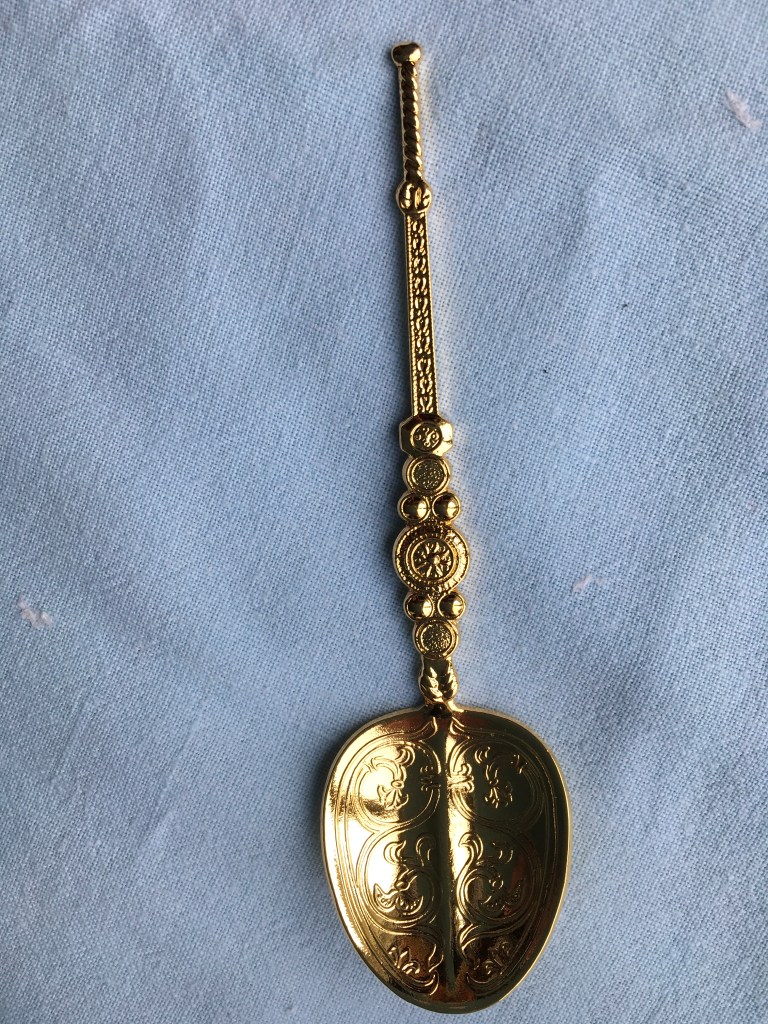
My respect for the staff of the big houses, such as the fictional Downton Abbey, grew this week as I set to sprucing up my silver spoon collection.
Long neglected, it has lain gathering dust in the loft until the recent redecoration of a room brought it to mind. A new blank wall, a whole new canvas beckoned to be filled and up to the ladder I headed to hunt out something appropriate.
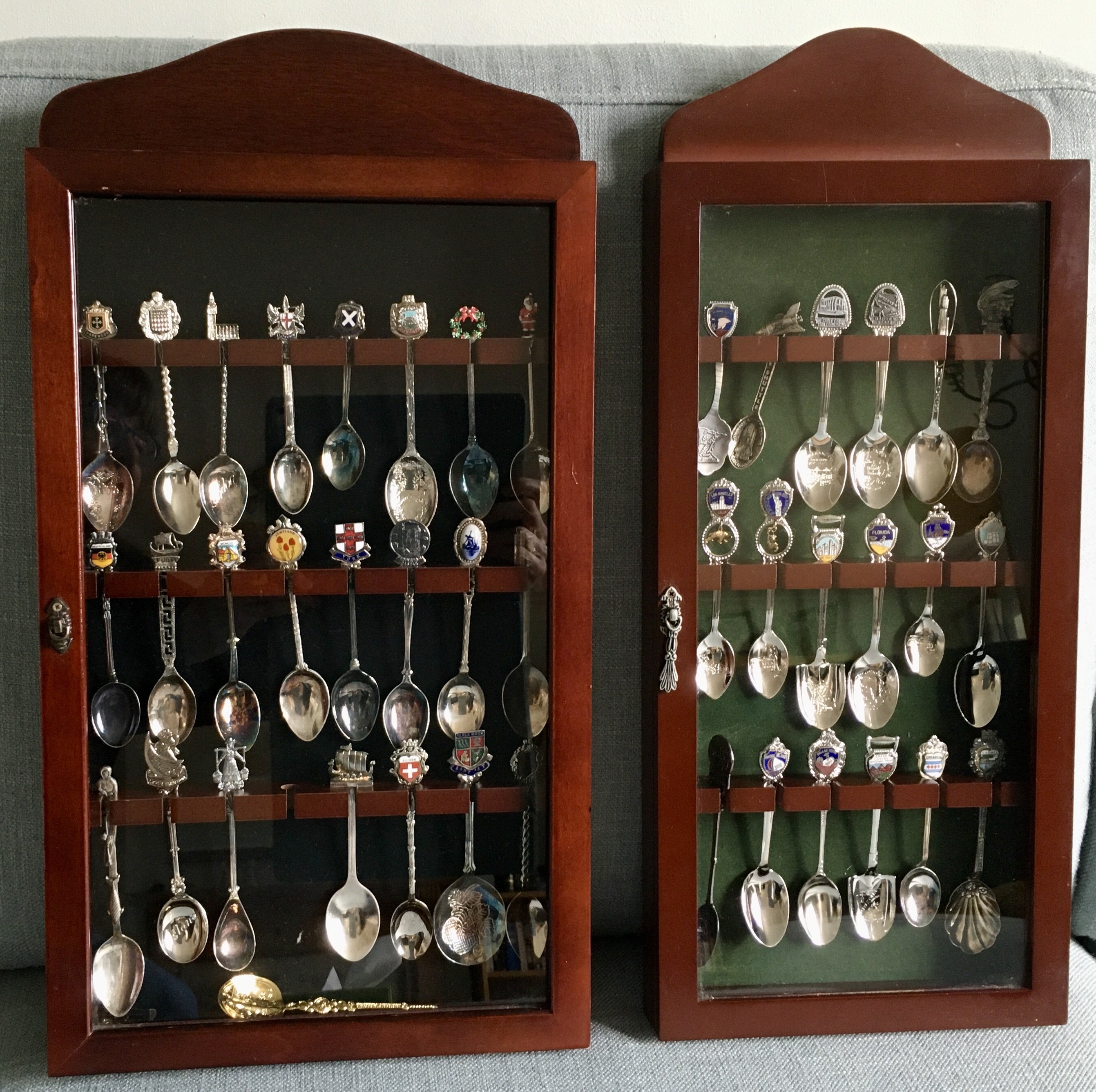
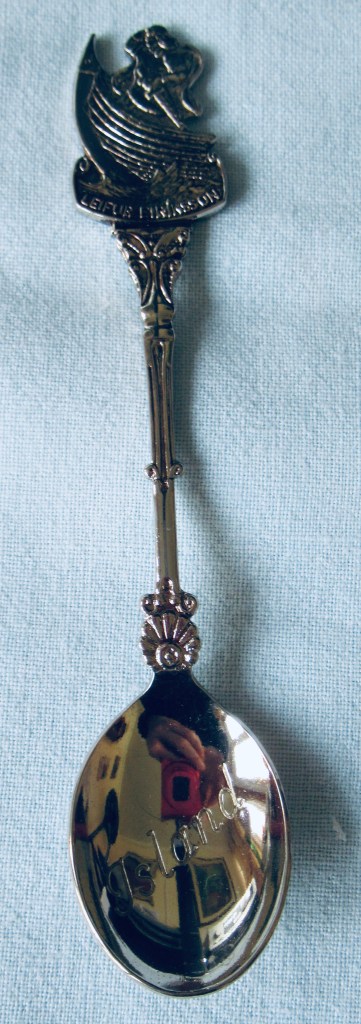
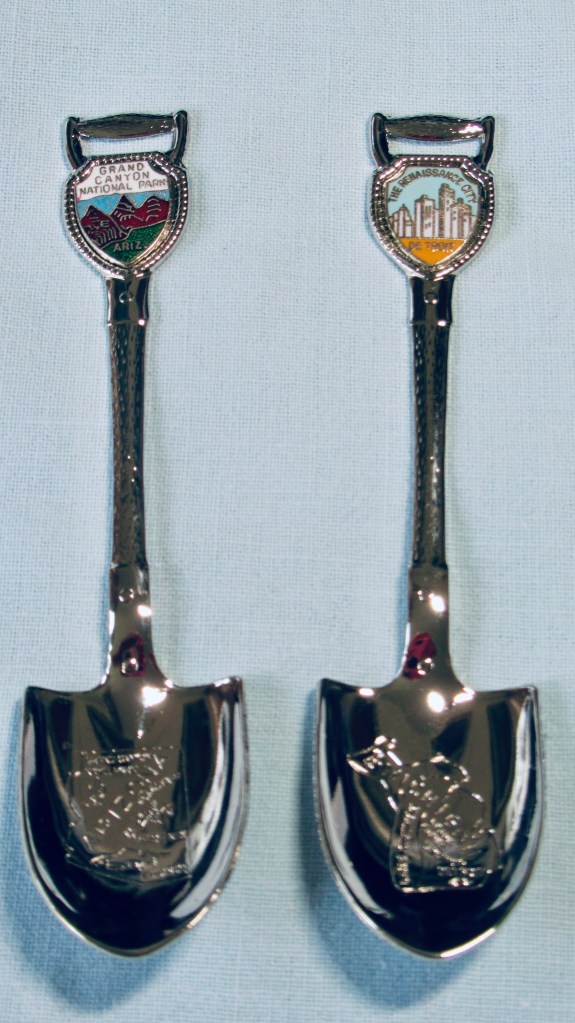
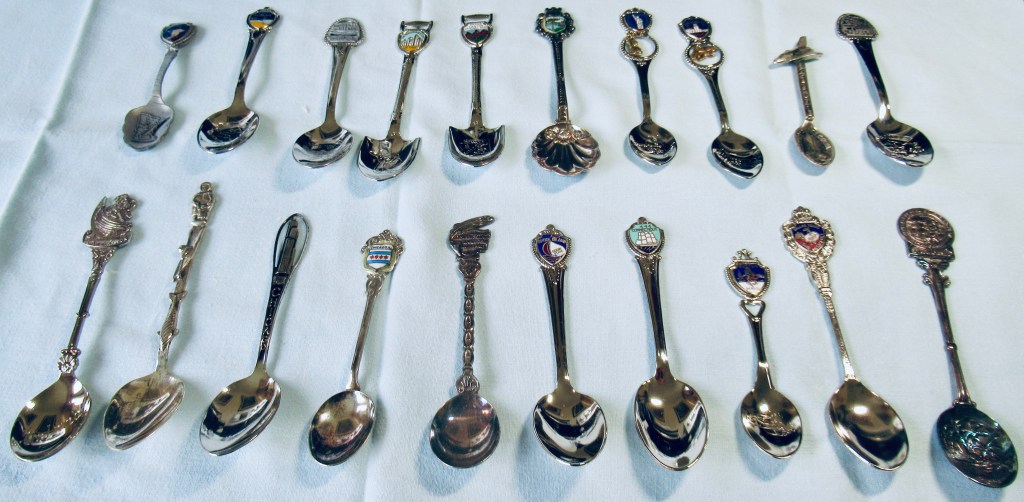
Tucked on a shelf the two cases lay next to each other – perfect. Not the entirety of my collection, there are many more in boxes, however these forty-two represent some of my favourites.
They were in a sad state; dirty and blackened and well overdue a clean-up. Cherishing them once more I washed them individually in a bowl of soapy warm water, rubbing them as clean as possible, drying and buffing up to a shine. This took more time and dedication than I’d expected and my esteem for the staff handling the silver in the big houses grew ever more, in awe of their perseverance and dedication!
Although many are gleaming and glittering some still are rather less than shiny. For now, I am not resorting to silver polish as online warnings recommend that if used at all it is important to acquire the right low-dosage one! Who knew!
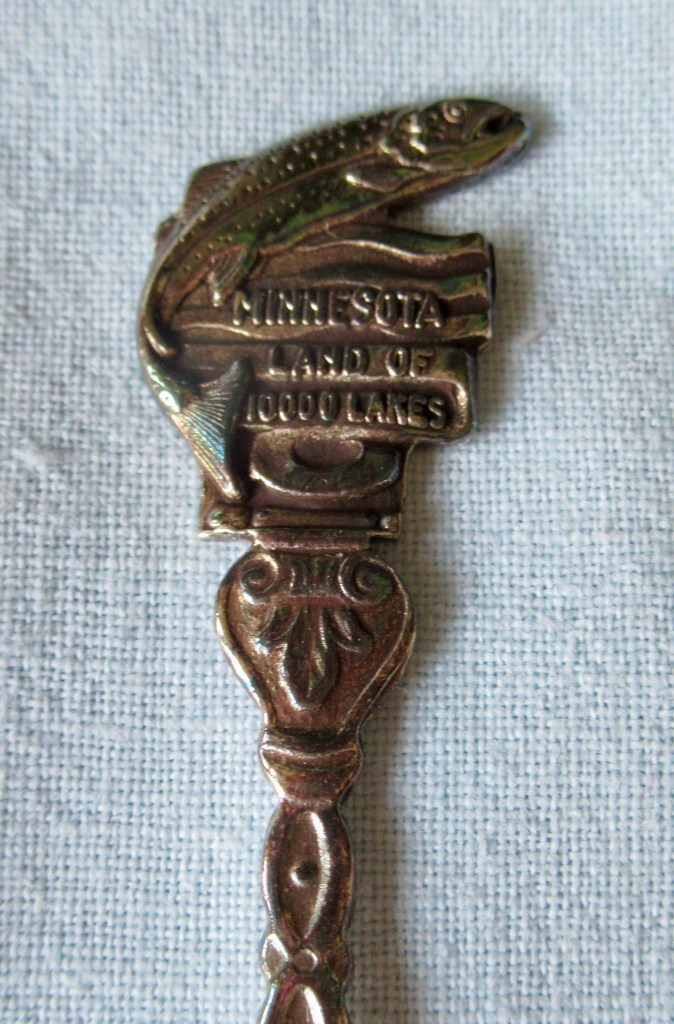
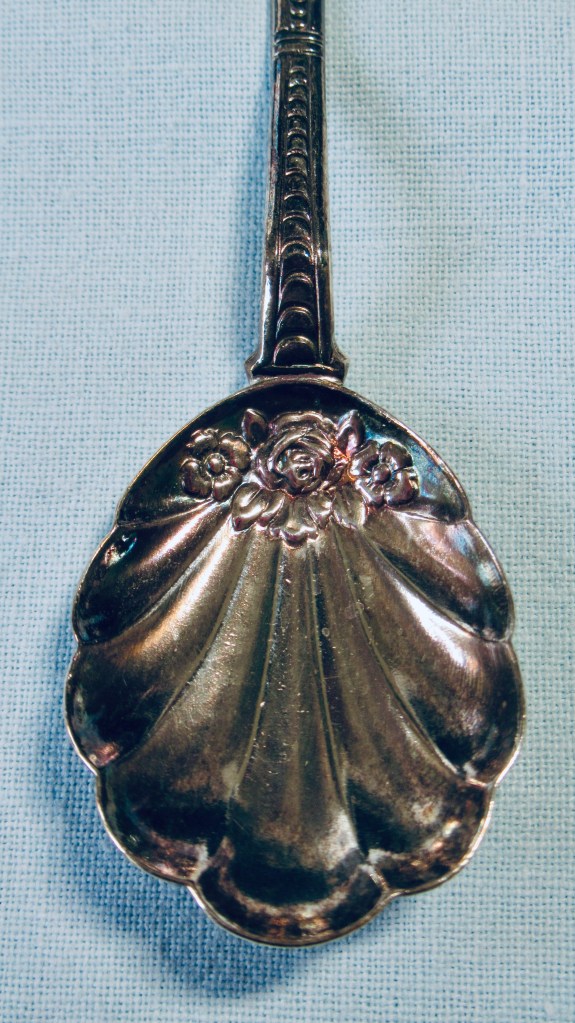
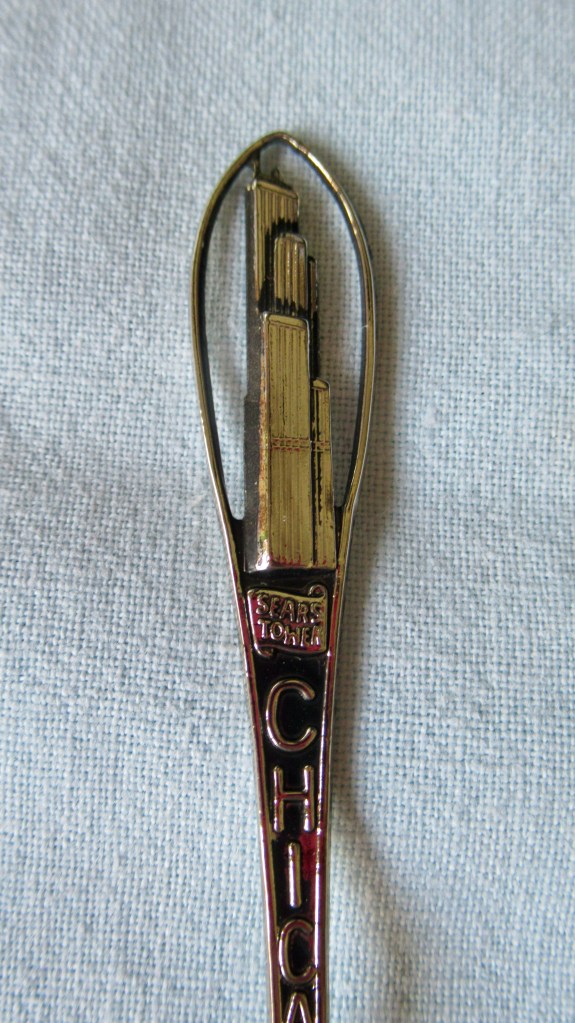
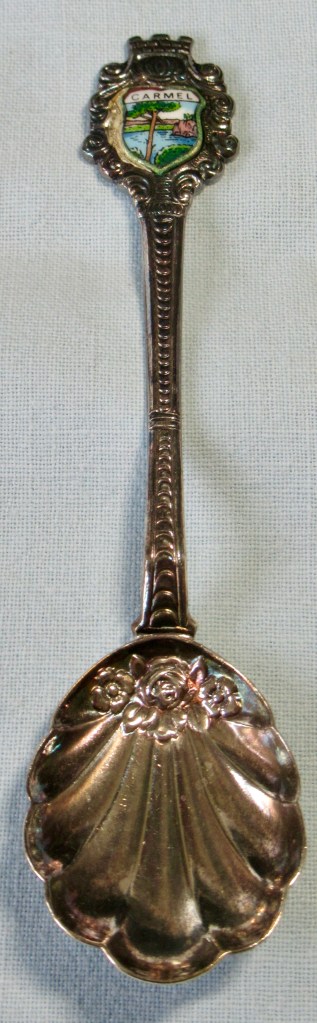
All children (and many adults too!) love collecting things and as well as bookmarks, spoons are my niche hobby. Many were gifted to me, mostly by family, as well as bought by myself. I love to travel and the spoons represented somewhere exciting and exotic; a memory of special times and other eras; the designs opening the doors of untold mystery and excitement.
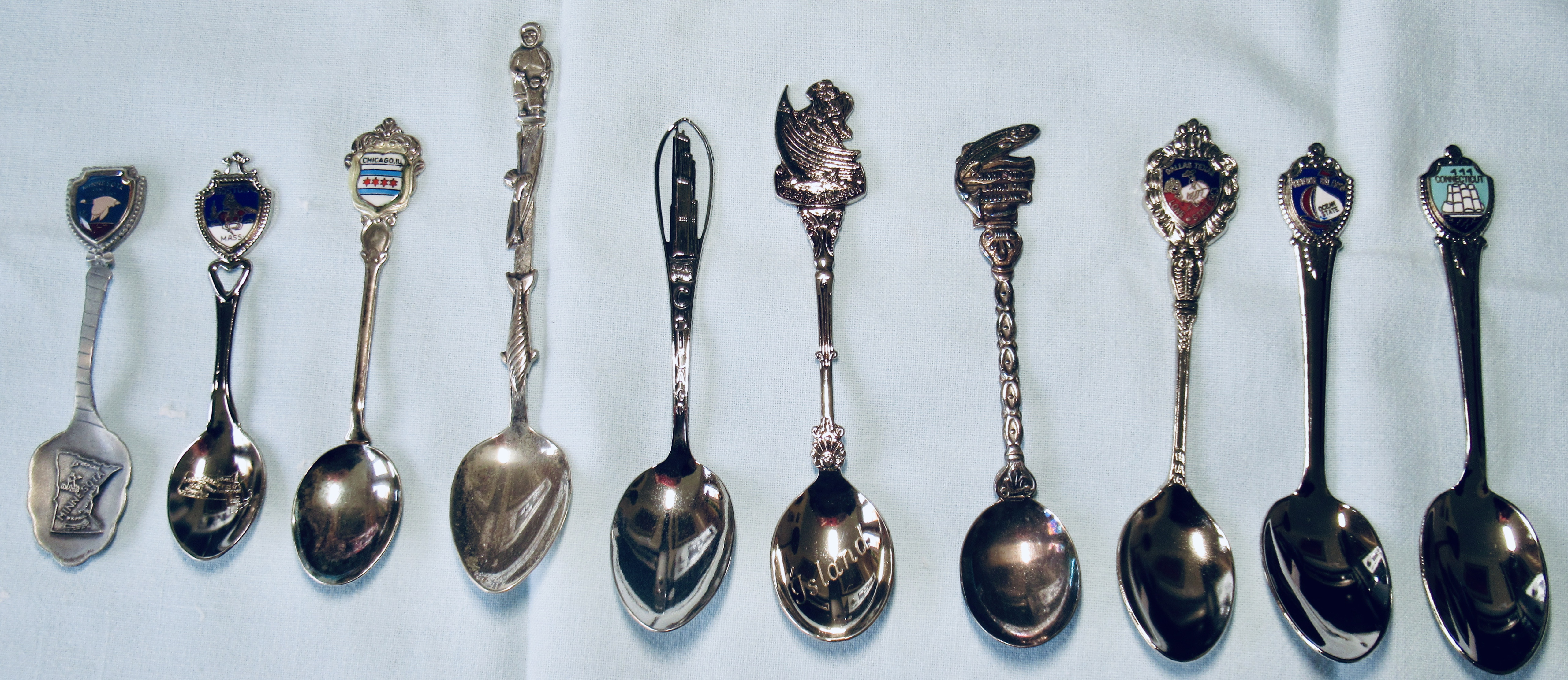
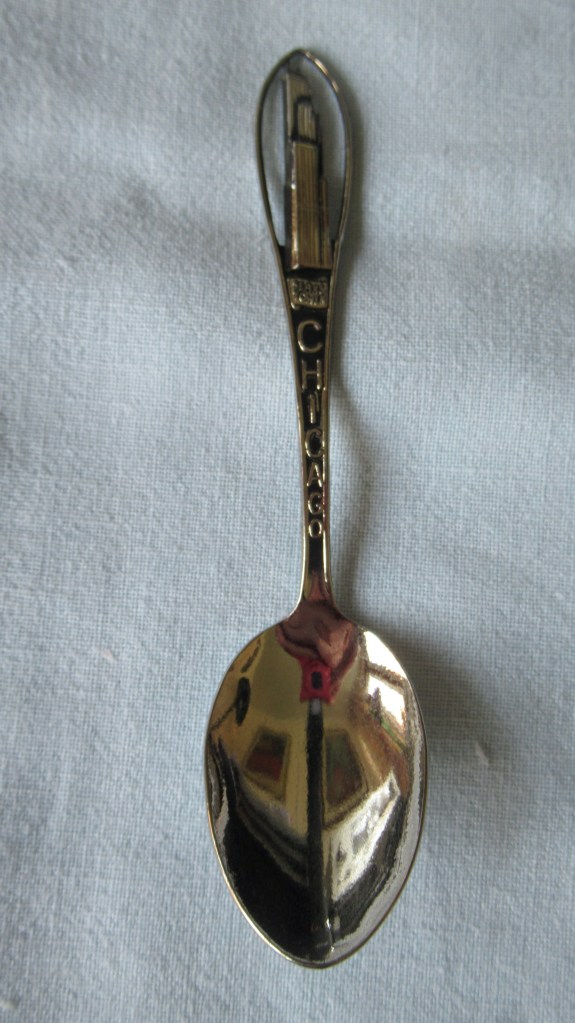
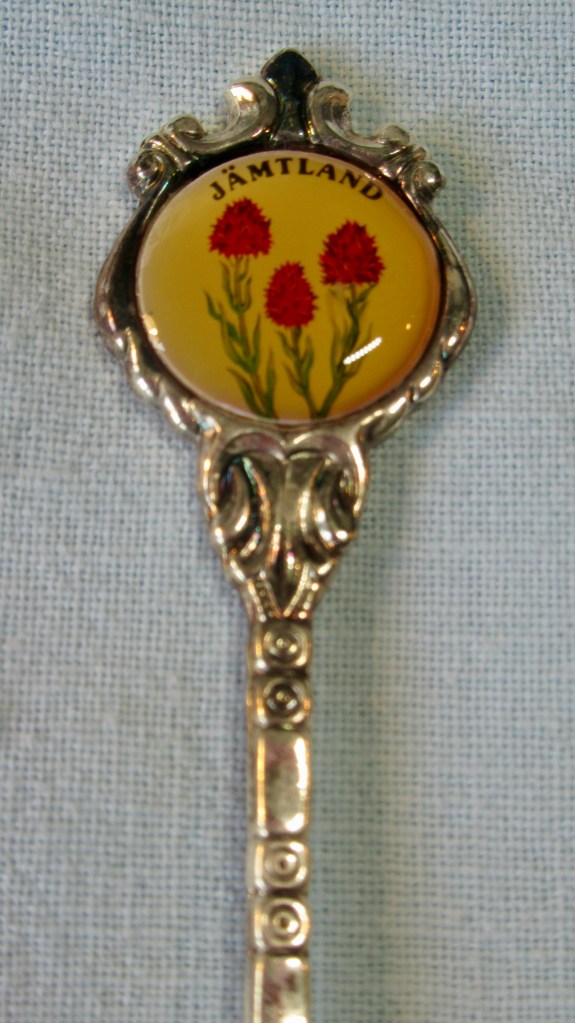
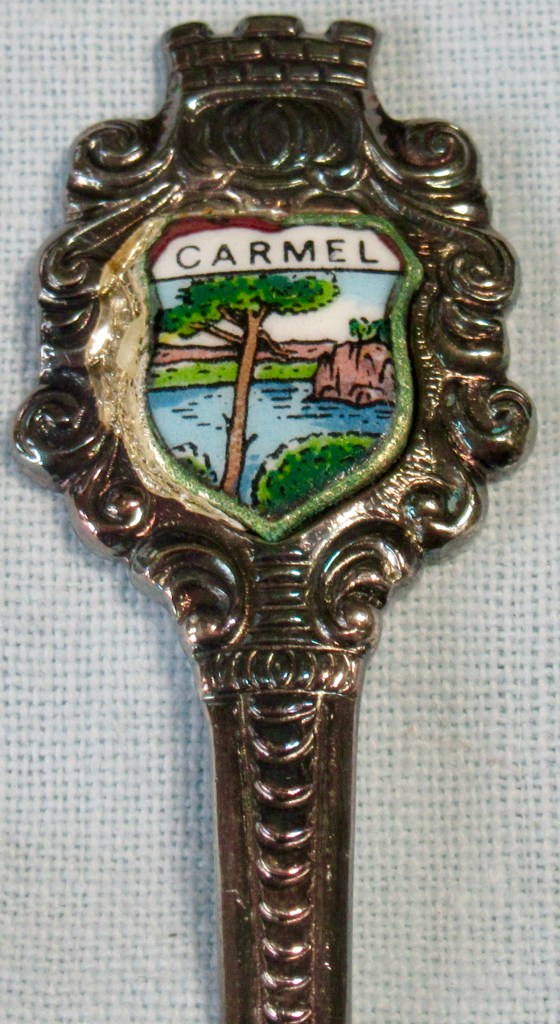
The collection is split into three categories: The United States of America, Europe and The United Kingdom. Enjoy browsing through the collection with me! Which are your favourite ones?
For those in America, can you find your state’s spoon?
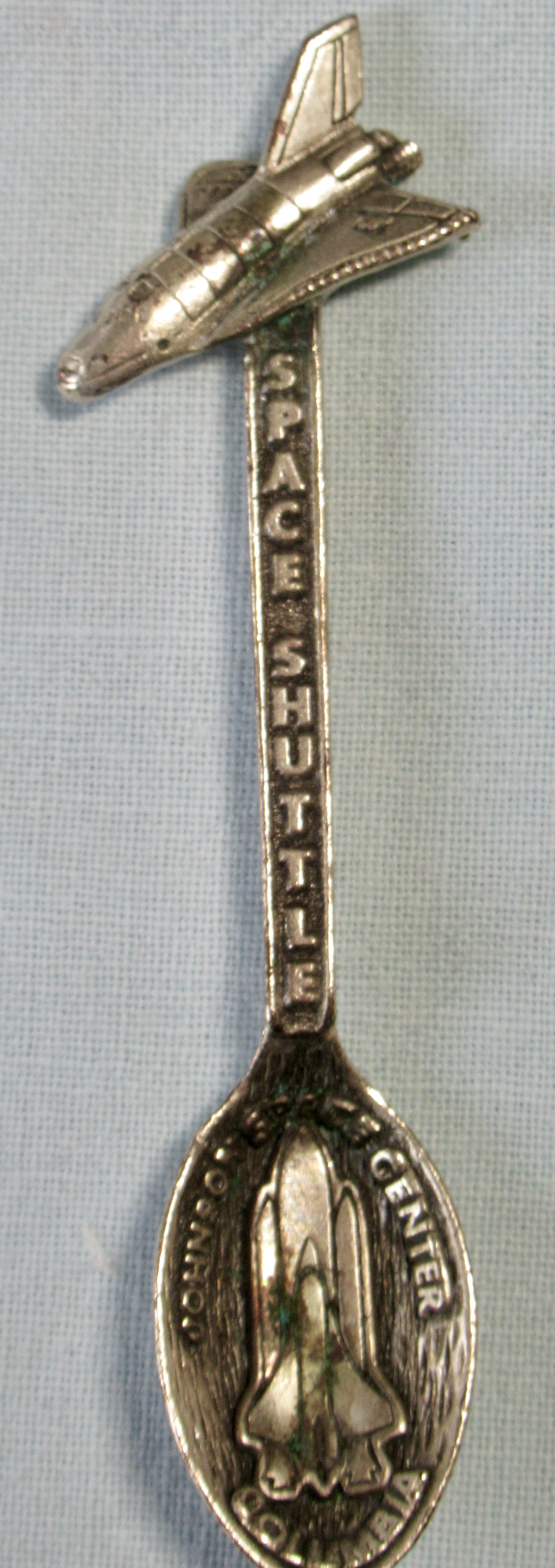
As a child I was mad about anything to do with space and especially the space shuttle – imagine my joy at receiving this spoon.
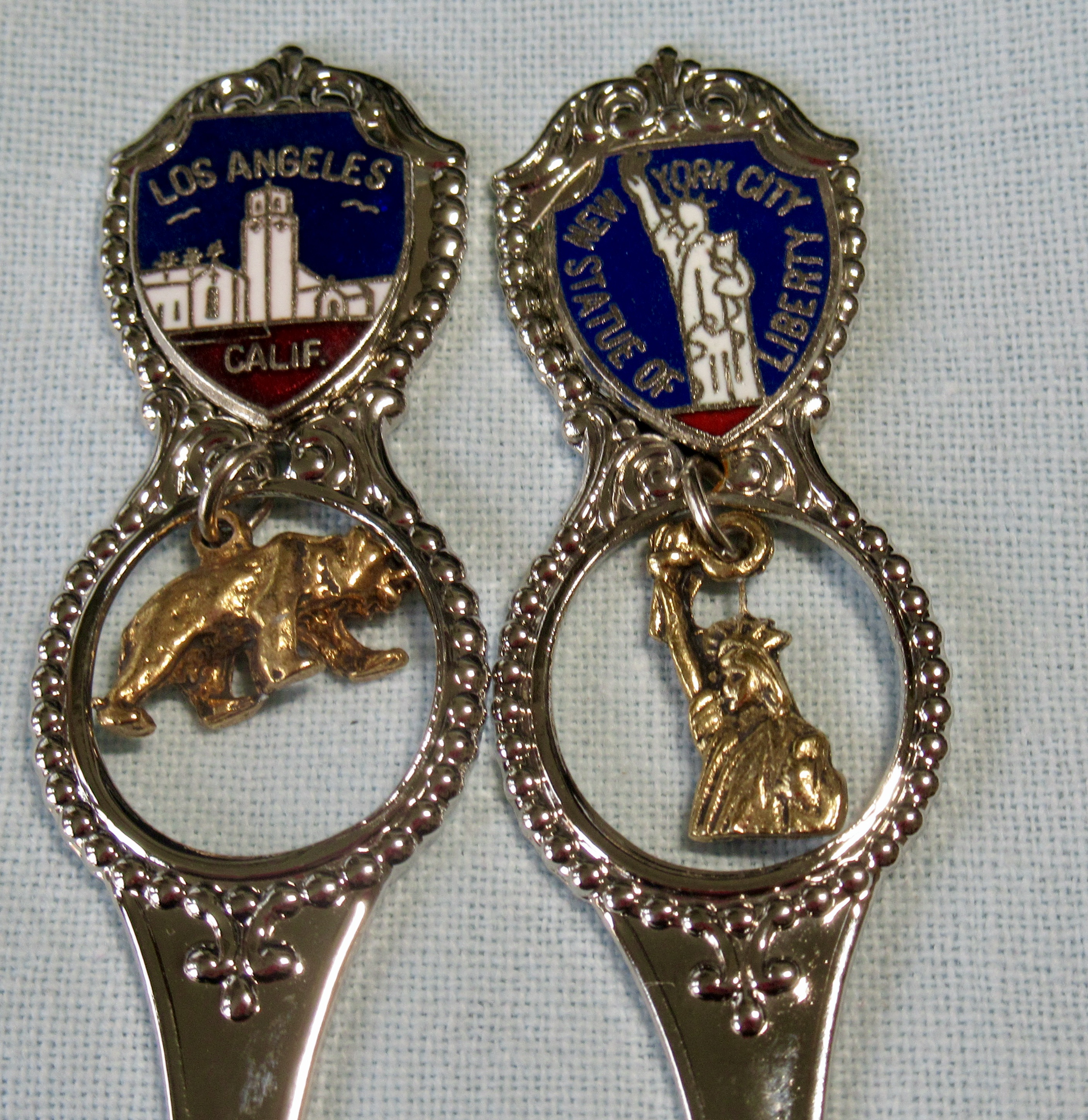
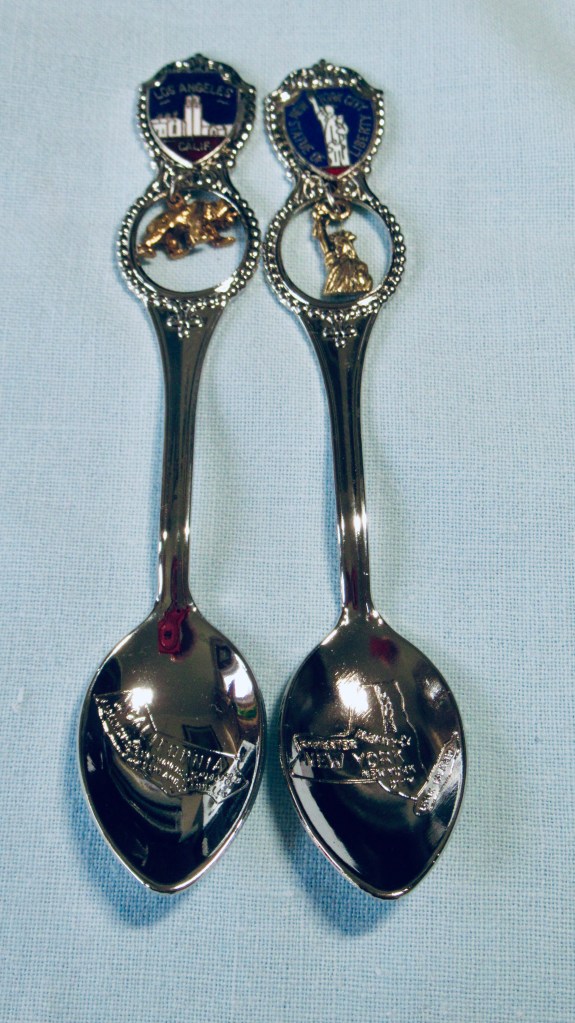
I’m particularly fond of the two spoons from Los Angeles and New York City with their golden hanging ornaments.
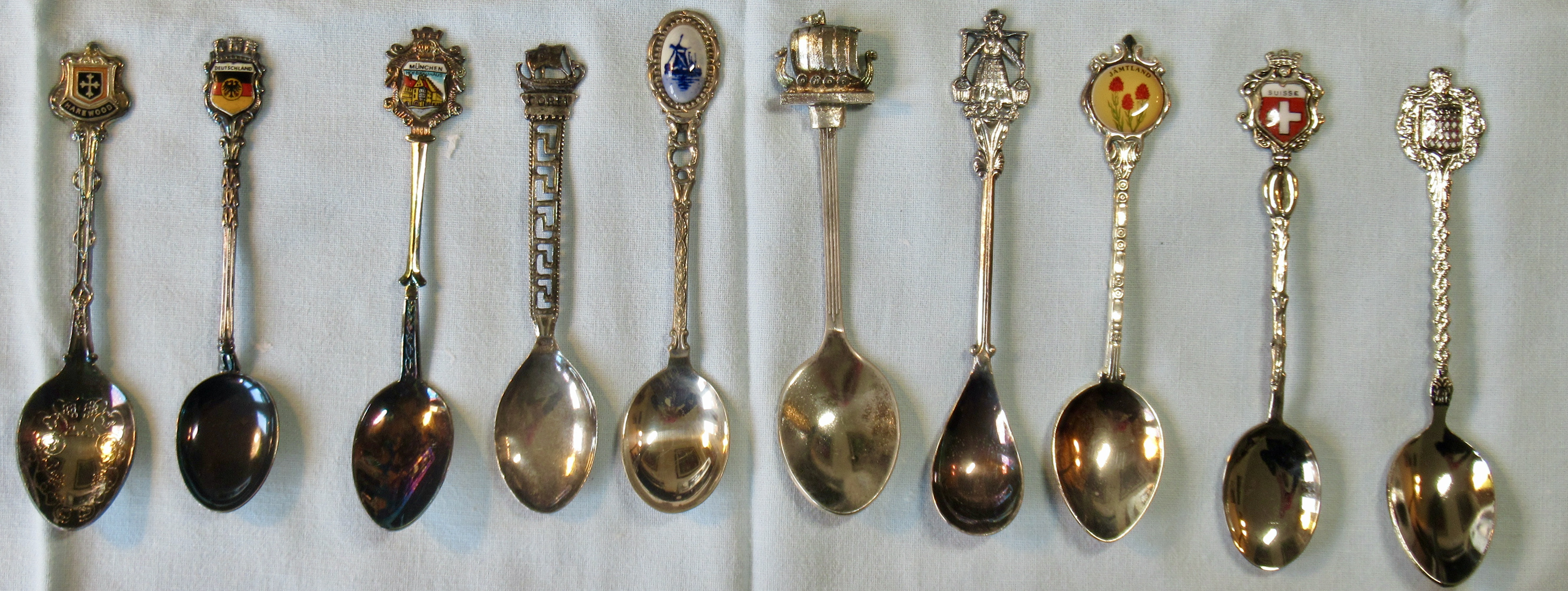
For those in Europe, can you see your country’s spoon?
When young we visited Greece many times and I have wonderful memories of our time in Corfu!
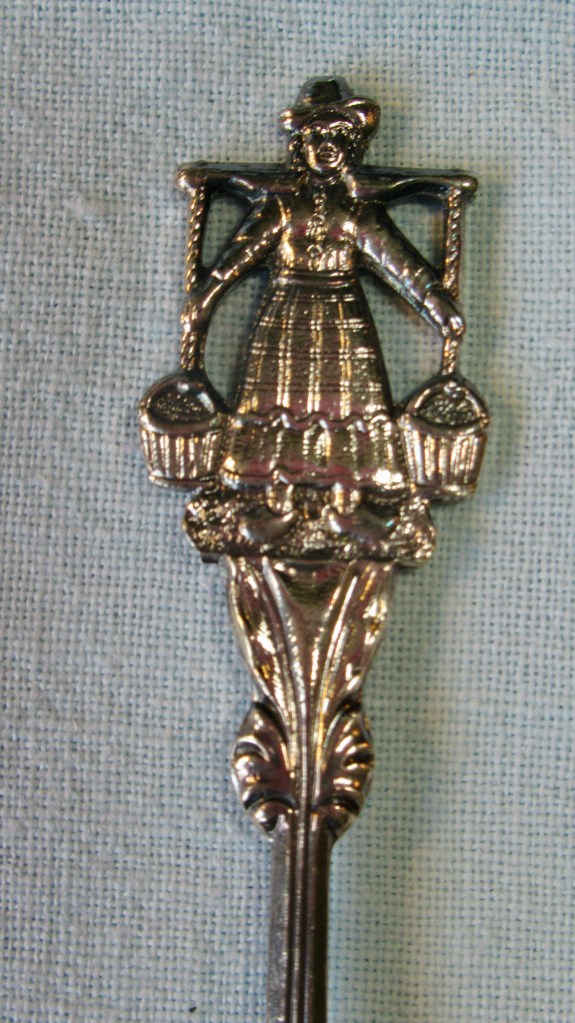
The slender shape of the Dutch milkmaid spoon is striking and there is exquisite detail of the woman herself, the two pails balanced perfectly on her shoulders.
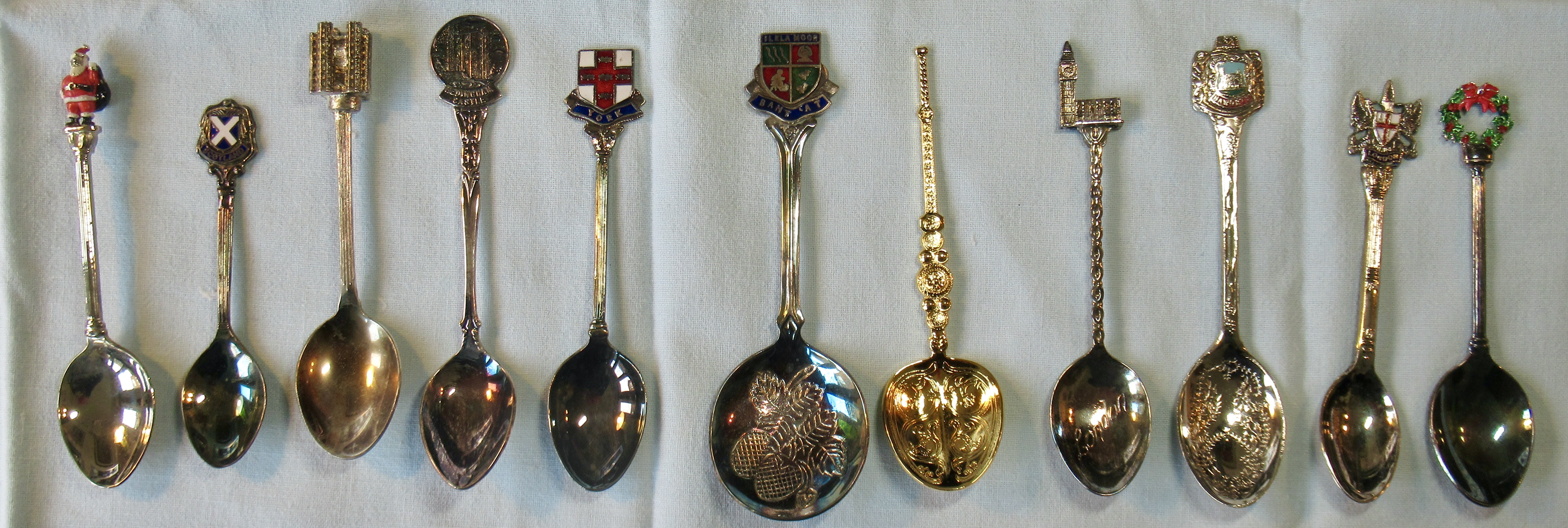
Here are the spoons from Great Britain.
Have you ever been to any of these places?
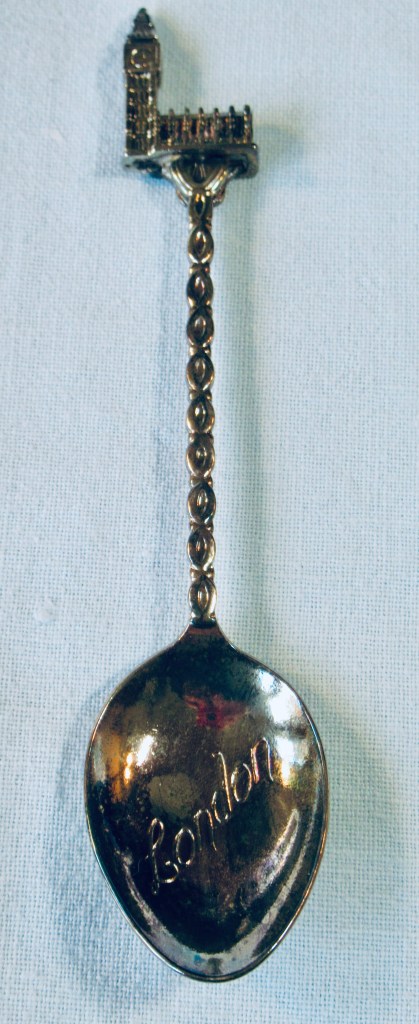
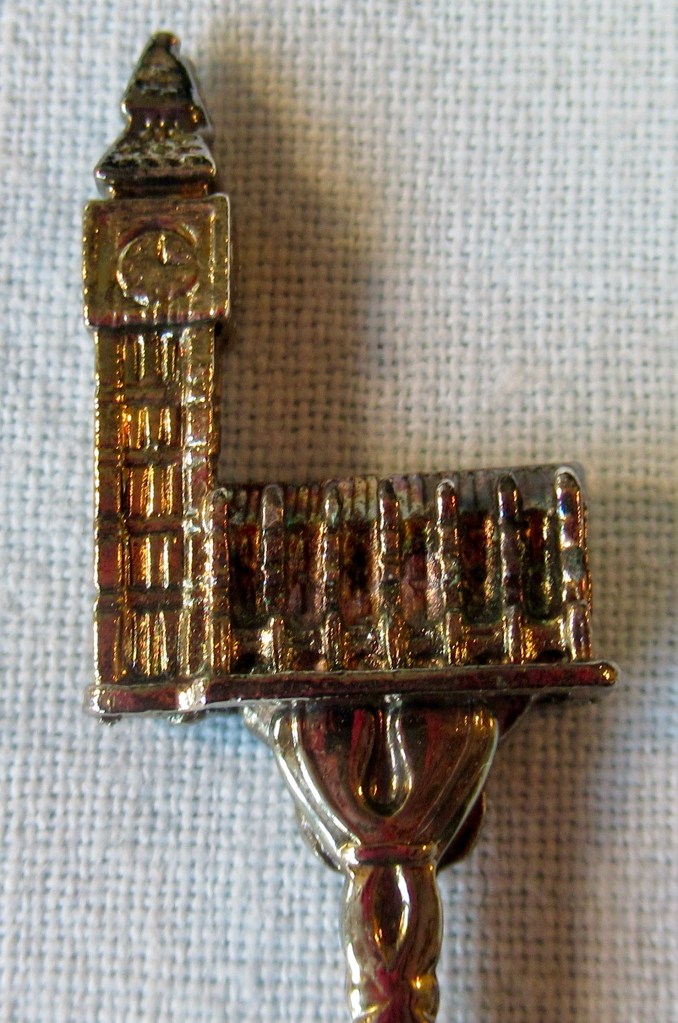
Big Ben and the Houses of Parliament are looking splendid on top of the silver spoon.
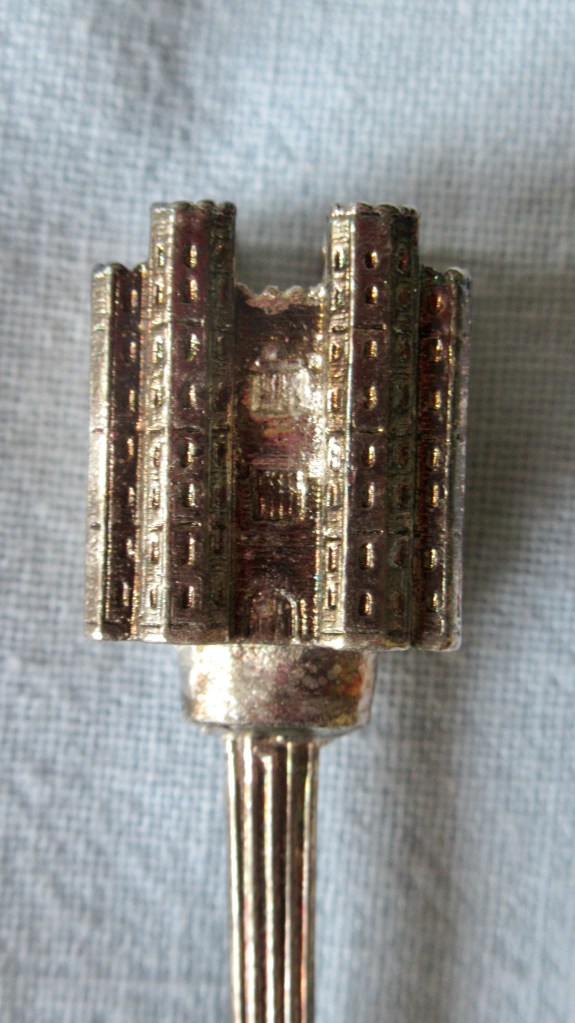
I remember being surprised that the local Hedingham Castle (which I’ve written about here) was similarly designed with the building on top.
Finally, one spoon fell in between all categories although it ended up with the American.
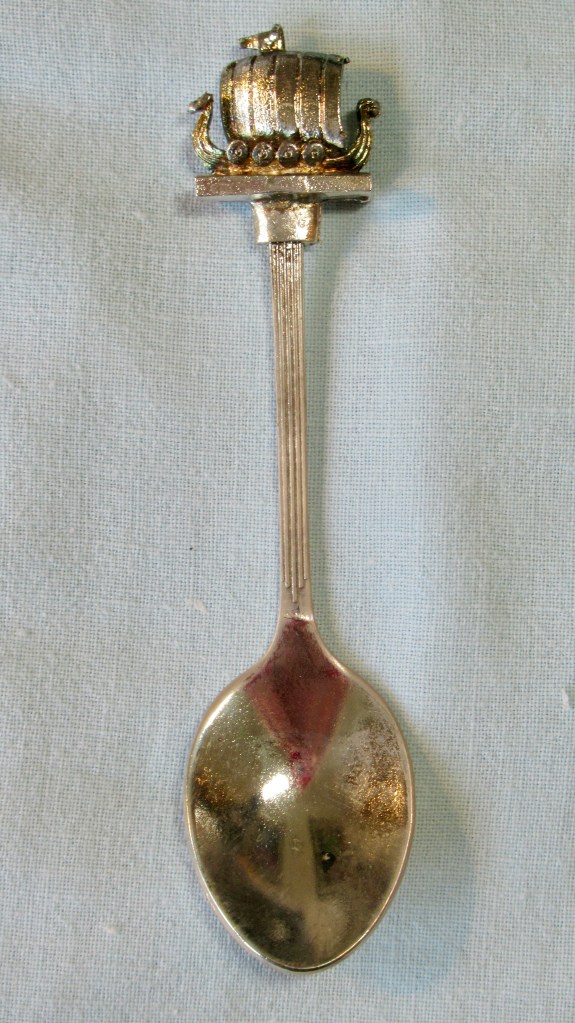
Leif Eriksson, also known as Lucky Leif, was a Norse man born in the late 900s, believed to be the first European to reach the shores of America. His father, Erik The Red, was originally banished to Iceland, before moving with his family, including Leif, to Greenland.
According to the sagas, Leif and his crew were said to have been blown off course while sailing from Norway to Greenland, eventually landing on Vinland in Newfoundland.
So much history within just each spoon! It is such a unique way of commemorating a place or moment.
Writing my post I became interested in spoon collections in general and intrigued to learn the following:
Silver spoon collecting became popular in the 1800s following the birth of tourism and especially the Grand Tours of Europe. By the late 1800s this European fad spread across America.
The first souvenir spoon produced in the United States, in Washington, D.C. in 1889, featured a profile of George Washington and was created to mark the centennial of his presidency.
Interest waned following World War One and is a marginal hobby nowadays.
My collection is palfrey in comparison to the world’s largest collection of 30,000 owned by Des Warren in Mayfield, Australia.
The phrase “born with a silver spoon in his/her mouth” is well known and is assumed to mean the child grew up wealthy. However, the idiom originated as a way of saying that the person never seems to get sick. There was a belief that the silver offered germ-killing properties and in the past children who were fed with silver spoons (which was a luxury often reserved for wealthier families) were typically healthier babies.
The most expensive silver spoon was sold for $32,500 / £26,000 at Heritage Auctions, London in 2021. It was manufactured in 1790.
Do you tend to buy a memento of your time visiting somewhere special? Or perhaps you have an unusual hobby or collection yourself? It’s great to chat away in the comments!
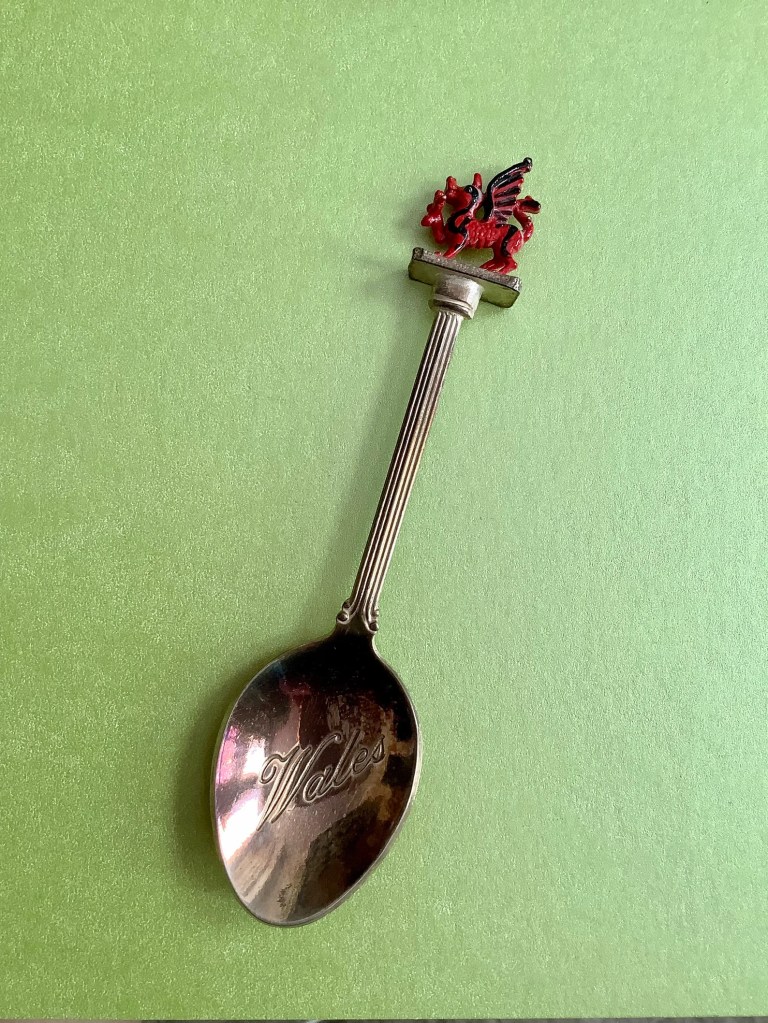
Finally, many thanks for David Prosser for mentioning how good the Red Dragon of Wales would look upon a silver spoon! They exist and look amazing- a new one I would love to be my next silver spoon!
Yes, it’s under warranty, only two weeks old but how can I make a claim when it simply disappeared?!
Early 2018 the internet was flooded with posts and tweets about the latest jetpacks for those with means and a wicked sense of adventure. The adverts promised a ride like never before with an added mysterious non-specific dimension. I just had to have one.
I’d tried out some jetpacks at an airfield or two. At £2,000 a time the rides were a bargain yet I longed to possess one of my own.
One spring afternoon I found myself in the library with my father. This was my favourite room, all Elizabethan dark wood panelling, four walls of books, all tucked safely away behind glass doors. On one shelf I spotted my beloved and tatty Jane Austen penguin books — a most wonderful writer and I adored her books so much. So very much that one Christmas my parents surprised me with a first edition set of all her sixteen books dating from the start of the eighteenth century. They got it at a very reasonable price, I was told, at just under £200,000.
My father was on the window seat and looked up at me. Even before I said a word he spoke.
‘No, Katy. I told you last night, no way. It is just too much.’
‘Pa,’ I said. He loved it when I called him this and I repeated. ‘Pa, it is just a bit more than my yearly allowance and rumours are you lost this amount just last month. Ma called it pocket change, I heard!’
Admittedly £300,000 was way past pocket change for me even!
There was a hiccup of silence. Yes!
I had him; the famous hiccup tell — he never could work out why he was always losing at the tables.
Father reached over to me, his glittering card stretched to my eager fingers.
‘Take this and just promise me to be careful, bubbles.’
There it was, the reason I would always get what I wanted — bubbles! The nickname made me smile and groan in equal measure. My delight of bubble baths was infamous. The renowned photos of me as a childsurrounded by bubbles galore by the world famous photographer Georgias Kerragiannis collectors plastered on our walls … and those of many art galleries. How did he manage to turn such a simple idea into a colourific gaudy prints that took the world by storm? Over and over he merely changed one tiny detail at a time and the buyers kept paying ever more.
Bubbles it was and this bubbles always knew the key to her father’s heart.
My delivery from Amazon arrived promptly the next day; a bemused driver was struck with the image of a jetpack man flying over the mountains on the box. Not subtle and I’d be leaving one of my scathing reviews tomorrow.
Up in my room, I rushed to remove the packaging, sending it flying across the bedroom. I grabbed the jetpack and stepped to my balcony. This couldn’t be difficult, I told myself, convinced the two controllers would be similar to my games. After all, I was an ace at Minecraft and Sims!
The instruction booklet lay tossed on my Egyptian cream sheets, unopened at the front cover of a red brash warning of ‘read before you operate — ignore at your peril’. Blah! Generation X are so molly-coddled! As if I couldn’t fly a simple jetpack.
I stood on the balustrade and pushed the red button, with a shout I stepped off. I was flying! There followed a big dip and near mid-air tumble but I made it just above the manicured lawn below, narrowly missing the ballroom.
Another burst of power and I was up and away, heading straight to the stables about half a mile away. Skimming over the lake, my feet took a quick paddle, the giant puffy mouths of the koi popping up to try and nibble my toes.
Looking at my right controller I noticed a dial by the thumb. I’d never seen this on my previous jetpack rides. I reached over with my left hand and turned it.
Suddenly the usual quiet of the landscape and stables turned to a maelstrom of people and horses, the shouts, chatter and neighing reaching crescendo levels, each trying to outdo the other above the din and clatter of the horse drawn-carriages on the cobblestones. The men wore the strangest costumes; tall black top hats and colourful ornate suits. What was the cause of this hub of activity? Had a film company unit hired it? It looked a set fit to film the next big Jane Austen blockbuster.
I was drifting down and right underneath me a man, my age, early 20s, looked up with a startled expression. He promptly turned white and fell backwards as I stepped into a neat landing next to him.
Suddenly he woke up and grabbed my arm.
‘What are you? A flying ghost?’
‘Don’t be ridiculous,’ I replied. ‘I’m Katy and you are …’
I left the pregnant pause, waiting for an answer as to his identity. His face was set in a priceless expression of utter bewilderment in the silence.
‘What is your name?’ I asked clearly.
This time he understood, stood up quickly, wiping his hands on his trousers before reaching out.
‘Darcy at your service, ma’am!’
I laughed out loud. As if! Who had put on this elaborate joke for me? My very own Darcy, even if dressed in worker garb in rough white shirt, leather brown vest and dainty long black socks and shoes with a buckle. A small black hat flopped over his head. Of course, my Darcy would turn out to be a stable hand but his manners were to be applauded.
‘Pleased to meet you, Miss Katy. From whence do you hail?’ He stopped abruptly and realised his question. His hands waved vaguely in the direction of the air, which is in fact where I arrived from and in the process his hands, trying to reach for my arm, touched the dial instead.
That was two weeks ago and since then Darcy has enjoyed his sudden introduction to the end of the twenty-first century once he recovered from his many fainting fits. I had immediately grasped the ‘other’ dimension of the new jetpack — time travel!
How could I not fall for my own Darcy, the genuine article from 1797, so he proclaimed.
There was one small issue; Darcy longed to return home for just a while. He just wouldn’t listen, after all, he was home, here at Streaton Manor with me, just a couple of centuries out. Why was he making all this fuss?
Darcy hadn’t declared his love for me yet; that would come, I was sure. But I just couldn’t take the chance though, could I? These past days he was always on about my flying jacket, wanting to borrow it. How could I risk this most amazing change in my life? Pa already approved of Darcy although Ma muttered he was rather too dishy. For whom, I wondered?
I couldn’t risk it! I just couldn’t. This way was better for us both. A new start.
Standing from behind the jetpack, I reached over and touched the dial before stepping backwards just as the jetpack disappeared.
Whoosh! Not quite the sound rather more of a pfft but the mesmerising disappearance warranted a fanfare, I thought.
Gasping, I laughed and laughed! I’d done it! Sent the jetpack back in time and Darcy and I would be united forever. All I need was some cash for our new life— £300,000 should do it.
Now, where did I put the warranty for the notorious defective disappearing jetpack?
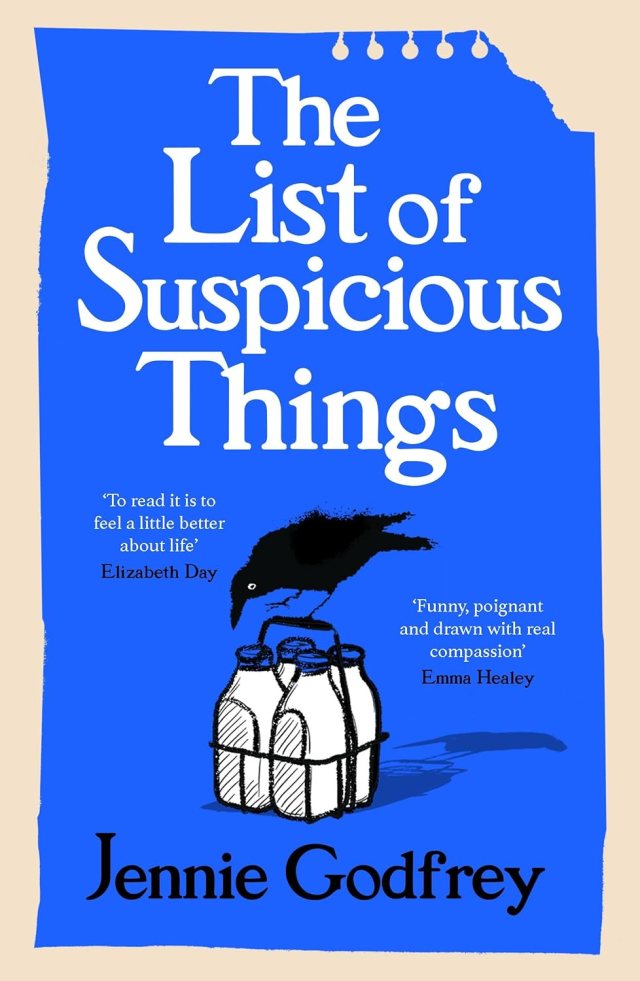
Never before have I had such an eerie feeling while reading a book; the setting, language and actual events of West Yorkshire in 1979 and 1980 have been captured with such precision and skill it was as if I was re-living my childhood having grown up in the county during those years.
At the start of 1979, the UK was at the cusp of political change with the election of the first-ever female Prime Minister, Margaret Thatcher. Closer to the book’s main character’s home county a serial murderer, dubbed the Yorkshire Ripper, continued to terrorise women in the area; the victims brutally attacked with a hammer. Between 1975 to 1980 thirteen women were murdered by Peter Sutcliffe and he attacked seven more. The fear was all-pervasive and the sense of danger was in everyone’s psyche.
To this background, Jennie Godfrey has set an enthralling narrative and one that drew me in before I even started. Like the main character of the book I too was a young girl growing up in Yorkshire at the time of the Yorkshire Ripper murders, experiencing the dark fearful clouds of his existence, the worry of parents, avidly following the news. Unlike the character of the book I at no time thought to try and capture the murderer. This is exactly what young Miv sets out to do, with the aid of her friend Sharon.
In ‘The List of Suspicious Things’ twelve-year-old Miv instantly catches the reader’s attention and never lets it go. Her family life, described with wonderful and memorable ‘70s detail, is askew after her mother suddenly stopped talking and her Aunt Jean moved into the home. Aunt Jean is a typical no -fuss-no-frills woman, outspoken, only to be listened to, she is never afraid to give her opinion on everything and everyone! It is not long before her aunt starts whispering to her father that they need to move away to safety – away from the Yorkshire Ripper.
Overhearing this, Miv, who is a determined and clever girl yet full of self-doubt, comes up with the idea for her and Sharon, to discover the identity of the Yorkshire Ripper and ensure she does not have to move away. The idea of ‘The List of Suspicious Things’ is born. After all, Miv has a huge interest in detective stories, TV shows and films!
Above all else, it is the grit and determination of the main characters and those around them who sweep the reader up and take us into the mindset of their lives.
The girls slowly add names to the list and it weaves an incredibly moving and dramatic cycle of secrets of those in the community and it touches upon themes especially far-reaching at the time. A recently bereaved Pakistani father, Omar, opens a shop in the area and his young son, in the same year as Miv and Sharon soon become friends and they see exactly the racial hatred that the father and son endure daily, a hatred that later plays a key role in the novel. A young librarian, Helen, helping the girls source documents for their research becomes a friend and they worry at her ‘accident-prone’ nature and ‘over-protective’ husband. A young girl comes to them for help as she is frightened by the choir teacher and his fondness for tickling.
These are but a few of the characters and themes explored in the book. The other characters feature in their own right with sections in the third person of some of them while the first-person narrative from Miv runs throughout the book. The combination is a powerful, warm and fully immersive novel which gripped my attention, the various aspects becoming intertwined. Ultimately Miv and Sharon can help some people on the list, others sadly not.
All the time, the biggest secret of all, remains unmentioned – why did Miv’s mother fall silent? Will Miv ever learn the reason for her mother’s withdrawal into herself?
As one name of a suspect is added to the list, and then crossed off, Miv becomes closer to finding the Yorkshire Ripper than she ever imagined.
The final chapters of the book are riveting, heart-wrenching and heart-warming. Jennie Godfrey writes with a deft and exact touch, ensuring the voice of young Miv is a driving force, allowing us to see her grow through the months as her understanding of the adult world deepens and reminding the reader of the depth of emotions and knowledge of young people.
Although I am aware that I could be slightly biased towards the book owing to my experience of this era I honestly believe this is a superbly crafted novel with characters galore to win your heart (or to detest in some cases!) as well as an engaging and unique story. A book that reminds us all of the secret lives of all those around us, even of those closest to us and the pain these secrets can cause oneself and loved ones.
This is a book not to be missed and one I highly recommend.
I received a free copy of this book from the publishers via NetGalley in exchange for an honest and impartial review.
The winter sun streams through her mother’s living room windows, the diffused light shining golden upon the January daffodils, a reflection of inner warmth below the star, the Christmas beacon’s final moments for the year, a click and its glow vanishes but not its significance; the yearly ritual practiced with precision and love, actions set deep within her mother’s being, the red star box battered by the years, one side telling its story through the varying coloured sellotape, her children’s eager hands to set up the Christmas Star all those years, a squelch of a step upon the cardboard, the squeal of sadness, now here the brown packing tape and scissors lay prepared for this year’s enshrining, a clean cloth ready to swaddle the bulbs, a bag to encompass the precious ornament, a Christmas light that witnessed her grandson’s first word ‘tar’, a star of light and hope, there it goes, eased from its resting place on the hook, over the curtain railing, lowered with solemnity to the table, the Christmas cloth adorning the surface, the brightness regaling the room, advent candles sparkling in the vast wall mirror, the cascade of light brightening the task at hand, the satisfying pull of tape, the snap of scissors and a brown strip is affixed with consideration upon the red box, just so, there and here, what about another on this side, finally they sit back and admire the handicraft, pause to absorb the memories, the love across generations.
The format of the above piece was inspired by a flash fiction winning entry in Mslexia magazine which was written in its entirety of 250 words in one single sentence.
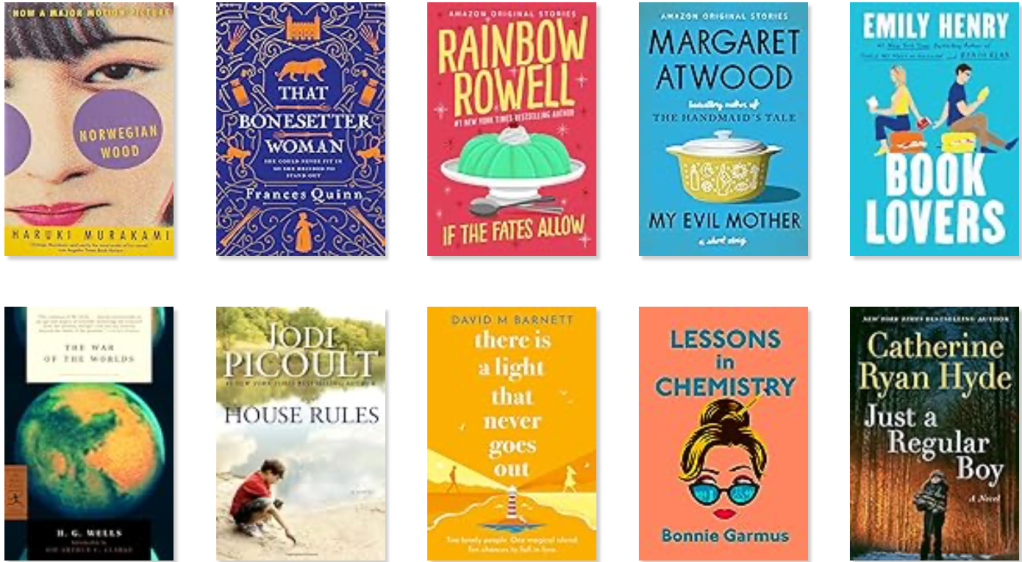
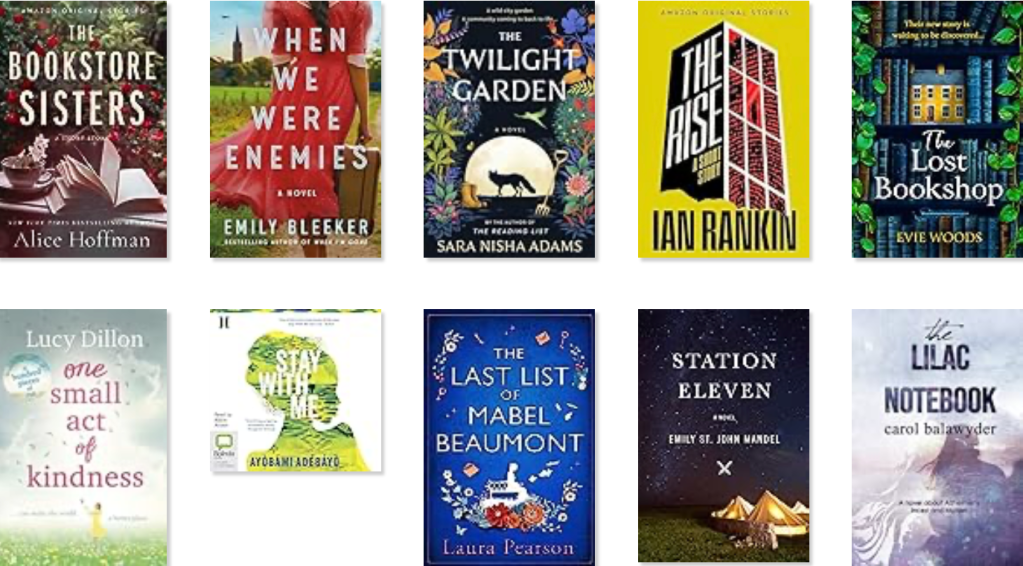
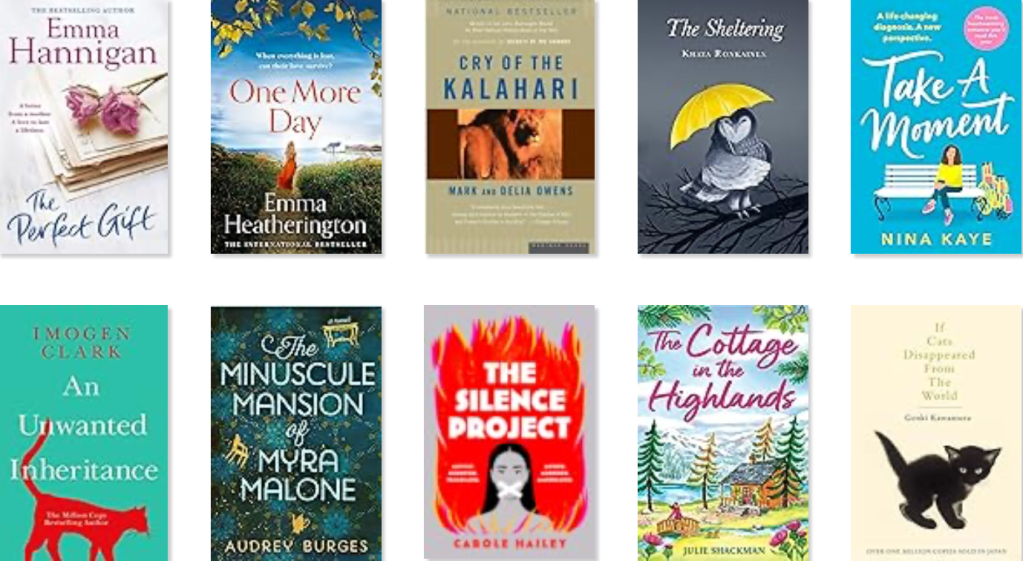
The above story celebrates some of the 80 books I read in 2023 and it’s fun to create a short narrative featuring a few of the titles. The book titles included are in the list below.
Norwegian Wood by Haruki Murakami
My Evil Mother by Margaret Atwood
House Rules by Jodi Picoult
At The Seaside Nobody Hears You Scream by Janet Gogerty
The Shadows We Breathe by Sarah Brentyn
A Winding Road by Miriam Hurdle
Happy Place by Emily Henry
The Sheltering by Khaya Ronkainen
Life is Like a Bowl of Cherries by Sally Cronin
The Lilac Notebook by Carol Notebook
The Lost Bookshop by Evie Woods
The Lies We Told by Diana Chamberlain
A Terrible Kindness by Jo Browning Wroe
More than Coffee by Lauren Scott
The Vanishing of Margaret Small by Neil Alexander
In Someone Else’s Shoes by Jojo Moyes
Where The Story Starts by Imogen Clark
The Family Tree by Sairish Hussain
In The Five Years by Rebecca Serle
There is Light the Never Goes out by David M Barnett
This Beautiful Life by Katie Marsh
Below are images of all the books I’ve had the joy of reading last year! I just made it over the finishing line of the Goodreads Reading Challenge in 2023 and this year I am reducing my sights to 52 books!
Wishing you all a New Year blessed with good health, happiness and light – may 2024 be filled with creativity!
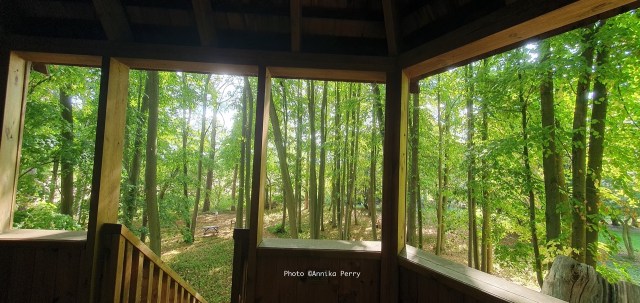
What is it about a tree house that beckons us so alluringly? A structure much loved over the years, one feels it promises so much, to step amongst the tree-tops, reach ever so slightly closer to the sky, feel the sense of mystical as one, for once, gazes down upon the earth.
The tree-house this morning was handily equipped with sturdy steps and railings, no need to clamber through twisted branches, avoiding bare sticks ready to blind and scratch. Handy yet not quite so adventurous!
Inside the magical tree house, a large branch spiked its way into the centre of the surprisingly spacious wooden crow’s nest and I danced around a little, pausing to admire the view. Before the wood was fully grown one would have been able to look out for over fifteen miles but I did not mind the retreat, nestled and surrounded by many more trees. Safe and secure up here, cosy within Nature’s richness!
Down on the ground the sense of a time warp continued; I left my childhood self playing in the tree house, while my adult being, back on terra firma, wallowed in the immersive tranquility of the gardens. Stepping away from the busyness of everyday life to utter peace, the haven was an abundance of treasures!
I scrunched a path across the deep pile of gravel to absorb the quiet and beauty of the restored Italian Garden.
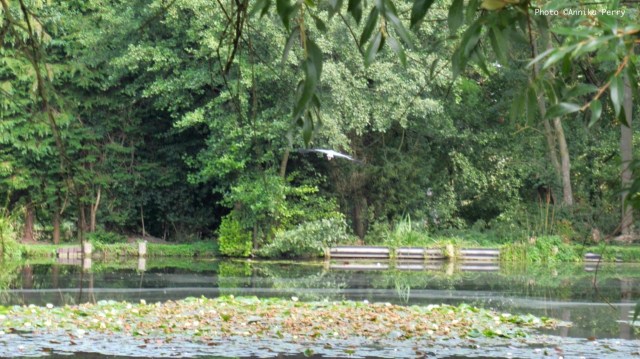
A heron majestically flew across the lake at the far end of the gardens.
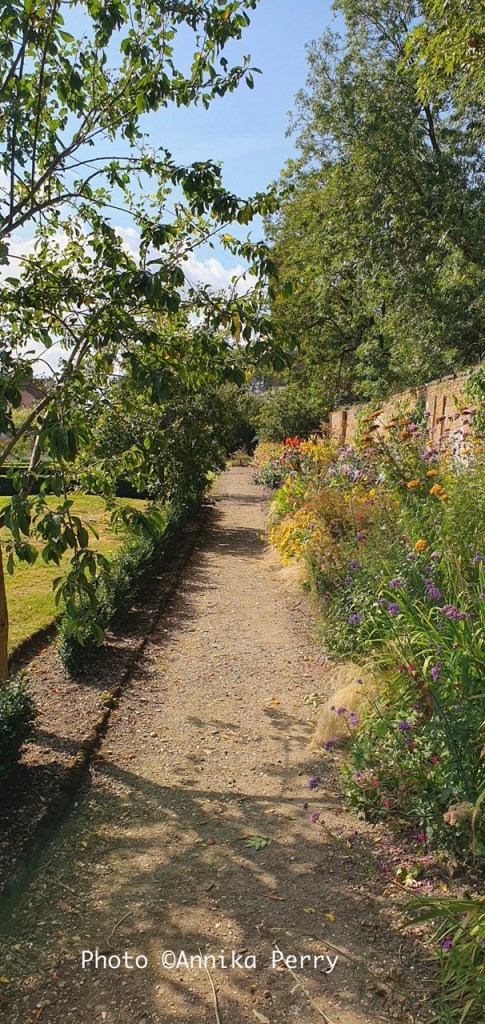
The silence in the walled garden was only interrupted by the flitting of the butterflies.
I stopped to talk to a volunteer gardener about their fragile guests and he said how these numbers were nothing compared to the previous week when he was surrounded by a cloud of butterflies!
My imagination played riot with this event, conjuring up the wonder of walking among a cloud of butterflies, the sight, the sound and no doubt the sensation of the wings! The picture is still in my mind! I took many photos on this little outing but the image engrained in my brain is from this one line. May I return in time next year to experience this incredible encounter!
After a grey and unusually cool summer in England, the September heatwave was a stunning surprise and an opportunity to enjoy the sunshine. A week later it is time to bid adieu to the summer for real, a tentative cool has swept in, the tart morning chill a fresh and welcome start to the day.
It is that sweet time of year, the flowers still clinging on to some of their resplendence; I’m thankful for the beauty and colour before the starkness of winter.
Note: The photos feature from a visit to The Forgotten Gardens of Easton Lodge, near Dunmow, Essex mid-September which is only open to visitors every Thursday and one Sunday a month.







































 Annika Perry