

How often don’t we take it for granted – this reading and writing. Let’s spare a thought today on International Literacy Day for the one fifth of the world’s population who are unable to enjoy and reap the rewards of what is now recognised as an inalienable human right – literacy.
Whilst in Roman era only 1% of the population was literate this has gradually increased over time in the western world and beyond to 99%, particularly following the Industrial Revolution. However, many areas in the world, such as Burkina Faso, South Sudan and Afghanistan, suffer from literacy rates of just above 20%. Of the one fifth illiterate people in the world, two-thirds are women, further disenfranchising and disempowering them from an active involvement in the community.
The International Literacy Day was established in 1965 by UNESCO to highlight the shocking illiteracy in the world as well as supporting and creating multifold organisations to improve literacy. They see a direct link with illiteracy and poverty and ill-health and recognise the relationship between improved literacy and economic growth and progress. Therefore the theme of International Literacy Day 2015 is Literacy and Sustainable Societies.
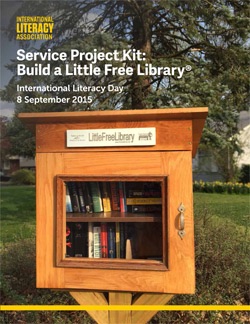 It is increasingly recognised that in today’s 21st Century literacy means much more than the basics of working with words and numbers. Communication is a central factor of literacy, not only through reading and writing, but also through the ability to listen and speak. Early on it is important to develop critical and visual literacy.
Of course technology now plays a huge role in society and individuals need to be computer literate, able to research information and then learn how to effectively use this. As many teachers will no doubt admit, their students now often know more than the teachers regarding modern technology and the teaching emphasis in this area has shifted to a form of partnership in learning.
Furthermore, computers, tablets and mobile phones are themselves seen as offering ‘fresh opportunities for literacy for all’. *
 This is not a hopeless cause and it has been proved that with determination and concerted effort literacy rates can dramatically increase over just twenty years. Hopefully the the hundreds of activities and events across the globe today can move more people towards improved literacy.
Personally I cannot imagine a world where I could not read or write – a lifeline of joy, education, entertainment, knowledge. Let’s hope that many more can soon drink from this fount of enlightenment.
* UNESCO Director-General
 Annika Perry