TO HUNT A SUB: NOW RELEASED

THAS cover--large

The wait is over!  The publication of what has for me been an eagerly awaited book is now available – ‘To Hunt a Sub’ by Jacqui Murray.

As Jacqui slowly started to give us an inkling about her first fiction book I was hooked. 

An unlikely team is America’s only chance

She reeled me when I read the summary.

A brilliant Ph.D. candidate, a cynical ex-SEAL, and a quirky experimental robot team up against terrorists intent on stealing America’s most powerful nuclear weapon, the Trident submarine. By all measures, they are an unlikely trio–one believes in brawn, another brains, and the third is all geek. What no one realizes is this trio has a secret weapon: the wisdom of a formidable female who died two million years ago.

An accomplished writer, Jacqui captured me with a sample chapter. Here is just a taster excerpt. Enjoy…and remember you can read buy the book now!

Within an hour, the massive warship had settled to the ocean floor like the carcass of a dead whale. It teetered atop an ocean ridge, listing starboard against a jagged seamount, and the gentle push of an underwater current from a cliff that plunged into a murky darkness. Every watertight door was closed. As per protocol, the oxygen level was reduced to suppress a fire hazard. Without climate controls, the interior had already reached 60 degrees. It would continue dipping as it strove to match the bone-chilling surrounding water temperature.  Hypothermia would soon be a problem. For now, though, they were alive. 

The hull groaned as though twisted by a giant squid.

The Captain peered into the gloomy waters that surrounded the sub. “Thoughts, XO?”

“We’re stable for the moment, barring a strong underwater current.” 

Based on the creaking protests from the hull, they were at or beyond crush depth. Any deeper, the outside pressure would snap the HY-80 outer hull and sea water would roar into the living compartments. Everyone would be dead in seconds, either drowned or impaled on the ragged remains of the sub by a force in excess of a Category Five hurricane.

selfJacqui Murray  is the author of the popular Building a Midshipman, the story of her daughter’s journey from high school to United States Naval Academy. She is the author/editor of over a hundred books on integrating tech into education, adjunct professor of technology in education, webmaster for four blogs, an Amazon Vine Voice book reviewer,  a columnist for TeachHUB, Editorial Review Board member for Journal for Computing Teachers, monthly contributor to Today’s Author and a freelance journalist on tech ed topics. You can find her books at her publisher’s website, Structured Learning.

To Hunt a Sub is available to buy on Amazon. 

 £ 2.29      Amazon UK 

$ 2.99      Amazon US 


A BOY MADE OF BLOCKS: A BOOK REVIEW

cblocks

A Boy Made of Blocks is a debut novel by Keith Stuart and is inspired by his experience with his own autistic son.

In the book, Sam is eight-years-old and only recently diagnosed with autism.  The trauma of bringing him up – described early on as ‘he (Sam) was like Joe Pesci in Goodfellas – small, funny but at the flick of a mental switch, easily capable of extreme and demented violence’ – has reached crises point with his mother, Jody and his father, Alex living apart in a trial separation. 

Alex has never connected with his son and mostly left Jody to care for Sam whilst using his job as an estate agent as an excuse to avoid the family home.  

The book is told solely through Alex’s first person point of view and I personally felt this is flawed on two levels. Firstly, it restricts the novel to the character of Alex and although we see Sam and Jody through his eyes, I would have enjoyed a direct view of their world through their eyes. As it is Jody becomes rather stereotyped and typecast. 

Furthermore, Alex’s initial self-pitying, self-absorbed litany (admittedly often self-depreciating and funny) does at times become tiring. It is only as the novel develops that he is redeemed and finally becomes a likeable character with whom I felt empathy.

It becomes increasingly obvious that Alex’s relationship with the world is almost as alien as his son’s. Alex’s isolation and loneliness is not as a result of  autism but started the day he saw his older brother killed by a car when they were children leaving school. A day and a death he has never come to terms with and that eventually tore the family apart, driving his sister (Emma) into a life of a globe trotter, never settling down with anyone, anywhere.

The transformation of Alex and Sam’s relationship and of their lives as a whole occurs as the result of Minecraft – an impulse purchase by his wife to help Sam fit in with his peers at school.  Based on the author’s real-life experience with his son and with his own in-depth knowledge of the gaming industry as a writer, it is only with the introduction of Minecraft that the book takes off. (As well as helping provide the title of this book!)

Minecraft acts like an extended metaphor throughout the book – the more Sam interacts with the game, the more he becomes connected to Alex and the world as a whole. The games’s low and high points – its hell, demons, creepers and finally treasure – mirrors their lows and highs in real life. Whilst staying at his best friend’s (Dan) flat, Alex joins Sam in the virtual world of Minecraft and together they start ‘chatting’ for the first time in Sam’s life as they build and build. It is this journey that finally causes Alex to see his son as a real person and not merely as a problem to be handled. ‘I saw Sam as an obstacle, something I’d have to work around. But that was wrong. Sam was the guide. Sam was my guide.’ Finally Alex realises they have more in common than he ever imagined.

The beauty and magic of the world of Minecraft is brilliantly and descriptively explained, weaving its way through the book as it widens the world for Sam.  

The ghost of Alex’s brother refreshingly haunts the pages, recounting  the events of their childhood lives and also providing an amiable side-plot through the possible romance between Dan and Emma. An aunt adored by Sam and to whom he naturally connects.

The tense in the book is unusual as it is present tense throughout and brings a sense of immediacy and involvement with the story.

A Boy Made of Blocks builds to a satisfying exciting conclusion, with me rooting for Sam along with the rest of his family and friends.

Overall, I like this book a lot but curiously enough I don’t love it. It is very well written and constructed. The start lacked the fizz and unputdownable factor of many other books, although it did pick up and I am very glad to have finished it.

Sam is pivotal for the story and the success of the book – at times I felt he was the only one making sense of the confusing mess of this world. He has depth and immediately likeable, personable and always original. Sam shines through for me. The lesson he has learnt is applicable to us all: ‘Life is an adventure, not a walk. That’s why it’s difficult.’

netgalleyI received a free copy of this book from the NetGalley in exchange for a honest and impartial review.

Rating:                           3.7 out of 5 stars.

Publisher:                      Little Brown Book Goup UK

Publication Date:        1st September  2016                         

Price:          £ 6.99       Kindle       –   Amazon UK          

                     £ 7.99        Paperback – Amazon UK

                    $ 20.41        Hardback –   Amazon US

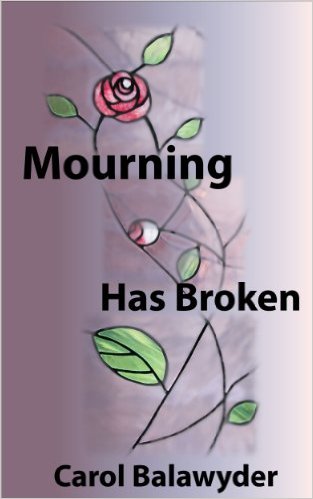
Mourning Has Broken: A Book Review

mourning2

I read this book during a time of loss and sadness. When my spirits were so low neither music nor books could enter my heart. Numerous books remained unread, the words and stories therein unable to penetrate the wall. 

Then I recalled reading about Carol Balawyder and ‘Mourning Has Broken’; her book on loss and grief. On a whim I bought it.

My attention was seized from the very first few sentences and as I devoured it within two days ‘Mourning Has Broken’ left a deep and profound impact on me.

The writing is exceptional and beautiful. Poetic in places, full of wisdom. Her words spoke directly to me, then at times mirrored my experiences of loss exactly. I have never highlighted so much in a book since my student days. Nor have I I talked so much about a book – I am sure my family by now feel they have read it too!

Within nine months Carol first lost her mother then her sister, Diana, to cancer.  Years before her father had passed away. As she struggled to cope with the ensuing grief, she turned to writing. These turned into two essays which are collected here in one book. Carol calls them essays; for me the word is too heavy, ponderous.

The writing flows with ease and is never ‘preachy’ in tone. Whilst the book is about how to deal with the pain of losing family members; it becomes much more – a personal exposition of Carol’s life and familial relationships and ultimately ‘Mourning Has Broken’ is as much a book on living and surviving grief as on mourning and loss.

Through skilfully crafted snippets Carol provides detailed images of her life when young with her father, mother and sisters (elder one, Louise). At times funny, at times sad, the overwhelming feeling regarding her parents is one of sadness and mourning – even before their deaths. Always kind, considerate and giving Carol realises she never had the relationship she wanted with them.  Averse to showing any physical or verbal affection she regrets her parent’s lack of hugs and ‘I love you’. Where her father was a secret alcoholic, her mother lived by an array of confusing rules, many of which young Carol inadvertently ran foul. 

pinkrose2The second part of the book opens with the ‘unfathomable’. That after five years of fighting lymphoma her sister’s battle is soon over. As the family and the two sisters gather for Diana’s final days in hospital I cried. The helplessness, despair is portrayed with Carol’s usual deep sincere honesty. 

As she recounts her sister’s fight with cancer (whilst Carol was at the same time also being treated for a ‘safer’ form of cancer) the reader follows her soul-searching; both to understand the past, its guilt, joys and lows and to comprehend present pain. Searching for spiritual meaning, searching for a way to live on. Her self-awareness is at times unforgiving, always touching. 

Throughout Carol’s gentle and compassionate nature shines forth. The book is both heart-felt and heart-warming. 

I cannot recommend it highly enough. It is not, as I thought, a only book for those suffering loss. It is for everyone, whenever. I wished I’d read it earlier. 

Now I will let some of Carol’s wonderful writing in ‘Mourning Has Broken’ provide a glimpse of this life-changing book. 

I know that we were circling, like birds of prey, around his death.

I remember once telling a therapist that my father was my hero. “It’s hard,” he answered, “for any man to stand up to that kind of idolization.”

I love therapy sessions where I am allowed to lie down, just as I love corpse pose in yoga. Why can I not give myself permission to lie down in my own home without a feeling of guilt that I should be doing something else? Something productive?

Morphine. Morpheus. One who shapes dreams. In a dreamlike state but still aware. What are you thinking of in these last hours of your life? What are you feeling? Where are you?

I don’t tell her I think my sister is hanging on like a leaf hangs on to a branch in late November. Sooner or later it will have to let go.

What needs letting go is a future with her.

Death changes everyone.

Before entering a bookstore,  I always ask for guidance that I may find the book which I need to be reading at this time in my life.

Still, at her funeral service, I read these lines from Thich Nhat Hahn: Time is too slow for those who wait/too swift for those who fear/too long for those who grieve/too short for those who rejoice/but for those who love, time is eternity.

Do we ever really bury those we loved dearly? Is there really any such thing as closure?

Mourning, I realize, must come in small parcels. To realize the immensity of the loss at once would be too overwhelming and unbearable. It must be done in bits and pieces of dreams disappearing one sliver at a time.

In the spring before Diana died, she and her partner, Jean-Louis, planted a wild rose bush at our parent’s gravesite. Now, as I walk towards the grave I am struck by the single rose in glorious bloom amidst all the dead ones. My immediate thought is that Diana’s spirit is in the pink wild rose for in her own life, she was a pink wild rose.

In this void, the voice of Karen Armstrong, one of the most progressive thinkers on the role of religion in our society, reaches me. God was not something you could prove with rational thought or words. God was something to be experienced, and you could have this God experience through music, poetry, silence, compassion, and kindness.

“Faith and hope,” she once told me, “are gifts of grace. They are the lighthouse which shines on our days of darkness.” 

carolFrom ‘Mourning Has Broken’ by Carol Balawyder

Note: Use of the quotes are reproduced from the book by kind permission of the author.

RATING:   5 out of 5 stars!

PRICE:        £ 1.99   Kindle       –   Amazon UK          $ 2.99   Amazon US

                     £ 6.02   Paperback – Amazon UK         $ 8.50     Amazon US


SING: A BOOK REVIEW

sing

Looking for a great summer read – look no further! Sing is pure escapism! Full of fun, fame, friendships and romance. A perfect getaway from reality.

As famous pop star Lily Ross yet again suffers a failed romance in the full glare of the public limelight she accepts the opportunity to escape the madness of her life. To recover from her heartbreak she decides to  live three months during the summer on a small island in Maine.

The house on the island was recently bought by one of her best friends, Tess who used to visit it as a child along with Lily and their other close friend, Sammy. As Lily’s fame and career took off Tess and Sammy left their own dreams behind to be companions and assistants to Lily. Only now, on the island does Lily’s selfish and self-centred approach to life start to rock the foundations not only of her ability to write songs but threatens her life-long friendships.

However, Lily at first fails to notice her friends discontentment as she struggles to recover from the break-up with equally famous Jed. Crashing, literally, into Noel, a local fisherman on her first day on the island does bring new romance for her as she quickly falls for the down-to-earth islander and soon discovers his deeper side and more complex family and career issues. Equally Tess and Sammy are vividly brought to life and developed throughout the book.

This is an engaging novel, marketed as YA / Teen book, but as always I disagree with this genre labelling and felt it was a delightful entertaining read as an adult. The plot moves quickly along, the characters which I feared would become caricatures are fully developed and it was particularly satisfying to see the shallow Lily rediscover her caring more thoughtful side as memories and new experiences sweep over her.

As always with such books it is very much of will she / won’t she scenario. Will she get back with Jed? Will she finish her album? Will she follow her heart’s desire? Will she abandon her fans and career? Will she finally see her friends as such instead of as paid assistants? 

This book not only made me want to stand up, cheer and dance, but by the end I was ready to join Lily and Sing!

netgalleyI received a free copy of this book from the NetGalley in exchange for a honest and impartial review.

Rating:                           4 out of 5 stars.

Publisher:                      HarperCollins UK

Publication Date:        2nd  June  2016

Price:                              £ 3.85     (Paperback – Amazon)  

                                         £ 3.99      (Kindle – Amazon) 

Link to Amazon.com 


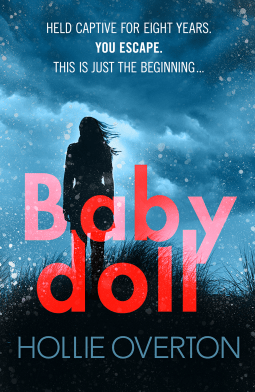
BABY DOLL: A BOOK REVIEW

babydoll

The next two books I will be reviewing are outside my normal genre: one a YA book, but first of all one of the most gripping psychological thrillers I’ve ever read.

Few books start with the dramatic intensity of ‘Baby Doll’. No gentle meandering scene-setting, no light character introduction. It all starts with a bolt on a door. A bolt that has not been shut.

As Lily gradually becomes aware of this lapse, she can finally hope for freedom. A chance to escape the room where she has been held hostage since she was sixteen. Eight long years of mental and physical abuse. One person, Lily, was captured, held. Two people escape. Lily and her five-year-old daughter, Sky. Sky who is about to encounter the outside world for the first time. Sky who is about the meet her relatives for the first time ever.

Once free, every new day brings fresh traumas to Lily and her family as they desperately seek to reconnect following the horrific years of heart-ache. As the man who abducted her, an ‘upstanding member of the community’, is brought to justice, Lily discovers the destruction wrought on her closest family after she went missing. Her twin sister, Abby, has changed beyond recognition and is now pregnant and in a relationship with Lily’s childhood boyfriend. Lily’s mother too sought relief outside the norm of the family.

Whilst relentlessly moving forward, the novel seamlessly weaves in much of the back story. It builds to a crescendo of shocking revelations until the brilliant, in the end the only possible, finale. 

This book is compelling; a definite page-turner and one I read in two days. Lily and her family became etched in my heart – I just had to know what happened next. Could the family survive? Could they re-unite? Would they ever find love and peace again? 

‘Baby Doll’ is an excellent taut thriller that raises many important issues. Although I felt at first that it was driven by the plot I quickly changed my mind as I warmed to the characters (or in the case of the abductor, detested). 

One major stumbling block for me was the poor edit of this Netgalley edition of the book. The first two words were joined together, then throughout the book there followed extra lines mid sentence, extra spaces before commas…I am sure Random House, its team and the author will correct these issues before publication but it was a distraction for me – luckily the book was so compelling!

I could say a lot more about ‘Baby Doll’ but I’m worried about spoiling the novel for you. I hope you get a chance to read this yourself. As you might have guessed I highly recommend this book.

netgalleyI received this ACR from the publisher through NetGalley in exchange for a honest and impartial review.
 

Publisher:                      Random House UK

Group Release Date:  30th June  2016

Price:                              £ 12.99   (Hardback – Amazon)  

                                         £ 7.99      (Kindle – Amazon)

Rating:                           4 out of 5 stars.

+++++++++

A quick aside.

Have you ever wondered about the name Netgalley?

I thought at first it was meant to be a play on word of ‘gallery’. Reading through a book the other day I think I’ve finally found the reason behind the name.

Net – obviously the internet.

Galley – this was originally the flat metal tray with three raised edges which used to hold the metal type. The galley proofs were proofs taken on a long slip of paper from the type while it was still in the galley, though the term is now used for any proofs not yet divided into pages.  (source: The Cambridge Handbook. Copy-editing by Judith Butcher)

++++++++++


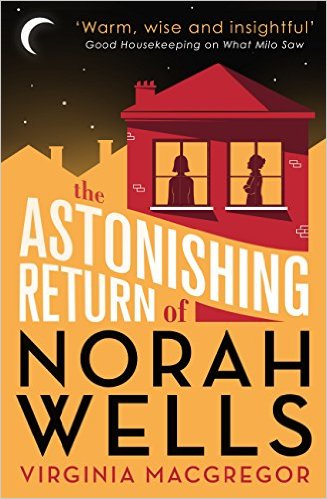
THE ASTONISHING RETURN OF NORAH WELLS: A Book Review

norah

On an ordinary Friday morning the lives of the residents at 77 Willoughby Street are shattered by the return of Norah Wells. The Mother Who Left six years earlier. She left baby Wilma and 8-year-old daughter Ella in the care of Adam, her husband. Inexplicably, unexpectedly she has come home. 

Home however has changed dramatically from the chaos she left behind. Her best friend, Fay, also god-mother to Wilma, has stepped up, not only to help Adam with the children but gradually replacing her in his and at least one of the daughter’s lives. 

Why did Norah leave? Why did she return? Where was she and with whom? What becomes of The Mother Who Stayed? Finally and most importantly, who is going to tell little Wilma that ‘Mummy’ is not her real mother?

This is an engaging, at times mystical, novel that unfolds through the various voices of the main characters. The nuances of each person are captured  perfectly and are captivating despite being in third-person. 

The children’s confusion, heart-ache, innocence is written in an almost fairy-tale style, often with short, staccato sentences, often with repetition. Whilst this quirky technique might not be to every reader’s taste I found it original and endearing. 

The two daughters are at the core of the novel and their various reactions to Norah’s presence are the catalyst for the non-stop plot twists, action and emotional scenes.

Ella immediately won my sympathy with her naivety and trust in her mother. A mother she believed, despite evidence to the contrary, to have been kidnapped. As a result Ella set up a campaign to find her mother and her twitter feed on this cause is a perfect modern contrast to the rest of the book. Her twitter messages brings in various suggestions, help and a diverse array of character that interact well with Ella. 

During the long period without her mother, Ella had modelled herself on Norah; adopting her lifestyle, her dress sense, her passion for running, learning to love jazz and like her musician mother, learning to play the trumpet. A mother Ella discovers had walked out on her of her on own free will. 

As the truth is finally revealed Ella’s emotional centre is profoundly shaken. Only then does the reader gradually learn that the foundations of their previous life had been far from stable and rather that of a dysfunctional family full of secrets and despair.  

Wilma is the light of this book; surrounded by a quasi-angelic, spiritual aura. Like Norah,she seems to hover between the real world and the spirit world and accompanying her across both is her best friend and pet dog, Louis. He immediately wins our affection and love – entrusted to look after Wilma whatever the price. His pivotal role in the novel is quietly reinforced throughout.

If having an animal in as a major element in a book sounds familiar, you might recall ‘Hamlet’ the pet pig from the wonderful ‘What Milo Saw’ also written by Virginia MacGregor. 

I couldn’t wait to read her second novel and am pleased to say that it did not disappoint. Her writing has become more self-assured, with the story-line more complex and featuring a variety of adult voices. 

Overall its feather light, surreal quality blends exquisitely with modern dilemmas and technology ensuring that this is ultimately an uplifting book. I was hooked from the start and I grabbed every free available moment to read on. I can highly recommend this book.

netgalleyI received this Reader Copy from the publisher through NetGalley in exchange for a honest and impartial review.

Publisher:                      Little Brown Book

Group Release Date:  14th January 2016

Price:                              £ 14.99   (Hardback – Amazon)  

                                         £ 7.99 (Kindle – Amazon)

Rating:                           4 out of 5 stars.

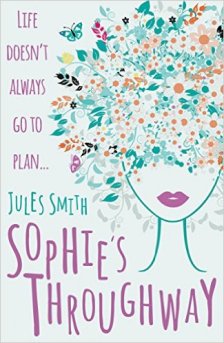
SOPHIE’S THROUGHWAY: A BOOK REVIEW

book

Not the most likely topic for a fiction novel but Jules Smith has pulled off a feat with this book – a tender, raw, no holes barred story of a mother struggling to hold onto her family and sanity amidst the chaotic world of her teenage son diagnosed with Aspergers and PDA.

Written in the first person, from Sophie’s (the mother) viewpoint, this only heightens the immediacy of the narration and the reader is brought smack into the middle of the family’s lives.  From the first sentence I was hooked, pulled into Sophie’s hectic, confusing world with demands from all sides shaking her (and the reader) to the core.

Brendon, her seventeen-year-old son, diagnosed with Aspergers and PDA (Pathological Demand Avoidance) is at the heart of the story. His verbal and frank comments cause understandable ruptures at school and home. Whilst his father flees from what he sees as his son’s intransigent behaviour, Sophie remains her son’s stalwart parent, friend and supporter. Not only does she fight for him at every possible moment, she relentlessly tries to ensure her younger daughter, Bryony, receives the attention she so desperately needs as well as retaining her work as an writer for an interiors magazine. 

Sophie’s lifeline is her work, which she loves and her colleagues provide  her with normality in her Aspergers centred world. However, as her son’s situation deteriorates even this rock is threatened. 

This book could easily have become didactic and prescriptive about Aspergers however the author has successfully sidestepped this trap. Quickly I warmed and cared for Sophie, Brendon and Bryony. Whilst so much  of his behaviour is appalling, like Sophie I could understand more of the illness and recognise the validity of some of Brendon’s keenly observed remarks and  outbursts. 

‘He had a point. I found the way he thought refreshing and challenging.’

The dichotomy within Brendon – almost a Jekyll and Hyde personality –  is a struggle for Sophie, as at one moment he is a kind considerate son, the next he pushes her to the end of her tether. 

‘Brendon had a keen sense of right and wrong which was amazing since he couldn’t apply it to himself.’

Can the diversion of an online scrabble game  provide Sophie with the love and support she desperately needs as she messages ‘The Voice’ in California? Her fantasy is just beginning to get carried away…or does romance lie much closer to home in the form of her understanding boss, Colin…

Unexpectedly this book was an instant hit with me, the writing flows with ease and sparkles with warmth and humour interspersed with fast-paced dialogue. The characters are wonderfully sketched and Sophie’s heart-felt and honest narration allows us to view not only her life but that of her son’s and daughter’s as well as that of their friends and teachers.

Personally I have two minor reservations about the book. Firstly, the title. I just don’t think it works – but don’t let this stop you reading it! 

Secondly for me the book finished abruptly. There was no ‘signposting’ of the end and I kept pressing my ‘next page’ button on my kindle in frustration wanting to read on…maybe this just show how much I had become caught up in the story…but I did want more of a resolution, conclusion. However, I would in no way let this detract from what is overall a highly rewarding and uplifting read. 

Released only two weeks ago this is a book I can highly recommend. 

Rating:                 4 out of 5 stars.

Price:                    £ 2.99  Kindle 

                               £ 9.99  paperback (amazon)  

Book Release:  3rd April 2016

Publisher:        Troubador Publishing


netgalleyI reviewed this book on behalf of NetGalley. 


A DICTIONARY OF MUTUAL UNDERSTANDING: A BOOK REVIEW

During the past two weeks of peaceful holiday in Sweden I’ve been lucky enough to read an array of books on behalf of NetGalley. Four particularly were striking, unusual, starkly different and therefore my next posts will feature these books. I start with the amazing and wonderful A Dictionary of Mutual Understanding by Jackie Copleton

mutualFrom the very first few words I knew this book would be one to cherish, to love – one that continues to live within my heart days and weeks  later. 

The story weaves between the present and past, between Japan and America as Amaterasu Takahashi is forced to re-live the earlier life of her long-lost daughter killed along with thousands of others as a  B29 dropped a nuclear bomb Nagasaki on 9th August 1945 at 11.02.

The story opens with the appearance of a man on the widow’s  door-step claiming to be her grandson, Hideo, who was killed in the attack. Disbelieving, she is handed documents to prove the veracity of his statement. So begins the epic sweeping novel; at times brutal, at times ethereal.

Amaterasu Takahashi is the main narrator, however this is effectively interspersed with Yoku’s (her daughter) diary as well as letters from Sato –  local doctor at the time – who caused the irreparable rift between mother and daughter.

Secrets and lies are at the core of so many novels and this one is no exception. Rather the secrets withheld and lies told are intricately, devastatingly interwoven rising to a crescendo of revelation and understanding in a story of family, love, strife and war. 

I could not fail but be pulled in by the heart-felt words early on.

‘Dear Daughter, the life I sought for you was not a bad one, was it? Could you understand why I acted the way I did? Could you see I had no choice? Only child, did you forgive me in those final moments? Did you forgive yourself?’

It was not only the story that ensnared me, the author – previously a language teacher in Japan – powerfully transported me into Japan; its detailed life and customs beautifully portrayed and conveyed. Each chapter begins  with a Japanese word or custom followed by a detailed description. Often this technique can slow the narrative and become cumbersome. However Jackie Copleton’s notes only heighten the sense of the culture and our understanding of the characters within her book and the choices they made and the lives they lived. Beyond the people and its culture, Nagasaki particularly is brilliantly brought to life at its cusp of transformation from the old order to modern city.   

‘Nagasaki, the city growing like a giant metal insect across the land.’ A city living in the glory of its ship-building era, an industry that would lead to its obliteration. ‘It felt as if the world’s heart had exploded…Never find the language for such and agony of noise and the silence that followed.’

Heart-warming. Heart-felt. Heart-wrenching. These are three words I jotted down as I finished the book and which sum it up perfectly. It is one of the best books I’ve read in a long time. No wonder it was long-listed for The Baileys Women’s Prize for Fiction 2016. My only surprise is that it didn’t make the short-list. 

badge_proreaderI was honoured to be accepted as a reviewer by Random House UK for ‘A Dictionary of Mutual Understanding’ on behalf of NetGalley.

Rating:              5 out of 5!

Book Price:       £ 4.99.    Kindle

                             £ 12.08   Hardback  (amazon)

Publisher:        Random House UK


WHAT MILO SAW – A BOOK REVIEW

image

If you are looking for a break from the current glut of dystopia novels than check out What Milo Saw by Virginia MacGregor, which is a heart-warming and engaging story centred around 9-year-old Milo.

Despite suffering from an eye disease which has left him with only pinhole sight, his depth of vision of the world around him exceeds that of the adults whom surround him.

As his gran, Lou, is put into a nursing home by his struggling mother only Milo can see the suffering and criminal acts carried out by Nurse Thornhill. Along with his pet pig, Hamlet, Milo sets out to expose the nursing home ‘Forget Me Not’ and free his gran from the misery.

Hamlet is a wonderfully crafted animal-character and I never imaged a pig would worm its way into my heart. Lovingly close to Milo’s gran, he snuggles next to Lou to keep her warm, raises the alarm in face of danger. Initially bought by his now absent father, Hamlet became Milo’s life-saver following his diagnosis about his eyes and impending blindness.

Alone to start with, Milo’s naive assumption that he can make a difference helps him to develop some unusual allies.

One is Al, the undercover journalist and also a relation. Al refuses to pander to Milo’s disability rather empowering him with advice on how to gather evidence.

To me more interesting is Tripi, a Syrian refugee who works as a chef at the nursing home and is astounded by the cultural differences compared to those in his country regarding the treatment of elderly relatives.

The story is bang up to date with the inclusion of Tripi, saved from certain death in Syria and now living and working (illegally) in the UK.

Tripi is initially an unwilling ally to young Milo, who helps him not only with accommodation away from the park bench but also helps him in his efforts to seek out his long lost sister. Tripi’s overwhelming sorrow is losing his sister as they fled Syria and he does not know whether she is alive or dead.  With a few deft sentences Virginia MacGregor captures the warmth and exotic nature of Tripi’s former life in Syria; my senses were awakened through the descriptions of the food and country.

Sandy, Milo’s mother, gradually develops from a rather stereotypical overworked single mother to one facing much more complex issues and with time the empathy and understanding for her grows as she herself adjusts to the truth of her situation and becomes aware of her own emerging strength and independence.

Each chapter of the book is written through the viewpoint of one of the main characters. Although in the third-person this is still a very personable and individualistic approach that works well throughout and brings the story neatly towards its resolution.

This touching book is simpler than many in this cross-over genre of fiction / YA, with a relatively uncomplicated sub-plot.

However, I thoroughly enjoyed the softer tones of the book, not squirming from the injustices of life, the difficulties of relationships, living life with a disability. I fell for the warmth and innocent caring spirit of Milo and I will remember him and his eclectic mixture of family and friends (not forgetting Hamlet) long after I finished the book.

Overall I found it an uplifting story and one I would highly recommend.

I received an Advanced Reader Copy from the publisher through NetGalley in exchange for an honest review.badge_proreader

This review is out later than usual owing to holiday commitments. My apologies.

Publisher: Sphere

Release date: 13th August 2015

Price: £ 3.85 (paperback – Amazon)   £ 4.99 (kindle – Amazon)

Rating: 4 out of 5 stars

‘GO SET A WATCHMAN’ – First Chapter Review!

book

Don’t worry, I’m not going to jump on the PR juggernaut surrounding Harper Lee’s latest (earlier) novel. Nor am I going to engage in the endless conspiracy theories regarding its existence, publication etc.

However, it’s difficult to avoid what has been promoted as the biggest book sensation in recent living memory. ‘Go Set A Watchman’ is set to smash sales records. The publishers are prepared for tomorrow’s look release with nearly 3 million books printed as well as being available on digital format.

So, what’s all the fuss about?

Away from the hype I approached the first free chapter with delight and slight trepidation. Delight as I thoroughly enjoyed and respected ‘To Kill a Mockingbird’, even more after reading it again last summer. This time as an adult I found I appreciated the novel much more. However I was anxious the book would disappoint and fall to ridicule. Reading this first chapter I realised my fears were unfounded.

‘Go Set A Watchman’ promises more of the same beautiful prose as ‘Mockingbird’. The deftness of language is retained with its gentle humour, crisp vernacular mingled with deep insightful reflections from the now mature 26-year-old Jean Louise, otherwise famously known as Scout.

train3,jpgThe initial striking difference with ‘Mockingbird’ is that this novel is told in the third person. From this first chapter I would say this is not detrimental. I did not find this viewpoint distant or remote, as has been suggested by some critics. Rather it allowed Scout’s maturity and in-depth reasoning to shine forth, whereas ‘Mockingbird’ worked brilliantly written from the first person, capturing her young innocence, confusion and sense of awakening.

The reader joins Scout as she’s travelling by train from New York to her home town Maycomb to visit her ageing father who is suffering from rheumatoid arthritis. Her laconic observations abound, such as in ‘trains changed, conductors never did’ as yet again the conductor forgets her stop and the train halts 440 yards from the station.

Scout has lost none of her home-town mannerisms as is evident in first her change of clothing to ‘her Maycomb clothes: gray slacks, a black sleeveless blouse, white socks and loafers…’ before adding, ‘she could hear her aunt’s sniff of disapproval’.

train4She does now though manage to tone down her behaviour as ‘she repressed a tendency to boisterousness’.  How far this is true the reader will have to find out later in the book however doubts are raised even in the first chapter as she retorts with harsh honesty to Henry’s marriage discussion: ’I’ll have an affair with you but I won’t marry you’.  Even Henry has noticed the change in her, recognising that ‘in the years he was away at war and the University, she had turned from an overalled, fractious, gun-slinging creature into a a reasonable facsimile of a human being’.  Overall, Scout is still ‘a person, who confronted with an easy way out, always took the hard way’.

Finally, am I the only one confused by the title? Frustrated by my ignorance I researched further and I was soon enlightened!  The phrase ‘Got Set a Watchman’ comes from Isaiah 21.6. ‘For this hath the Lord said unto me,/Go, set a watchman, let him/declare what he seethe.’

This supposedly alludes to Scout’s view of her father, Atticus Finch, as the moral compass (ie. watchman) of Maycomb. (Thank you Wikipdeia!)

I hope you have enjoyed this brief summary of the first chapter of Harper Lee’s latest publication. The final verdict on the novel will of course only be known upon reading the book in its entirety. I will buy it, soon but not quite yet. I don’t feel like be railroaded. I’ll wait for a while…for the paperback!  I trust I will be as enlightened and satisfied with the rest of the novel as I was with this opening chapter.

Thank you for reading.

If you want a peak at the first chapter please take a look at http://www.theguardian.com/books/ng-interactive/2015/jul/10/go-set-a-watchman-read-the-first-chapter