Season of Mists *

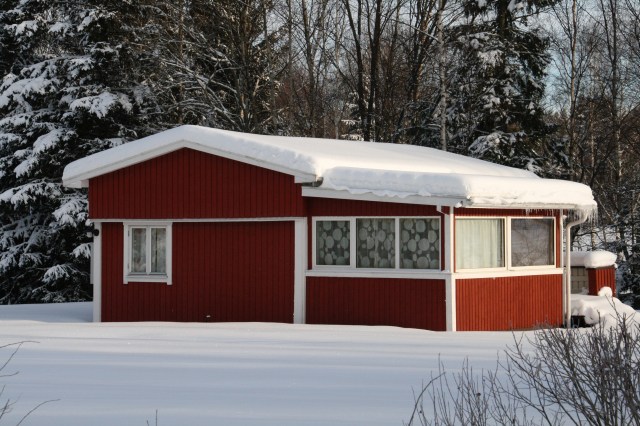
snow covered stuga feb. 10

As Autumn steadily sweeps across us, the temperatures dipping further down with each day, nature’s exhibition of its colourful canvases growing ever more spectacular, we slowly ready ourselves for the winter. 

Winter coats, gloves, hats and scarves are made ready.  The radiators clatter to the sensation of heat coursing through the pipes for the first time in months. 

So off to Sweden I head for a few days to help prepare the summer houses for oncoming winter, when ice can reach a metre or two below the ground, when snow can pile metres high up against the walls. Minus twenty (centigrade) is not unusual. This is the final sorting before the dark days descend, radiators will be left on and this year to ensure there is no repetition of last Easter’s indoor flood following burst pipes, a heated lead has been placed in the water pipes between the houses to stop them freezing. Fingers crossed. 

I can’t wait to see the bountiful beauty the trees will offer – although even as we left in August the birch leaves were already tinged ochre and cracking at the tips. The ocean adorns itself with a wintry gown, the light flickering across the silver shimmery sea, the crispness of the air snapping at my lungs. 

This is my last escapade abroad this year; I will catch up with you all on my return until then I wish you a lovely final few days in October, a fun Halloween if celebrating and for those participating in NaNoWriMo best of luck! May stamina, perseverance and snacks carry you through until the end of 50,000 words. 

‘There are moments in our lives, there are moments in a day, when we seem to see beyond the usual. Such are the moments of our greatest happiness. Such are the moments of our greatest wisdom. If one could but recall this vision by some sort of sign. It was in this hope that the arts were invented. Sign-posts on the way to what may be. Sign-posts toward greater knowledge.’

Robert Henri (1865-1929), American artist & teacher

* From ‘Ode to Autumn’ by John Keats

SOFIA!

rhino4

I wrote the following short story a few months ago and since then have swayed back and forth whether to send it into competitions. Following my recent post on The Cost of Competitions and the informed and lively discussion afterwards I have decided to share Sofia here instead.

So, when you have a few minutes to spare I hope you have a chance to read the story -perhaps snuggled up in your favourite corner, a coffee / tea to hand plus the odd biscuit or chocolate too!

The first half of the story appears below – to read it all including the final half please click here.

SOFIA

With two chipped mugs balanced precariously on a tray Inspector Nunn kicked the door closed and placed the drinks in front of Jane. She hardly noticed the tea sloshing onto the plate of scattered rich tea biscuits.

“Sorry about that Mrs Terence. Please continue,” said Inspector Nunn, as he reached for a soggy biscuit and dunked it in his tea.

“I noticed the man’s voice, that second time I saw him. He was restrained and quite embarrassed to start with, calling out for his daughter.

“He didn’t seem too worried and then there was a sudden, almost hysterical urgency in his call.

“‘Sofia! Sofia!’

“By now he was much more frantic and as he ran past me I saw his long brown hair unfurled from his ponytail. Ragged and knotted. He took a few steps along the path, and then his head swiveled round, as he scanned his surroundings. Helpless. Searching, with that haunted look. Perhaps that’s why nobody helped. Not at first anyway.

“‘Sofia!’

“He shouted her name again and again; the last syllable stressed and short.” “Mrs Terence…” interrupted Inspector Nunn.

“Jane, please.”

“Jane. When was the first time you saw him?”

“Sorry. We saw him only a couple of hours earlier. Ellie – that’s my daughter – and I bumped right into him. Into him and his little girl. Sofia, I assume. The two girls started talking, in that peculiar fashion of four-year olds. There was silence, followed by a couple of words, then some pointing. Ellie mentioned the sloth we’d just visited. That’s why we hadn’t seen them; we were blinded by the sunlight as we stepped out of the dark corridor. Ellie hadn’t been too impressed by the sloth, if I’m honest. It did rather resemble a slab of fur…”

“Jane, what about Sofia? How did she seem?”

“She was happy, excited even. I guess it was her first time at the zoo. She was buzzing after their encounter with the golden tamarins; she danced around us, her light red hair floating behind her, the locks bouncing on her back. Beautiful. A tamarin had snatched the bottle of drink from the man’s rucksack, but luckily the staff had retrieved it quickly. That explained why Sofia was clutching the bottle in one hand and in the other a sheep. I remember that. In a zoo full of exotic animals she carried around a cuddly sheep. Pretty boring, I thought.”

“Did you try to help? Did you try to stop him? To talk to him?”

“He was too fast, you see. He didn’t stop. Didn’t even really say anything else. Perhaps I should have done something, anything. Yes, I was a bit afraid. After all I was on my own here, with little Ellie. I should have forced him to stop, tried to help him. He was just so large – a body building type with a tight black T-shirt with weird silver writing on it. Look at me. At five foot six, I felt tiny next to him. Vulnerable even. I did have to think of Ellie.”


“Thank you for waiting Mr..?”

“Elwood. Martin Elwood. I don’t know how I can help you. I didn’t see anything.”

“Anything you can tell us will help. Trust me. When did you arrive today?” asked Inspector Nunn, as he munched away on the final sodden biscuit, his tea long since finished.

“I got here first thing this morning, just as the zoo was opening. In the summer we bought one of those Gold Cards, giving us free admission for a year. It’s great value for money. Have you got any children, Officer?”

“Inspector. Yes, I have two. Carry on.”

“Shh…Don’t talk too loud, they’re fast asleep, they’ve just had their bottles. It was my first time here with the twins on my own.”

“The man, Mr Elwood. When did you notice him?”

“That was right away, in the car park. He was with the little girl in the van as I pulled up. It was a white van with the name of a builder on it. His own business I assumed, although I did wonder why he wasn’t working. In this recession didn’t think anyone could afford take time off willy-nilly?”

“How about you? Why were you here on a Tuesday?”

“I’m a pilot and work erratic hours – crazy working life – I bet yours is a bit like that, Officer?”

“Again, it’s Inspector. Do continue but less about my life please,” replied Inspector Nunn. “How did they seem?”

“Fine I suppose,” replied Martin. “The girl was talking non-stop, playing with a little sheep. I saw her singing “Baa Baa Black Sheep” and that made me smile.”

“Why?”

“Well, because it was a white sheep of course. The whole time the guy seemed distracted, stared ahead, ignoring his sweet daughter. That was pretty cold of him, if you ask me. I couldn’t do that.”

“Didn’t he talk to her at all?”

“Oh, well, I suppose now you ask, he did look at her a couple of times, stroked her hair even, but with sadness. I mean, why come to a zoo if you’re gong to be a miserable sod?

“At the entrance till we stood behind him. He was one of those who obviously don’t feel the cold. This morning there was still a slight frost, early for mid-October, but a definite chill and even I got my coat on. He seemed one of those macho types, wearing just a T-shirt advertising a heavy metal band or such. What a contrast to the girl! What was her name? Sophie you said earlier?”

“Sofia.”

“Sorry, Sofia. She wore a pretty red dress with lots of layers, a red cardigan with white lace and matching white plimsolls. Dressed for a party I thought. The zoo does hold them you know but it did seem odd, as no one turned up to greet them and there were no other children in party clothes.”

“When did you see them next?”

“Quite a bit later, by the giraffes. The man was a bit more engaged then, you could say. The girl was on his shoulders, and she reached out with her free hand to stroke the giraffe. It lowered its head and then suddenly stuck out its tongue. A thick wedge of black flesh licked her hand, she squealed in shock, startling us all. Her dad took a step backwards and stumbled over the pushchair. It nearly tipped over and with a scream my boys woke up. Great, they’d only been asleep for a few minutes! Yes, I suppose that is selfish but I – they – needed their rest. The man did say sorry but his accent was so heavy I barely understood him.”

“He wasn’t her father.”

“That’s strange, who was he then?” “Her uncle.”


“Good Afternoon Miss..?”

“Beaumont. My first name is Bethany. I just heard the witness muttering as he left. Something about the guy not being Sofia’s dad. Are you sure? They seemed so close.”

“Please Bethany, tell me first what were you doing here today? And why were you so sure that they were father and daughter? What makes you such an expert?”

“I never said I was an expert. I just see a lot. I’ve been working here for two years; came straight from school. I pride myself on working out the visitors relationship to each other, kills time at the ice-cream kiosk I tell you.

“He acted with the love of a father. Sure, he looked different, but I’m not your normal twenty-year old either with all my piercings.

“My Mum despairs, especially when I had my tongue done last monh. Sofia liked it though; she touched the stud and all. Her dad…uncle…didn’t seem to mind at all.

“She’d just come from the African area and the giraffes. There was a bit of a scare I heard. The ice cream was to comfort her. The Calippo lolly was clasped in both her hands, they must have been freezing. A sheep? No, I didn’t see her holding anything, just the ice-lolly. The man wasn’t holding anything either. He bought a 99 Flake and we had a long chat about that. Yes, he did seem foreign but his English was fine. What did we talk about? Oh you know, the usual, in this case the ice cream. Why didn’t it cost 99p instead of the two pounds? Inflation, that’s what I said. Of course it didn’t help that he had all the trimmings, including a flake, sprinkles and sauce. They seemed like any normal visitors – no, I take that back. They were different, friendlier, not too many stop for a chat with me.”

Copyright ©Annika Perry

To read the rest of the story please press here and read on from page 6.


The Cost of Competitions

writer

To pay or not to pay?

Have you ever paid to enter writing competitions; either for short stories, poetry or even submitting a novel? Or perhaps you’d never contemplate having to pay for competitions? 

The topic of writing competitions came up at our last meeting of the local writing group and I was surprised at the varying opinions.

A couple of people seemed genuinely surprised that most competitions charged and that these were successful – I then had to admit to entering some myself with one win, a shortlist and a couple of long-list to my name. 

oldieimageAt first I was overjoyed to have my work professionally validated and deemed worthy to be read in print and it was the confident booster I so desperately needed. The deadlines, themes etc was a great incentive to sit down and write, producing a story in a day or two – then a few more days to re-write and edit. However, as I entered more and more competitions I quickly became disillusioned. Not only was it expensive but entering the competitions was eating into my novel time. Instead I took a break from them and concentrated on writing the first draft of my book; the thought of competitions filed away in the depths of my brain. Until the discussion. Until the latest issue of Writing Magazine (a top-selling magazine in UK aimed for all level of writers in all genres). Once again many competitions tempted me, my creative desire to write short stories rejuvenated. 

However, are paid writing competitions a scam as sometimes is implied? 

Starting out, my initial reaction was the same as some of my writing group members who were shocked you had to pay for them. However, at the same time I appreciate there is a cost to running them, the administration alone for example. Also the judges take considerable time and work to read through the entries. In the process though some competitions have become prohibitively expensive as they fight for prestigious writers to join their panels.  Free competitions can be great, particularly if you have researched them well although I think paid ones are here to stay.

competition

If you are interested in entering competitions, whether free or fee-paying, I quickly learnt there are several important issues to consider.

  • First of all, check out who runs the competition? Is it reputable? Will your work be published in print / online?
  • What is the prize? Sometimes just recognition and being in print is enough, just be aware of this in the first instant. Another point to consider is that if it is a famous prestigious competition, such as the  internationally famous Rubery Book Award or the BBC Short Story Award, it will attract thousands of entries from across the globe and your work will have less chance to make an impact. 
  • Is there a particular topic/theme to the competition? It is important to submit work targeted to the particular competition and not be tempted to recycle old entries that nearly but don’t quite match the prerequisites.
  • There are some excellent free competitions, the Writers & Artists Yearbook Short Story Competition is one example and well worth entering and this year for the first time there is no specific theme. However other free competitions seem more set on getting your personal details for promotion. Just be aware.
  • Take the time to look up the judges. This can be more helpful than initially imagined. What type of books / poetry / stories have they written or promoted? What can you learn about them from their social media exposure? Perhaps your style and content is not something that would interest them and your entry would be better placed elsewhere. 
  • Do check out the previous winners. This piece of research can pay dividends in the long run and its importance cannot be emphasised enough. Early on I made this mistake and only too late, after submission, read some previous winners and realised that my story had no chance of winning. Very frustrating and I chastised myself for this lapse. Also if hoping to win a magazine competition read not only the previous month’s winner but also a few back issues to help establish a feel of the target audience.  
  • Reading the T & Cs (many times and preferably underlining!) is vital.  Always make sure to follow the rules of the competition – this is not a moment to rush ahead without reading the small detail. How should the submission be made? Post? Electronically? If the latter, in what format? In an attachment or part of an email? What are the font / spacing etc rules. What is the word count – and stick to it! The number of words, means just that! Unfortunately an entry can lose out for this reason alone and I know of one such case. Also send the correct money, in time! Also make sure you take note of any restrictions – for example there may be an age band or locality to consider. Finally be aware of the deadline. This is in itself an excellent incentive to complete your work for but do make sure the submission is in at least a few days ahead. Posting on the deadline date is not accepted by most competition rules. 
  • It is a good idea to consider how relevant is the prize for you? Financial reward is always welcome no doubt! Specific prizes such as a free book cover design will only be attractive to those with a book ready. Writing course prizes, such as a week on the prestigious Avron Writing course offered by the Bridport Prize, are also popular but again not ideal for everyone.

Hopefully by following these points you can save both money and time by ensuring your entry will be considered by the judges. 

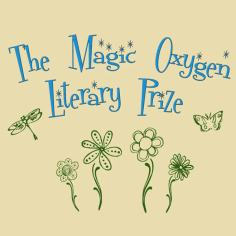
oxoLately, some competitions have expanded their remit from pure competitions to helping others, whether locally or abroad. For example the Magic Oxygen Literary Prize  promises to plant a tree for every entry. The trees are planted in Bore, Kenya. Furthermore the competition money will help fund an extra classroom at a school nearby. Personally I cannot help be moved by their efforts but at the same time wonder if it is a bit of a gimmick, a con? 

Novel writing competitions are some of the most expensive ones on the market, often starting at £20. The Rubery Book Award costs £36 to enter with a prize of £1,500. Is this too much or is the possibility of a break into the publishing world worth the cost? Some offer feedback for an extra outlay. Is this worth it?  

Recently I have noticed an increase of competitions on blog sites and whilst initially sceptical I have followed some and seen their success. The writing is of a superb quality, the winners receive public recognition as they are published on the blog and shared further and the entry fees are far lower than anywhere else but still retain the incentive of a cash reward. As the number of entries are considerably lower than national competitions ones the chance of a win is exponentially improved. 

puppetWhat are your experiences with writing competitions? Have you entered any? Many? Paid ones or only those for free? Are you perhaps running a competition on your blog? Could you share your experiences? Have you ever been asked to be a judge for writing experiences? What was this like? 

I would love to hear from you and hope a lively discussion will ensue.

scrabble

Finally, in addition to the competitions already mentioned the following are just some of the many which have caught my eye and these should give you a feel of the range, expense and prizes out there.

  • Cinnamon Press runs competitions for Poetry & Short Stories.
  • The Telegraph newspaper runs a monthly ‘Just Back’ Travel writing Competition.
  • An audio transmission of the winning story is promised in this free and unusual competition run by soundwork
  • The Rialto is running a pamphlet competition. 
  • The London Magazine offers a prize  consisting of a number of pounds sterling equal to the current year (£2016 for year 2016)for the best Short Story submission. 
  • mslexia magazine, one of my favourite writing magazines, runs four competitions, open to women writers of all levels of experience from prose, Short Story, Novel and Poetry. Winners have gone on to secure publishing deals and literary agents.
  • Inktears Short Story / Flash Fiction competition.

chalkboard_quotes_twainjpg

The Good-Morrow #NationalPoetryDay

sun3The Good-Morrow was one of the first poems John Donne wrote for his 1633 collection ‘Songs and Sonnets’ whilst still a student at Lincoln’s Inn (one of the four Inns of Court for barristers in London). I studied this as a student at school and I often recall it in its entirety; its passion, sensuality, energy and overwhelming belief in life itself never fails to lift my spirits. Hope you feel the same. What poem has this effect you? 

donne01
John Donne


THE FIRE CHILD: A BOOK REVIEW

fire child

‘You will be dead by Christmas.’

This dramatic declaration, uttered by eight-year-old Jamie to his new step-mother, Rachel, is pivotal to ‘The Fire Child’ and as the summer months count down to Christmas the tension and intensity of the book builds a to nail-biting finale. 

From her single life in London Rachel is quickly whisked off her feet by handsome but mysterious David and soon she finds herself in the midst of his family legacy and home of Carnhallow House in Cornwall. David is a loving and kind husband but often distant from her, both emotionally and also physically as his work takes him to London. His mother, Juliet, is welcoming but the sinister looms ever closer. Whilst Rachel quickly forms an attachment to her step-son, Jamie often appears disturbed by Rachel’s presence and he is haunted by visions of his dead mother; beautiful, angelic Nina who died in an accident eighteen months earlier. Nina who now it seems is proclaiming Rachel’s imminent demise. As Rachel seeks help for the boy, she finds her sanity brought into question as the past begins to catch up with her.

Tremayne weaves a wonderfully tight story with multiple threads coursing through the writing. Who is lying? Jamie? But why? Or is it David with his deep sense of duty to keep the family legacy alive? Or even Rachel herself? 

Following in Nina’s footsteps, Rachel tries to continue the excellent restoration carried out by Nina of the stunning estate which sits upon the tin tunnels dating back to the previous century. Nearby lies Morvellen Mine – the site of Nina’s death.

The emotional detachment of both David and Jamie is mirrored in the remote location of the house. The suffocating, claustrophobic atmosphere is brilliantly brought to life; Rachel’s isolation emotionally and physically is emphasised in every chapter and rendered more immediate through the first person perspective. Her loneliness is palpable and reflected in the increasingly colder climate, darker days, gloomier light.The novel is steeped with tension, spine-tingling and even though I read this on warm summer days I still felt chilly and had goosebumps. The book has many similarities with Daphne du Maurier’s chilling ‘Rebecca’ and its powerful use of pathetic fallacy evoking a sense of a dark foreboding threat, madness and even death.

Half-way through the book I felt it had reached its climax and I honestly wondered where it would go; how or even if the author could continue this crescendo of suspense. I needn’t have worried. Through the use of David’s voice in the third person interspersed with Rachel’s continued narrative the author brings the book through unimaginable twists and turns to its dramatic conclusion. 

‘The Fire Child’ is a compulsive read, eerie, tense, well-crafted and cleverly plotted. I found myself walking and trying to unravel its intricacies – who was the real victim? Who was the culprit?  How and why did really Nina die? My only reason for not giving this book five stars is that I never totally empathised with any of the characters. Admittedly they were fully developed and well portrayed but I hesitated in giving my heart to any one of them. That said, this is up there with the best of this year’s psychological thrillers.

Finally a thank you to S. K. Tremayne (a pseudonym for journalist Sean Thomas who also writes as Tom Knox) for the fascinating history of the 4,000-year-old  tin mining industry of Cornwall, highlighting just some of its horrific and terrifying practices. The factual elements were seamlessly incorporated into this work of fiction.tinmine

A Cornish Tin Mine Ruin

netgalleyI received a free copy of this book from NetGalley in exchange for a honest and impartial review.

Rating:                          4 out of 5 stars.

Publisher:                     HarperCollins UK

Publication Date:        16th June  2016                         

Price:        

£ 6.00  Hardback – Amazon UK       

£ 4.99 Kindle (available 28th March 2017)  –  Amazon UK                                                                  £ 7.99 Paperback (available 9th February 2017)  – Amazon UK

From  $ 5.81 Hardback – Amazon US